


This is a segment from The Breakdown newsletter. To read full editions, subscribe.
“The dollar is always going to be the reserve currency. Anyway, for a long time.”
— Jerome Powell
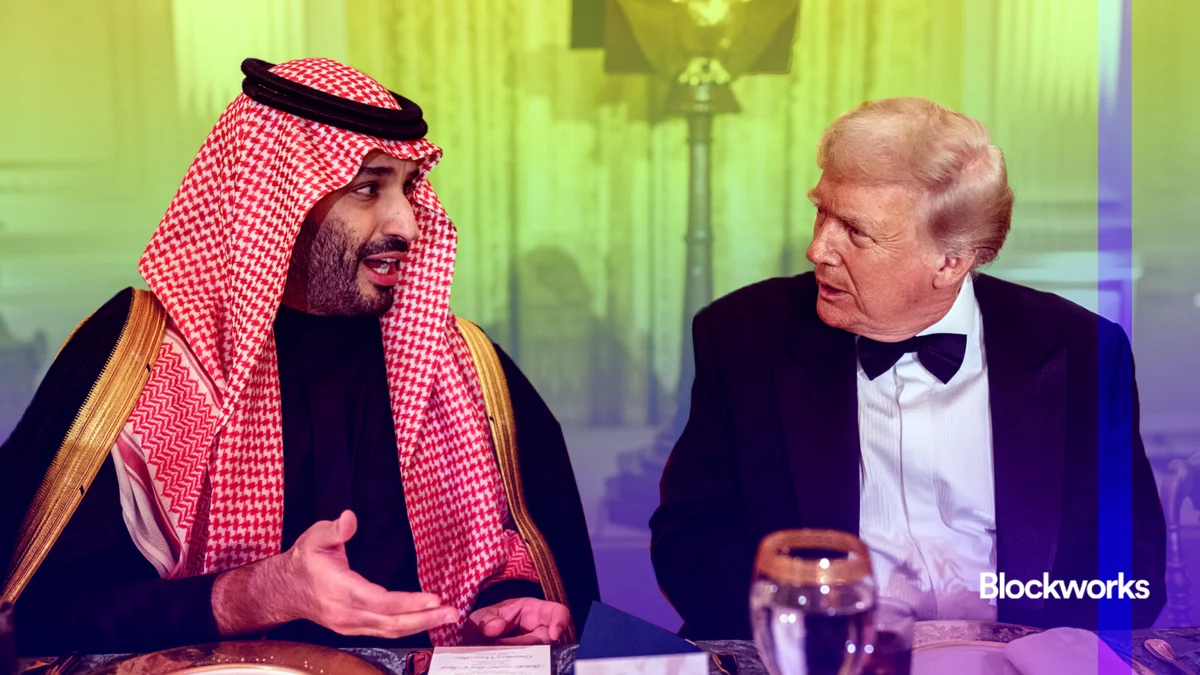
When the price of oil suddenly quadrupled in 1973, sending shockwaves through the global economy, Saudi Arabia was wholly unprepared for the sheer volume of billions of dollars that started flooding into its coffers. Strictly speaking, the money never actually made it “into” the Kingdom in a physical or localized banking sense. Global buyers of Saudi oil sent their massive payments directly to accounts held at Citibank and JPMorgan in New York. There, the money sat idle because Saudi finance officials barely knew how to move it, let alone invest it across complex international financial landscapes.
With billions piling up rapidly in non-interest-bearing accounts, the Saudi Arabian Monetary Agency (SAMA) found itself facing an unprecedented administrative crisis. Reluctantly, officials asked an American banker named David Mulford to step in and manage the monumental wealth on their behalf. Mulford and a small team of intrepid bankers packed their bags and moved to the underdeveloped port town of Jeddah on the Red Sea. They scrambled to secure accommodation in houses newly built in a desolate part of the desert that possessed no roads—getting to their living quarters meant simply driving vehicles across the open sand.
The harsh realities of their new environment quickly set in. The houses lacked basic modern conveniences, including telephones, televisions, mail delivery, and even municipal trash removal. Left with few options, the bankers routinely left their household trash out in the sand for local Bedouins’ goats to feed on. The makeshift office they commuted to six days a week under the blazing sun proved even more challenging. They were assigned a single room in a decrepit building, furnished with nothing more than basic chairs and desks. There were no computers, no modern terminals, and certainly no telephones to connect them to global markets.
Across the hall from their workspace sat a primitive facility that highlighted the stark conditions: a simple toilet set in a long, deep room featuring an open drain running behind it. As Mulford vividly wrote in his autobiography, this was used by their entire section of the building and flushed only once a day at precisely three in the afternoon. Investment deals of monumental global significance were negotiated, agreed upon, and processed via the building’s single telex machine—a kind of hybrid typewriter and telegraph device that was constantly in use. Executing a single financial transaction required dozens of back-and-forth telex messages and took weeks to complete from start to finish.
And yet, as Mulford recalls of those dizzying early days, they faced a relentless operational treadmill where they had to invest money at the rate of approximately $500 million per day simply to prevent themselves from falling behind the incoming wall of capital.
Mulford’s firsthand account of his nine years at SAMA fundamentally debunks the persistent geopolitical conspiracy theory that the Saudis invested their astronomical oil windfalls into US Treasurys as part of a deliberate quid pro quo arrangement in exchange for an American military security guarantee. Instead, the historical reality is far more mundane and rooted in market practicalities: the Saudis invested heavily in US Treasurys because quite simply, they had to. No other financial market anywhere in the world possessed the sheer capacity to absorb the staggering $20 billion a month that the Saudis desperately needed to put to work.
Furthermore, no other market offered the combination of safety and ease of execution that the US provided—critically important factors when every single investment had to be coordinated laboriously by telex from the Saudi desert. SAMA actually tasked Mulford with moving 30% of their immense investment funds completely out of the US market in a bid for portfolio diversification. Yet, he struggled profoundly to achieve even that goal due to the structural limitations of global finance at the time.
In most financial markets outside of the United States in those days, a currency trade of just $5 million to $10 million was enough to single-handedly move markets and create severe volatility, meaning there were absolute practical limitations on the amount of currency diversification that SAMA could possibly achieve without disrupting global exchange rates.
This historical constraint challenges the enduring idea that dollar dominance can be artificially engineered through either political coercion or clever central banking policy. The Saudis chose Treasurys because of what America fundamentally was as an economic engine, not because of what Washington promised or demanded under diplomatic pressure. Even in the turbulent 1973 economy—an era plagued concurrently by recession and inflation, alongside a US president resigning in disgrace—American financial markets retained the depth, characterized by vast quantities of high-quality assets, the liquidity, defined by the easy tradability of those assets, and the safety backed by the rule of law, that made it the absolute best option available for the world’s largest investor.
Today, the United States commands an even wider structural advantage, anchored by the fact that it houses the world’s most innovative and successful companies. Non-US investors currently own roughly $19 trillion of US equities, a figure that is more than double the amount they hold in US Treasurys, reflecting an enduring global appetite for American corporate earnings and economic dynamism. The nation also boasts a central bank that has largely retained its hard-earned inflation-fighting credentials, even amidst intense political pressure to finance ever-larger federal fiscal deficits.
The current head of that central bank, Federal Reserve Chair Jerome Powell, fundamentally attributes the unrivaled dominance of the US dollar to the strength of American democratic institutions and the rule of law. That institutional foundation serves as the bedrock of the currency’s global appeal. Powell has emphasized that he believes the dollar will remain the world’s preeminent reserve currency for as long as those foundational institutional pillars remain firmly in place.
There is, of course, no absolute guarantee that these institutional safeguards will endure forever, and a growing chorus of economists openly doubts whether they will maintain their integrity for much longer. Renowned economist Ken Rogoff, for instance, has warned publicly that the dollar is slowly fraying at the edges. He points to mounting anxiety among foreign investors regarding a perceived breakdown of American domestic institutions, increasingly unpredictable policymaking that runs the risk of unfairly disadvantaging foreign capital, and mounting political threats to the traditional independence of the central bank.
All of these compounding factors are steadily adding up to a palpable loss of global confidence in the long-term safety of investing in the United States. If this institutional erosion continues unchecked, efforts by policymakers or market participants to artificially manufacture demand for the dollar—such as through the heavy promotion of dollar-backed stablecoins—are unlikely to provide any meaningful rescue.
Digital stablecoins are currently in high global demand precisely because the underlying US dollar is already in high demand worldwide, creating a foundational financial dynamic that is vanishingly unlikely to ever work in reverse. If the United States ultimately chooses to squander or surrender the structural advantages that underpin its currency, no amount of manufactured digital demand or clever financial engineering will be able to save it.



Comments (0)