


For years, the mainstream experience of artificial intelligence has been defined by a conversational loop: humans type a prompt into a text box and wait patiently for an answer. This transactional model has powered the generative AI boom, but it fundamentally limits how machines are deployed to solve real-world challenges. The next major chapter in the evolution of artificial intelligence belongs to autonomous agents—software systems designed not just to answer questions, but to actively pursue complex solutions over extended periods, bound only by the compute resources and contextual limits provided to them.
As the tech industry shifts its focus toward autonomous workflows, the demand for specialized agent infrastructure has surged. Yet, the foundational compute and execution environments required to run these ambitious systems at scale have largely lagged behind. Enter Sail, a new platform engineered specifically to power autonomous agents and support their resource-heavy execution requirements. Founded by industry veterans, Sail aims to solve the unique bottlenecks that prevent AI agents from operating continuously over hours, days, or even months.
A New North Star for AI Infrastructure
Sail is architecting its platform for a future where autonomous agents run continuously to tackle humanity’s most complex and multifaceted computational problems. Traditional AI infrastructure is optimized for quick inference calls and low-latency responses to human prompts. In contrast, Sail has purpose-built its inference platform to operate seamlessly across a wide variety of hardware configurations, offering the architectural flexibility required to handle long-running agent tasks without interruption or prohibitive costs.
To achieve this ambitious vision, the founding team at Sail is actively developing and pushing the boundaries of two core technological pillars: an innovative inference stack and a specialized execution workspace known as Sailboxes.
The first pillar is their proprietary inference stack, the underlying machinery responsible for executing complex machine learning models. Operating under the guiding philosophy that "there are no bad chips, only bad prices," the Sail team has taken traditional inference infrastructure apart and completely rebuilt it to extract maximum performance from every available processor. Rather than relying exclusively on the newest and most expensive enterprise-grade GPUs, Sail’s software distributes workloads intelligently across diverse hardware providers to prevent execution stalls.
This approach allows the platform to tap into underutilized data center capacity that would otherwise sit idle—particularly hardware clusters that are too small, older, or unconventional for traditional hyperscale cloud providers. Furthermore, Sail positions itself among the early adopters of emerging hardware accelerators as they hit the market, constantly finding productive places for new chips within its engine. By optimizing the economics and distribution of compute workloads, the stack enables agents to think longer and harder about problems, expending billions of tokens on a single complex task at a fraction of standard industry costs.

Sailboxes and the Era of Immortal Agents
The second foundational pillar of Sail’s platform is the Sailboxes workspace, designed explicitly for agents that need to run indefinitely. Sailboxes fluidly scale CPU and memory resources to match the exact, dynamic needs of the user at any given moment. This means that if an agent is paused while waiting for an external event, a database query, or a long-running tool call, the user is billed almost nothing for that idle time.
Because of this cost-efficient architecture, customers are able to leave Sailboxes running continuously for months, effectively creating immortal agent environments. These persistent workspaces currently underpin a wide variety of demanding customer use cases. From executing always-on security vulnerability checks to monitoring every physical product listed across the web, Sailboxes provide the reliable runtime environment necessary for continuous autonomous operations. Even inside the company’s own headquarters, the technology powers a competitive chess leaderboard that has been running autonomously for months without interruption.
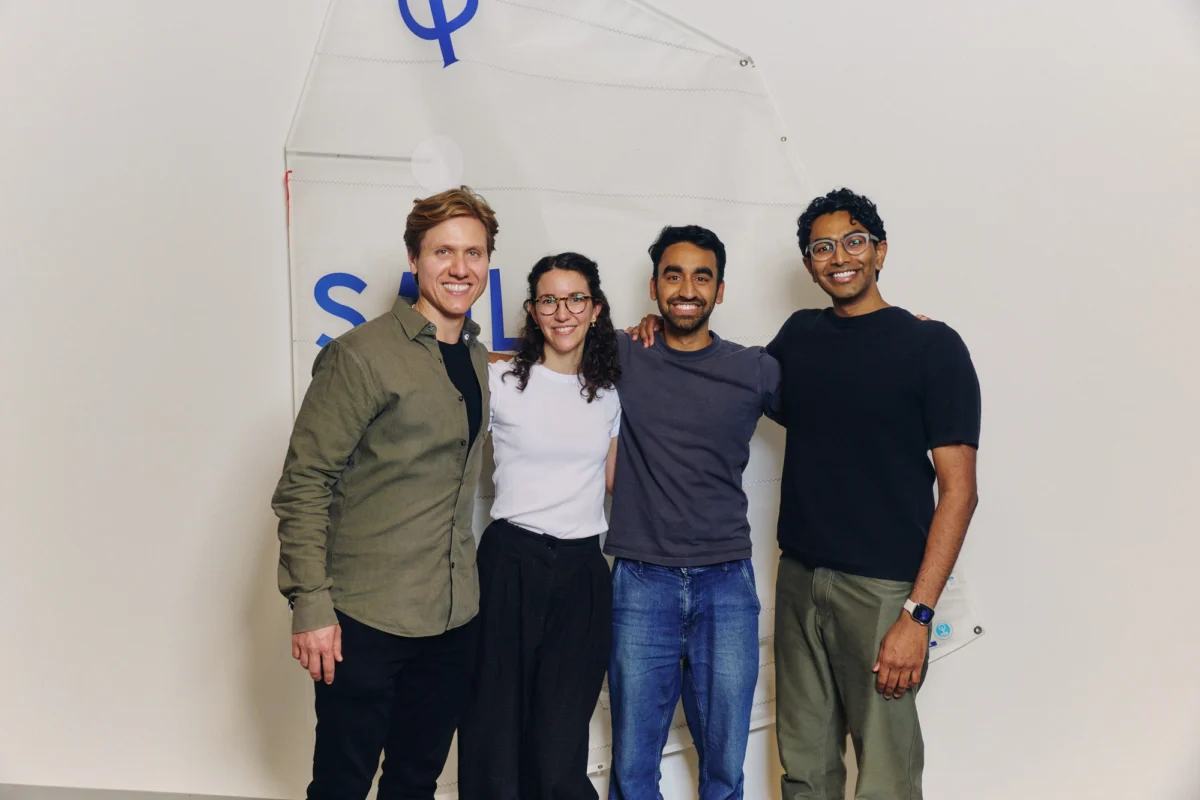
The capability to run continuous workloads requires a deep, foundational understanding of performance engineering at every level of the hardware and software stack. The leadership team at Sail brings decades of combined experience in high-performance computing and distributed systems to the table. Neil Movva began his career at NVIDIA pushing GPUs to their absolute limits, subsequently applied similar optimization techniques to new generations of AI accelerators at Apple, and ultimately returned to core GPU infrastructure at Together AI. Co-founder Samir Menon also joins from Apple, where he engineered highly reliable systems capable of scaling to support billions of users. Together, this founding duo possesses a deep technical background rooted in performance optimization and hardware engineering.
Beyond the intensive demands of building high-speed inference engines, the culture at Sail’s headquarters balances technical rigor with a collaborative, close-knit environment. The top position on the company’s internal chess leaderboard remains a fiercely contested title among new hires, reflecting a culture of intellectual curiosity and friendly competition.
Making Intelligence Abundant
Sail’s overarching mission is to make machine intelligence abundant and frictionless for developers and enterprises alike. Every operational and architectural decision made by the company—ranging from optimizations at the individual chip level to the design of its developer APIs—is intentionally aligned toward providing engineering teams with the tokens, computational scale, and extended runtimes required to build autonomous agents without artificial limitations.
Backed by investors and partners who have supported the vision from day zero, Sail is positioned at the forefront of the next infrastructural evolution in artificial intelligence. As enterprises transition from simple conversational models to fully autonomous agents capable of sustained, complex problem-solving, platforms like Sail aim to provide the essential engine for the road ahead.




Comments (0)