


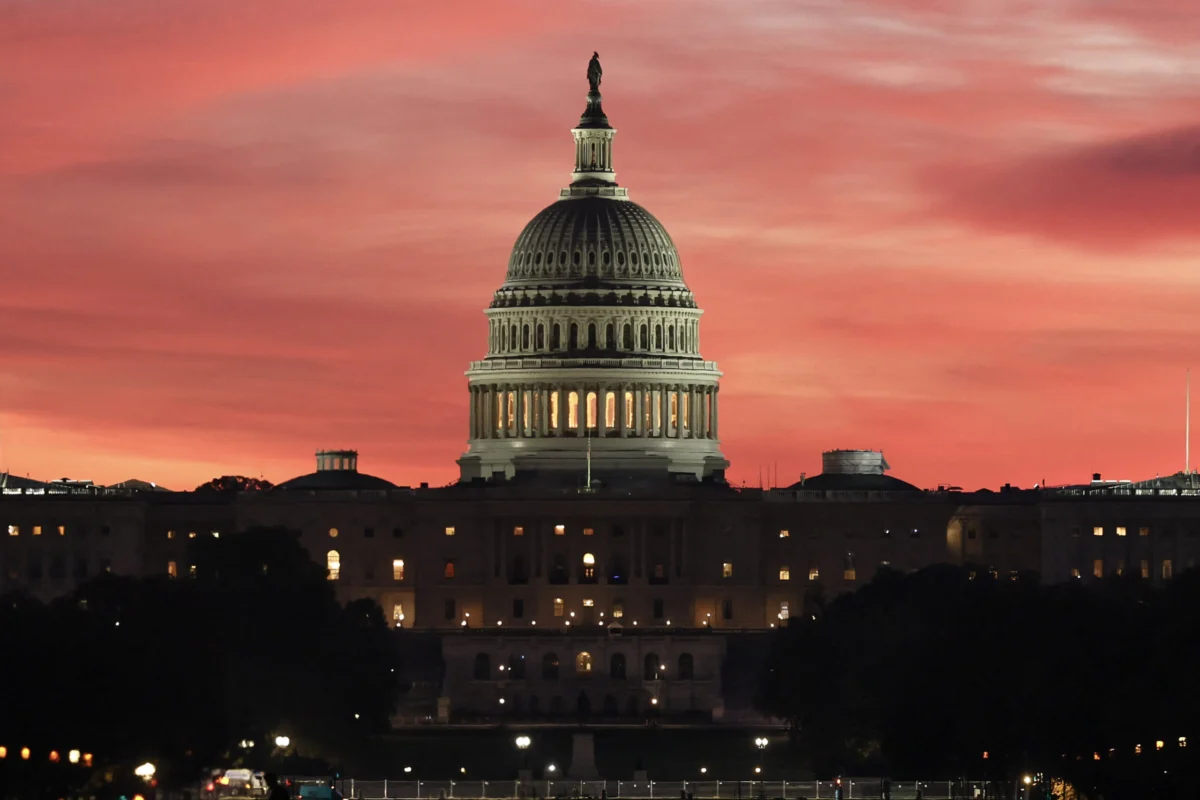
As investors across the globe nervously sweat out the final hours leading up to the midterm elections, financial markets are bracing for potential political shifts in Washington. Yet, despite the palpable anxiety that typically grips Wall Street ahead of major political showdowns, history offers a remarkably comforting message. Regardless of whether the political pendulum swings toward a red wave, a blue wave, a split decision, or simply maintains the status quo in the nation’s capital, midterm election cycles have historically served as a reliable precursor for strong performance across the broader stock market.
An in-depth historical analysis of S&P 500 returns following elections from 1980 through 2024 reveals a distinct pattern of resilience and eventual growth. Across both presidential and midterm election cycles, the benchmark index has risen by an average of 0.2% over the course of both the first day and the first week following the vote. This modest initial upward tick broadens significantly over a slightly longer horizon, with the index posting an average gain of 1.1% after one month.
However, the truly compelling narrative emerges when investors look out over a full twelve-month horizon. One year after midterm elections, the S&P 500 has historically gained an average of 13.7%, a figure that mirrors the 13.8% average return recorded following presidential elections. Even more striking is the consistency of these gains: equity returns were positive in a staggering 91% of all cases evaluated over that timeframe. Most notably, the S&P 500 recorded positive returns following all 11 midterm election cycles that took place from 1982 through 2022, demonstrating an uncanny ability to climb higher once the political uncertainty is finally cleared away.
In contrast, short-term market returns have proven to be considerably less reliable, particularly in the immediate aftermath of high-stakes presidential contests. Presidential elections have frequently produced slightly negative average returns over the initial one-day and one-week periods, underscoring the acute volatility that accompanies sweeping executive changes.
"There’s some anxiousness before these elections," explains Ryan Detrick, CNBC contributor and chief market strategist at Carson Group. "Once you are through it, it’s a big relief and markets tend to do pretty well." This psychological shift from paralyzing suspense to operational certainty appears to act as a powerful catalyst for investors, washing away months of speculative friction and allowing underlying economic fundamentals to reassert themselves.
Markets Prefer Gridlock
Even as the broader market historically recovers and thrives in the wake of midterm uncertainty, a closer examination of political configurations reveals that Wall Street harbors a distinct preference for a divided government. Specifically, the market tends to favor scenarios where one political party maintains control of the White House while the opposing party holds at least one chamber of Congress, effectively creating a system of legislative checks and balances.
Data spanning 10 midterm elections and five presidential contests that ultimately resulted in no single party holding total control of Washington tells a compelling story. In those instances of divided government, the S&P 500 climbed by an average of 15% over the ensuing one-year period. Furthermore, these one-year returns were positive in 14 out of 15 historical cases. By comparison, the index gained a more modest, though still respectable, average of 11.5% over the twelve months following elections that resulted in single-party control.
"If you have a huge red wave or a big blue wave, markets actually kind of don’t like that as much because you have too much spending one way and too much power," Detrick notes, highlighting the market’s innate aversion to unbridled legislative ambition and sweeping policy overhauls that could radically alter corporate tax structures or regulatory landscapes.
A similar dynamic has played out during periods of divided authority featuring a Democratic-controlled Congress operating alongside a Republican executive branch—a political split that could potentially emerge from Tuesday’s electoral outcomes. A CNBC analysis examining the three specific midterm elections (1986, 1990, and 2006) that resulted in Democrats controlling both legislative houses while a Republican occupied the presidency found that the S&P 500 experienced an average decline of 0.5% on the immediate reaction day. However, that initial hesitation quickly gave way to renewed buying, with the index advancing an average of 3.4% a month later and surging 10.9% by the end of the year.
Granted, financial analysts are quick to point out that elections can frequently act as mere coincident events running parallel to much larger economic forces that matter far more for overall market performance. The limits of political influence on equities are best illustrated by the stark extremes of post-election market history.

For instance, the S&P 500 plummeted a devastating 22.1% during the twelve months following the 2000 elections, weighed down heavily by the catastrophic bursting of the dot-com bubble rather than the shifting political winds in Washington. That marked the worst post-election performance recorded since 1980. Conversely, the single best post-election year in modern history occurred in the wake of the 2020 elections, when the S&P 500 roared back with a phenomenal 38.3% gain as financial markets mounted an aggressive, liquidity-fueled recovery from the unprecedented COVID-19-induced selloff.
Broader Economic Forces Take Precedence
Ultimately, astute investors must bear in mind that overarching Federal Reserve monetary policy and the health of the corporate earnings cycle matter far more for equity valuations than the outcome of any midterm ballot box, according to perspectives from Société Générale.
The primacy of monetary policy over politics was clearly demonstrated in the aftermath of the 2018 midterm elections, when Democrats successfully wrested control of the House of Representatives during the turbulent first term of President Donald Trump. While political analysts obsessively debated the legislative gridlock that would inevitably paralyze Washington, the Federal Reserve was actively tightening monetary policy in the background, executing four separate interest rate hikes throughout that year. As a result of the tightening financial conditions, the S&P 500 finished that year down 6.2%, though the broader market ultimately recovered to post an 11.7% gain exactly one year after the election as corporate resilience reasserted itself.
Today, the financial markets find themselves facing a completely different set of structural drivers. The primary swing factor governing the current market trajectory remains the explosive rise of artificial intelligence and the ongoing question of whether recent technology sector pullbacks will deepen or stabilize. As long as the broader AI wave maintains its structural momentum and the overall U.S. economy continues to demonstrate steady growth, "this bull market is probably still alive and well," according to Detrick.
However, a scenario involving a sweeping Democratic victory across both the House and the Senate would almost certainly introduce fresh regulatory pressures, potentially weighing on the massive artificial intelligence infrastructure buildout and triggering further corporate retrenchment in the tech sector.
Compounding these political considerations, the global bond market remains visibly skittish, characterized by rising bond yields across international economies and a localized mini debt crisis unfolding in France. At the same time, geopolitical anxieties persist, particularly surrounding the ongoing conflict with Iran. These tensions run the risk of escalating further in the post-election environment if President Trump follows through on explicit threats of additional military strikes or if Iranian leadership chooses a path of regional escalation.
"Seasonality isn’t destiny, and worries around Iran, AI and France won’t mysteriously vanish," cautioned Jim Reid, Deutsche Bank’s global head of macro and thematic research, in a recent note to clients.
If historical precedents hold true through the remainder of the calendar year, market participants could very well witness a traditional Santa Claus rally alongside continued S&P 500 gains in the weeks following the midterms. Even so, the current financial landscape remains an undeniably AI-driven market, with international geopolitics, central bank monetary policy, and the trajectory of the bond market ultimately holding the reins.
Additional reporting for this article was contributed by Chris Hayes of CNBC.





Comments (0)