


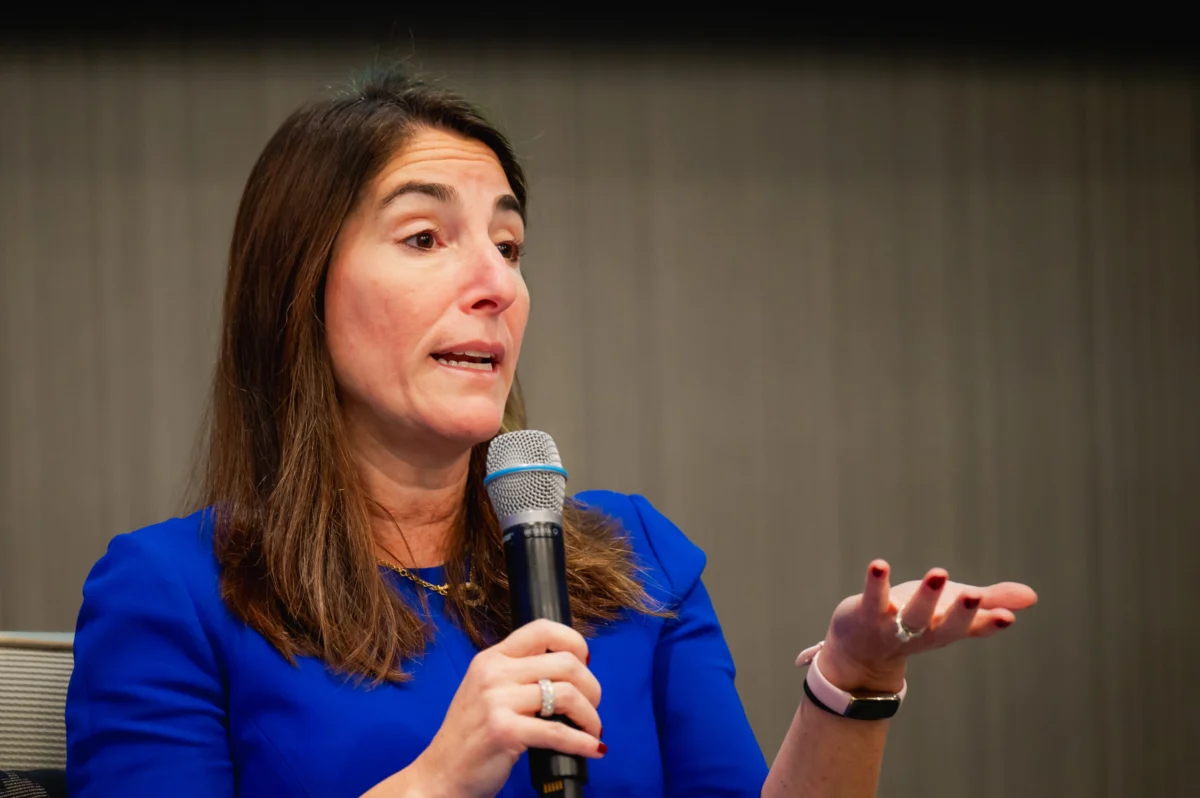
Speaking at the annual gathering of the National Association of Business Economics, Hammack emphasized the importance of proactive policymaking in an environment characterized by persistent price pressures. As a voting member of the Federal Open Market Committee (FOMC), the central bank’s principal policymaking body, her remarks carry significant weight regarding the future trajectory of U.S. interest rates.
"When feasible, I generally think it’s preferable to make smaller adjustments, and to do so relatively quickly, rather than to wait and risk needing a larger course correction," Hammack said in prepared remarks delivered during the conference.
The commentary from the Cleveland Fed chief implies that additional interest rate hikes could be on the horizon as the central bank grapples with inflation that continues to run above its targeted threshold. Federal Reserve officials previously signaled in the minutes from their September policy meeting that they could vote to raise interest rates again, though those documents did not provide a clear indication of a definitive timeline for such a decision.
The central bank’s recent shift in monetary policy followed a prolonged period of steady rates, highlighted last month when the Fed voted to increase interest rates for the first time in three years. That move marked a notable pivot in the central bank’s strategy as policymakers work to ensure that consumer price growth decelerates sustainably back toward the official 2% target.
Financial markets are closely monitoring these developments, continually recalibrating their expectations for upcoming FOMC gatherings. According to the FedWatch tool provided by CME Group, traders have priced in a more than 78% likelihood that the central bank will keep interest rates unchanged at its policy meeting later this month. However, market sentiment shifts significantly further down the calendar, with traders projecting a nearly 88% chance of a rate hike at the Fed’s final meeting of the year in December.
During her address, Hammack elaborated on the complex economic landscape, noting that sticky inflation poses ongoing challenges for everyday consumers, commercial enterprises, and monetary policymakers alike. The broad nature of current inflationary pressures means that bringing annual price growth back down to the central bank’s goal of 2% will require sustained effort and time, she explained.
Recent economic data underscores the persistence of these pressures. The personal consumption expenditures (PCE) price index, which is widely regarded as the Federal Reserve’s preferred gauge of inflation, came in at 3.4% year over year in August. Meanwhile, the core reading of the index—which strips out volatile food and energy costs to provide a clearer picture of underlying price trends—registered at 3% compared with the same period a year prior. Both figures illustrate that while inflation has retreated significantly from its pandemic-era peaks, it remains stubbornly above the central bank’s long-term objective.
Despite inflation remaining above target for an extended period, Hammack pointed to one encouraging metric: long-run inflation expectations have remained remarkably well anchored.
"Long-run inflation expectations have stayed remarkably well anchored despite actual inflation being above target for more than five years," Hammack said. "But I’m not taking that for granted."
Maintaining anchored expectations is critical for central bankers, as it prevents consumers and businesses from baking high inflation into wage negotiations and pricing strategies. However, Hammack cautioned that the margin for error narrows as time goes on, noting that with each passing month, persistently elevated inflation raises the risks of an inflationary mindset becoming entrenched in the broader economy.
Considering all the economic inputs that factor into her decision-making process, Hammack reiterated that maintaining a restrictive monetary policy stance remains entirely appropriate to ensure a timely return to 2% inflation. Her advocacy for prompt and measured adjustments reflects a broader debate within central banking circles regarding how best to navigate the final mile of the inflation fight without triggering unnecessary economic disruption.


Comments (0)