


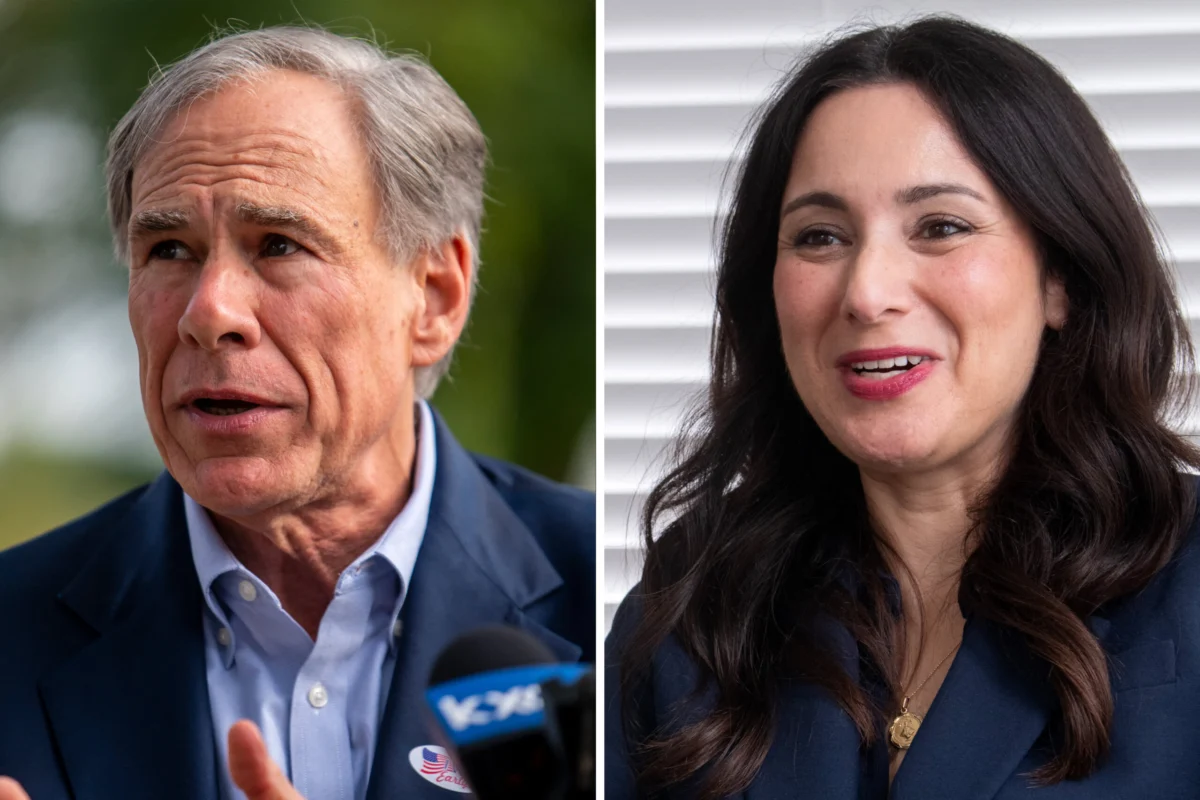
Political observers across the United States are closely watching the high-stakes Texas gubernatorial election for early signs of a broader political backlash against the artificial intelligence boom. As voters prepare to head to the polls for the 2026 U.S. midterm elections on Tuesday, prediction market traders see rapidly growing odds of a dramatic Democratic upset in a state that has long served as an unshakeable stronghold for the Republican Party.
Incumbent Republican Governor Greg Abbott, who is seeking a fourth term in office, still holds the statistical advantage on prediction platforms, but his once-commanding lead has eroded significantly in recent weeks. According to speculators on the prediction platform Kalshi, Abbott maintains roughly a 60% chance of defeating his Democratic challenger, state Representative Gina Hinojosa, in Tuesday’s general election. However, that number represents a substantial tightening of a race that was previously viewed as safe for the longtime incumbent.
Hinojosa’s odds of securing an upset victory have surged dramatically over the summer and autumn months. On Kalshi, her chances have jumped from a meager 8% in mid-July to 40% by Monday. A similar trend has played out on Polymarket, another prominent prediction market, where Hinojosa saw her odds climb from as low as 5% in late July to 39% on Monday. These shifting financial contracts, which are ultimately resolved using official data from the Texas Secretary of State’s office, mirror a series of recent public opinion polls showing the race narrowing into a dead heat.
Market analysts and political strategists frequently emphasize that odds on gambling and prediction platforms do not rely on the rigorous demographic methodologies utilized by traditional political polling, and therefore they cannot serve as a direct substitute for scientific polls. Nevertheless, the rapid movement in financial markets underscores a palpable shift in momentum as the campaign enters its final hours.
If Hinojosa manages to pull off the victory, she will achieve a historic milestone by becoming the first Democratic governor in Texas in more than thirty years. To close the gap against the entrenched incumbent, the Democratic state representative has strategically seized on a vulnerability that caught many political veterans by surprise: widespread voter anxiety surrounding the explosive growth of energy-intensive AI data centers and the mounting strain they place on the state’s infrastructure.

Hinojosa has successfully used Abbott’s previous, enthusiastic support for data center development in the Lone Star State as a primary line of attack against the governor. The political friction surrounding the technology represents a sharp pivot from just a year prior. In November 2025, Governor Abbott proudly touted a massive $40 billion investment by tech giant Google, a project that included bringing three new state-of-the-art data center campuses to Texas. At the time, Abbott celebrated the milestone by boldly proclaiming to the public that Texas was positioning itself to become the undisputed epicenter of artificial intelligence development in the United States.
However, Abbott has been forced to significantly alter his tone and policy approach as public opinion regarding data centers has soured rapidly over the past year. Texans across the political spectrum have expressed growing concerns over the immense electrical power and water resources required to sustain sprawling AI server farms, particularly in the wake of historical grid instability and rising utility costs. The backlash has resonated deeply with voters, turning a high-tech economic development win into a political liability for the administration.
Responding to the mounting pressure from constituents and local communities, Abbott took decisive executive action in August by ordering a comprehensive audit of all data centers seeking to connect to the state’s electrical grid. The directive was designed to evaluate the stress these massive facilities impose on the grid managed by the Electric Reliability Council of Texas. Following the audit order, Abbott took an even more aggressive step in September by temporarily halting the approval of all new data center-related permits until the state completes a thorough review of the existing waitlist and implements stricter oversight.
Despite the incumbent’s late attempts to address voter concerns, Hinojosa’s campaign has continued to press the issue by demanding systemic reforms. According to her official campaign platform, Hinojosa is running on a firm commitment to implement an immediate moratorium on new data center construction until the state legislature can establish strict guardrails, environmental protections, and regulatory oversight to safeguard Texas consumers and natural resources.
The intensifying political battle arrives at the tail end of a historic voting period. In-person early voting across Texas officially concluded on Friday, setting the stage for what is expected to be massive turnout on election day. State election officials report that more than 7.7 million Texans have already cast their ballots, reflecting an engaged electorate eager to have its voice heard in a cycle that could redefine the political landscape of the state and provide a nationwide bellwether for how communities grapple with the rapid, resource-heavy expansion of artificial intelligence infrastructure.




Comments (0)