


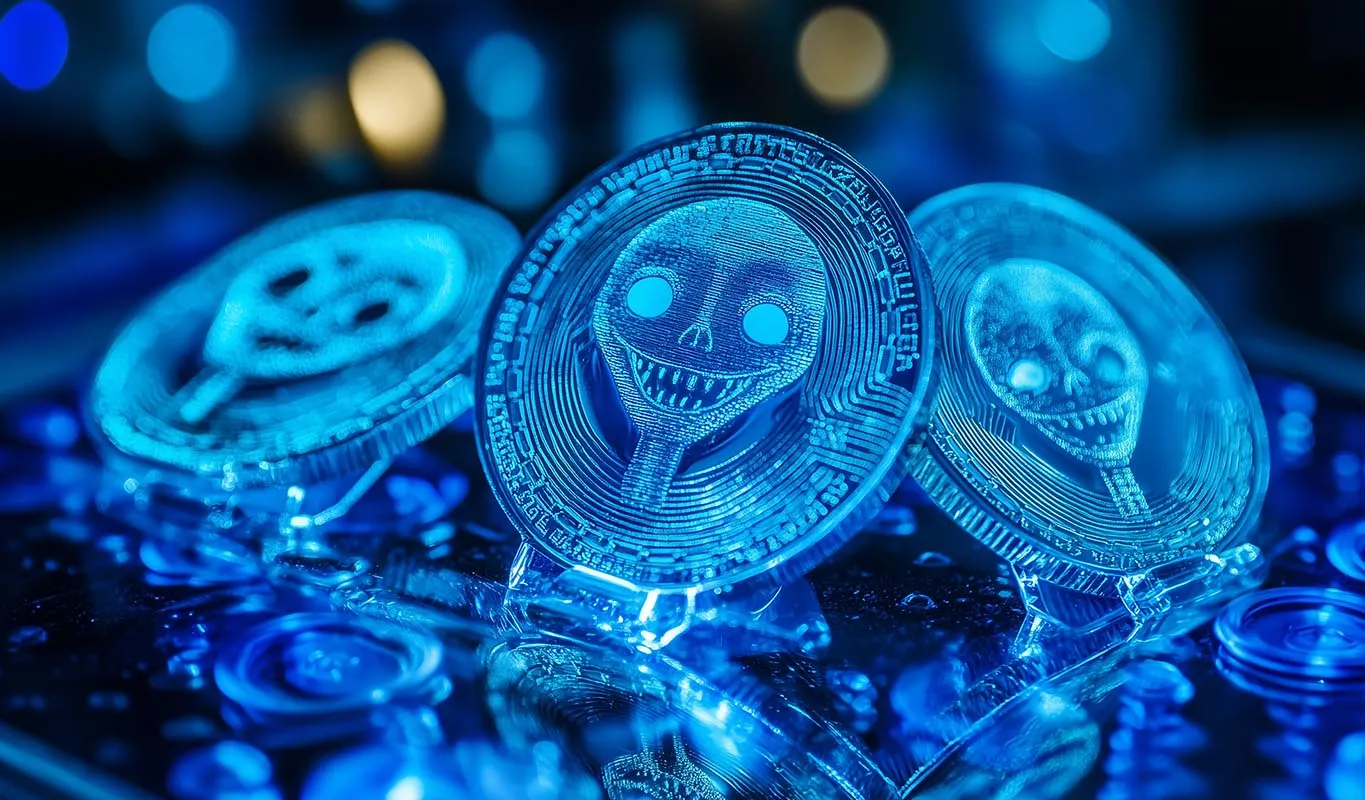
State-sponsored cybercriminals from North Korea, who are allegedly behind last month’s record-shattering $6.4 billion Binance heist, have adopted a novel and somewhat absurd tactic to launder their ill-gotten gains: they are funneling stolen crypto assets through a variety of newly minted, low-value memecoins.
According to a comprehensive new analysis published by prominent crypto analytics firm Elliptic, the hackers utilized the NEAR blockchain to mint at least six distinct memecoins. Each of these newly created tokens was subsequently paired with NEAR tokens inside individual, isolated liquidity pools designed to obscure the trail of the stolen funds.
The memecoins themselves bear whimsical, internet-culture-inspired names such as "FUK" and "SINU," and feature striking imagery and logos depicting chimpanzees, foxes, and even Elon Musk framed by an "Elon 2028 President" banner. Despite their playful and unserious branding, these digital assets are serving as technical instruments in a sophisticated international money laundering operation.
The operational mechanics of the scheme involve a multi-step layering process across decentralized finance infrastructure. Blockchain investigators discovered that the hackers systematically moved portions of the stolen NEAR holdings into a specific cluster of destination wallets. From there, those funds were injected directly into different liquidity pools in exchange for the newly minted memecoins.
Once the tokens were acquired, a completely separate set of controlled wallets stepped in to execute the reverse maneuver. These secondary wallets sold the memecoins back into the respective liquidity pools, effectively cashing them out and withdrawing legitimate, clean crypto assets on the other side of the transaction. By routing the capital through these internal decentralized exchanges, the perpetrators attempt to break the direct on-chain link between the original heist addresses and the final destination of the funds.
Despite the creative use of memecoins, blockchain forensics experts emphasize that the illicit activity remains entirely visible on public ledgers. Tom Robinson, the chief scientist and co-founder of Elliptic, explained that while the tactic introduces friction, it falls short of true anonymity.

"It does not hide the funds so much as slow down the people tracing them," Robinson noted in the analysis. "Each extra hop takes time to unpick, and laundering is a race to move funds before they are flagged. The tokens are also cheap, at about $90 each on NEAR, so the launderers can make many of them and discard each one after use."
Robinson further emphasized that state-backed operations originating from North Korea rarely rely on a single, isolated method to clean stolen capital. Instead, these cybercriminal syndicates prefer to layer multiple
inexpensive techniques concurrently, with each step designed to add incremental delays for investigators and compliance teams. In this context, home-made memecoins function merely as one additional layer in a complex, multi-tiered obfuscation strategy.
The scope of this laundering technique extends beyond a single network. Elliptic’s findings reveal that the hackers replicated identical laundering procedures on the Tron blockchain using native TRX assets. Furthermore, the cybercriminals deployed a closely related variant of the scheme on the Solana network, though with a slight twist: rather than minting entirely new tokens, they leveraged pre-existing digital assets that featured thin trading volumes and low liquidity, allowing them to manipulate the pools without attracting immediate widespread attention.
The massive scale of the underlying security breach has drawn scrutiny from multiple corners of the blockchain intelligence community. Leading analytics firm Chainalysis has formally attributed the record-setting exploit to TraderTraitor, a specialized North Korean cybercrime syndicate. According to intelligence assessments, TraderTraitor operates broadly under the organizational umbrella of the Lazarus Group, a notorious state-sponsored hacking outfit long implicated by international cybersecurity agencies in numerous high-profile cyberattacks against global financial institutions and cryptocurrency exchanges.
As investigations continue, compliance officers, exchanges, and blockchain intelligence firms are racing to update their monitoring parameters to detect and flag these unique liquidity pool interactions. While the adoption of memecoins highlights the evolving adaptability of state-sponsored threat actors in exploiting decentralized finance protocols, it also underscores the enduring transparency of public ledgers, where every transaction—no matter how whimsical its branding—leaves an indelible digital footprint.


Comments (0)