


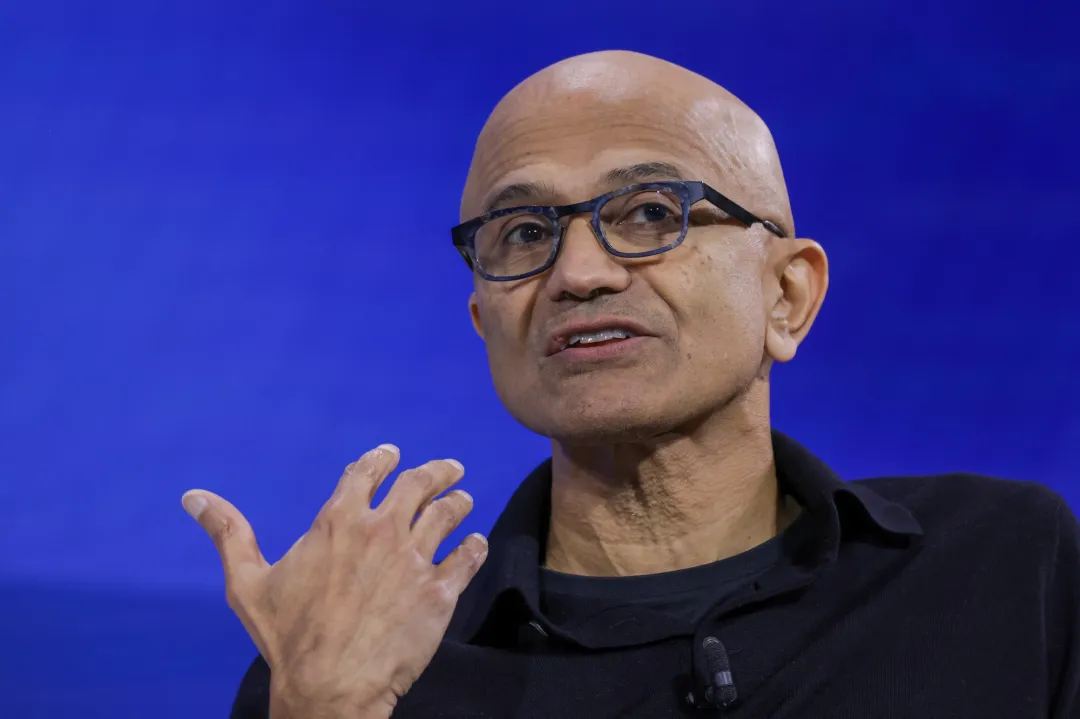
Speaking during appearances at the New York Times Dealbook Summit and on Gergely Orosz’s The Pragmatic Engineer podcast, Nadella explained that the move was deeply tied to the company’s aggressive pivot toward artificial intelligence. However, he was quick to clarify that the strategy is not about replacing human workers with algorithms. Rather, it represents a foundational reorganization of how Microsoft operates, transforming the company into an environment where every employee leverages AI to execute daily tasks, shifting their primary responsibilities toward managing and directing those intelligent systems.
The buyout initiative, Nadella told Andrew Ross Sorkin at the Dealbook Summit, was designed to ensure that workers felt a sense of agency when facing a profound workplace transition.
"Let’s take software engineering. We went from, ‘Well, we don’t buy that AI can ever do software.’ To suddenly, ‘Wow, it can do all software, and why do we need software engineers?’ To now rediscovering that software engineering is very much alive and, in fact, is going to thrive, except the way the team is organized and the work that a software engineer does has now got a new operating point," Nadella explained during the summit.
For many professionals, navigating this rapid evolution is a challenging prospect. Nadella acknowledged that the accompanying reorganization and shift in daily responsibilities can be difficult for staff, but maintained that the structural changes are ultimately necessary for the company’s long-term survival and relevance.
To illustrate this shift, Nadella pointed to the team responsible for building Cowork, the AI agent integrated into Microsoft 365 applications. According to the CEO, that entire product development team consists of just 11 developers who have successfully mastered the use of AI to perform their jobs. Instead of writing traditional code line by line, they have built what he described as a software factory that produces the final product.
This model, Nadella believes, offers a glimpse into the future of professional labor across the entire organization. In time, he predicts that every employee will function similarly as a manager of AI agents rather than an individual directly executing manual or routine tasks. That level of strategic direction and oversight, he noted, will eventually become the baseline for all modern jobs.
Yet managing this transition is uniquely complex for an enterprise of Microsoft’s scale and history. As a 51-year-old technology titan, the company did not originate as an AI-first organization. Transforming a legacy corporate structure presents deep logistical and cultural hurdles.
"So the question is, how quickly can an incumbent transform the work, the workflow, and the work artifact, and with all the wage support that goes with it?" Nadella remarked. He added that the institutional transformation will undoubtedly take more time than outside observers might expect, noting that some workers inevitably decide the shifting landscape requires them to pursue alternative paths for their careers.
This perspective was echoed during Nadella’s conversation with Gergely Orosz on The Pragmatic Engineer podcast, where the topic of the 60,000 voluntary buyouts was examined in greater depth. Nadella noted that the tech industry at large has inadvertently fostered a pervasive sense of anxiety among workers, many of whom feel they have lost control of their own professional destinies due to the hyperbolic narratives surrounding the AI revolution.
Discussions concerning the technological singularity—the hypothetical future milestone where artificial intelligence surpasses human intelligence—alongside frequent predictions that automation will completely eradicate the job market, have taken a psychological toll on the workforce. Nadella suggested that this widespread apprehension makes even routine professional changes feel daunting to employees. Consequently, leadership must do the difficult work of making structural adjustments, realigning teams, and providing genuine opportunities for those willing to adapt.
Ultimately, the massive buyout offer served as a clear signal to Microsoft’s global workforce. Employees were given a stark choice: embrace the new AI-first operational framework that fundamentally redefines daily responsibilities, or take the opportunity to transition away from the company and pursue new endeavors elsewhere.


Comments (0)