


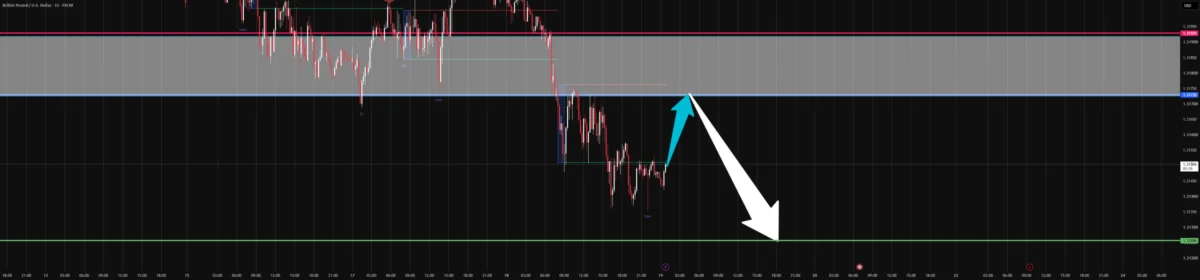
Foreign exchange market participants tracking the British Pound against the United States Dollar are closely monitoring a potential short-trading setup on the 15-minute timeframe. Following a decisive and sharp breakdown from a previously reliable price floor, market behavior suggests that the currency pair may soon offer a calculated bearish opportunity as it attempts a corrective recovery toward established overhead barriers.
The recent price action for the GBP/USD pair has highlighted heightened volatility and a shifting structural dynamic in the very short term. Earlier in the session, the 1.3173 to 1.3193 price zone functioned adequately as a dependable area of support, where buyers repeatedly stepped in to halt downward momentum and absorb selling pressure. However, that defensive barrier ultimately gave way under mounting selling pressure, leading to a swift and aggressive downward displacement that caught several intraday participants off guard.
Market analysts evaluating the post-breakdown dynamics note that the currency pair is currently experiencing a corrective bounce, gradually ascending back toward the region it recently abandoned. In standard technical analysis frameworks, areas that previously acted as support frequently transition into roles of overhead resistance during subsequent retests, provided the broader selling pressure remains intact. Consequently, market observers anticipate that the 1.3173 to 1.3193 band will now act as a significant ceiling, potentially repelling the ongoing recovery attempt and allowing bearish momentum to resume.
To capitalize on this technical shift, market participants are outlining a specific parameters-based strategy centered on confirmation rather than blind execution. The proposed entry strategy revolves around the approximate 1.31730 price level, but strictly contingent upon witnessing a clear bearish reaction once price re-enters the targeted zone. Rather than placing limit orders preemptively, traders are advised to wait for definitive candlestick evidence, such as a discernible rejection wick signaling fading buying interest, or a definitive 15-minute candlestick closing back below the threshold, which would reinforce the validity of the resistance level.
Risk management parameters accompanying this short scenario have also been carefully mapped out to protect capital against unexpected volatility spikes or false breakouts. The designated stop-loss order is positioned at approximately 1.31929, placed safely above the upper boundary of the resistance zone to account for normal market noise and minor price overshoots. This places the protective stop roughly 20 pips away from the anticipated entry area, ensuring that any invalidation of the bearish thesis is managed with a predetermined and controlled level of risk.
On the objective side of the equation, the targeted profit-taking level is set near 1.31256, representing a downward span of approximately 47 pips from the anticipated entry price. This configuration yields a favorable risk-to-reward ratio of approximately 1 to 2.4, aligning with standard risk management principles often utilized in intraday technical trading strategies.
As the currency pair continues its measured climb toward the inflection zone, market participants remain vigilant, awaiting concrete price action confirmation before committing capital to the short setup.
Disclaimer
The information and publications provided in this report are for informational purposes only and are not meant to be, and do not constitute, financial, investment, trading, or other types of advice or recommendations supplied or endorsed by TradingView or any affiliated entities. Market participants are encouraged to conduct their own comprehensive research and risk assessments before engaging in any financial transactions or trading activities.

Comments (0)