


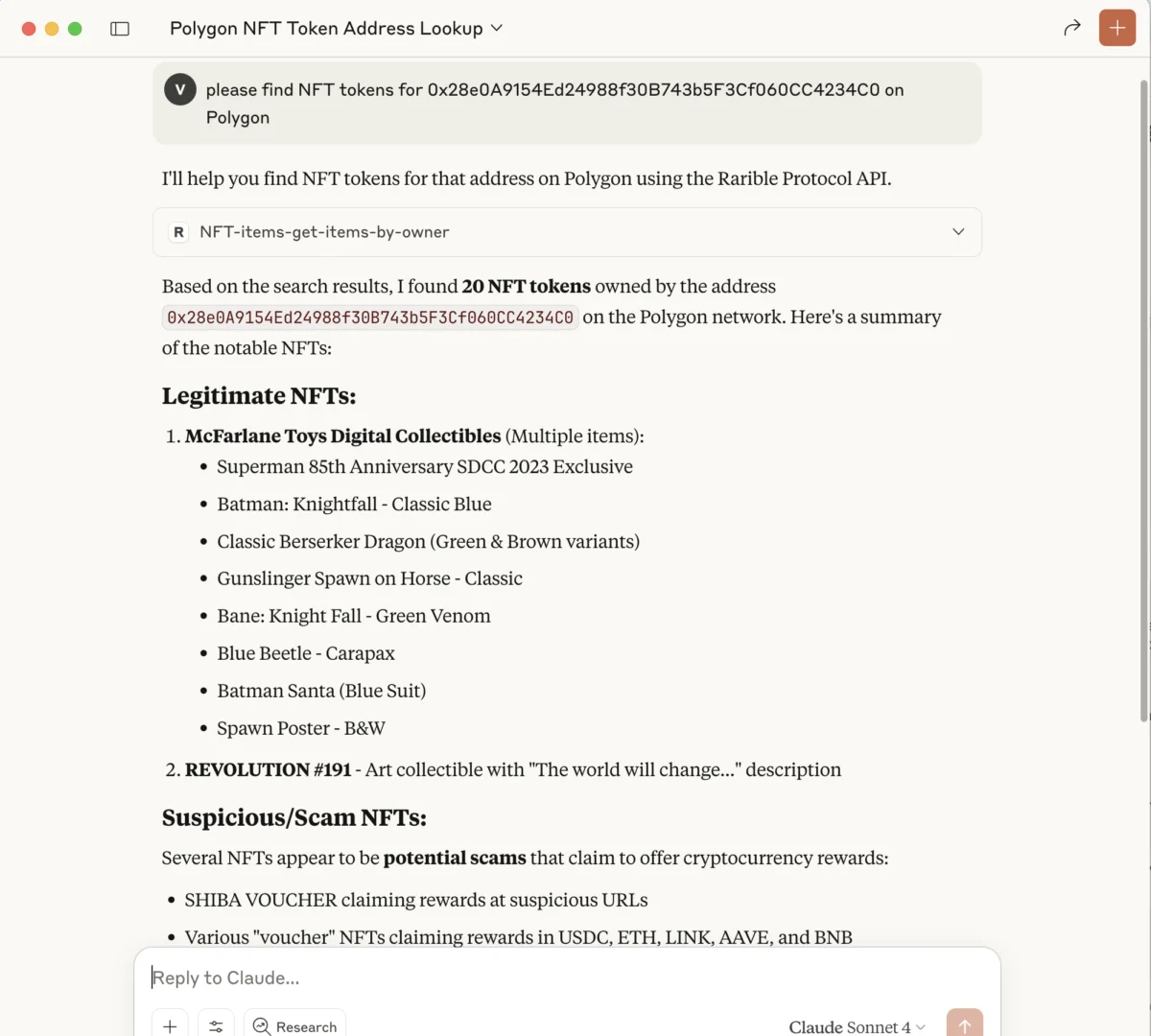
For years, developers working within the Web3 ecosystem have faced a persistent and frustrating bottleneck: retrieving comprehensive non-fungible token data remains remarkably complicated. Whether a builder wants to track floor prices, verify wallet ownership, or analyze trending digital assets, the process typically demands building an entire frontend interface or writing complex, time-consuming API queries. This friction has historically slowed down innovation, creating barriers for developers who need to access blockchain intelligence quickly and efficiently.
To address this industry-wide challenge, Rarible has introduced the Rarible Model Context Protocol (MCP) Server, a new developer tool designed to bridge the gap between artificial intelligence and blockchain infrastructure. Currently available in beta, the protocol allows developers and users to ask questions in plain, conversational language and automatically translates those inquiries into real, structured queries. By connecting large language models such as Anthropic’s Claude or Cursor directly to the Rarible Protocol, the system enables technical and non-technical builders alike to pull detailed NFT and marketplace data without needing to construct a custom backend or master an extensive API documentation library.
The release marks a significant step forward in making blockchain data more accessible through modern, AI-driven development workflows. While the MCP Server is still in its beta testing phase, it already offers robust support across all major EVM (Ethereum Virtual Machine) chains, as well as Eclipse and Flow networks. Rarible has encouraged developers to test the infrastructure and provide feedback through its official community channels on Discord and Telegram.
What Is MCP?
At its core, the Model Context Protocol Software Development Kit represents a modern paradigm in developer tooling. It functions by allowing applications to query the Rarible Protocol API using natural language through integration with advanced LLMs or custom AI agents. Developers can deploy the technology either as a standalone MCP server or embed it directly into existing software projects to introduce context-aware NFT data retrieval capabilities.

Engineered as a production-grade, type-safe TypeScript SDK, the protocol provides structured access to a wide array of blockchain assets, including individual NFT items, entire collections, ownership records, and marketplace transaction metrics. Designed for versatility, the SDK operates seamlessly in both browser and server-side environments, supports both CommonJS and ES Modules, and features a fully modular architecture. This flexibility is particularly valuable for developers working with tight bundle sizes or those who require customized hooks for specialized applications.
Who It’s For and Unlocking the Power of NFT Data
The introduction of the MCP Server is expected to save countless development hours for anyone building applications that interact with NFT data. This includes creators of specialized AI tools, digital marketplaces, analytics dashboards, and decentralized finance interfaces where rapid access to accurate market intelligence is paramount. Furthermore, the SDK serves as an ideal resource for development teams looking to prototype rapidly using artificial intelligence and blockchain data

streams without the overhead of scaffolding complex API layers from scratch.
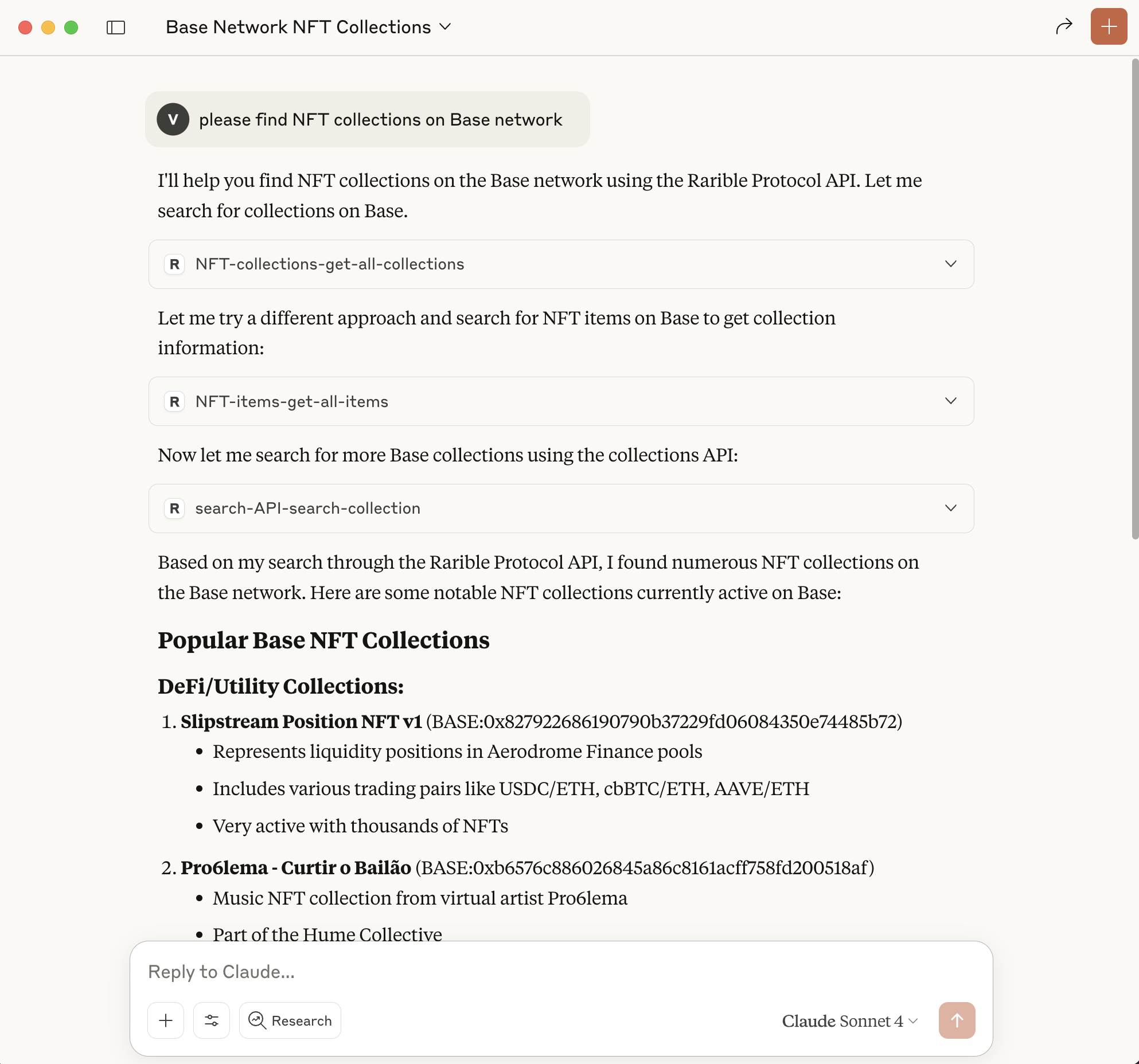
While large language models have grown increasingly sophisticated at interacting with programmatic interfaces, digital asset data has traditionally remained locked behind rigid endpoints. The MCP SDK effectively humanizes these endpoints, transforming abstract data structures into conversational interactions. Developers and users can now pose straightforward queries such as asking for the top collections on a specific network like Base Chain or requesting collection rankings organized by floor price on Ethereum.
The underlying SDK translates these natural language prompts into safe, structured API calls directed at the Rarible Protocol, subsequently returning real-time data in a format immediately usable by the host application or AI agent. This capability streamlines the creation of next-generation applications where enhanced visibility into digital asset markets provides a competitive edge.
Integrating with Modern Development Environments
The architecture of the MCP SDK is built to integrate smoothly into existing local development setups, such as running Claude locally through desktop tool integration. By configuring a local environment file with a Rarible API key—which can be requested directly through the platform’s pricing and developer portal—developers can establish a direct bridge between their local AI assistant and live protocol endpoints.
Once configured, launching the server exposes all supported SDK methods as native tools within the local environment. This enables the AI assistant to automatically convert conversational prompts into structured programmatic calls, query the MCP server, and return detailed analytical responses without requiring manual endpoint intervention. The system supports complex data retrieval operations, ranging from querying detailed marketplace metrics by specific item identifiers to examining comprehensive transaction histories, bids, traits, and sales activities.
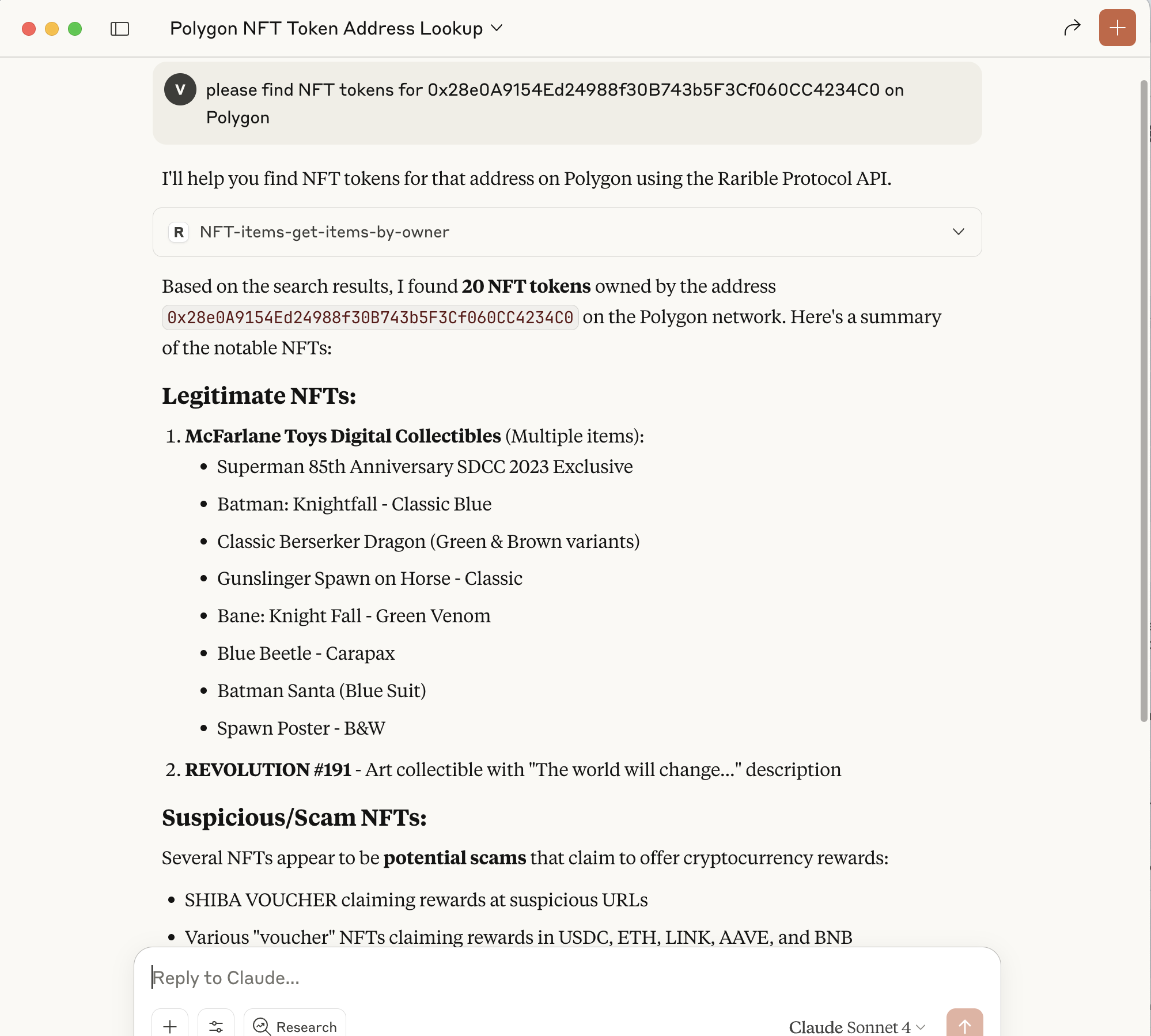
As the beta period progresses, Rarible plans to expand the scope of the MCP Server, bringing its natural language querying capabilities to additional blockchain ecosystems while continuing to refine its performance based on community engagement. Developers interested in exploring the SDK can access the package through standard node package registries and join the dedicated developer communities to collaborate on the future of AI-assisted Web3 development.



Comments (0)