


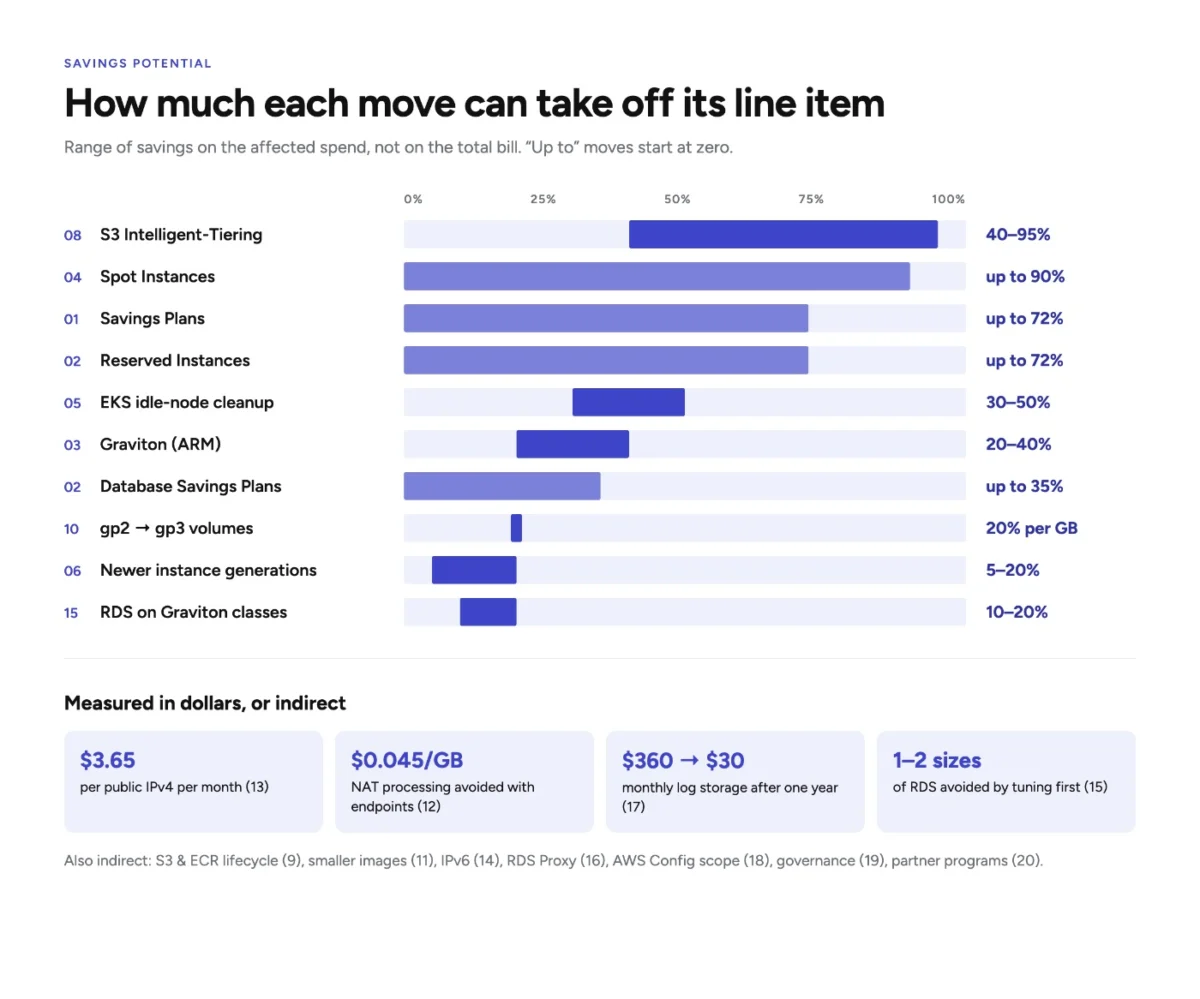
When cloud infrastructure experts examine bloated Amazon Web Services bills, they rarely discover exotic architecture mistakes. Instead, investigations frequently point to a dozen unexamined default configurations that teams have left running untouched for years. From steady workloads paying standard on-demand pricing to legacy storage volumes, unmonitored log groups, and underutilized network gateways, these ordinary defaults accumulate significant waste over time. While individual infrastructure adjustments can frequently slash specific line items by half or more, a comprehensive review of these overlooked settings commonly yields a substantial reduction in overall cloud expenditure during the first quarter.
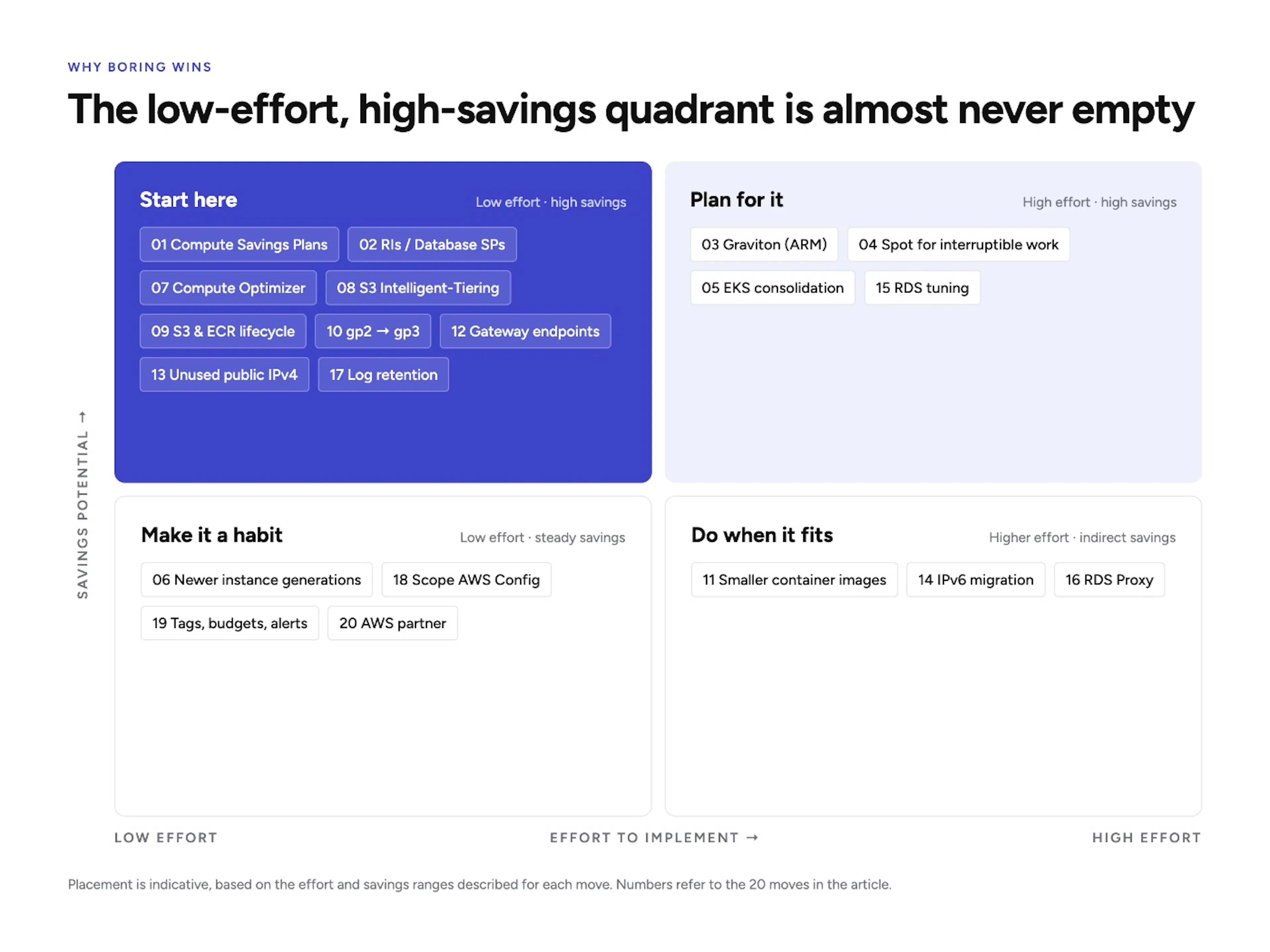
Cloud cost management specialists note that organizations consistently misallocate their optimization efforts by ignoring simple, high-impact fixes. When plotting potential infrastructure improvements on a matrix measuring implementation effort against savings potential, the quadrant representing low effort and high financial impact is rarely empty. Teams frequently overlook these opportunities because the fixes feel deceptively simple or because no single internal team explicitly owns the cloud bill as a product.
Recent updates to the broader cloud ecosystem—including public IPv4 address charges, new processor generations like Graviton5, database savings plans, and shifting reseller commitment models—have made routine configuration reviews more critical than ever. Before initiating any changes, cloud engineers emphasize the foundational rule of measuring first. Activating cost allocation tags, enabling cost-explorer features with resource-level granularity, and reviewing the centralized optimization hub provide the necessary baseline to track financial improvements as adjustments take effect.
Shifting Compute and Database Workloads Away From List Price
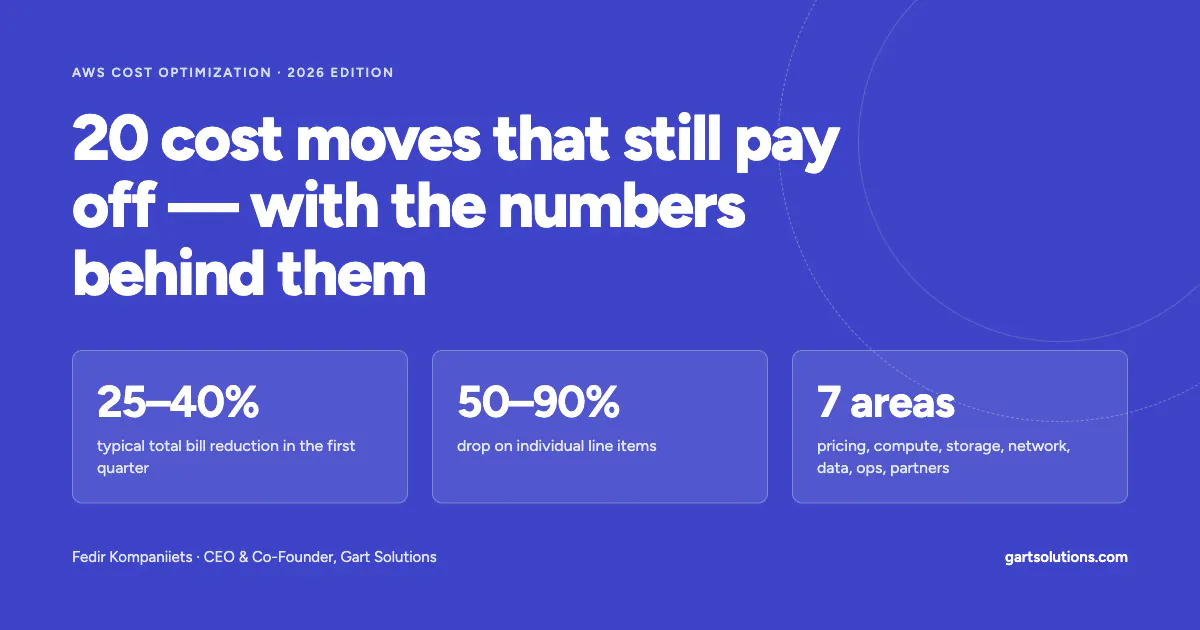
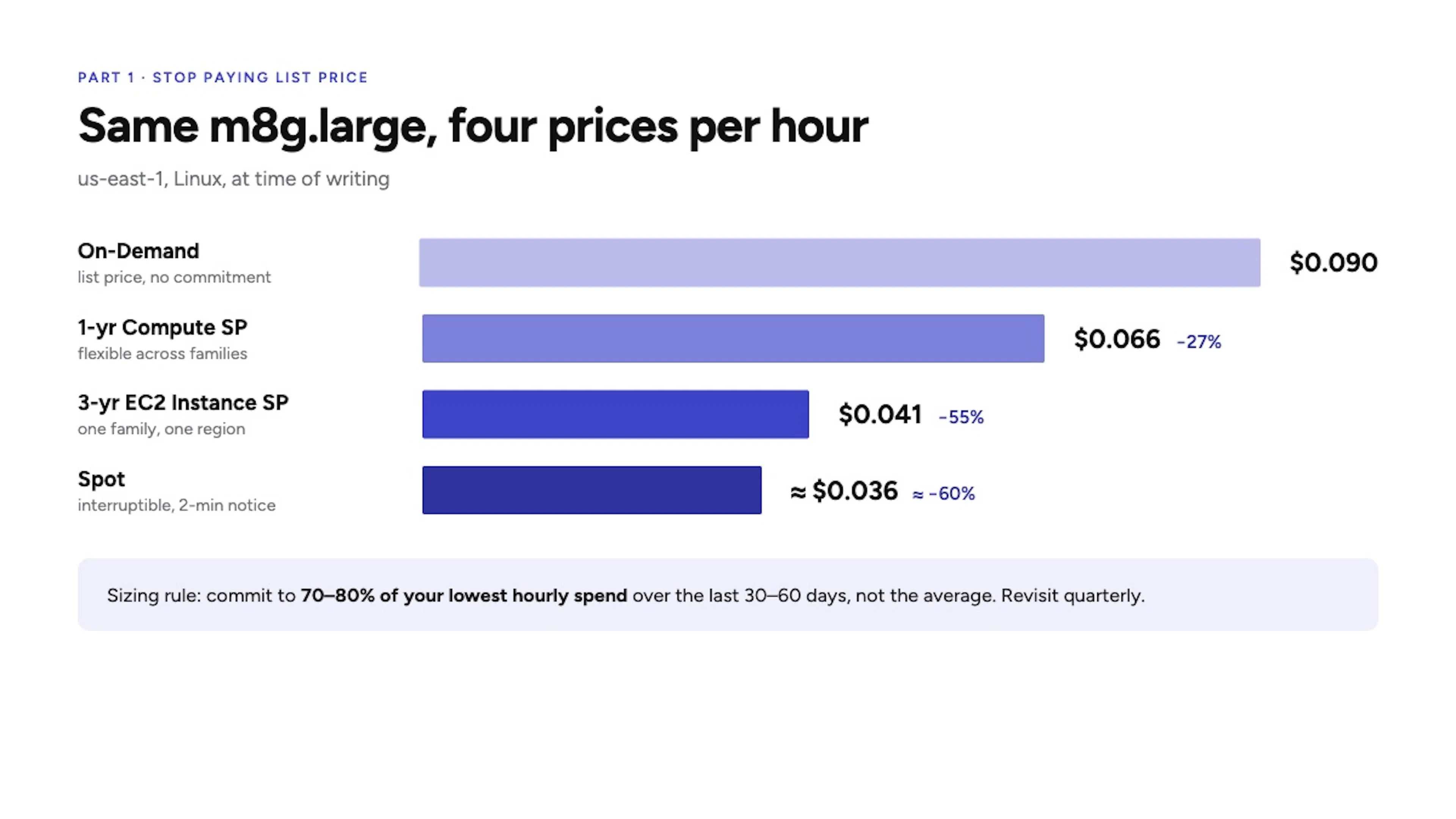
One of the most reliable methods for curbing cloud expenditure involves securing predictable workloads under long-term pricing models. Organizations running steady database, container, or virtual machine baselines at continuous floors often leave substantial savings on the table by relying entirely on on-demand rates. By committing to a predictable dollar-per-hour spend over a one-year or three-year term, companies can secure dramatic discounts compared to standard pay-as-you-go pricing.
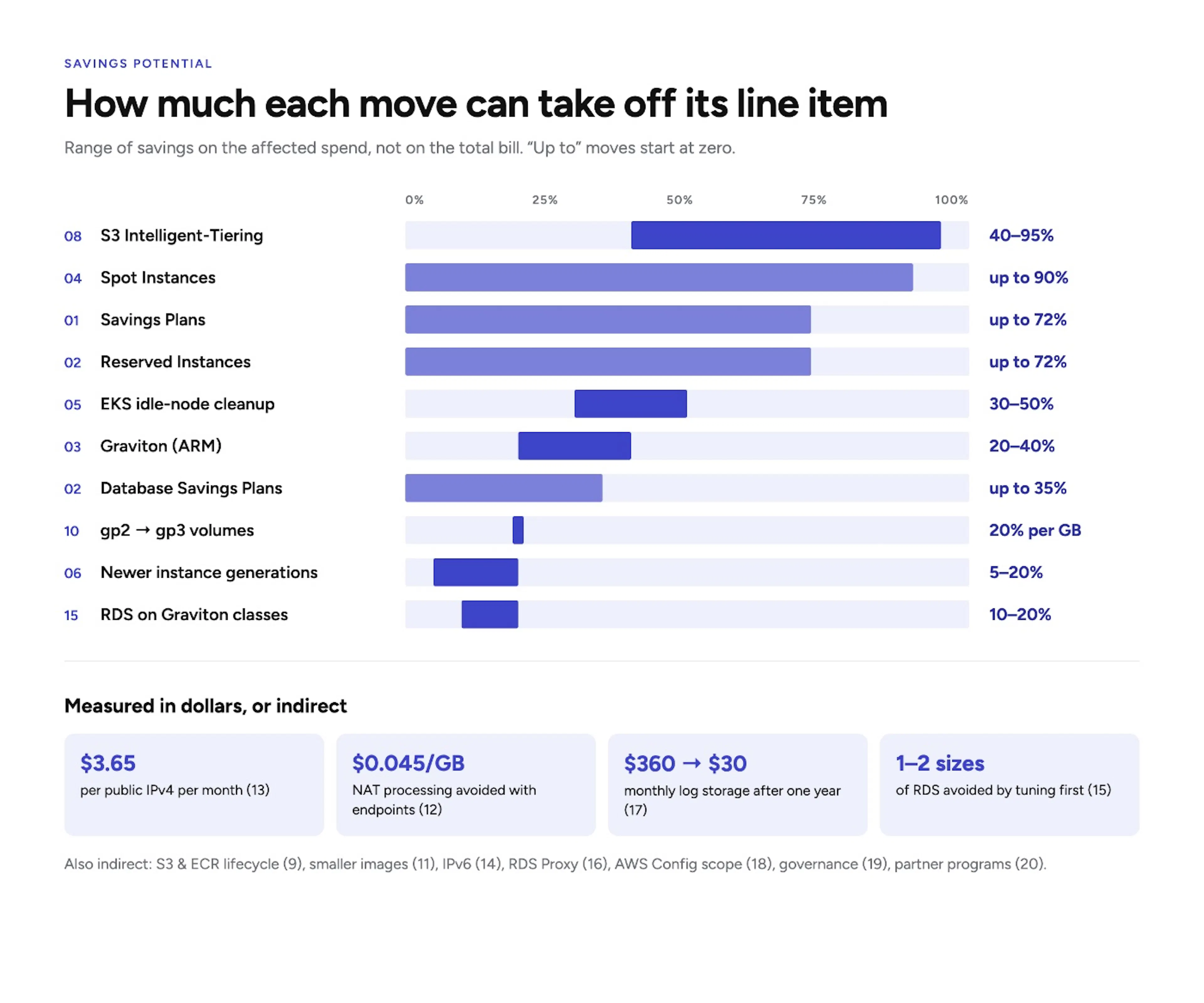
Similar financial optimization principles apply to managed database environments, caches, and search clusters where traditional compute commitments do not reach. While classic reserved instances have long provided deep discounts for specific database engines, newer database savings plans offer broader flexibility across multiple relational and non-relational database services. These flexible commitments allow engineering teams to shift their data tier usage across different engines and serverless configurations throughout the year without losing financial coverage.
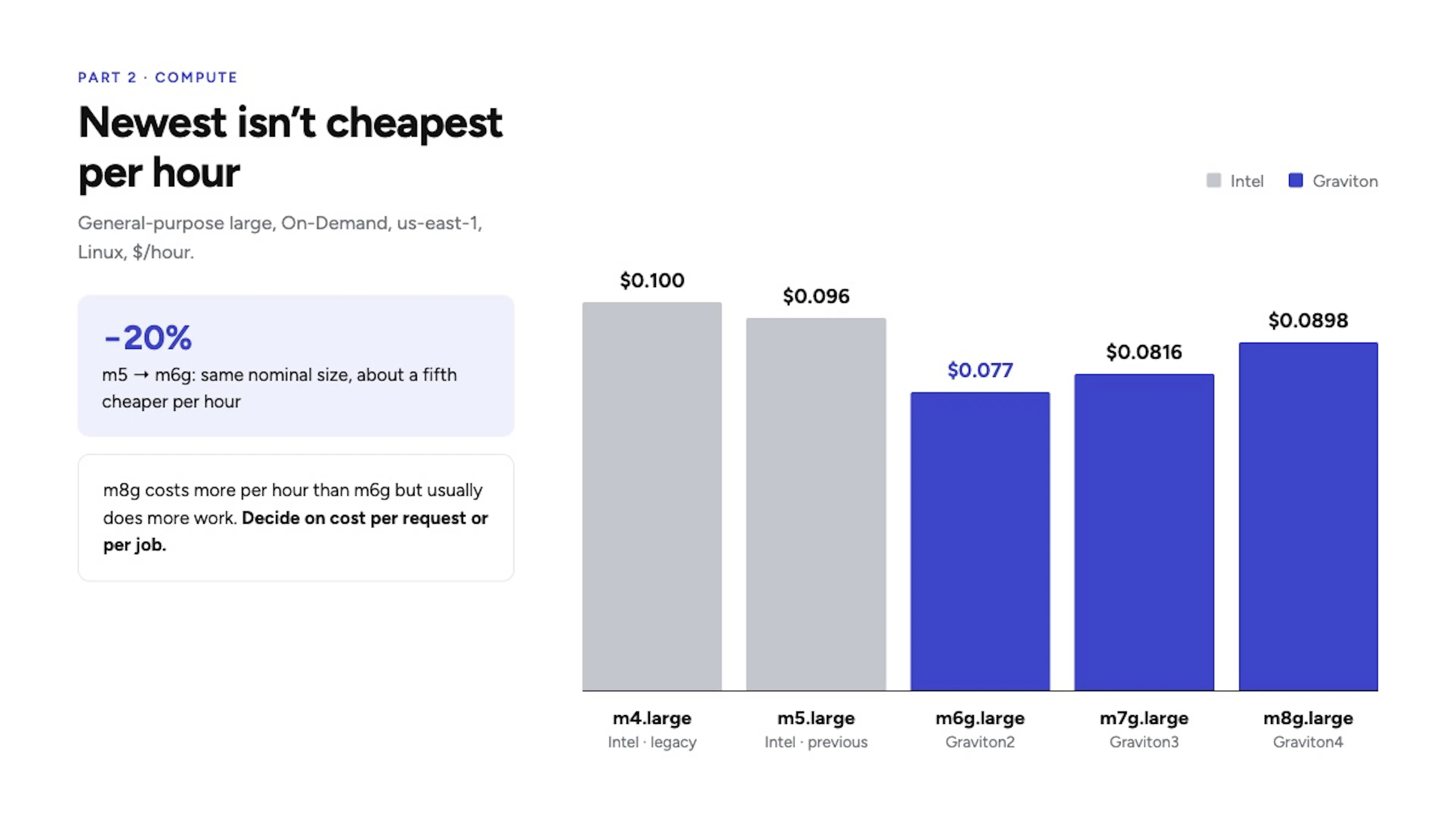
Simultaneously, the industry push toward energy-efficient ARM-based processors continues to yield substantial price-performance gains. Migrating compatible workloads to AWS Graviton processors typically reduces hourly compute costs significantly while delivering superior performance per core compared to traditional x86 architecture. Although workloads relying on specialized native dependencies or legacy software require careful auditing before migration, containerized applications can often utilize multi-architecture builds to transition smoothly.
For interruptible tasks such as continuous integration runners, batch processing, and stateless web tiers, leveraging spare capacity through spot instances offers massive discounts compared to standard pricing. Modern spot infrastructure operates on gradual, supply-driven pricing rather than traditional auctions, making it a reliable option for fault-tolerant architectures when combined with diversified instance pools and automated recovery mechanisms.
Modernizing Container Infrastructure and Storage Management
Kubernetes clusters frequently suffer from idle node spend when traffic ebbs and node autoscalers fail to consolidate workloads efficiently. Modern node provisioning tools address this by constantly monitoring cluster utilization and actively shifting pods to fewer nodes, allowing infrastructure to scale down aggressively during quiet periods. Setting realistic resource requests for containerized applications remains vital, as inflated configurations routinely undermine automated scaling mechanisms.
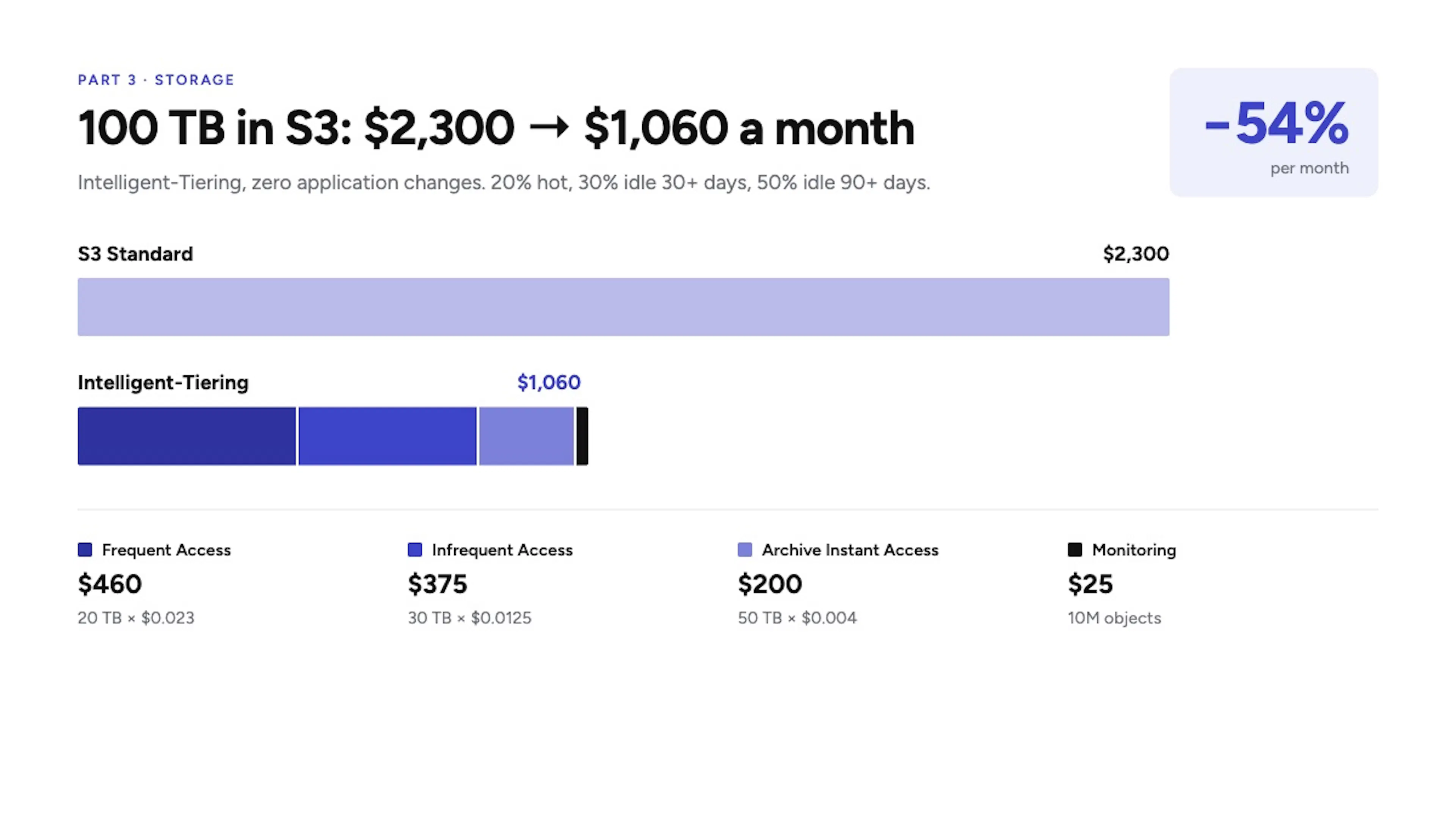
Storage systems represent another quiet source of continuous financial growth. Organizations frequently leave backup files, data lake partitions, and historical logs in standard hot-storage tiers indefinitely. Implementing automated intelligent tiering allows cloud environments to shift infrequently accessed objects into cooler storage tiers automatically, substantially reducing storage expenditure without introducing retrieval fees or requiring application modifications. For data with predictable lifecycles, automated lifecycle policies ensure that temporary artifacts and outdated container images are systematically expired rather than accumulating storage charges indefinitely.
Legacy general-purpose storage volumes attached to virtual machines also present immediate optimization opportunities. Migrating older solid-state drives to current-generation storage volumes reduces baseline costs per gigabyte while uncoupling input-output performance from total storage capacity. This separation allows engineering teams to provision accurate storage volumes without over-purchasing capacity merely to achieve required performance thresholds.
Navigating Network Surprises and Observability Costs
Network architecture frequently harbors unexpected expenses that catch engineering teams off guard. Private subnets communicating with managed storage or container registries often route traffic through network address translation gateways by default, generating substantial processing fees for internal data transfers that never leave the cloud provider’s network. Deploying dedicated gateway and interface endpoints keeps internal traffic off the public gateway infrastructure, neutralizing these hidden processing costs.
The introduction of hourly fees for public IPv4 addresses has further amplified the financial impact of forgotten network assets. Organizations with organic historical footprints frequently maintain numerous unattached elastic IP addresses, public database instances, and legacy virtual machine mappings that continuously accrue charges. Consolidating public endpoints behind modern load balancing services and planning gradual dual-stack migrations toward IPv6 helps organizations curb the steady expansion of public address expenditures.
Observability platforms and logging services also demand rigorous governance. Cloud monitoring tools frequently default to permanent log retention policies, causing storage volumes to compound endlessly month after month. Establishing strict retention schedules aligned with actual compliance requirements prevents historical log storage from turning into an invisible financial drain. Similarly, scoping automated configuration recording tools to exclude high-churn resources prevents routine operational changes from generating excessive configuration items and inflating operational tooling bills.
Ultimately, maintaining an optimized cloud environment requires continuous operational habits rather than isolated administrative exercises. Because every configuration adjustment involves trade-offs regarding engineering time, architectural flexibility, or operational complexity, technology leaders must evaluate financial changes against broader business impacts. By systematically addressing foundational default settings, organizations can successfully align their cloud infrastructure expenditures with actual operational demands.




Comments (0)