


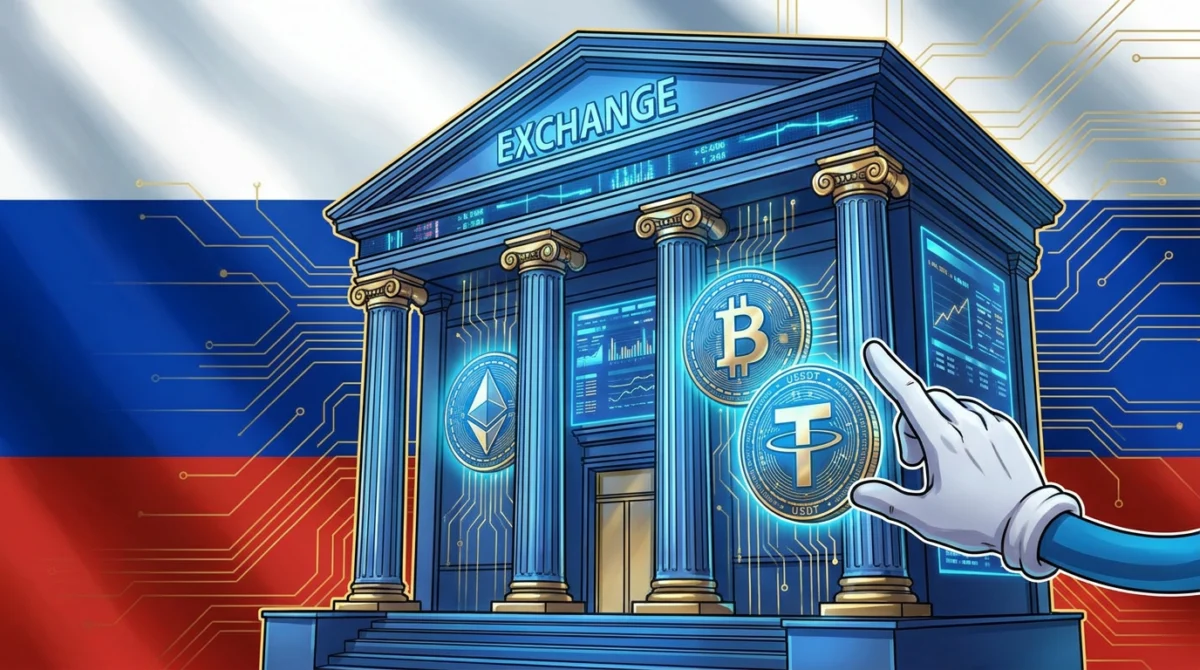
Russia’s central bank has finalized a comprehensive set of rules allowing authorized exchanges to offer Bitcoin, Ether, and Tether USDt to retail investors, with the framework officially taking effect on November 17. The landmark regulatory shift marks a major turning point for the country’s financial ecosystem, bringing digital assets firmly under the supervision of institutional banking authorities while simultaneously restructuring how citizens buy, hold, and trade cryptocurrencies.
Under the newly finalized directive, non-qualified retail investors will be permitted to purchase up to 300,000 rubles—equivalent to approximately $3,700—in cryptocurrency annually. This limit applies to each intermediary through which they conduct transactions, including registered brokers, asset managers, and specialized crypto exchange providers. Qualified investors, conversely, will face no purchase limits on their trading activities. However, a crucial safeguard applies across the board: all retail investors, regardless of their financial classification, must successfully pass a mandatory test demonstrating their understanding of digital asset risks before they are permitted to execute trades.
The new regulatory framework builds directly upon comprehensive legislation signed by Russian President Vladimir Putin on August 4. That foundational law established a fully regulated cryptocurrency market in the country, placing the entire sector under the direct oversight of the central bank. The legislative push represents a concerted effort by Moscow to harness the economic potential of blockchain technology and digital currencies while establishing strict compliance, anti-money laundering, and consumer protection protocols.
Just one week after the presidential signing, on August 11, the Bank of Russia published its draft regulations. These guidelines specifically identified Bitcoin, Ether, and Tether USDt as the only digital assets eligible for public trading on domestic platforms. This selection was determined based on rigorous criteria, including robust market capitalization, high average daily trading volume, and a minimum of five years of verifiable price history established on foreign exchanges. Limiting the initial rollout to the most liquid and established tokens reflects a cautious, risk-managed approach by regulators aiming to shield everyday consumers from highly volatile altcoins.
The legislative process moved swiftly following the summer announcements. The core cryptocurrency law officially took effect on September 1. Shortly thereafter, the Bank of Russia authorized Sberbank, the country’s largest financial institution, to begin offering crypto exchange services in October, signaling that traditional banking giants would play a central role in the emerging digital asset marketplace.
These domestic developments are occurring alongside major infrastructure preparations by the nation’s premier financial institutions. The Moscow Exchange, Russia’s largest securities exchange and a major publicly traded company, is actively preparing to launch its own cryptocurrency trading operations on December 1. Initially, the exchange plans to offer the three approved cryptocurrencies through a series of pilot transactions, providing a controlled environment to test liquidity, execution speeds, and institutional participation before scaling up the service.
Russia to restrict peer-to-peer crypto trading
Even as Russia expands legal access to digital currencies through centralized, highly regulated financial platforms, the government is simultaneously tightening restrictions on transactions that occur outside of those official channels. This dual-track strategy aims to channel all domestic cryptocurrency activity through supervised institutions where transactions can be monitored and taxed.
Direct peer-to-peer cryptocurrency trading will be entirely prohibited starting July 1, 2027. Furthermore, regulatory measures already implemented by the Bank of Russia have banned the transfer of digital assets from regulated domestic accounts to self-custody wallets, effectively cutting off the ability of citizens to hold their purchases independently outside of approved financial intermediaries. Alongside these structural controls, Russia maintains its long-standing prohibition on using cryptocurrency as a legal medium of exchange to pay for goods and services within the country, ensuring that the ruble remains the sole domestic currency for commerce.




Comments (0)