


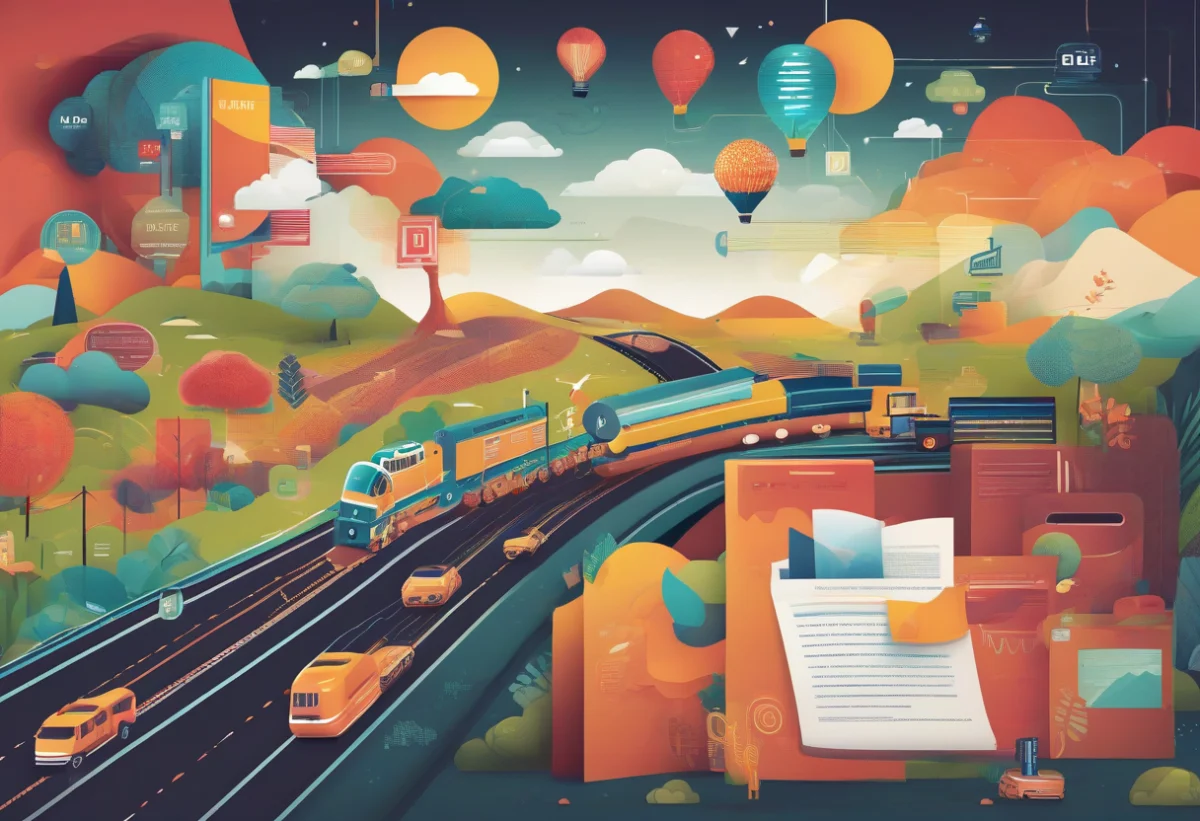
The power of content is immense and unparalleled, for it moves people on a primaeval level. But for that to happen, they have to be able to perceive it and appreciate it with their senses. Life on Earth likely began at a microscopic level, with invisible microbes that lived but perceived nothing. It was only when higher forms of life arrived and evolved into the highly evolved human species that could see, hear, and speak and fully perceive the wondrous universe they lived in, that literature, arts, science, and mathematics flourished, allowing humanity to live a life that would have been the envy of the gods of the old legends.
Throughout history, the capacity to record and share human thought has defined eras. The invention of the printing press was a seminal event in human history, allowing for the dissemination of the printed word and knowledge to millions of hitherto ignorant and illiterate masses. This revolutionary leap led to incremental advancements in science and technology, ultimately enabling human beings to literally master the land, seas, skies, and space above, ushering in an unprecedented era of growth, progress, health, wealth, and above all, enlightenment.
As societies advanced, the technological apparatus supporting this dissemination expanded exponentially. The advent of newspapers, magazines, the telephone, the telegraph, television, faxes, and ultimately the internet and smartphones allowed for content to be pushed forward like nothing before it. In the modern era, the arrival of artificial intelligence on the scene has taken this continuous evolution to another level, reshaping how information is generated, targeted, and consumed on a global scale.
Much of this momentum belongs to the collective efforts of content creators. It is to the credit of writers, academicians, journalists, artists, filmmakers, playwrights, domain experts, consultants, and anybody who steps forward to shine a path for others about something that makes a difference to their lives that the world has reached the level of progress and achievement that it currently enjoys. Looking at the broader sweep of history, it would not be an exaggeration to deduce that the two foundational pillars of human progress that have ensured humankind’s dominance of planet Earth are content creation and content distribution. Without the dual engines of generating meaningful ideas and successfully transmitting them across populations, human civilization would stall.
Content is all about distribution
Despite the profound value inherent in well-crafted material, the reality of the modern media landscape presents a formidable operational challenge. The most evocative of content will sit idly and do nothing for a brand if it is not effectively distributed. But distributing content in today’s age of digital clutter is far from easy. Content creators and brands must contend with a staggering volume of competing signals. Consider the modern reality that publishers and enterprises face a digital ecosystem where approximately six new websites, 116 blog posts, and 500 minutes of YouTube video content are uploaded to the internet every single second.
Given this overwhelming saturation, organizations and communicators must seriously evaluate their content distribution options to ensure that they use them optimally. Navigating this environment requires a strategic mix of different media categories, starting with owned media options. These are the channels over which an organization maintains direct control, such as a brand’s official website or a proprietary newsletter, alongside direct communication mechanisms like email campaigns that reach audiences without algorithmic interference.
Alternatively, communicators can look at shared media options, which encompass all social media channels. This avenue has become the defining flavour of the times, serving as a dynamic and vital tool for initiating and maintaining a two-way, real-time communication process with prospective clients and loyal customers alike. Beyond owned and shared platforms, there remains the paid media option, where organizations can promote their brand, products, and ideas with the help of advertisements and paid media placements designed to capture immediate attention in crowded spaces.
We live in an era where paid advertisements show up in our digital feeds constantly, frequently appearing at inopportune times or causing user fatigue. To counter this commercial intrusiveness, public relations professionals and media strategists developed the concept of native ads and advertorials. These are promotional pieces crafted to read like regular news coverage, blending seamlessly into the editorial environment of a publication. Of course, deploying these strategies requires that great care be taken not to claim or imply that the material is anything other than paid promotional content, thereby maintaining ethical transparency with the public.
The overall effectiveness of any distribution campaign can be significantly optimised by fashioning content in a manner that perfectly suits the specific channel chosen for it. For instance, material pertaining to the launch of a new electric two-wheeler could be repurposed in several distinct ways to serve as appropriate copy for a corporate website, a professional LinkedIn post, an informative email newsletter, or a targeted paid advertisement.
Optimizing a content strategy is, to a great extent, an exercise in matching material with its optimal distribution channel. Content creators can determine the best fit through various analytical methods. This can be accomplished by closely monitoring website traffic patterns, keeping a watchful eye on social media engagement rates, and maintaining a clear understanding of conversion metrics, whether measured in terms of digital downloads, newsletter sign-ups, or direct purchases. Furthermore, organizations must track the precise financial cost associated with every conversion made as a direct result of a media campaign to ensure long-term sustainability.
Achieving this level of precision often begins with robust marketing segmentation, ensuring that the right message reaches the correct demographic segment. The timing of content distribution plays an equally critical role in determining whether a campaign succeeds or fades into obscurity. Once these foundational elements are properly aligned, organizations can leverage modern automation tools to efficiently distribute their content to the designated channels in a seamlessly efficient manner, reducing manual friction and maximizing audience reach.
Ultimately, understanding the mechanics of distribution lies at the core of making brilliant content perform brilliantly in the real world. The evolution of digital distribution began with static websites, progressed through search engine optimization, and eventually landed firmly on social media outreach. To this established framework, modern brands must also add influencer outreach, which helps a company gain direct access to a loyal, highly engaged audience that is already heavily invested in what the specific influencer endorses. Getting content to resonate and engage actively within these specialized networks is what ultimately secures the traction a brand deserves. To sustain this momentum, it is essential to continuously track and analyze content performance across different channels, allowing communications teams to make necessary adjustments and corrections to their distribution patterns in real time.
When viewed through the lens of history and modern media alike, high-quality content can be likened to a raw, uncut diamond lodged deep in the bowels of the earth. In this metaphor, effective distribution involves mining for that diamond, meticulously polishing and cutting it, and finally presenting it to the world in all its dazzling brilliance.


Comments (0)