


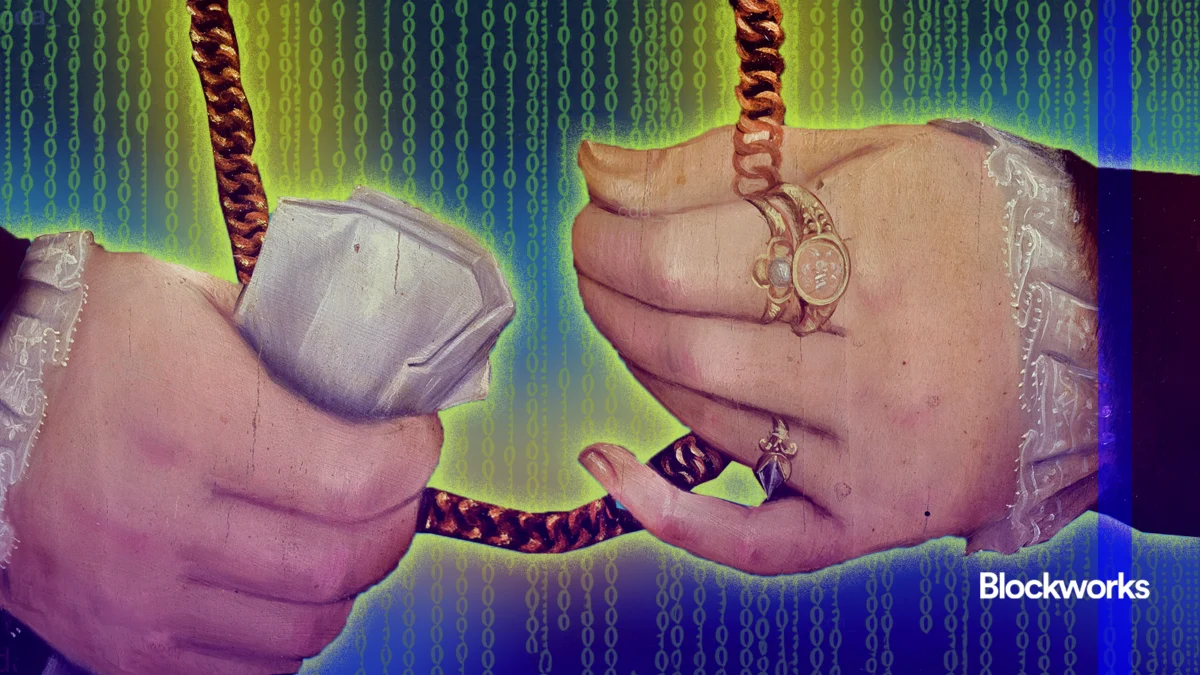
In 1604, the Court of King’s Bench delivered a landmark judgment in what is now historically recorded as Semayne’s Case. The ruling favored the defendant, Richard Gresham, who had resolutely shut his door in the face of a royal sheriff attempting to enter his premises to seize goods to satisfy an outstanding debt. Establishing a foundational legal principle regarding personal privacy and the sanctity of the home, Sir Edward Coke, the Attorney General of England at the time, famously reported that "the house of every one is to him as his castle and fortress."
Yet, even as Coke firmly erected those conceptual castle walls, he left open a deliberate gate for the sovereign’s authorities to breach them under specific conditions. The court held that officers of the law, when actively pursuing criminal matters, were legally permitted to break down household doors if necessary—provided they formally announced their presence first. More than four centuries later, that precise legal framework continues to govern modern jurisdictions. Semayne’s Case is the ancestral cornerstone of why American law enforcement today is legally required to knock and announce their presence when executing official business at a residence, and conversely, why they retain the authority to force entry under exigent circumstances.
While the Fourth Amendment protects citizens against unreasonable searches of their personal castles and the seizure of their personal property, the fundamental architecture of traditional financial privacy mirrors this ancient legal doctrine. Everyday banking transactions are private only in the narrow sense that traditional financial institutions keep customer records behind closed doors, hidden from public view. However, if law enforcement agencies come knocking with appropriate legal backing, the door must be opened.
In the contemporary landscape of digital assets and decentralized finance, however, the concept of "privacy" has evolved to take on a vastly different and far more absolute definition. To many participants within the cryptocurrency industry, a truly private financial transaction is one meticulously secured by advanced cryptography, making it entirely invisible to any outside observer except the user. It represents the construction of a flawless financial castle equipped with no backdoor gate for the state or regulatory authorities to saunter through at their own discretion. In many ways, this pursuit is a direct return to the foundational roots of the cypherpunk movement: absolute financial privacy, immutable and guaranteed purely by mathematical code.
The pressing question resonating across the digital asset sector is just how far into cypherpunk ideology the ecosystem is genuinely prepared to venture. At times, the answer appears to be profoundly far. This sentiment was recently underscored when Securities and Exchange Commission (SEC) Commissioner Hester Peirce publicly identified herself as a "freedom maximalist." Speaking on the evolving regulatory discourse, Peirce voiced strong support for the renewed industry emphasis on privacy mechanisms, noting the urgent need to reshape the prevailing regulatory narrative.
"We have to recast the narrative around privacy mechanisms, because it’s become the presumption that if you want to keep your transactions private, you’re doing something wrong," Peirce remarked during a recent discussion, offering a remarkably cypherpunk-sounding perspective for a senior government regulator.
When examining the nuance of her stance, Peirce elaborated on her definition of privacy by stating that people within the United States possess an inherent right to keep their financial transactions confidential absent any concrete suspicion of illegal activity. When asked about situations where legitimate suspicion of illicit activity does arise, her response anchored the debate firmly in historical precedent: "There are ways for governments to get access to information to bring a case."
In essence, under this perspective, remarkably little has fundamentally changed since the royal rulings of 1604. "Privacy" is ultimately defined as the capacity to shield one’s information from general public view, while remaining entirely accessible to a governing authority that successfully demonstrates a valid legal justification to inspect it.
Perhaps surprisingly, numerous prominent figures within the cryptocurrency space appear to share this pragmatic view, including prominent voices deeply embedded in privacy-centric protocol development. During a recent episode of the Empire podcast, Eli Ben-Sasson offered a concise and measured definition of privacy, describing it simply as a dynamic where "people who shouldn’t see your stuff don’t get to see it."
That framing inherently implies that certain designated entities should retain visibility—such as law enforcement officials equipped with a legally binding warrant. Ben-Sasson holds unimpeachable credentials within the privacy-focused sector of the cryptocurrency industry, having served as the founding scientist behind Zcash, widely regarded as one of the most dedicated cypherpunk projects in existence. Yet, his functional definition of privacy is hardly revolutionary or radical. As he noted during the podcast discussion, it aligns closely with everyday societal expectations of privacy, drawing a direct parallel to the financial privacy that everyday citizens are already familiar with through traditional commercial banking applications.
This convergence raises a critical question: Is the current wave of renewed enthusiasm for crypto-enabled privacy merely an effort to recreate the degree of financial privacy that consumers already enjoy with conventional legacy banks?
According to alternative perspectives within the industry, the answer may be far more complex. Shaul Kfir, who helped lead the development of the institutional privacy protocol Canton Network, offered a noticeably different definition during his appearance on Empire, suggesting a standard that goes far beyond traditional banking norms. "Privacy," Kfir stated, "is I get to choose who sees my stuff."
That distinction separates crypto-native solutions cleanly from traditional financial institutions. Under the conventional model, users cannot actively choose whether law enforcement or regulatory bodies inspect their banking data; commercial banks comply with legal demands quietly, often without providing any notification to the account holder. Kfir, who views privacy simultaneously as a fundamental human right and an essential business requirement, maintains that his perspective captures a higher standard of confidentiality.
While Kfir and Ben-Sasson both champion the necessity of privacy, their respective technical approaches and underlying definitions highlight the ongoing philosophical tensions within the sector. Zcash fundamentally empowers users with the cryptographic tools to pick and choose precisely who gains visibility into their transactional data. By contrast, the architecture of the Canton Network does not attempt to replicate a scenario where a user can move capital independently of institutional oversight in the manner of an unmonitored cash equivalent. Kfir noted that such a model is not a primary problem that enterprise users need to solve, characterizing it as an imagined issue rather than a genuine operational hurdle for institutional adoption.
This dynamic leads to an intriguing irony within the discourse. Kfir’s operational definition of privacy—revolving around granular, user-directed choice—arguably maps more accurately onto the decentralized privacy technology built by Ben-Sasson. Conversely, Ben-Sasson’s more pragmatic definition—focusing on keeping information away from unauthorized parties while maintaining compliance with established societal norms—closely mirrors the institutional framework championed by Kfir. This cross-pollination of definitions vividly illustrates the broader confusion currently surrounding what digital "privacy" is actually intended to achieve.
Reflecting on these contrasting philosophies, Ben-Sasson noted that it remains somewhat of a mystery why privacy continues to be such a contentious and heavily debated issue within the broader cryptocurrency ecosystem. The core dilemma persists across development teams and regulatory bodies alike: Is a blockchain ledger genuinely "private" only when data disclosure is strictly and entirely voluntary, as demonstrated by protocols like Zcash? Or does the more institutionally compliant model championed by networks like Canton sufficiently fulfill the criteria for modern financial confidentiality?
Whichever path ultimately prevails, the enduring debate over the boundaries of personal and financial privacy has injected a powerful sense of renewed purpose into the digital asset industry. As developers, regulators, and institutions continue to navigate these complex waters, the ultimate task remains clear: the cryptocurrency sector must collectively decide what privacy actually means in the digital age.





Comments (0)