



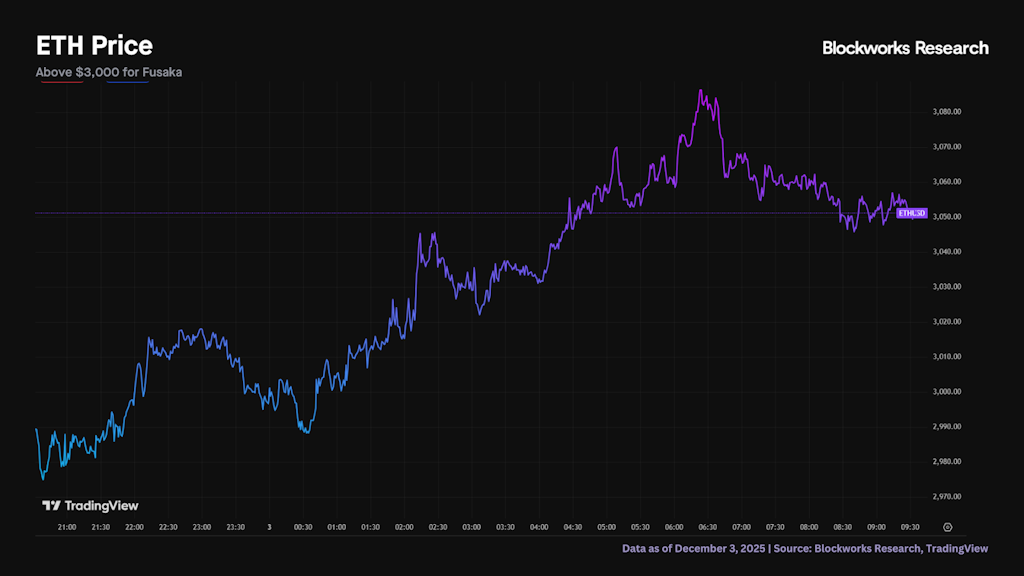
Global financial markets leaned decisively into a risk-on posture, with the cryptocurrency sector spearheading the upward movement while traditional asset classes remained relatively subdued. Amid this broader shift in investor sentiment, Ethereum successfully deployed its highly anticipated Fusaka upgrade, introducing PeerDAS, Blob Parameter Only hard forks, and the critical EIP-7918 standard, a combination designed to fundamentally reshape the network’s data availability and fee dynamics. Simultaneously, alternative Layer-1 networks are expanding their real-world use cases, with Sui launching an ambitious, full-stack push into the robotics sector to position onchain primitives at the center of future autonomous machinery.
Market Indices and Sector Rotation
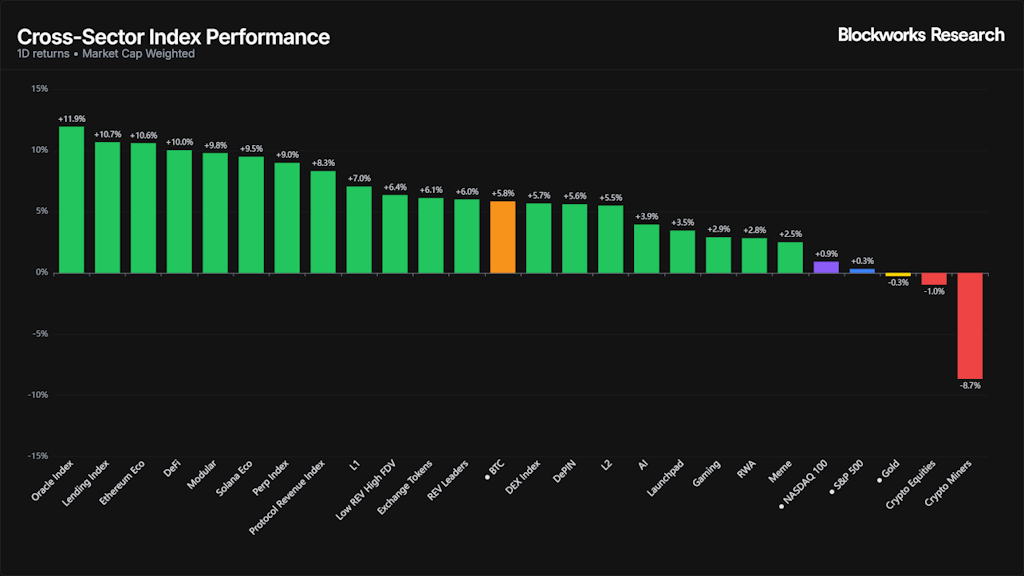
Cryptocurrency markets broadly outperformed traditional financial assets as macro headwinds showed signs of easing. Bitcoin posted a solid 5.8% gain, sitting comfortably mid-pack within the digital asset ecosystem, whereas traditional equities barely budged. The S&P 500 inched up by just 0.3%, and the Nasdaq 100 posted a modest 0.9% increase. Meanwhile, safe-haven assets experienced slight downward pressure, with gold slipping 0.3%.

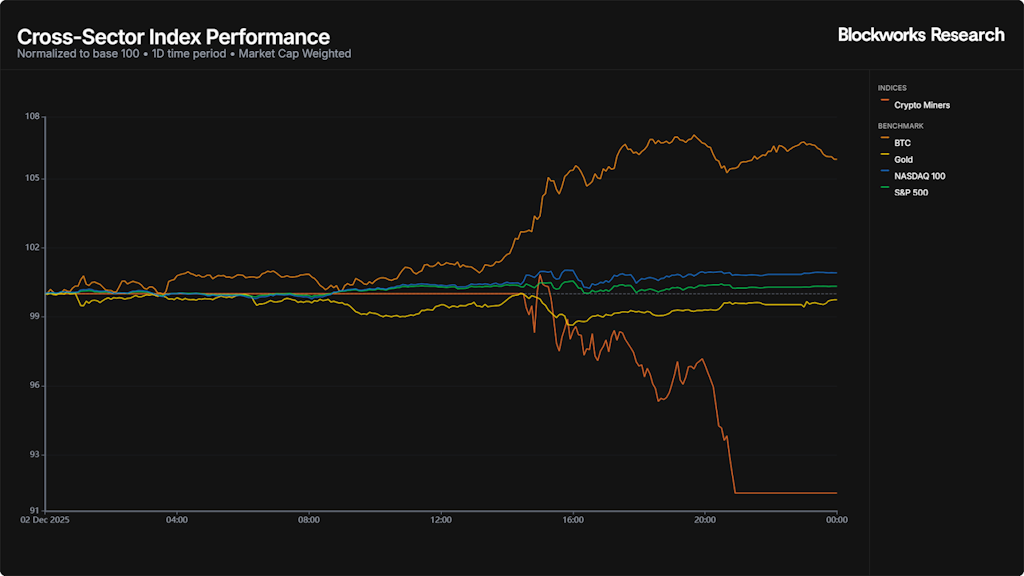
The most pronounced outlier on the downside was the crypto equities and mining sector, which dropped 8.7%. This notable pullback among mining firms pointed toward a combination of profit-taking and heightened sensitivity to Bitcoin’s recent price consolidation phases.
Despite the weakness in mining stocks, overall crypto sector breadth remained exceptionally strong. Oracles, lending platforms, and the broader Ethereum ecosystem led the board, signaling a clear capital rotation back into core infrastructure and high-utilization protocols. Decentralized finance, modular architectures, the Solana ecosystem, and perpetual swap platforms followed closely behind with robust performances, indicating a widespread appetite for beta across liquid alternative sectors.
Further down the stack, Layer-2 networks, artificial intelligence plays, token launchpads, and gaming tokens all trended higher. Conversely, more speculative segments, such as meme coins, lagged behind the broader market advance. This bullish price action coincided with stabilizing macroeconomic conditions, including steady bond yields, firmer liquidity indicators, and positioning metrics that suggest investors are actively re-engaging with risk after an extended period of caution.
The strong rebounds observed across core infrastructure sectors reflect growing expectations for higher onchain activity and potential catalysts stemming from upcoming protocol upgrades. As market participants look toward upcoming macro economic prints that could test the durability of this risk-on tone, volatility remains compressed. However, with crypto sector dispersion widening, traders are anticipating sharper narrative rotations as market conditions evolve.
Ethereum Deploys the Fusaka Upgrade and Targets Deflationary Mechanics
The core technical development within the crypto ecosystem centered on the activation of Ethereum’s Fusaka upgrade, marking the second major network overhaul of the year following the Pectra hard fork in May. Multiple upgrades within a single calendar year are a rare occurrence for Ethereum, a cadence explained by the fact that Fusaka functions as a half-upgrade. Over a dozen Ethereum Improvement Proposals were removed from the scope earlier in the year after the Ethereum Object Format was mothballed in April.
Among the twelve EIPs that made it into the final Fusaka implementation, PeerDAS stands out as the most technically significant. Gabriel Trintinalia, a protocol engineer at Consensys, explained the developmental constraints that shaped the upgrade’s final form. During the initial development phases of Fusaka, any feature that carried a risk of delaying the fork, such as those requiring extensive ongoing research or introducing high technical complexity, was systematically deprioritized and removed from the active scope.
PeerDAS introduces data availability sampling to the network, a mechanism that allows validators to collaboratively share the computational and bandwidth load of processing data blobs. This distributed sampling approach effectively enables a sustainable increase in the number of blobs packed into each block.
Despite these architectural improvements, historical data shows that blobs have frequently failed to reach their initial target of six per block. Ironically, just as network metrics suggested blob utilization might finally approach those targets, Ethereum developers are moving to increase capacity further through structural changes.
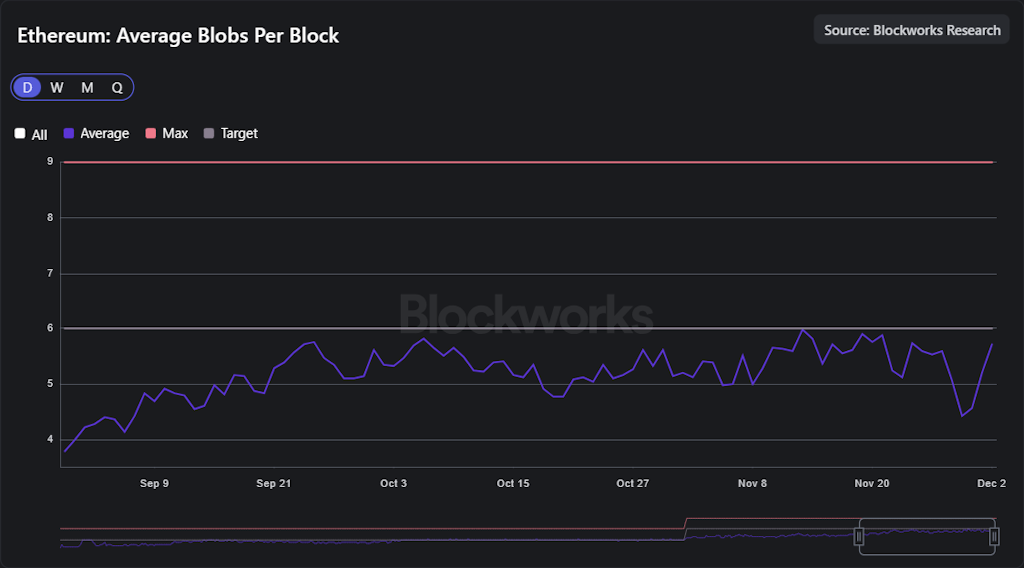
Technically, the Fusaka upgrade does not immediately raise the absolute blob target. Instead, it introduces Blob Parameter Only hard forks. This innovation establishes a separate, streamlined process for adjusting blob storage parameters in the future. Rather than waiting for a massive, coordinated network upgrade, core developers can now implement smaller and more frequent adjustments to blob capacity as demand dictates.
The underlying economic challenge for Ethereum remains the imbalance between supply and demand, which has historically left blob gas prices largely immaterial, save for brief periods when prices touched a modest 1 gwei. Post-Pectra data spanning from June through October reveals that the network generated roughly $900 in total blob fees. Although a brief spike in November pushed cumulative figures to approximately $23,000, these numbers remain mathematically insignificant relative to overall network revenue. Nevertheless, the November spike highlighted the order-of-magnitude revenue difference that materializes when blobs actually encounter a competitive market.
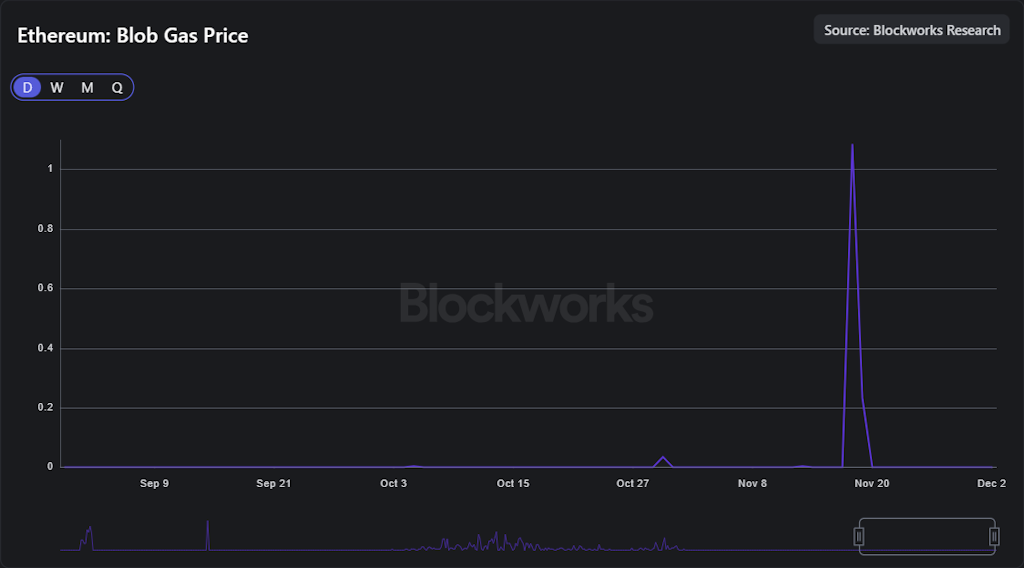
This persistent imbalance underscores the importance of EIP-7918, an upgrade that market observers argue deserves significantly more attention. The proposal addresses the structural flaws of the blob fee market by introducing a reserve price tied directly to execution costs, effectively functioning as a price floor. When Layer-2 execution costs outpace blob costs, this mechanism prevents the blob fee market from collapsing into ineffectiveness at a baseline of 1 wei.
Historical simulations indicate that had EIP-7918 been active since June 1, the total amount of burnt blob fees would have been nearly eight times higher. Beyond establishing a reserve pricing model, the upgrade introduces greater price stability and predictability, mitigating the risk of dramatic fee spikes during periods of heightened blob market inelasticity.
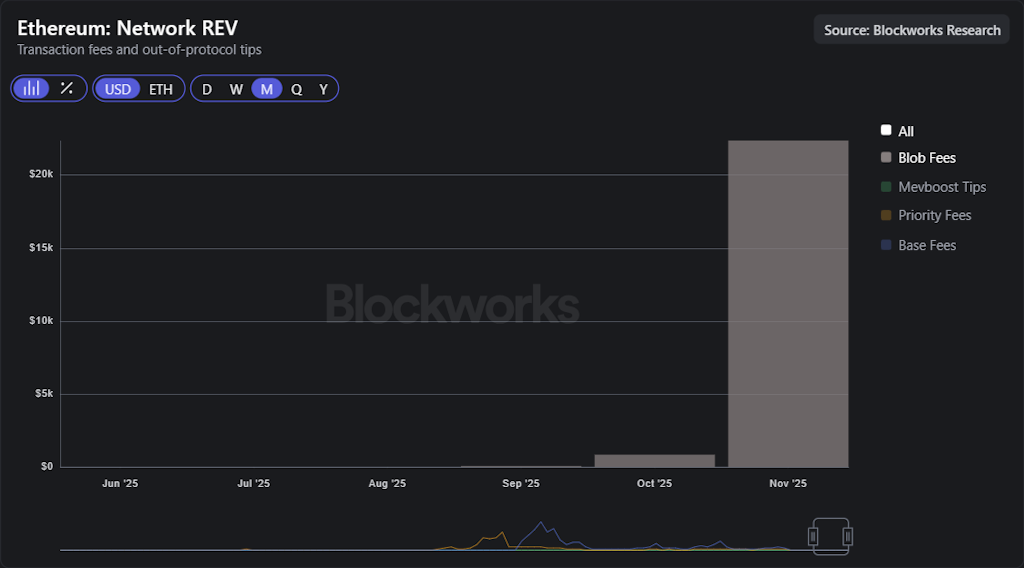
When combined with the scalability enhancements of PeerDAS and the administrative flexibility of Blob Parameter Only hard forks, EIP-7918 suggests that as Ethereum successfully scales Layer-2 capacity, associated blob fees should correspondingly rise. Historically, the relationship between L2 scaling and blob fees has been strictly inverse. For ETH holders, this shift, working in tandem with Layer-1 scaling initiatives, offers a viable pathway to return the circulating ETH supply to a sustained deflationary phase.




Comments (0)