


It has been nearly a year since a distinct shift began in the technology investment landscape, transitioning away from speculative digital assets and into the physical bedrock of the modern digital economy: semiconductors. In August 2025, early market theses predicting severe compute scarcity proved accurate, paving the way for a parabolic surge in semiconductor equities as RAM shortages took hold by September of that year. For investors who migrated capital out of cryptocurrency and into hardware infrastructure, the returns have been extraordinary, with many foundational names doubling within a matter of months.
As strategies have been refined through early 2026, a conviction-heavy positioning has emerged among specialized market participants. Rather than spreading capital thin across every prominent artificial intelligence ticker, a concentrated focus has settled on three core memory manufacturers: SK Hynix, SanDisk, and Micron. While options trading around broader semiconductor names remains common, the core thesis rests entirely on memory as the most crucial, yet deeply misunderstood, component of the entire artificial intelligence buildout.
Many of these specialized stocks have climbed between 250% and 1,000% over the past year alone. Yet, despite these monumental gains, market participants argue that the broader trade remains in its early innings. While retail and institutional investors alike frequently look at high-profile AI stocks feeling they have missed the boat, the underlying infrastructure bottleneck points overwhelmingly toward memory technology.

To understand the mechanics of the memory trade, one must look first at the fundamental technology driving modern artificial intelligence models. The popular perception of the AI race often oversimplifies the hardware requirements, assuming that raw computational power from advanced graphics processing units is the sole metric of importance. While powerful processors are necessary to perform rapid calculations, the sheer scale of these computations must be held continuously in the active memory of the system, functioning much like a human carrying numbers over in their head during complex mental arithmetic.
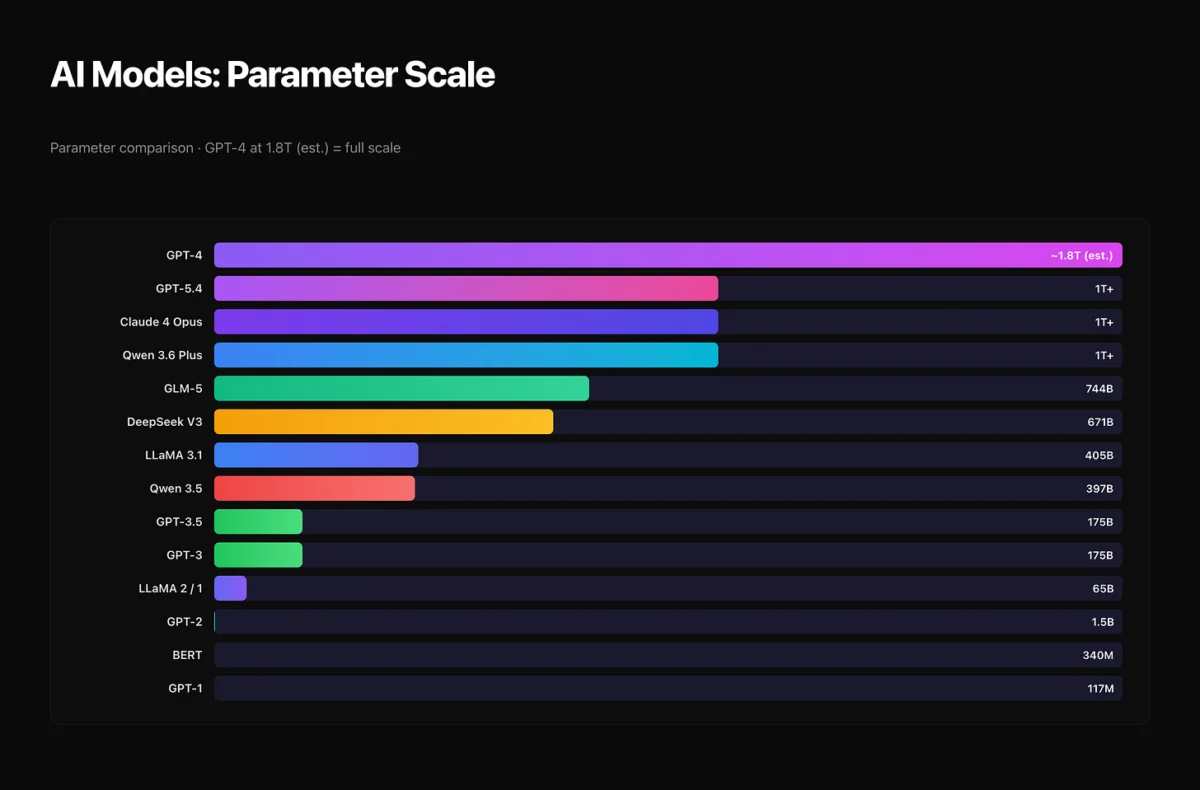
This dynamic requires two essential components: immense processing capabilities and vast amounts of high-speed memory. Modern AI models are categorized by their parameter sizes, dictating both their complexity and capability. As artificial intelligence architectures evolve, smaller models achieve greater efficiencies, but the larger, high-parameter models scale in capability even faster. In practical terms, operating in the modern AI landscape without adequate memory means being restricted in both the models you can execute and the amount of context you can feed into them during interactive sessions.
The math underlying this constraint is stark. Assuming standard precision formats like FP16, roughly 2 gigabytes of video random-access memory (VRAM) are required for every billion parameters in a model. Running a next-generation architecture like GPT 5.4 locally on consumer hardware, for instance, would demand approximately 2 terabytes of VRAM—a requirement that is both prohibitively expensive and practically unattainable with current single-card consumer configurations. Even smaller variants, such as a 35-billion parameter model like Qwen3.5, demand roughly 70 gigabytes of VRAM, easily overwhelming standard high-end consumer setups and requiring massive enterprise-grade hardware clusters costing hundreds of thousands of dollars.

Furthermore, active AI sessions demand substantial memory overhead. While developers and power users frequently utilize 128k context windows, serious programming and analytical tasks quickly push those limits, driving demand toward 256k context windows and beyond. The fundamental premise remains unyielding: as users demand more advanced, multifaceted capabilities from artificial intelligence, the absolute requirement for memory expands in tandem. GPUs without sufficient memory are functionally paralyzed during inference tasks, making any comprehensive AI infrastructure buildout fundamentally reliant on memory expansion.
Despite this undeniable physical reality, public markets have exhibited a curious disconnect. When examining the various sub-sectors of the artificial intelligence economy—ranging from cooling infrastructure and power generation to chip design and manufacturing—observers note a shared underlying demand cycle. It is structurally impossible to experience a massive boom in NVIDIA GPU shipments without an equally massive surge in memory consumption. Yet, valuations across these interconnected sectors display glaring discrepancies.
Infrastructure companies that provide data center cooling solutions trade at soaring forward price-to-earnings multiples of 50, buoyed by the consensus belief in unrelenting artificial intelligence demand. Meanwhile, primary semiconductor giants holding the absolute keys to hardware enablement trade at significantly more conservative forward earnings multiples. For every processor sold, massive quantities of high-bandwidth memory must accompany it, sourced from an oligopoly consisting of just three major manufacturers: Micron, SK Hynix, and Samsung. If the broader market is willing to heavily price the future earnings of processor designers and supporting infrastructure, the current valuation of memory makers appears drastically mispriced.

The primary driver of this market skepticism lies in historical precedent. Wall Street institutions view memory as a historically cyclical, commodity-driven industry characterized by extreme boom-and-bust cycles of oversupply and price crashes. Traditional memory demand was historically tethered to consumer electronics and mobile phone sales, where inventory gluts routinely depressed earnings and forced manufacturers into painful retrenchments.
However, this traditional framework fails to account for the structural evolution of the market. Demand has fundamentally shifted from consumer mobile devices to enterprise servers and high-performance computing clusters. Furthermore, high-bandwidth memory—integrated directly onto advanced processors—differs fundamentally from traditional swappable DDR memory sticks. High-performance computing workloads are constrained by data transfer speeds, meaning modern architectures are heavily memory-bound.
To believe that memory prices will experience a precipitous crash in the coming years requires believing that global enterprise demand for artificial intelligence will suddenly collapse. For organizations and power users utilizing large language models to drastically scale operational output and handle complex workflows, the productivity gains are undeniable, making the underlying capital expenditures economically justified regardless of whether artificial intelligence achieves general intelligence on an accelerated timeline.

Even when accounting for traditional market skepticism, financial projections for major memory producers highlight immense potential upside. Conservative estimates project substantial net profits for leading memory firms, with market capitalizations translating into remarkably low forward earnings multiples for dominant players. Furthermore, memory manufacturers have increasingly locked in multi-year visibility through robust long-term supply agreements. Executive leadership across the sector has repeatedly noted that capacity remains heavily booked well into the future, blunting the impact of traditional cyclical downturns.
As spot prices continue to reflect acute shortages and manufacturers maintain disciplined capacity expansions, the structural supply-demand imbalance persists. Beyond traditional enterprise computing, emerging applications such as autonomous robotics, advanced image synthesis, and real-time video generation will continue to place unprecedented demands on memory bandwidth and storage capacity. As the market slowly reconciles the permanent shift in memory utility, the foundational infrastructure supporting the artificial intelligence revolution remains uniquely positioned for sustained expansion.




Comments (0)