



When the initial analysis on the growing scarcity of artificial intelligence hardware was published in August 2025, the overarching consensus on Wall Street viewed the trajectory of semiconductor demand through a conventional, cyclical lens. Traditional financial models anticipated that total compute usage would scale up by roughly tenfold by 2030, following a predictable, manageable curve. However, market realities have quickly divorced themselves from historical precedent. Compute is not growing linearly; it is expanding at an exponential rate, driven by AI laboratories doubling their foundational training infrastructure year-over-year in pure gigawatt scale, while infrastructure and application workloads surge by orders of magnitude every few years.

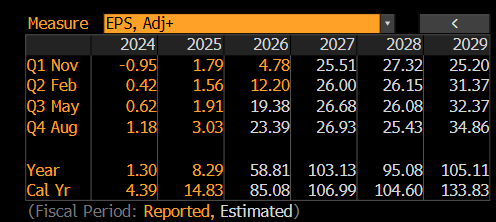
This parabolic demand has triggered intense debate within financial and technology circles regarding the sustainability of the current capital expenditure supercycle. Broadly speaking, market observers and equity analysts split into two distinct camps. On one side are the skeptics and traditional bears, who argue that heavy artificial intelligence capital investments are racing far ahead of actual utility and end-market demand. In this view, semiconductor manufacturers and memory suppliers are experiencing the familiar, volatile peaks of a classic cyclical boom-and-bust cycle. Analysts point to historical precedents, such as Micron Technology’s performance in 2024 when the company swung to negative earnings following an aggressive demand cycle, as evidence of an impending correction.

Wall Street consensus estimates have largely baked in a plateau effect for future earnings, projecting that financial returns for major memory and semiconductor names will flatten out significantly after the current infrastructure build-out concludes. For instance, forward-looking earnings estimates for fiscal years 2027 through 2029 are modeled as relatively constant, leading conservative analysts to warn that current valuations could represent a cyclical peak. If end-market demand softens or if supply outpaces consumption, the market could face a severe correction reminiscent of previous semiconductor downturns.
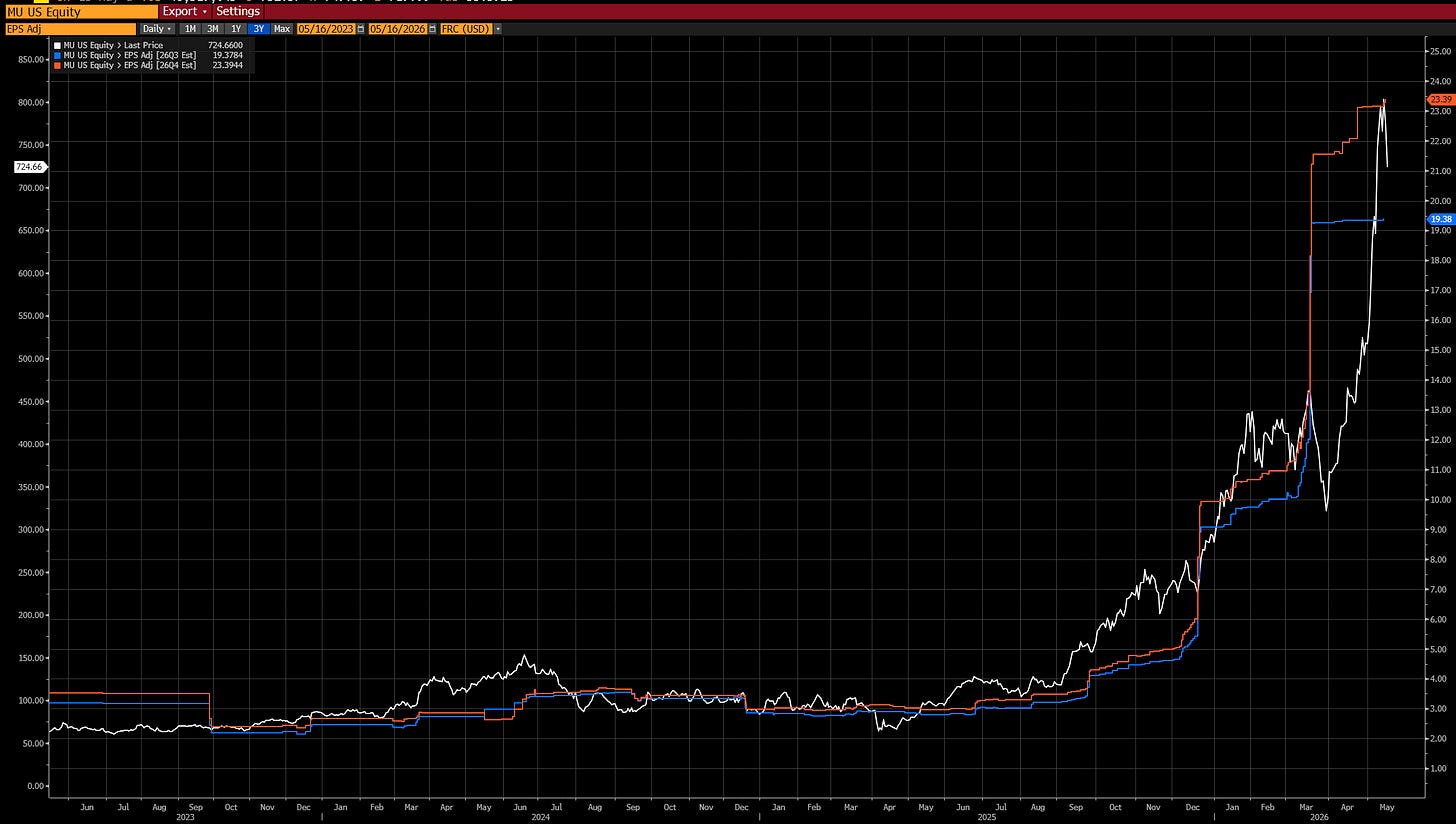
Yet, this bearish narrative may fundamentally underestimate the structural shifts reshaping the global economy. A deeper look at industry expansion plans reveals that supply additions are struggling to keep pace with demand. SK Hynix opened its M15X plant in Cheongju, South Korea, in early 2026, serving as one of the few major capacity additions for the year among the industry’s major players, while accelerating its Yongin fab schedule. Samsung’s fourth wafer fab in South Korea is slated to come online in 2026, though full mass production is not anticipated until after 2027, with a dedicated High Bandwidth Memory fab scheduled for 2028. Meanwhile, Micron has planned new facilities in Idaho, Singapore, and Taiwan, with mass production scaling through 2028. For the immediate future, industry leaders face severe production bottlenecks.
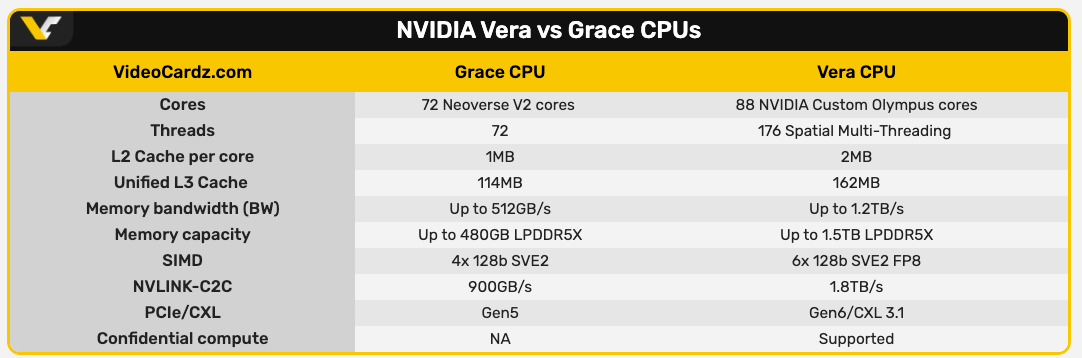
Industry executives have increasingly warned that the hardware deficit is far from temporary. During appearances at major technology conferences, manufacturing leaders noted that current shortages could persist for years, driven by structural deficits in silicon wafer production and the immense technical challenges of scaling advanced node manufacturing. The physics of modern artificial intelligence hardware further exacerbate these constraints. Next-generation computing architectures, such as NVIDIA’s upcoming Vera Rubin CPU platforms and advanced rack systems, demand exponentially higher memory integration, with memory consumption per rack tripling compared to previous Grace CPU generations.
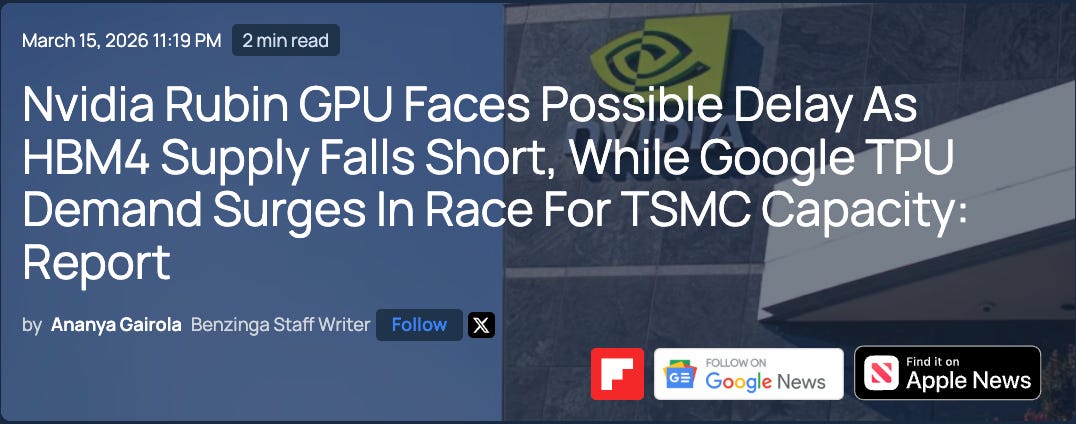
With multi-billion-dollar backlogs stretching far into the future, the primary challenge facing the technology sector is no longer just the absolute amount of capital available, but the severe physical limits of the manufacturing supply chain. High Bandwidth Memory, an essential component for high-performance AI accelerators, can only be manufactured by a handful of companies globally. Furthermore, the production pipeline faces a secondary, even more formidable bottleneck: advanced packaging. Once memory chips and graphics processors are manufactured, they must be meticulously integrated onto silicon interposers using specialized packaging technologies, an intricate process dominated by industry giants like Taiwan Semiconductor Manufacturing Company. Advanced packaging capacity remains heavily constrained, preventing excess memory from flooding the market and artificially depressing prices.

These supply chain constraints are already rippling down to consumer markets and enterprise hardware availability. Recent inventory adjustments across major consumer electronics brands, where high-capacity RAM configurations for professional workstations and studio computers have experienced sudden supply reductions and subsequent price surges on secondary markets, point to a broader reallocation of memory silicon toward enterprise data centers. Compute is rapidly transitioning from a commercial commodity into a scarce, tightly controlled strategic asset.
As this trend accelerates, the economic and geopolitical implications extend far beyond stock market valuations. Rather than triggering an artificial intelligence market crash, hardware scarcity is creating a hyper-competitive environment where infrastructure landlords and cloud providers can command premium pricing from the highest bidders. Enterprises are already engaged in fierce competition to secure guaranteed access to compute resources, while national governments implement aggressive industrial policies to subsidize domestic semiconductor manufacturing and secure local data center infrastructure.
Looking toward the end of the decade, industry analysts project that advanced compute availability will face severe regional bottlenecks at the nation-state level. The race to secure reliable power sources, suitable real estate, and state-of-the-art silicon will transform energy-rich land into strategic economic assets. Compute is emerging as the foundational currency of a new technological elite, altering the traditional dynamics between capital and labor. In this new paradigm, human labor will be valued strictly by its ability to effectively direct and manage autonomous compute resources, cementing a structural transformation that will define global industrial power for decades to come.



Comments (0)