


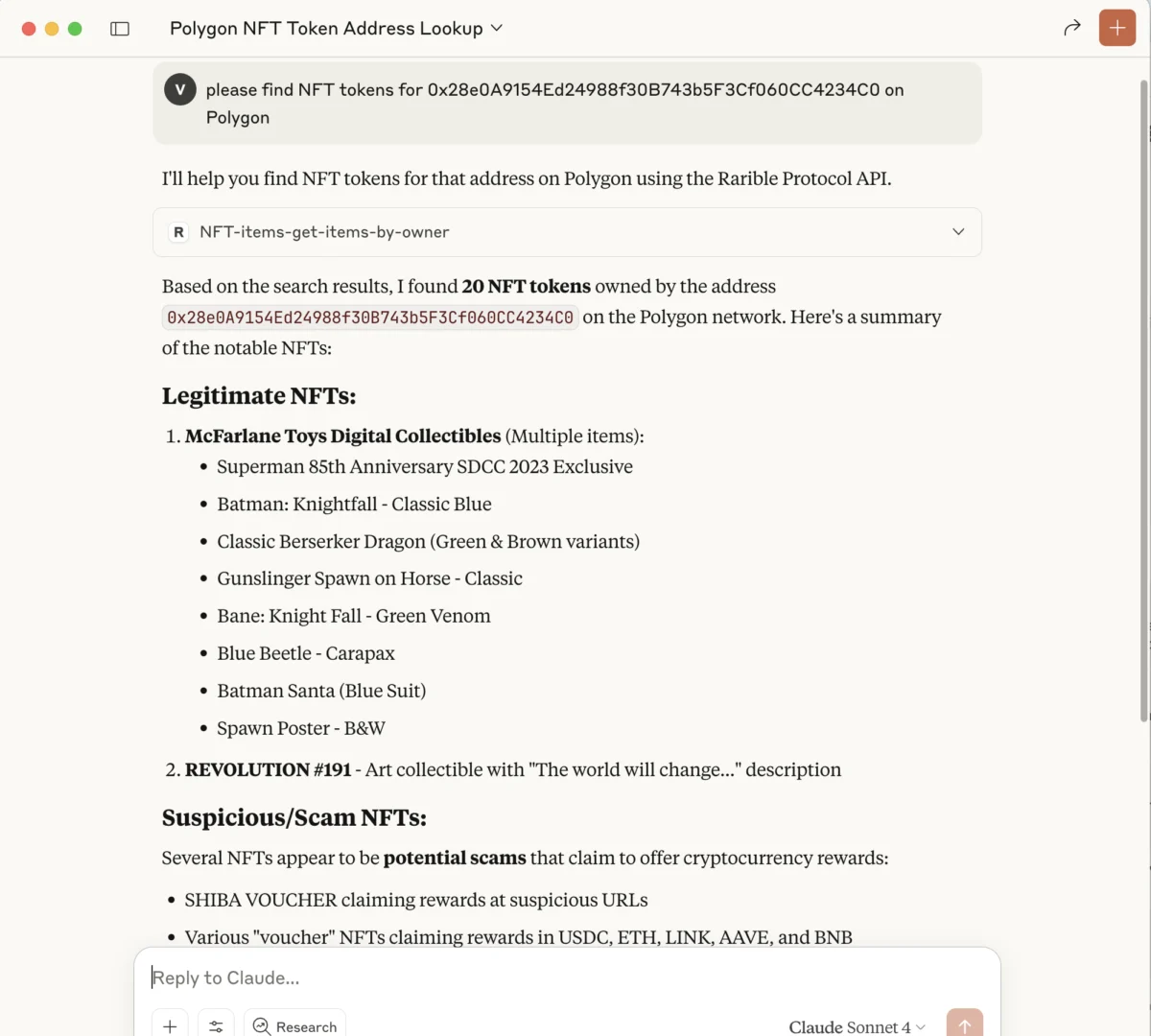
For years, developers working within the non-fungible token ecosystem have faced a persistent and frustrating bottleneck: retrieving reliable, comprehensive NFT data remains remarkably complicated. Whether the objective is tracking floor prices, verifying asset ownership, or identifying trending collections across various blockchains, developers have traditionally been forced to construct cumbersome frontend interfaces or write complex, highly specific application programming interface queries. This heavy lifting creates a barrier to entry, slowing down innovation and making it difficult to access crucial marketplace information quickly and efficiently.
Addressing this developer friction head-on, Rarible has introduced the Rarible Model Context Protocol Server, a new tool currently operating in its beta phase. The system is designed to bridge the gap between artificial intelligence and blockchain data by allowing users to ask questions in plain, conversational language and automatically translating those inquiries into real, structured queries. By connecting large language models such as Anthropic’s Claude or development environments like Cursor directly to the Rarible Protocol, developers can now pull intricate NFT and marketplace data without needing to build custom backend infrastructure or master an entire API documentation library from scratch.
What Is the Model Context Protocol?
At the core of this new offering is the Model Context Protocol software development kit, a modern developer tool created to streamline how applications interact with blockchain endpoints. Rather than writing extensive code to fetch data, developers can leverage conversational AI agents to query the Rarible Protocol API naturally. The SDK can be implemented either as a standalone server or embedded directly into pre-existing projects, infusing those applications with context-aware capabilities for accessing digital asset information.
Engineered as a production-grade, type-safe TypeScript solution, the SDK delivers structured access to a wide array of blockchain data, including individual NFT items, entire collections, ownership records, and marketplace activity. It has been built for versatility, operating seamlessly in both browser and server-side environments while supporting both CommonJS and ES Modules. Furthermore, its modular architecture accommodates developers working with tight bundle constraints or those who require custom hooks to tailor the tool to their specific operational needs.
Who Benefits from the New SDK?
The introduction of the MCP Server is aimed squarely at developers, creators, and engineers building applications that touch upon the NFT space. By abstracting the complexities of traditional API calls, the tool significantly reduces development time, freeing teams to focus on user experience and core product features rather than data plumbing.
This accessibility is particularly advantageous for developers who wish to rapidly prototype new concepts using artificial intelligence and blockchain data without the time-consuming process of scaffolding entire API layers independently. From dashboard creators to marketplace developers and AI tool builders, the protocol serves as a bridge that brings complex on-chain analytics into conversational interfaces.

Unlocking the Power of On-Chain Data Through Conversation
While large language models have grown increasingly adept at interfacing with external software, blockchain and NFT data have historically remained trapped behind intricate, highly technical endpoints. The MCP SDK fundamentally alters this dynamic by transforming opaque data endpoints into an interactive, conversational resource.
Instead of navigating complex documentation, developers and users can simply pose straightforward questions to their AI assistants. Queries such as requests for top collections on specific networks or collection rankings sorted by floor price on Ethereum can be handled natively. The SDK seamlessly translates these natural language prompts into secure, structured calls directed at the Rarible Protocol, subsequently returning real-time data formatted explicitly for application or agent consumption.
The system currently supports EVM-compatible networks, alongside Eclipse and Flow, with plans to expand blockchain coverage in the future. It encompasses comprehensive support for tracking ownership histories, gathering collection-level statistics, and monitoring marketplace sales data.

Integrating with Developer Environments
For local development workflows, the MCP Server can be integrated directly into environments like Claude Desktop through standard configuration files. By establishing this connection, developers enable Claude to execute live queries against the Rarible Protocol via the MCP Server without requiring manual prompt engineering or custom API scripting.
Authentication is handled through an API key system obtainable directly through Rarible, ensuring that requests remain secure and authenticated. Once configured within a local development setup alongside Node.js, the server initializes automatically upon launching the desktop environment, exposing all supported SDK methods as accessible tools within the workspace.
For instance, developers can programmatically query specific assets using straightforward code implementations, retrieving complete datasets that include pricing history, transaction records, bids, traits, and metadata. This programmatic approach ensures that while the interface can be conversational, the underlying data retrieval remains robust, typed, and reliable.
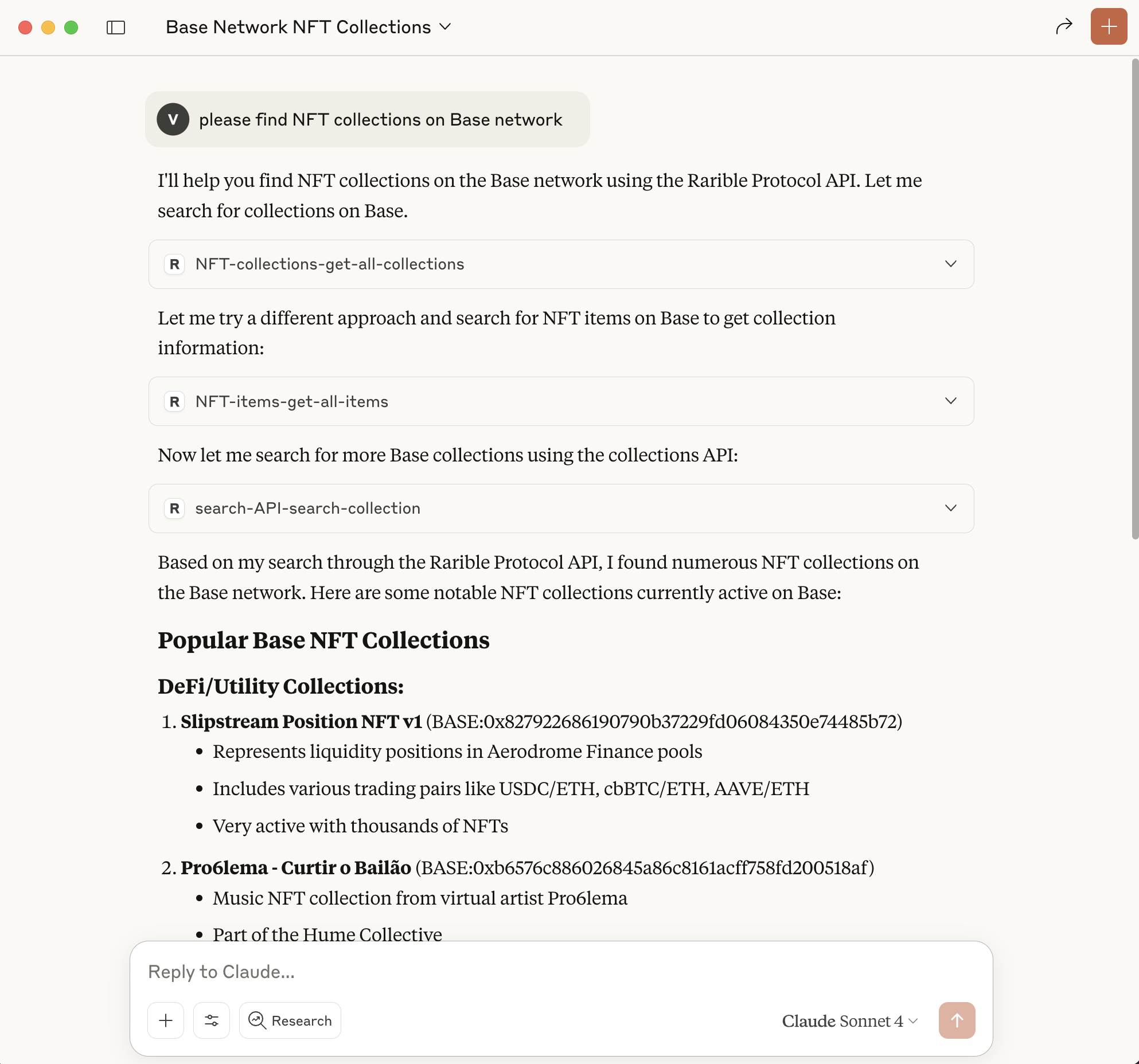
As the beta testing phase continues, Rarible is encouraging developers to test the capabilities of the MCP Server and share their experiences, feedback, and technical support queries through the official Rarible developer communication channels on Discord and Telegram.


Comments (0)