


For years, the journey from a conceptual idea for a physical object to a tangible, functional piece of hardware required a steep technical learning curve. Aspiring makers had to master complex Computer-Aided Design (CAD) software, understand parametric modeling, and spend countless hours sketching, extruding, and troubleshooting digital blueprints before ever touching a 3D printer. However, a quiet revolution at the intersection of artificial intelligence, voice dictation, and desktop fabrication is beginning to dismantle those traditional barriers.
Just a few months ago, one software engineer—who had never touched CAD modeling in their life and did not even own a 3D printer—decided to bridge the gap between digital ideation and physical creation. Eschewing the traditional path of learning complex design suites from scratch, they turned to a fully AI-forward workflow, relying on speech-to-text dictation tools and coding assistants like Codex to bring physical objects into existence entirely through natural language.
The process has proven remarkably effective. By dictating designs using Wispr Flow and translating those spoken concepts into functional models via Codex, the engineer has successfully designed, printed, and installed a variety of custom hardware components for their workspace. From specialized audio equipment cradles to modular storage organizers and custom filament spool holders, the workflow demonstrates how natural language processing is transforming hobbyist manufacturing. What once required specialized engineering training is now being accomplished through conversational iteration—talking through a design, printing the result, testing it against a real-world object, and refining the parameters through follow-up dialogue.
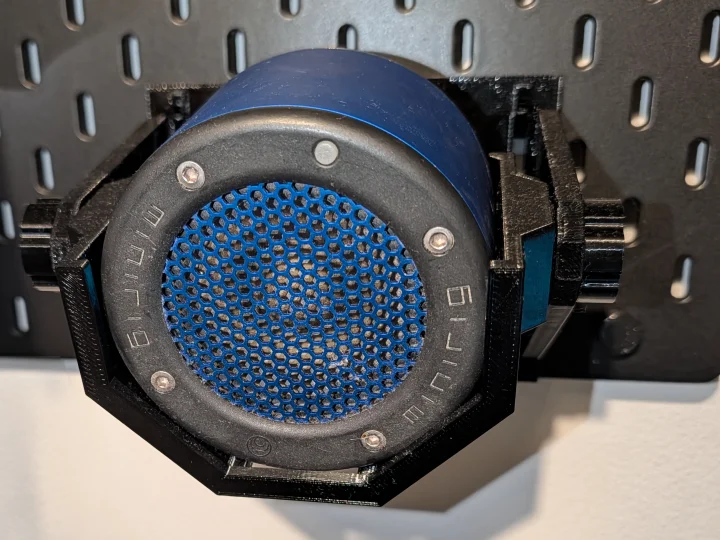
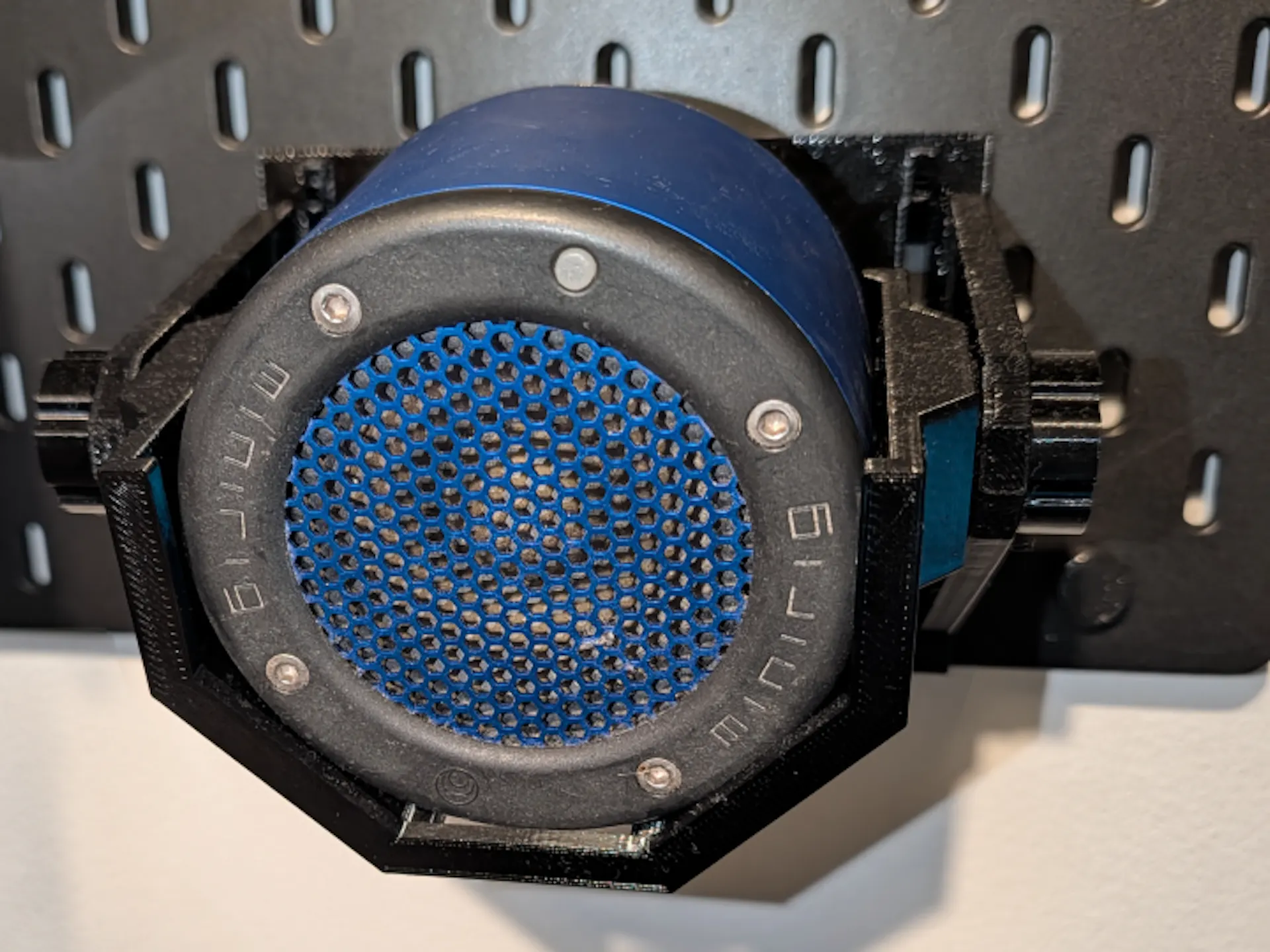
The practical applications of this AI-driven approach are already visible in daily use. One of the primary projects completed through this conversational workflow is a custom Minirig 3 speaker holder designed specifically to fit an IKEA SKÅDIS pegboard. The resulting object is not a simple, static block of plastic; it is an adjustable cradle featuring an integrated cable channel and secured with actual bolts and nuts. Once printed, the cradle was immediately installed, seamlessly holding the high-end portable speaker it was engineered around.
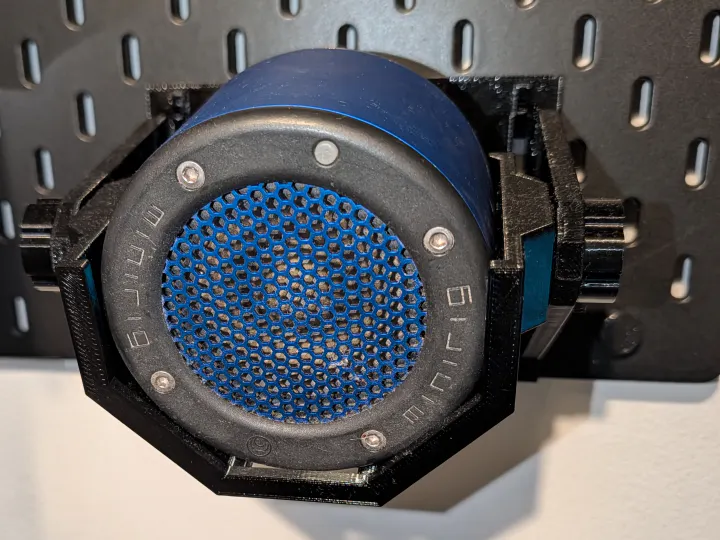
While the designer notes that the photographs showcasing these real prints utilize AI tools purely to clean up the background environments, the physical objects themselves are entirely authentic results of desktop 3D printing. The ability to modify existing open-source designs has further accelerated the workflow. For instance, instead of building a storage solution from a blank slate, the engineer successfully remixed an existing CC0-licensed gridfinity resistor organizer created by designer dmc_faLl. By taking a pre-existing blueprint and instructing the AI to modify its dimensions, they produced a taller, customized 6U version tailored precisely to their component storage needs.
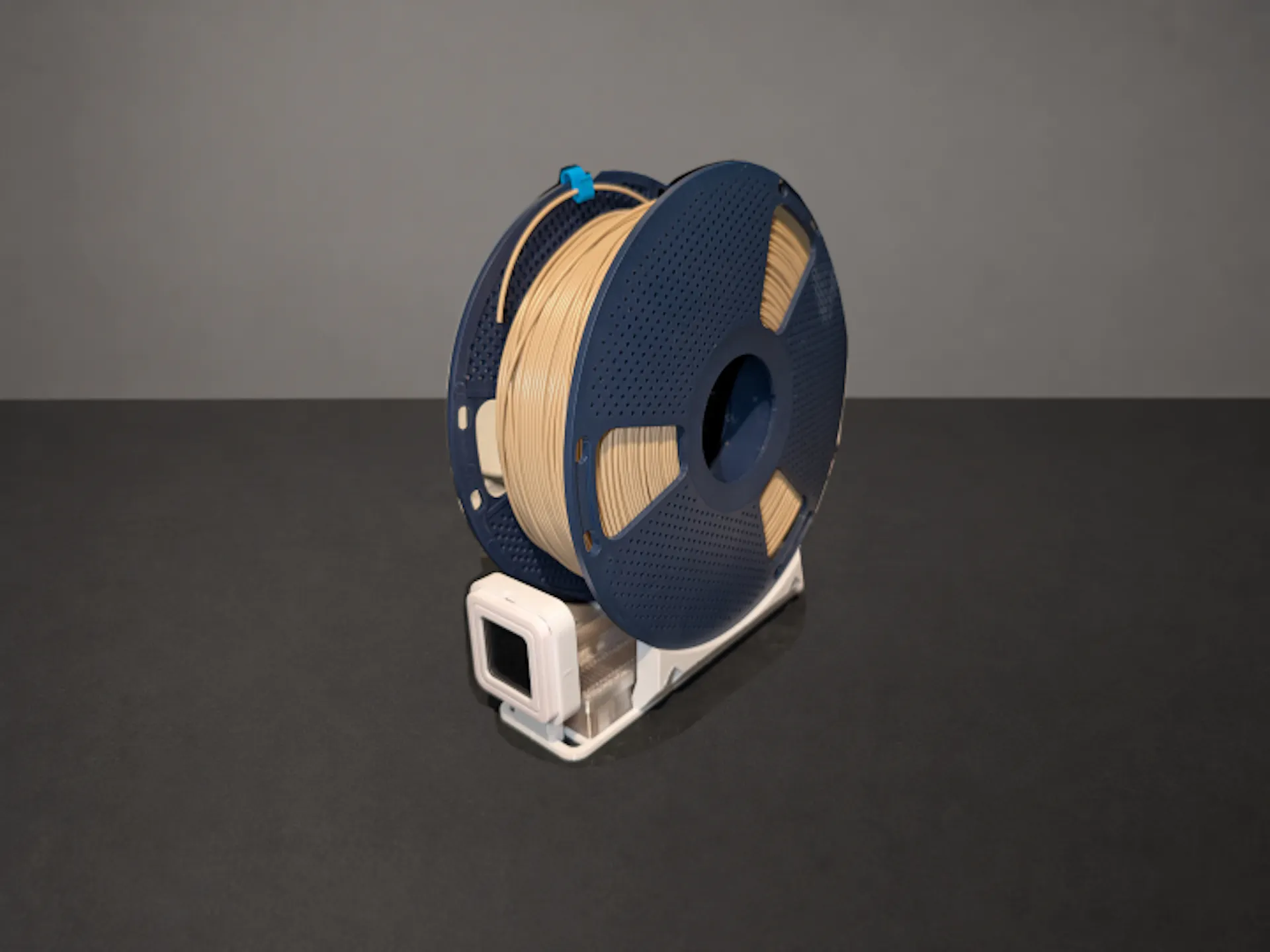
The true potential of conversational CAD, however, shines during iterative design processes involving physical constraints. This was vividly demonstrated during the creation of a specialized cereal-box filament spool holder designed for a CrowdLox 4L box. The comprehensive setup incorporates a removable desiccant tray and interchangeable inserts to accommodate square, round, and rectangular meters.
Designing those meter inserts provided an illuminating case study in what a true design conversation looks like once a physical object is part of the feedback loop. Initial test prints successfully accommodated the meters, but practical usability revealed immediate flaws. The retaining clips were excessively tight, making extraction a frustrating and risky endeavor; a round meter inserted into the initial prototype could not be removed without risking damage to the plastic housing. A subsequent, more complex cradle design technically fit the meter, but allowed it to spin freely—fulfilling the dimensional requirements while failing to meet the functional objective.
Rather than returning to manual drafting tools or abandoning the project, the engineer articulated the problem back to the AI in plain English, explaining a preference for a simpler mechanical approach. They requested a design akin to the first iteration, but supplemented with dedicated slots that would allow the gripping elements to flex inward and outward, alongside an increase in overall depth.
The resulting slotted frame proved exceptionally effective for the round meter. The rectangular meter, meanwhile, required a slightly more nuanced fine-tuning process. An initial automated variation proved too loose, while a subsequent adjustment yielded a tight grip that created excessive friction during removal. Solving the issue required a simple, targeted conversational prompt asking for a fit positioned precisely halfway between the two previous iterations. Printing the newly generated inserts yielded the desired result: components that held their respective meters securely while allowing for effortless removal.
Subsequent refinements have already been mapped out through further digital dialogue. For example, the engineer noted that an awkward front pedestal on the current design required supports that were tedious to clean up post-printing. By simply talking through the issue, the mounting structure was successfully altered and checked in the digital environment, ready for production whenever the next printing session begins.
For professionals with a background in software development, this workflow represents a profound shift in creative capability. Many software engineers enter the field driven by a fundamental desire to build things, only to find themselves constrained to digital screens. With the advent of affordable desktop 3D printers, advanced voice-to-text dictation tools like Wispr Flow, and AI code generation models capable of producing geometric specifications, that boundary is dissolving.
No longer confined to traditional "vibe coding" or writing software that exists solely in the digital ether, creators can now converse with AI to shape physical objects, test them against real-world hardware, and rapidly iterate through flaws. This integration opens up vast new possibilities for hobbyists and professionals alike, bridging software engineering, physical manufacturing, and microcontroller-based hardware development.
Reflecting on the journey from a complete novice who did not own a 3D printer just three months ago to someone surrounded by functional objects born entirely from spoken words, the reality feels distinctly futuristic. The ability to articulate an idea aloud, translate it into code and geometry via AI, and materialize it as a functional physical tool within hours marks a significant milestone in personal manufacturing and design accessibility.



Comments (0)