



Global financial and digital asset markets turned sharply risk-off, with bitcoin sliding below the $86,000 threshold and underperforming both traditional equities and gold. As investors brace for a crucial week of macroeconomic data release, the broader crypto sector faced defensive positioning, though isolated areas of outperformance emerged within specialized lending and ecosystem indices.
The market downturn coincides with an acceleration in crypto mergers and acquisitions throughout the sector, prompting renewed industry-wide debate over token utility, investor rights, and whether contemporary incentive-driven capital flows represent durable onchain demand or merely temporary, rented liquidity.

Macro Markets and Index Performance
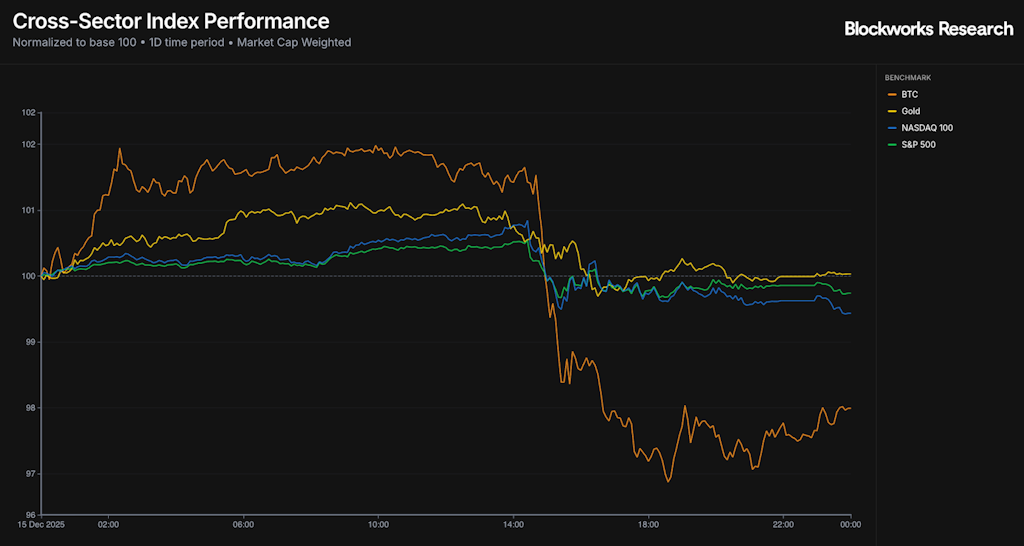
Risk aversion dominated trading desks as crypto assets underperformed relative to traditional safe havens and equities. Gold closed the day flat, reflecting defensive capital preservation, while bitcoin slipped 2.01%. Equities similarly moved lower, with the S&P 500 dropping 0.26% and the Nasdaq 100 declining 0.57% as investors rotated out of high-beta assets.
On the macroeconomic front, market participants are positioning cautiously ahead of a dense slate of economic releases in what marks the final full trading week of the year for traditional stocks. Notably, both October and November nonfarm payroll reports are scheduled for release, the former having been delayed earlier in the quarter due to a brief United States government shutdown.
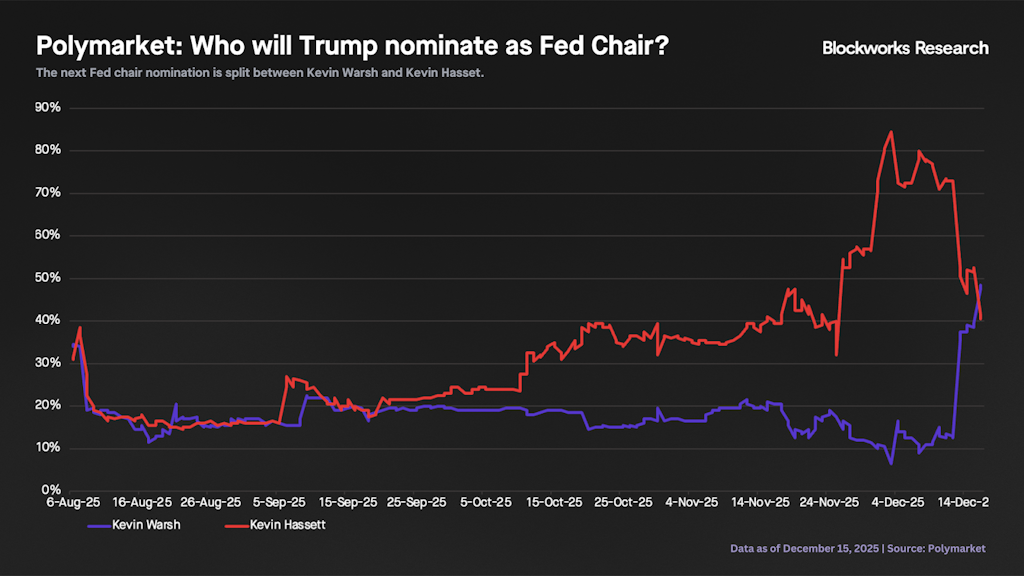
Simultaneously, political and economic speculation has intensified regarding the eventual successor to Federal Reserve Chair Jerome Powell, whose current term concludes in May 2026. While market analysts noted that Kevin Hassett emerged as a clear frontrunner earlier in the month, Kevin Warsh has since captured a narrow lead, highlighting the fluid nature of the leadership race. Regardless of the ultimate choice, consensus expectations point toward a potentially more dovish Federal Reserve under new leadership, which could pave the way for continued interest rate cuts in the coming year.
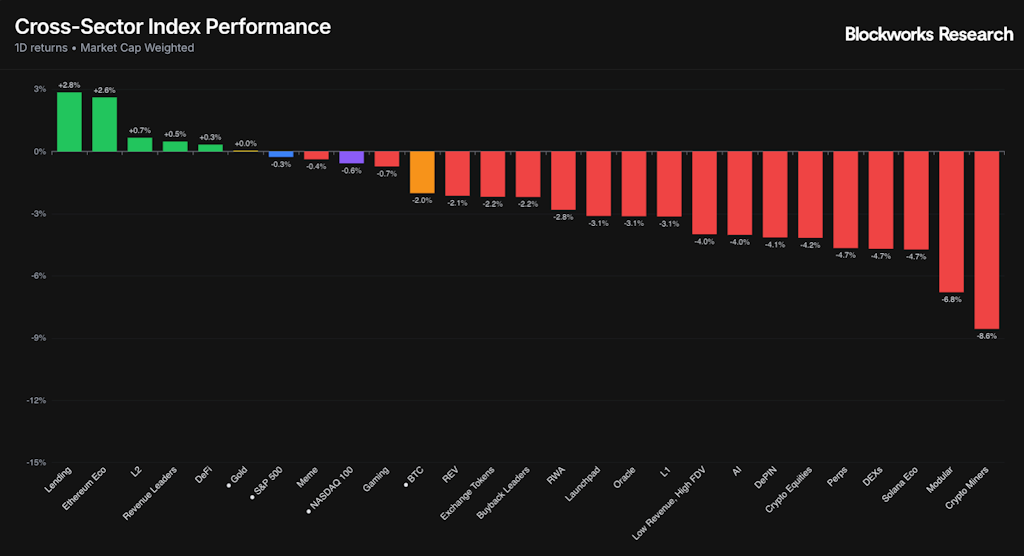
Despite the broader market pullback, certain cross-sector indexes displayed notable relative strength. The Lending index rose 2.8%, and the Ethereum Eco index climbed 2.6%. AAVE led the charge with a 3.0% gain, positioning itself as the top-performing asset across both indices. The upward momentum was further reinforced when Aave founder Stani Kulechov executed an onchain swap of nearly $10 million worth of wrapped Ether into AAVE. Market observers interpreted the move as a direct signal of alignment with the token following recent governance discussions between the DAO and Aave Labs.
Market Update and the Evolution of Crypto M&A
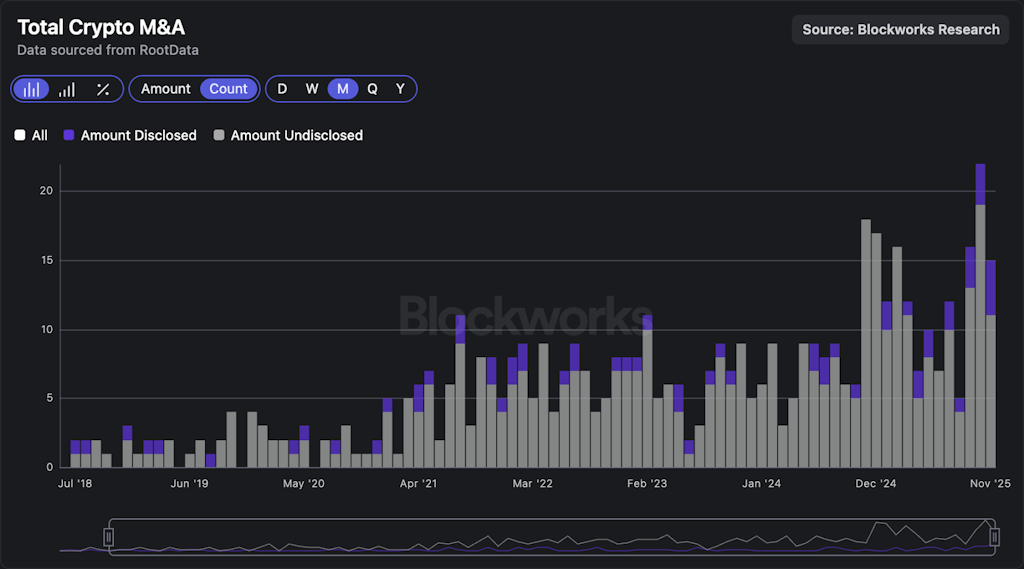
A defining structural theme for the crypto industry heading into 2026 is consolidation, with various sectors increasingly coalescing around a handful of dominant players. Merger and acquisition activity across the digital asset ecosystem has accelerated significantly over the past year, reflecting the early stages of this maturation process. According to data from RootData, there have been 143 crypto M&A deals recorded over the course of the year, though only 21 transactions have publicly disclosed their acquisition amounts. Among these, the most prominent transaction remains Naver’s high-profile $10.3 billion acquisition of Dunamu.
While industry consolidation generally points to a maturing market, a series of high-profile M&A deals completed over the final months of the year have cast a spotlight on a persistent structural challenge within the asset class: the utility and investment viability of tokens.
Recent transactions, including Pump’s acquisition of Padre, Coinbase’s acquisition of Vector, and Circle’s acquisition of the Axelar core team and related intellectual property, share a common denominator. In each instance, token holders were largely neglected during the deal structuring, with Pump only formally addressing PADRE token holders after facing significant community backlash.
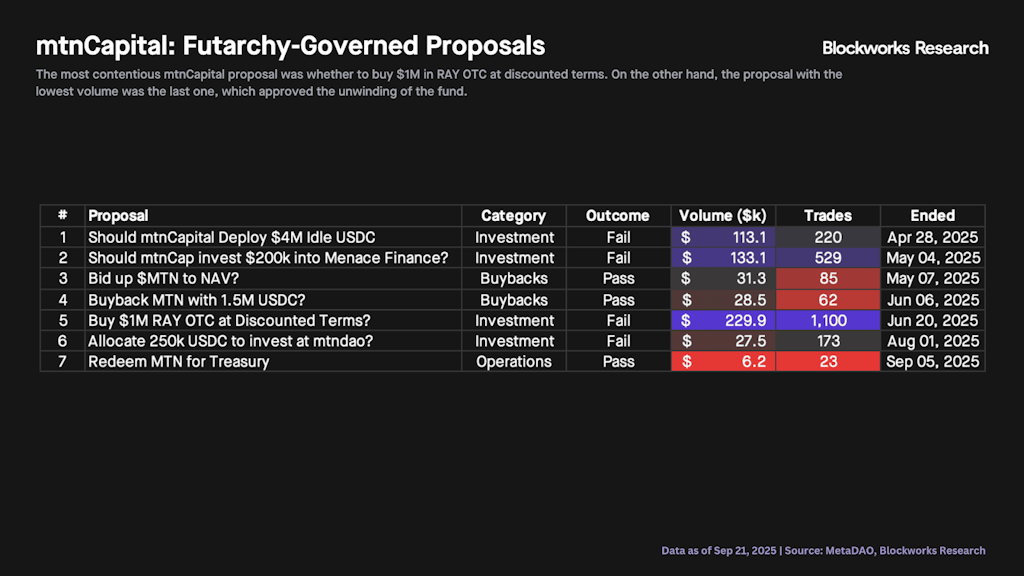
This structural disconnect has fueled ongoing experimentation around governance and value accrual. Projects like MetaDAO have attempted to address these shortcomings through "ownership coins," which have outperformed segments of the broader crypto market. Although legal frameworks remain complex, MetaDAO embeds mechanistic protections directly into tokens, allowing holders to utilize treasury clawback proposals as a final recourse. The orderly wind-down of mtnCapital demonstrated this mechanism in action, as token holders successfully redeemed their MTN tokens for underlying USDC held in the project treasury after it became evident that the underlying experiment had failed.
Alternative approaches are simultaneously tackling capital formation from the traditional finance angle. Rather than attempting to fix legacy tokens, platforms like Superstate are actively bringing equities and primary capital formation onchain. Superstate’s Opening Bell platform allows partner issuers, such as Galaxy, to move shares seamlessly between traditional legacy markets and tokenized representations of those shares on public blockchain networks including Ethereum and Solana.
Superstate expanded this infrastructure with the introduction of Direct Issuance Programs, designed to modernize traditional capital formation. This framework enables SEC-registered issuers to receive stablecoins directly into corporate wallets from KYC-verified investors, instantly issuing tokenized shares to the investor’s wallet while simultaneously updating the company’s official shareholder registry in real time.
As these ecosystems evolve, market participants are increasingly agnostic about whether they hold a native cryptographic token or a tokenized traditional equity, provided the instrument conveys a clear legal claim on underlying cash flows, assets, and regulatory recourse. Both methodologies are expected to coexist and play foundational roles in the maturation of onchain markets.
Is Onchain Demand Durable?
Incentive programs, airdrops, and points farming have remained ubiquitous fixtures of the modern crypto user experience. For retail and institutional participants alike, these mechanisms offer lucrative risk premiums and yield kickers for interacting with emerging financial applications. For protocols, token incentives function as a non-cash customer acquisition expense, helping bootstrap liquidity and overcome the difficult cold-start problem inherent in launching new financial products.
However, these community reward budgets are finite. Eventually, token allocations are exhausted, leaving the open market to determine whether a financial product holds genuine utility and economic viability absent external subsidies.
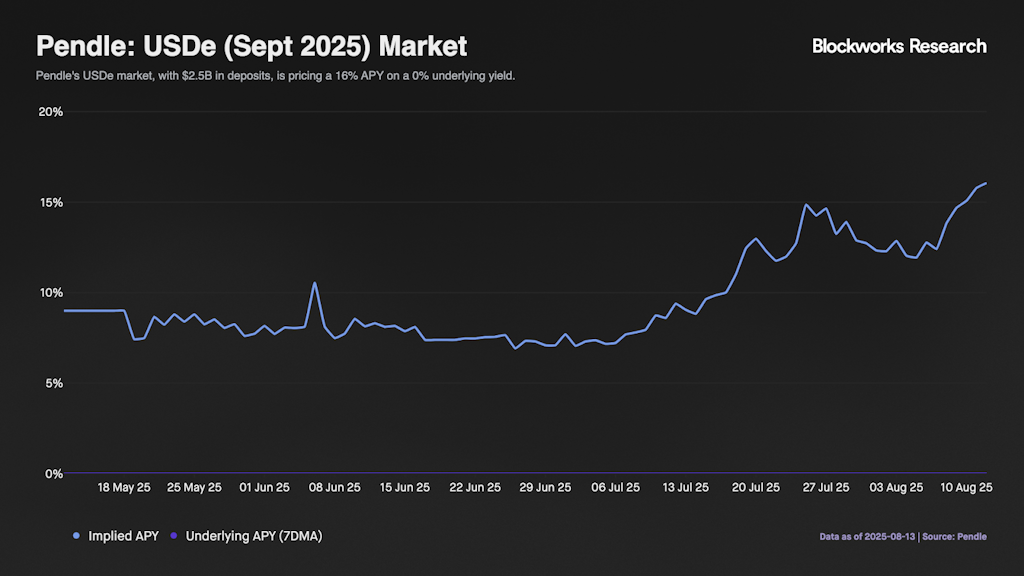
A clear historical case study can be found by examining the USDe market on Pendle leading up to its September maturity. That market successfully captured a 70x points boost. Despite generating zero underlying organic yield, the implied yield on the instrument surged past 16%, helping amass over $3 billion in total deposits.
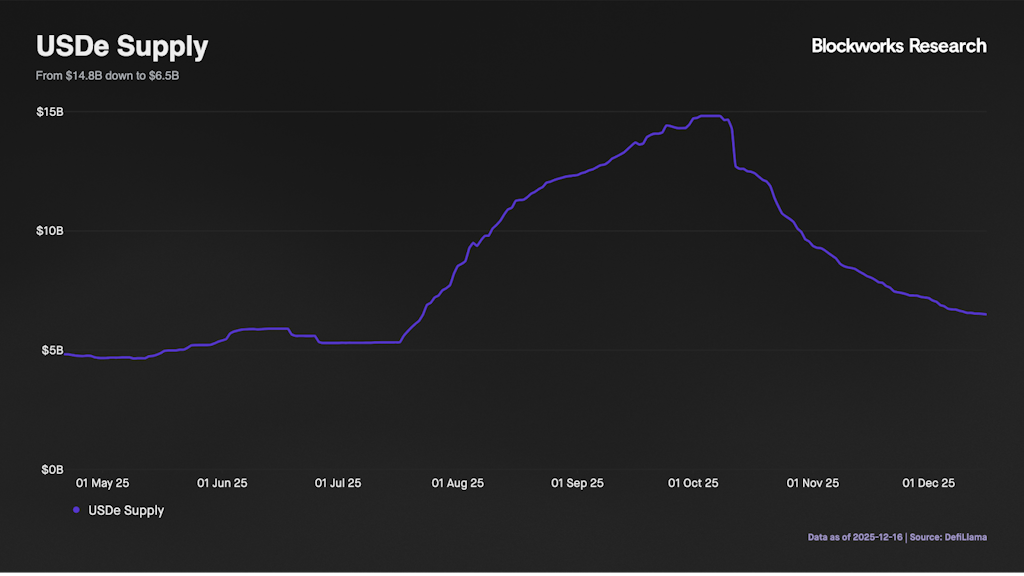
The structure offered a compelling yield spread. Users could secure a fixed 10% to 15% yield on USDe principal tokens and loop them on lending markets like Aave with a borrowing cost of 5% to 7%, all backed by billions in liquidity while native token incentives papered over the spread. Combined with parallel markets, this dynamic drove the total supply of USDe from $5 billion toward $15 billion. Following the expiration of those instruments and the conclusion of Ethena’s Season 4 points campaign, alongside broader market deleveraging events, the supply of USDe subsequently contracted back to $6.8 billion.
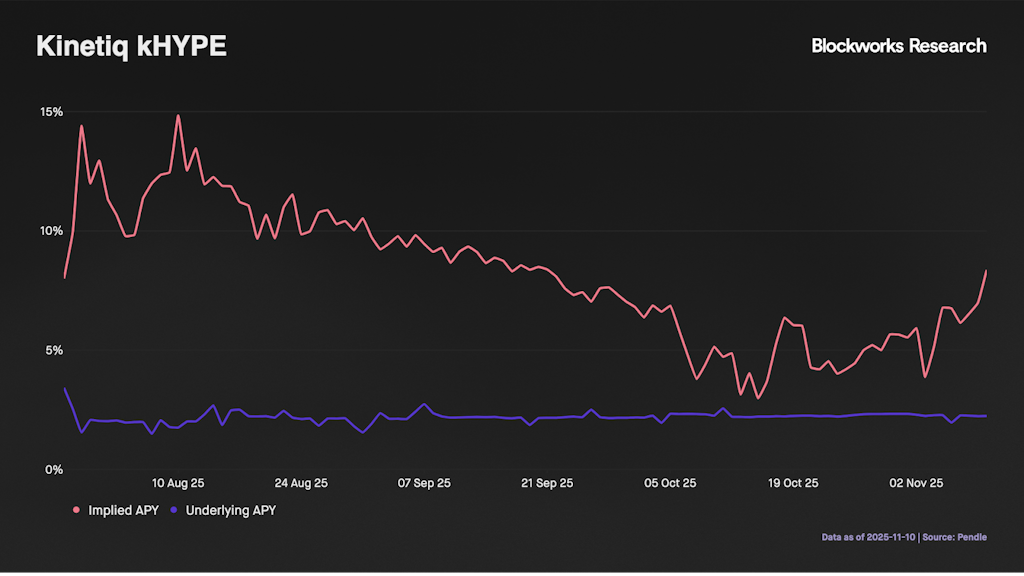
Similar patterns have repeated across other ecosystems. Prior to its token generation event, Kinetiq’s kHYPE attracted significant deposits ahead of anticipated airdrops. Pendle markets for kHYPE priced yields as high as 15% against an underlying base staking yield of only 2% to 3%, capturing over 40% of the total kHYPE supply and becoming Pendle’s second-largest listing. Following the token generation event and the expiration of that maturity window, the supply of kHYPE similarly contracted by 40%.
More recent market experiments are following similar trajectories. USD.AI, a protocol that aggregates onchain stablecoin suppliers to finance real-world GPU infrastructure loans, accumulated over $600 million in deposits in a remarkably short timeframe. Running a strict points campaign with capped deposits, demand for airdrop exposure became so intense that participants locked out of direct deposits bid up the stablecoin above its intended peg by $0.04.
USD.AI markets on Pendle offered some of the highest stablecoin yields available, with implied yields launching near 30% before drifting toward 10% against an underlying base yield of zero. Over 80% of the total USD.AI supply has been utilized through Pendle markets.
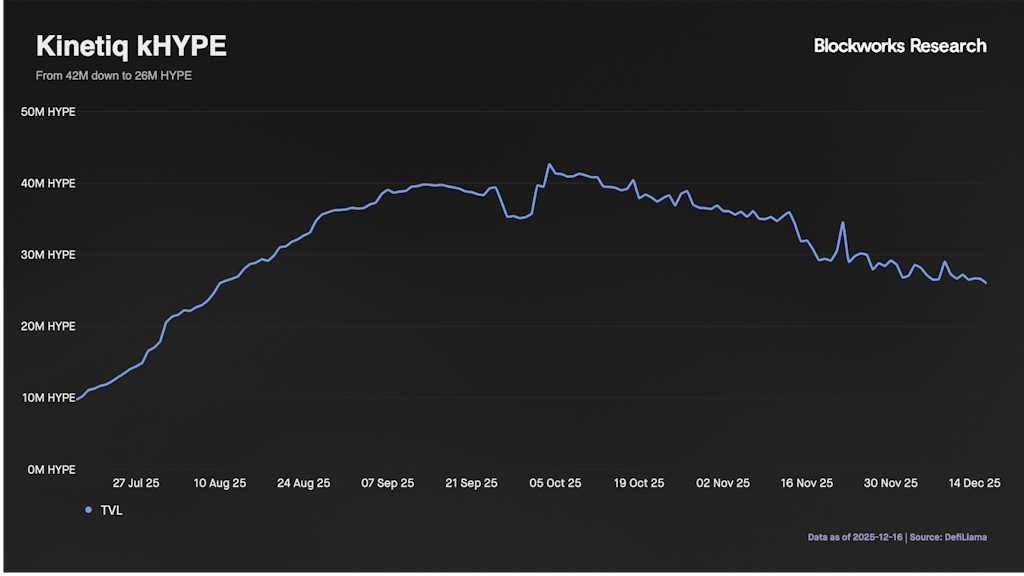
While these yields and incentive structures remain attractive to participants and effective for bootstrapping protocols, they highlight a persistent cyclical reality. Once incentive budgets are depleted and token generation events conclude, protocols must rely entirely on the organic cash flows generated by their underlying operations. Unless loan books and productive economic activity scale proportionally to match prior deposit sizes, underlying annual percentage yields may struggle to maintain the appeal that temporary liquidity currently enjoys. Ultimately, while points farming remains an enduring feature of the onchain economy, mobile capital will continue to rotate dynamically toward the most compelling risk-adjusted returns.




Comments (0)