



Cryptocurrency markets experienced a notable shift in momentum over the past week, led by a resilient recovery in Bitcoin prices, renewed institutional interest via exchange-traded funds, and shifting expectations surrounding macroeconomic leadership in the United States. Following a volatile stretch that tested key psychological levels, market participants are reassessing both macroeconomic tailwinds and fundamental network growth across leading layer-one blockchains and decentralized applications.

The broader financial landscape continues to show steady movement, with traditional equities maintaining an upward trajectory while specific segments of the digital asset economy experience divergent performance trends. As the market digests recent structural proposals, changes in fee generation, and looming political appointments, digital assets are charting a complex path forward into the final month of the year.
Market Indices and Sector Performance
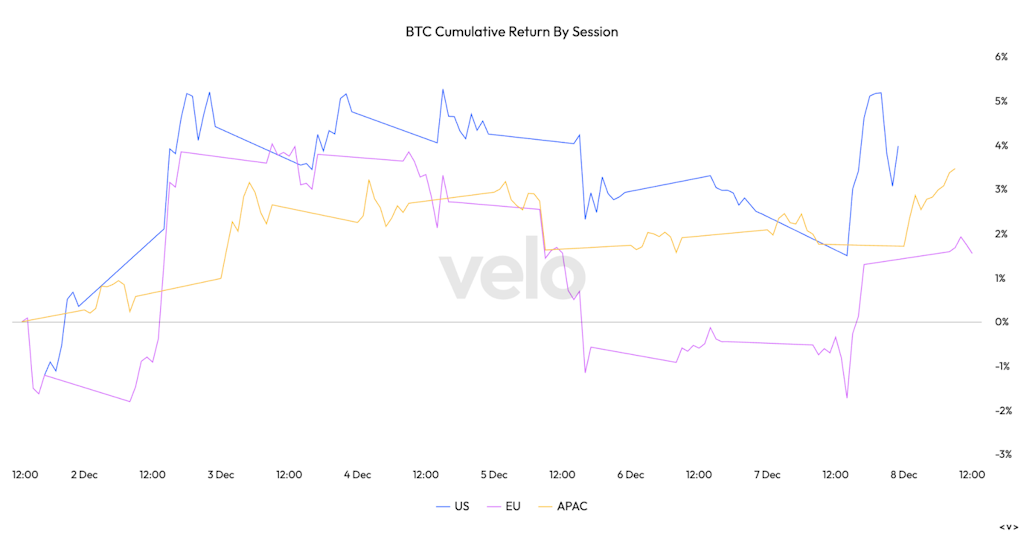
Bitcoin staged a strong recovery after bouncing off local lows near $85,000, climbing back to trade around the $92,000 threshold. Over the trailing three-week period, the premier cryptocurrency has posted a 5% gain, though this upward movement has been accompanied by pronounced intraday volatility. Market analysts have noted a distinct regional divergence in trading behavior, with Bitcoin consistently underperforming during European trading hours while showing relative strength and outperformance during US and Asia-Pacific sessions.
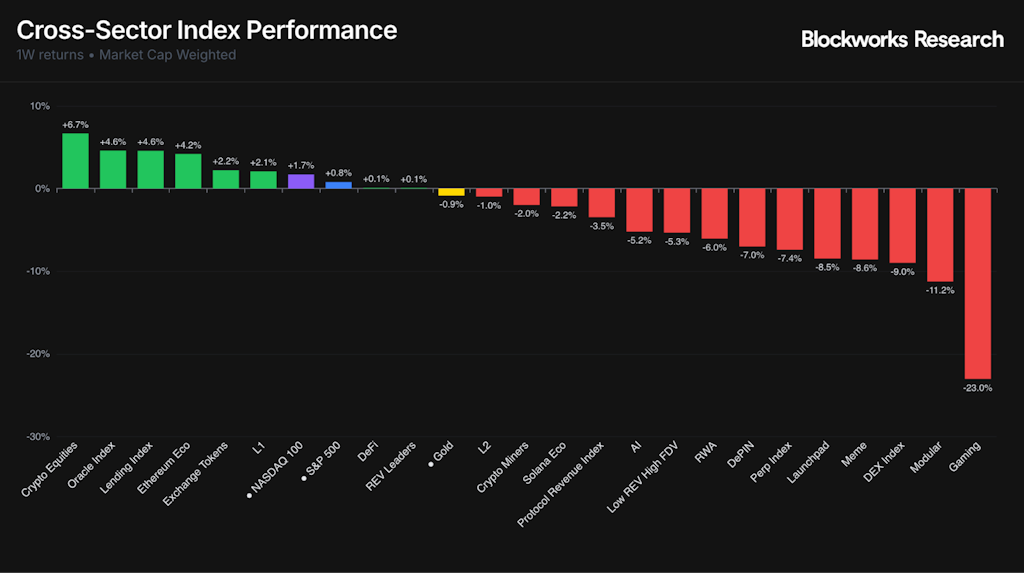
This price recovery has had a cascading effect across various sectors of the digital asset ecosystem. Over the past week, tokens associated with decentralized oracles, lending protocols, and the broader Ethereum ecosystem outperformed the wider market, each registering gains of just over 4%. Crypto equities recorded the strongest sectoral performance, surging 6.7% over the week, a move primarily driven by the notable outperformance of financial technology equities like Robinhood (HOOD).
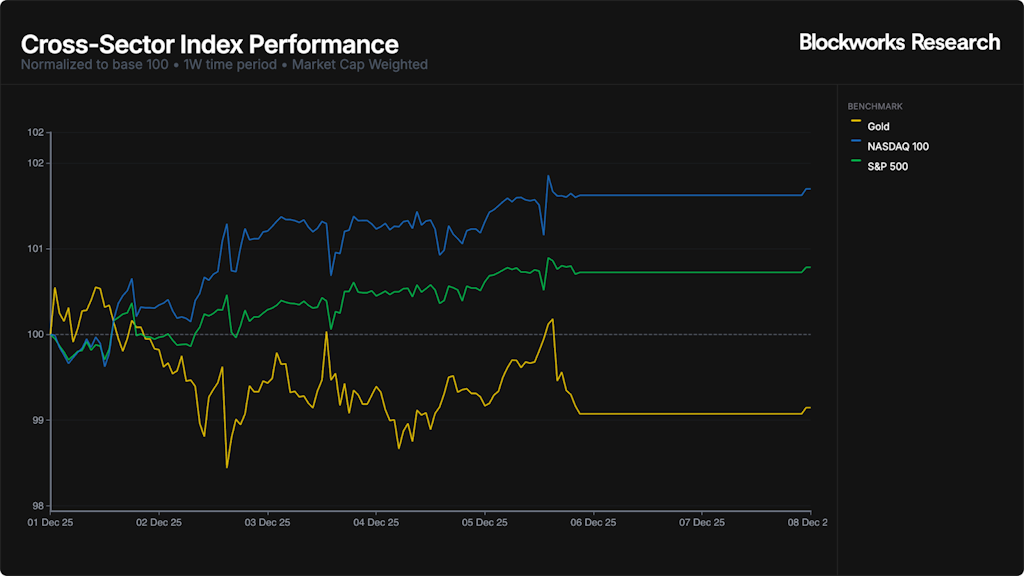
In the broader macroeconomic sphere, traditional equity markets have maintained their steady ascent. The Nasdaq 100 rose 1.70%, and the S&P 500 ground higher by 0.78%, reflecting continued appetite for risk assets. Meanwhile, safe-haven assets experienced slight downward pressure, with gold underperforming by 0.85% over the same timeframe.
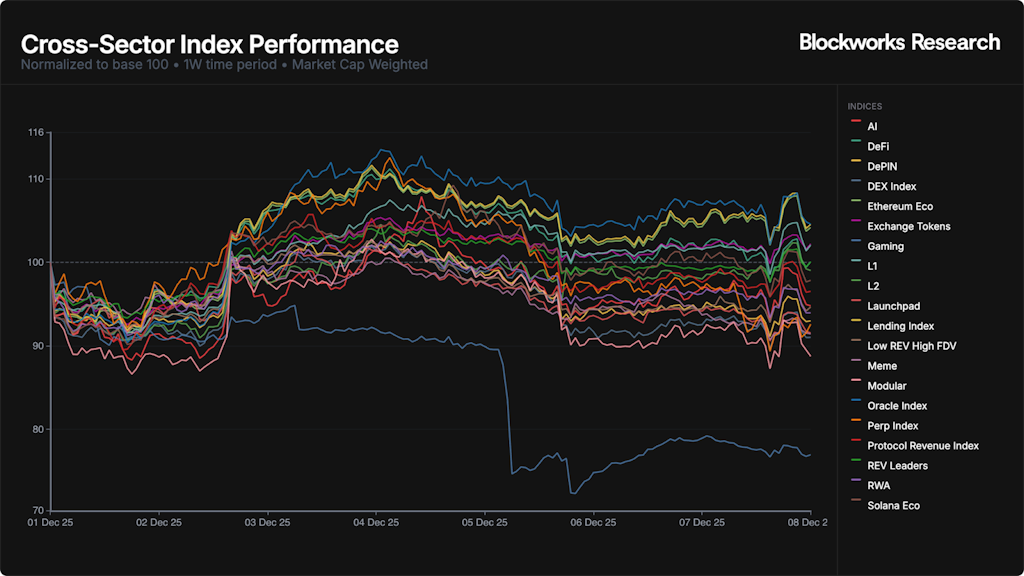
On the other end of the spectrum, the gaming sector faced severe headwinds, significantly underperforming relative to the rest of the crypto economy with a weekly drawdown of 23%. Among individual tokens, LGCT emerged as the worst weekly performer, suffering a steep price decline of 75%.
Macroeconomic Shifts and ETF Flow Reversals
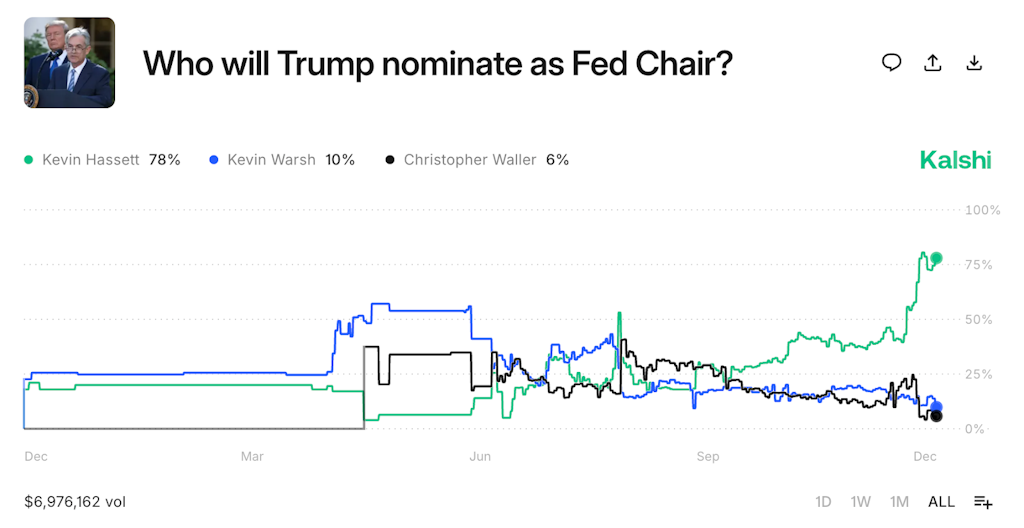
Attention in traditional financial circles has increasingly turned toward Washington as speculation mounts regarding the next chair of the Federal Reserve under President Donald Trump. Prediction markets, including Kalshi, indicate that odds have surged to 78% favoring Kevin Hassett as the next nominee for the central bank helm. President Trump recently confirmed that an official announcement regarding the nomination is imminent. Hassett, a trusted economic advisor and close White House ally, has emerged as the leading candidate largely due to his policy alignment with the administration’s stated desire for significantly lower interest rates. Proponents of this view argue that reduced rates would spur economic activity by providing cheaper consumer loans and residential mortgages.
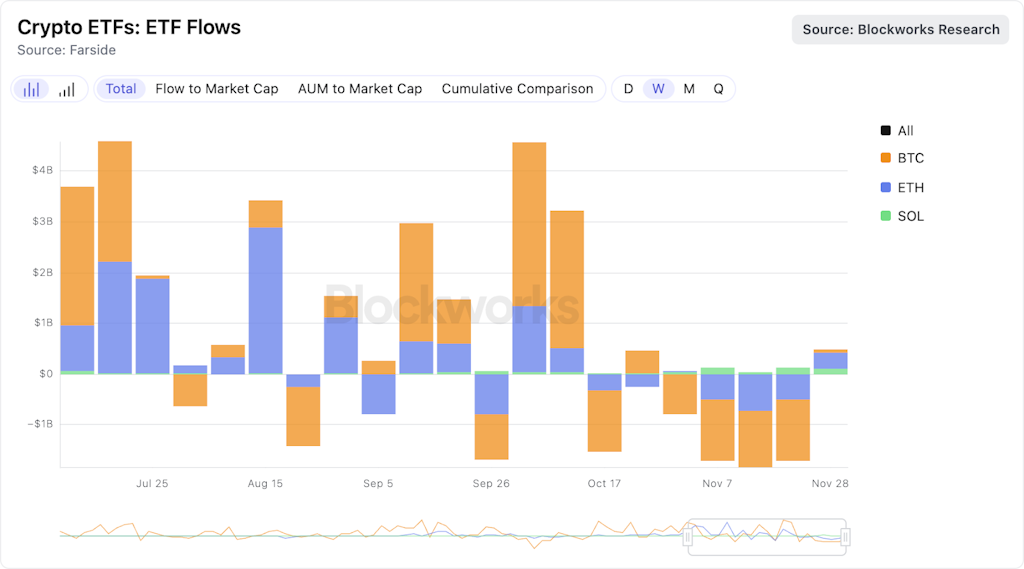
Concurrently, the institutional investment landscape surrounding digital asset exchange-traded funds has shown signs of stabilization following a turbulent period. Bitcoin ETF flows experienced a sharp reversal in November, marked by heavy net outflows that contrasted sharply with the steady accumulation trend observed from May through October. Throughout November, US spot Bitcoin ETFs saw approximately $3.46 billion in net redemptions, entirely erasing the $3.42 billion in net inflows recorded during the previous month. This contraction represented the worst monthly outflow period for the products since February 2025, when redemptions reached $3.56 billion.
The dramatic shift in November highlighted how quickly institutional sentiment can deteriorate despite months of consistent capital deployment. Furthermore, the correlation between ETF flows and underlying price action remained robust, as November’s heavy outflows closely mirrored Bitcoin’s double-digit percentage decline for the month.
However, the first week of December brought a welcome reprieve. Bitcoin ETFs registered their first positive net inflow week since the final week of October, pulling in approximately $70.2 million in net new capital. At the same time, institutional products tied to other major layer-one assets attracted even larger relative sums, with Ethereum and Solana ETFs recording $312 million and $108 million in net inflows respectively over the past week.
Application and Network Revenue Dynamics
Fundamental on-chain metrics reveal a stabilization in network and application revenue generation across the decentralized finance landscape. Network revenue figures remained largely consistent with the previous week, with perpetual exchange Hyperliquid capturing the lion’s share at 35% of all network revenues. Tron followed closely behind, accounting for 20%, while Solana secured 15%. Notably, BNB network revenues remain subdued relative to the multi-month highs established in October, with much of that historical market share having migrated toward Hyperliquid and Solana.
A similar stabilization was observed in application-level revenues, which rebounded to $38 million—representing a 10% increase week-over-week. This uptick breaks a four-week streak of consecutive declines across tracked decentralized applications. Hyperliquid maintained its dominant position by capturing 35% of application revenue, followed by memecoin launchpad pump.fun at 25%, and Axiom at 8%.
Structural Proposals and Token Economics on Solana
Beyond short-term price action and revenue metrics, structural changes to token economic models continue to draw significant attention from developers and network participants. Helius contributors Lostin and Ichigo have formally introduced SIMD411, a proposal designed to accelerate Solana’s native token emission schedule.
The core objective of SIMD411 is to double the disinflation rate from its current -15% to -30%, while leaving the long-term terminal inflation rate unchanged at 1.5%. By implementing this predictable parameter adjustment, the network’s annualized inflation rate would descend from its current level of approximately 4.14% down to the 1.5% terminal target in roughly 3.1 years—around early 2029—rather than following the original projected timeline of roughly 6.2 years, which would have extended into early 2032.
Proponents of the proposal argue that if implemented, SIMD411 would effectively eliminate approximately 22.3 million SOL in token emissions over a six-year comparison period relative to the existing trajectory, representing a reduction valued at roughly $2.9 billion at current market prices. By curbing these upcoming emissions, the network could substantially mitigate persistent sell pressure stemming from validator rewards and token dilution, providing a more robust economic foundation for the Solana ecosystem as network adoption scales.





Comments (0)