



The cryptocurrency market has spent the better part of the current cycle wandering through an existential fog. To many observers, the landscape feels increasingly aimless—a market that has wrung out the easy liquidity of previous eras and left behind a trail of declining token prices, collapsing yields, and exhausted speculative trends. The frenetic energy of past peaks has largely given way to a quieter, more disillusioned atmosphere. Traditional finance integrations, incremental payment rails, and minor efficiencies for legacy institutions have materialized, but they largely fail to capture the original counter-cultural ethos that drew early participants to the decentralized ecosystem in the first place.
Yet, beneath the surface of a seemingly stagnant market, a profound shift is quietly taking shape away from the mainstream spotlight. While the broader public and many institutional players remain fixated on traditional use cases or superficial narratives, a parallel economy is beginning to germinate at the fringes of technology. This nascent space is driven not by human speculation or the coordination challenges of misaligned market participants, but by the burgeoning capabilities of artificial intelligence. As autonomous software agents grow increasingly sophisticated, industry analysts and technologists are beginning to look toward a future where machines—not humans—are responsible for driving a vast share of economic activity.
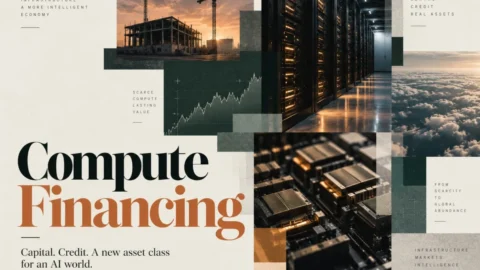
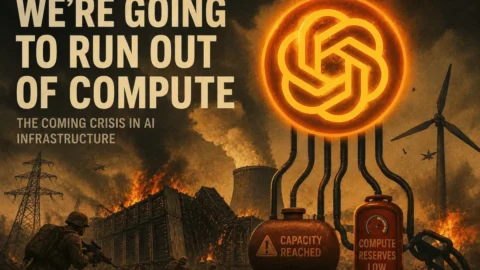
This evolving machine-driven economy operates on an entirely different timeline and scale than traditional human commerce. Human economic structures are notoriously slow, bogged down by the friction of communication, negotiation, and divergent incentives. In contrast, autonomous systems operate at lightning speed, executing complex workflows and coordinating micro-tasks in fractions of a second. This new paradigm brings its own unique economic markers, most notably the escalating cost of compute. Cloud computing platforms and hardware resources are experiencing steady cost increases year-over-year, establishing a high-stakes environment where computational power serves as the ultimate scarce resource. If a specific computational workload fails to generate sufficient economic value, it is rapidly priced out to make room for more efficient or productive uses.
The foundational bricks of this machine economy are already becoming visible in specialized niches, beginning with the realm of automated application programming interface payments and micro-transactions. Rather than relying on manual subscriptions or human-driven software evaluations, autonomous agents are beginning to demonstrate the capacity to independently search for, test, and purchase technological services. An agent tasked with solving a specific computational problem can theoretically query multiple providers simultaneously, run rapid parallel experiments to determine which software stack performs best, and execute instantaneous micropayments to secure the optimal solution without human intervention.

As these capabilities mature, the financial requirements of autonomous agents will inevitably grow more sophisticated. Routine workflows will give way to complex financial operations, requiring automated lending, borrowing, and dynamic asset management tailored specifically to machine actors. While early experimental steps—such as on-chain GPU financing protocols—offer a glimpse into this future, the broader infrastructure required to fully support an agent-driven financial layer is still in its infancy. Industry timelines suggest that as frameworks for autonomous agents evolve beyond simple convenience and workflow streaming into always-on, value-handling entities, the demand for robust financial rails will accelerate significantly, with many projecting a major inflection point within the next twelve to eighteen months.
This impending transition holds profound implications for the culture and technical standards of the cryptocurrency ecosystem. For years, the industry has wrestled with a pervasive culture dominated by short-term speculation and financial engineering, often alienating core technologists who value deep system design and cryptographic principles. However, the arrival of autonomous agents is poised to fundamentally alter these dynamics. Software agents do not care about viral narratives, day-trader sentiment, or superficial marketing hype. Operating entirely on expensive computational resources, agents are strictly driven by utility, performance, and tangible outcomes. In a market dominated by machine actors, technical excellence, robust system architecture, and rigorous adversarial thinking become absolute prerequisites rather than optional luxuries.
The shift toward an agent-centric economy also promises to upend traditional power structures within the cryptocurrency sector. Rather than a landscape dominated by venture capital firms setting high fully diluted valuations and distributing tokens to retail investors, a machine-driven ecosystem places supreme value on data and verifiable performance. Data, which has historically been treated as a secondary or undervalued asset in many blockchain architectures, is positioned to become the primary lifeblood of on-chain agents. As swarms of autonomous systems interact, execute transactions, and continuously analyze the behavior of other agents, the demand for high-quality, accessible on-chain data is expected to surge dramatically.
Beyond data consumption, this structural evolution is projected to catalyze significant repricing and development across several foundational sectors within the blockchain space. Programmable and agentic custody solutions, highly secure oracle networks, and decentralized, indestructible code infrastructure will become critical pillars that autonomous systems can rely on without human oversight. Furthermore, the emergence of novel asset classes specifically tailored to agent-to-crypto activity will likely redefine how value is generated, measured, and exchanged on-chain.
Encouraging early developments are already emerging across the infrastructure landscape, such as the transition of key payment frameworks like x402 to neutral stewardship under organizations like the Linux Foundation, ensuring that foundational technologies remain open and decentralized rather than proprietary. For developers and technologists navigating the current market malaise, the mandate is clear: the underlying infrastructure of the new machine economy must be thoroughly built and tested long before autonomous agents reach mass adoption. As funding cycles shift and competition inevitably intensifies, the builders who maintain a clear vision of this automated future will be uniquely positioned to shape the next major era of technological and financial evolution.

Comments (0)