


Cybersecurity has long been characterized as a perpetual, high-stakes arms race between malicious actors and defenders. However, the advent of agentic artificial intelligence and Mythos-class models has dramatically tipped the scales in favor of attackers, opening a modern Pandora’s box of offensive cyber capabilities. In the wake of these advanced models, the global tech ecosystem has witnessed a staggering explosion in Common Vulnerabilities and Exposures (CVEs), straining traditional security teams and infrastructure to their absolute limits.
At its core, cyberattacks are fundamentally about technical exploitation, which relies heavily on advanced coding and reasoning prowess. Frontier systems, such as Anthropic’s Mythos, possess the sophisticated capability to independently discover and exploit zero-day vulnerabilities before patches can be developed. Furthermore, when any sufficiently powerful model is paired with automated agent harnesses, the economic and operational barriers to executing complex social engineering attacks plummet to near zero. This enables threat actors to scale their campaigns to unprecedented levels, creating a dangerous reality where the threat landscape intensifies with every single new model release.
Alarmingly, defensive security technologies and methodologies are not improving in a parallel fashion. The critical data required for effective defense lives deep within system logs, security events, traces, and complex telemetry—representing a fundamentally different modality than the vast bodies of natural language text that large language models (LLMs) are typically trained on. These log modalities barely register in the pretraining phases of general-purpose models. Unlike offensive cybersecurity, which frequently involves goal-directed reasoning toward a clearly defined technical objective, defense requires open-ended, continuous reasoning. Defenders must constantly hunt for elusive anomalies across vast, churning oceans of normal-looking network activity.
This distinct capability demands extensive, domain-specific training that general-purpose models simply do not possess. In short, effective cybersecurity defense is profoundly "out of distribution" for general-purpose frontier models; neither the specialized training data nor the deep operational intuition it requires is well-represented in standard training pipelines. In the fierce commercial and scientific race toward artificial general intelligence (AGI), the major frontier AI labs cannot be reasonably expected to take an administrative and technical detour to overhaul their training pipelines specifically for defensive cybersecurity. Enterprises and organizations certainly cannot afford to stake their digital security on the speculative hope that they eventually will.
Recent rigorous testing conducted by Corma has vividly illustrated this structural "defense gap." In controlled red and blue team simulations, researchers set up scenarios where an attacker agent plants a hidden backdoor inside a system, and a defender agent attempts to locate and neutralize it. The results were stark: the defending model failed to discover the hidden backdoor 78% of the time. Crucially, this failure rate occurred even when the defender agent was an identical, copy-paste replica of the very same model that had planted the backdoor in the first place. Holding model quality completely constant, attackers maintain a structural, systemic advantage in the current paradigm.
The only viable answer to relentless scaling laws on the offensive side is the establishment of equally powerful scaling laws on the defensive side. Recent industry events have made it glaringly clear that frontier AI engineered specifically for defensive cybersecurity is one of the most crucial, yet entirely unsolved, problems of the modern artificial intelligence era. Solving this monumental challenge is the generational mission upon which Corma was founded.
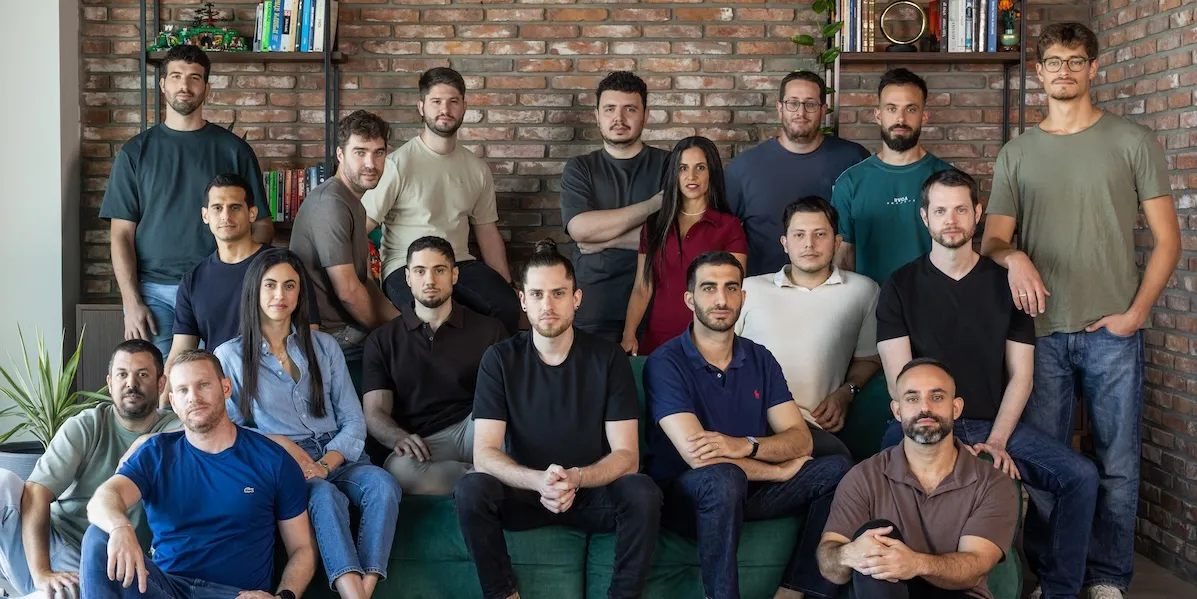
Under the leadership of founder and CEO Alon Pluda, the Corma team is actively training a specialized foundation model designed explicitly to power autonomous defensive cybersecurity agents. Cybersecurity shares deep structural similarities with strategic games like Go or chess—it operates as a two-player, zero-sum game featuring a clean, binary reward system (either a network was successfully breached or it was not) alongside an endless, repeating supply of interactive games to play. Historically, reinforcement learning and self-play have repeatedly produced superhuman capabilities and results when applied to this exact operational paradigm. Industry observers are now watching history repeat itself in the digital security domain.
Corma is pushing this technological envelope further by deploying large-scale reinforcement learning across simulated cybersecurity environments that meticulously replicate complex enterprise networks. These simulated environments incorporate all the realistic tools, deep telemetry, and background noise found in modern corporations. The resulting training pipeline yields advanced frontier defensive capabilities that consistently outperform general-purpose foundation models, while simultaneously achieving dramatically lower per-token inference costs.
In the perpetual cat-and-mouse game of enterprise cybersecurity, vertical integration and a sovereign AI approach are poised to win out. Cost matters immensely, as always-on inference expenses can accumulate rapidly across a massive corporate infrastructure. Owning the underlying model weights matters just as much, ensuring that operations are never restricted by arbitrary policies or usage limitations on cybersecurity applications set by closed model labs. Furthermore, specialization and rapid inference speed are paramount—in the face of automated attacks, the fastest system to identify and neutralize a new threat is the ultimate victor.
Corma’s proprietary foundation model has been fully deployed and productized as an autonomous, agentic Security Workforce. These specialized workers operate seamlessly across a wide array of different security tools, taking on specialized roles that span the entire breadth of a modern security organization. Their operational scope ranges from security operations center (SOC) triage and identity management to cloud security, network security, and beyond. Today, these autonomous workers are actively on the job at Fortune 500 corporations and large enterprises across critical sectors, including healthcare, finance, critical infrastructure, retail, and more.
The practical impact of Corma’s foundation model is demonstrated by its ability to complete complex defensive workflows end-to-end. Industry executives have shared striking examples of its efficacy. One Chief Information Security Officer recounted how a Corma agent proactively notified him of a pending enterprise attack via his Garmin smartwatch while he was out on an evening walk with his dog. With a single quick confirmation tap from the user, the agent successfully executed the protocol to shut the attacker down entirely—all while the CISO remained on his walk. In another notable instance, during its very first hour on the job inside a customer’s production network, Corma independently uncovered, contained, and remediated an active attacker campaign that the organization’s human security team had completely missed for 52 days.
Training frontier foundation models for the rigorous demands of defensive cybersecurity requires a rare combination of world-class hackers and world-class AI researchers—an intersection of talent possessed by almost no other company on Earth. Alon Pluda is widely recognized as one of the most elite hackers globally, and he has successfully assembled a cohesive, interdisciplinary team of top-tier hackers and research scientists. This team is rapidly hill-climbing on complex technical challenges while building substantial commercial momentum across the enterprise market.
With the backing of major investors who have stepped up to lead Corma’s seed funding round, the company is well-positioned to chart new territory. As the cybersecurity landscape evolves under the pressure of next-generation machine intelligence, Corma is stepping forward to secure the digital frontier in what promises to be one of the most dynamic and critical races in the history of technology.





Comments (0)