



Macroeconomic realities have finally delivered a sharp reminder to the cryptocurrency market that broader global financial conditions still matter immensely. After weeks of optimistic momentum, digital asset markets found themselves tethered to the cautious signals emanating from traditional finance, even as localized sectors within the decentralized ecosystem undergo profound structural shifts.
The Federal Reserve recently delivered the widely anticipated 25-basis-point interest rate cut, yet the accompanying policy guidance struck a notably hawkish tone. Central bank officials signaled a much tighter monetary path ahead, projecting only a single rate cut for the entirety of the next year. Policymakers pointed toward a cooling yet resilient labor market, persistent inflation hovering above the central bank’s target, and economic growth that continues to outpace expectations.

This messaging poured cold water on market participants hoping for an aggressive wave of incoming liquidity. For bitcoin, the impact was immediate. The leading cryptocurrency was knocked off its early-session strength, surrendering its gains as the realization set in that monetary easing will unfold far more slowly than consensus had anticipated. While traditional markets digested the Fed’s outlook with a degree of calm, bitcoin closed down 0.73%, while safe-haven gold and major equity benchmarks such as the S&P 500 and the Nasdaq managed modest gains of 0.57%, 0.53%, and 0.22%, respectively.
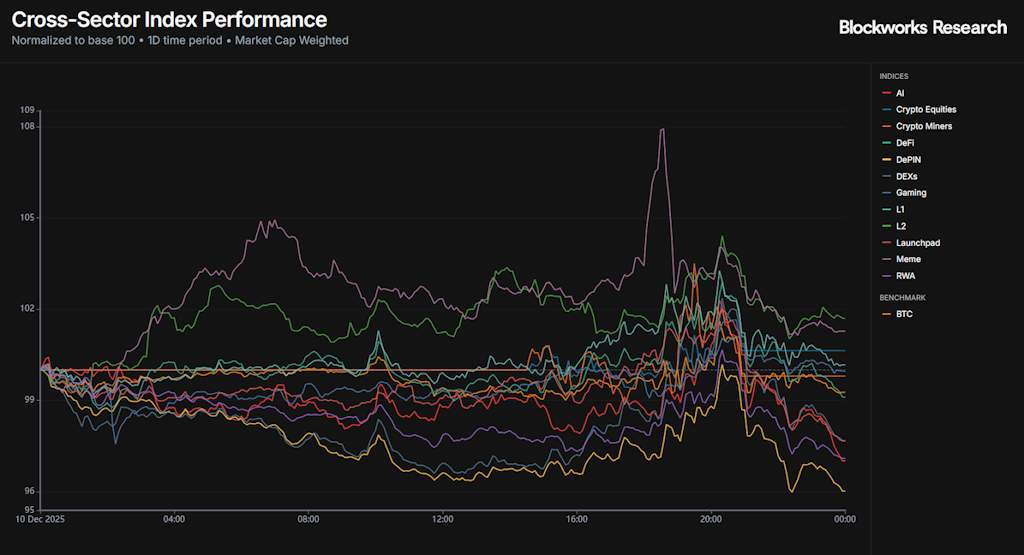
Beneath the headline indices, performance across various crypto sectors remained notably fragmented. Layer-2 networks and meme-centric tokens managed to eke out gains of 1.70% and 1.27%, respectively. The strength within the Layer-2 sector was driven almost entirely by MNT, which surged 4.5% and now commands nearly a third of the sector’s total index weighting. A similar dynamic played out among meme assets, where M (MemeCore) jumped 6.2% while the vast majority of other prominent meme tokens drifted lower. Conversely, artificial intelligence and decentralized physical infrastructure networks, or DePIN, lagged significantly, posting sector-wide losses of 3% and 4%. The weakness in AI was compounded by steep pullbacks in tokens like IP and ICP, which fell 6% and 7.9%, respectively, while DePIN suffered from notable declines in FIL and HNT.
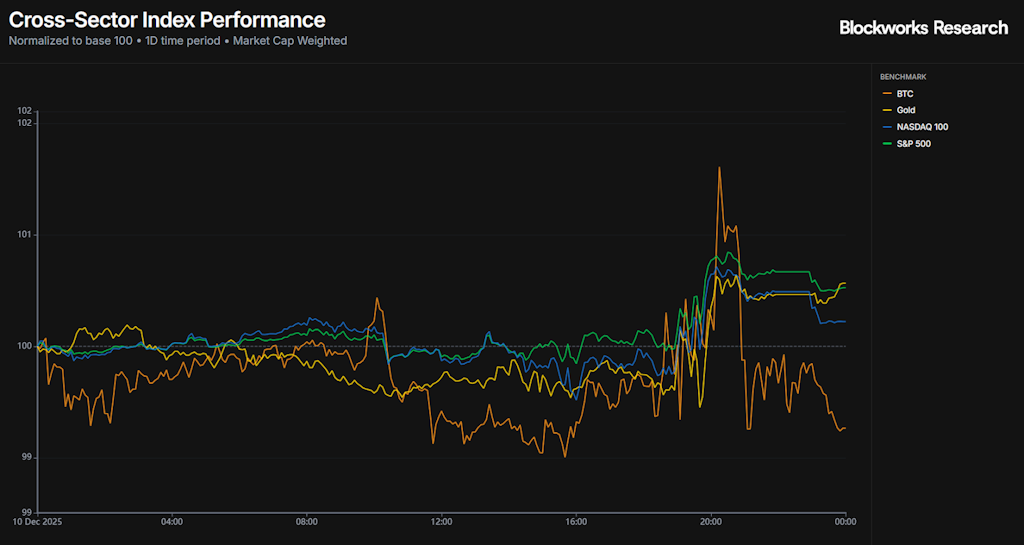
With bitcoin hovering around the $90,000 threshold, the broader market currently feels stuck in neutral. Until macroeconomic indicators establish a clearer directional trend, digital assets appear destined to drift in tandem with traditional market sentiment.
The Evolving Perp Wars and the Pressure on HYPE
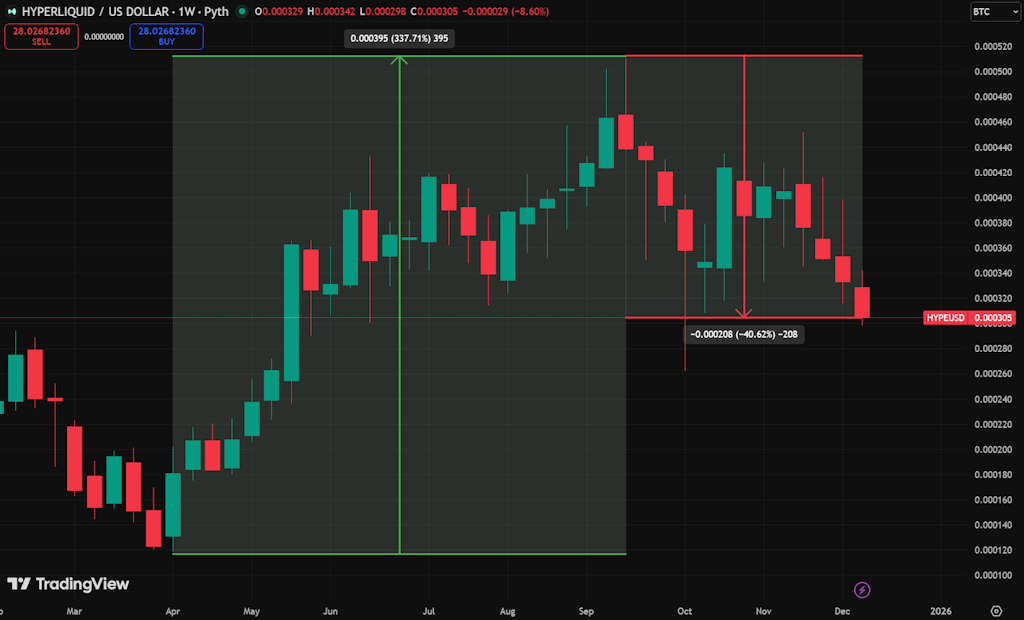
Away from macro headwinds, the fiercely contested perpetual swaps market—commonly known as the Perp Wars—is undergoing a dramatic transformation. Industry participants have increasingly found themselves asking whether the momentum behind HYPE is beginning to fade. The token has visibly struggled to keep pace with broader market recoveries, sliding approximately 20% over a recent seven-week stretch while bitcoin dropped by just 3%. Zooming out to examine weekly HYPE-to-bitcoin returns reveals that the token has surrendered nearly half of its outperformance accrued since the market lows seen in April, following a pronounced peak in mid-September.
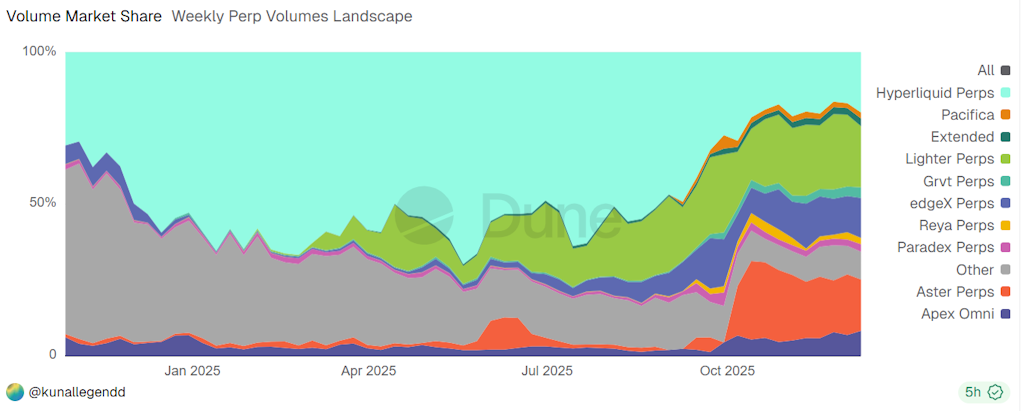
The catalyst behind this shift is unmistakable: intensifying competition. The apex of HYPE’s relative performance coincided almost perfectly with the market debut of Aster, a new perpetual exchange contender that rapidly captured both trading volume and user attention away from Hyperliquid. Since mid-September, Hyperliquid’s commanding share of perpetual trading volume has contracted from 49% to roughly 19%. The vast majority of this lost market share has migrated toward Aster and a competing venue, Lighter, which has managed to occasionally edge out Hyperliquid in weekly trading volume metrics since mid-October.
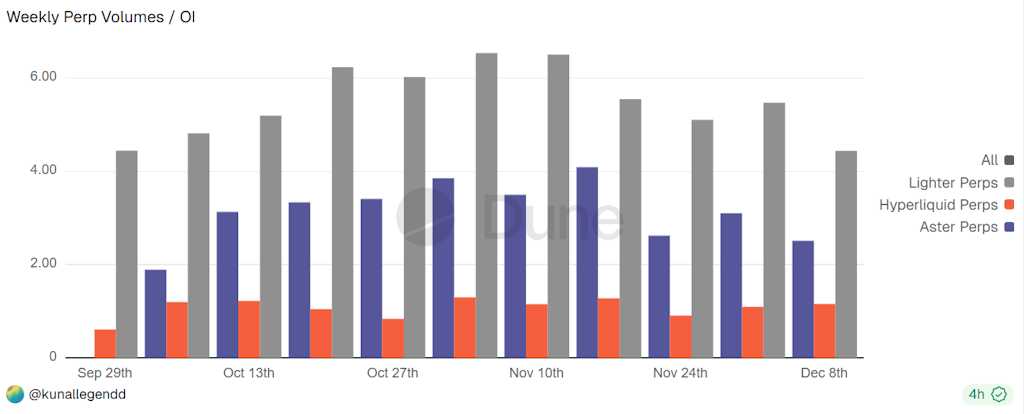
Raw volume figures, however, do not tell the entire story of market health. A deeper dive into weekly trading volume relative to open interest reveals that both Lighter and Aster maintain significantly higher turnover ratios than Hyperliquid. High turnover ratios typically indicate rapid cycling of outstanding positions and frequently signal inorganic, incentive-driven activity associated with point farming programs. Because both Aster and Lighter have relied heavily on aggressive point systems to bootstrap liquidity, a substantial portion of their current activity risks evaporating once those incentive structures cool off.
Lighter’s upcoming token generation event will likely serve as the first genuine test of whether its current user engagement is sticky or merely temporary behavior driven by yield-seeking farmers. For a considerable period, many market observers assumed Hyperliquid would unilaterally dominate the decentralized perpetual exchange landscape. The current reality paints a much more competitive picture, suggesting the sector is unlikely to become a winner-take-all monopoly. Instead, the protocol that ultimately captures dominant market share will likely be the one offering the tightest combination of low fees, deep liquidity books, diverse market selections, and a frictionless trading experience.
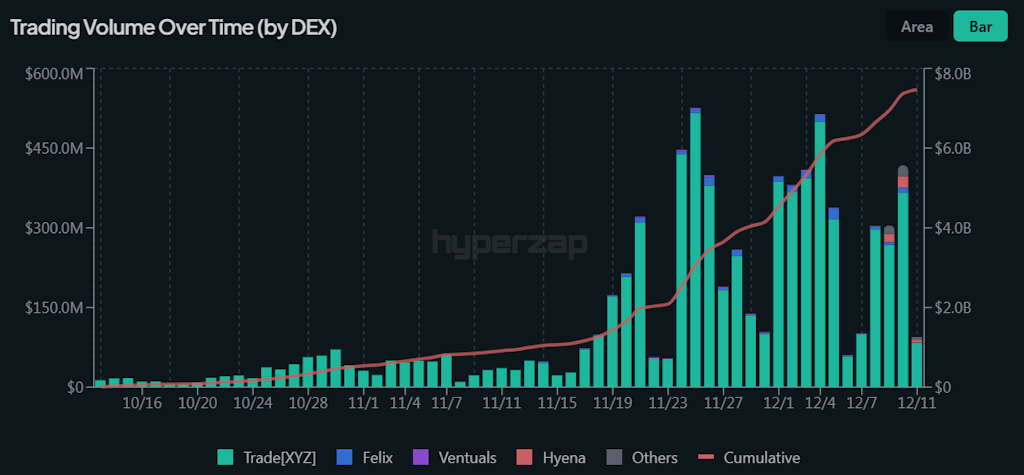
Lighter has aggressively contested the fee battle by offering zero maker and taker fees, a dynamic that aligns with the broader rise of perpetual aggregators capable of routing order flow directly to the most cost-effective venues. Nevertheless, market depth and asset variety remain critical pillars, domains where Hyperliquid continues to hold a distinct advantage. This edge was further reinforced by the implementation of HIP-3, which introduced equity perpetual markets that have attracted strong early user traction.
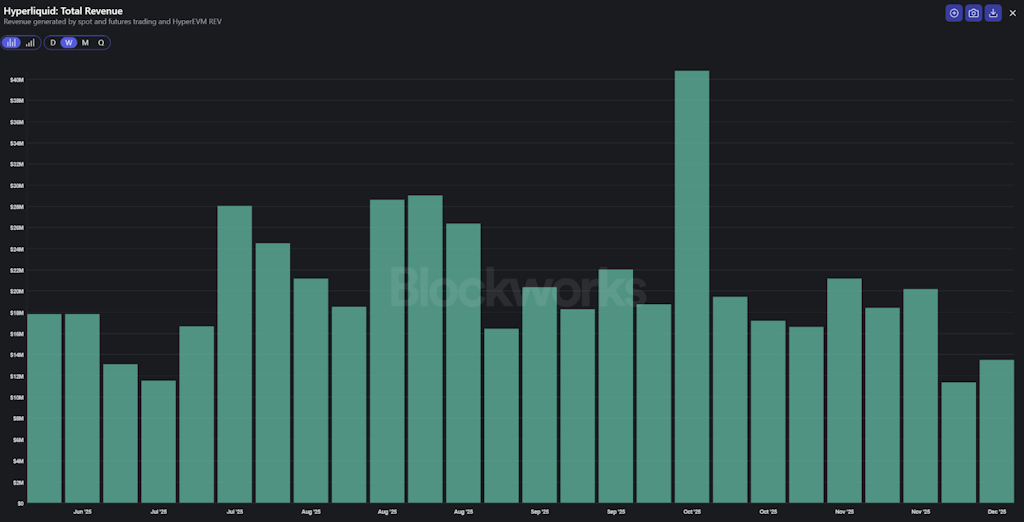
Recent headwinds, including protocol team token unlocks and emerging concerns regarding the specific mechanics of Hyperliquid’s automated deleveraging design, have undeniably weighed on short-term market sentiment. Even so, the protocol’s underlying financial fundamentals remain formidable. Hyperliquid consistently generates between $10 million and $20 million in weekly revenue, cash flows that are systematically utilized to buy back HYPE tokens. Within the current crypto landscape, very few protocols possess a real, self-sustaining economic engine of that magnitude. While the path forward is never guaranteed, dismissing Hyperliquid prematurely overlooks the foundational strength of its business model, signaling that the broader battle for perpetual exchange dominance is only just beginning.
Addressing the Crisis in Crypto Investor Relations
The broader cryptocurrency industry has matured at a staggering pace, shedding much of its historical reputation as a market driven purely by speculative infrastructure plays. Today, the ecosystem comprises diversified, revenue-generating businesses capable of producing substantial cash flows. Across the industry, monthly protocol revenue—excluding stablecoins—averaged $175 million over the past year, representing a striking 133% year-over-year increase compared to the $75 million recorded previously.
The unprecedented capacity for global coordination across decentralized networks has unlocked commercial growth rarely seen in traditional corporate history. Hyperliquid achieved a $1 billion annualized recurring revenue run rate faster than any other team on record, Tether successfully secured funding rounds at a reported $500 billion valuation, and emerging applications like Axiom reached $63 million in monthly revenue less than half a year after launch. Fundraising volumes further underscore this momentum, with total monthly capital raises consistently ranging between $500 million and $2 billion.
Despite this commercial maturation, navigating the cryptocurrency landscape has grown increasingly complex, particularly for traditional finance investors seeking to diversify their institutional portfolios. Although digital assets have largely evolved into ownership-based instruments functioning similarly to cash-generating corporate enterprises, their native cryptographic structures render traditional due diligence exceedingly difficult.
Consider the example of Pendle Finance, a prominent yield-optimizing platform operating within the fixed and variable rate swap ecosystem. While the traditional interest-rate derivatives market routinely handles a staggering $7.9 trillion in daily volume, institutional allocators investigating how this utility translates into the crypto economy immediately encounter a wall of dense structural nuances.
This intricate complexity pervades nearly every product category within the modern decentralized finance environment. Traditional allocators frequently grapple with foundational questions regarding the operational advantages of central limit order book models versus automated market maker liquidity pools, the architectural tradeoffs between modular and monolithic lending frameworks, and the long-term sustainability of various user acquisition strategies. These persistent hurdles help explain why many cash-flow-generating protocols continue to trade at steep valuation discounts relative to their traditional finance counterparts.
For professional asset allocators, the standard research workflow remains fundamentally broken. Critical operational information is frequently fractured across multiple decentralized dashboards, decentralized GitHub repositories, and private communication channels. This fragmentation creates severe barriers to entry, obstructing proper institutional evaluation and capital deployment.
To bridge this operational divide, industry participants are beginning to build dedicated infrastructure designed to professionalize the connection between token issuers and institutional capital. Initiatives like Lightspeed IR, developed in partnership with the Solana Foundation, aim to replace fragmented research workflows with standardized, secure environments. By converting raw onchain governance activity and high-fidelity metrics into institutional-grade research, and by centralizing product roadmap updates, such platforms seek to streamline direct communication between project teams and professional allocators. Starting within ecosystems characterized by high user activity and robust cash-flow applications, these efforts reflect a broader industry mandate to ensure that crypto-native projects can effectively articulate their underlying business fundamentals to the broader financial world.





Comments (0)