


The robust September figures extended far beyond exports alone. Imports climbed by 31% year-on-year, representing the fastest increase recorded since June and accelerating notably from August’s already strong 28.2% import growth rate. Both headline figures comfortably outstripped the median forecasts compiled in a Reuters poll, which had projected a more modest 25.5% expansion for exports and 24.5% for imports.
The impressive performance was propelled by several key global trends, including a booming international appetite for artificial intelligence infrastructure hardware, climbing prices for core industrial commodities, and a temporary cooling of trade friction with the United States. According to detailed customs data accessed via Wind Information, China’s exports to the United States grew by an astonishing 39.6% in September alone. This remarkable surge outpaced the growth rate of China’s overall global exports, ultimately driving the country’s monthly trade surplus to an unprecedented $133.5 billion—the highest level recorded since January 2025.
Hao Zhou, head of research and chief economist at Guotai Junan International Holdings, noted in a client note that the resulting record monthly trade surplus "underscores the continued strength of China’s external sector despite lingering concerns over domestic demand."
Global scrutiny regarding the economic ripple effects of China’s surging manufacturing output has escalated sharply in recent years. Critics and trade partners frequently point to sluggish domestic consumption within China as a primary driver behind the aggressive export push, which often floods international markets with competitively priced goods. At the same time, however, a coinciding rise in the global prices of core industrial products has provided crucial support to import growth, creating a complex and interconnected trade environment.
Underpinning the broad export boom is a profound shift in global technology demand. A massive, sustained global wave of capital expenditure directed toward data centers designed to power artificial intelligence applications has fueled a voracious appetite for Chinese-made electronic components and specialized hardware. This tech-driven demand surge was vividly illustrated in the trade figures for integrated circuit boards. The total financial value of China’s integrated circuit board exports globally skyrocketed by a staggering 136% in September compared to the same month last year. Yet, a deeper dive into the numbers reveals a fascinating dynamic: according to CNBC calculations of official figures, the actual physical number of units exported rose by a mere 1%. This immense divergence underscores how soaring values, driven by higher-end, advanced semiconductor packaging and technological upgrades, played a far larger role in the revenue expansion than simple volume growth.
In contrast, China’s traditional energy import sectors told a very different story. The physical volume of the country’s crude oil imports contracted by double-digit percentages for the sixth consecutive month. Despite the ongoing volume decline, the total financial value of those crude oil imports rose for the first time since May, reflecting shifting global energy pricing dynamics. Customs records indicate that both crude oil and natural gas imports have experienced consistent volume declines since the very beginning of the year, pointing toward structural shifts in China’s domestic energy consumption and industrial feedstock sourcing.
Earlier in the year, both Chinese exports and imports had registered their fastest collective growth rates in half a decade. That momentum has been sustained by a delicate and evolving diplomatic landscape. Most notably, trade tensions between Beijing and Washington—China’s largest single-country trading partner—have shown signs of stabilization. Just last month, the United States and China announced formal plans to roll back existing tariffs on $30 billion worth of goods from each respective nation, while simultaneously agreeing to extend a broader bilateral trade truce by an additional two months through January.
Parallel negotiations have unfolded across other major global trade corridors. Following intense high-level trade talks held in Beijing, the European Union announced last week that China had formally agreed to halve its exports of hybrid-powered vehicles to the 27-nation bloc, seeking to preemptively address mounting protectionist concerns among European automakers.
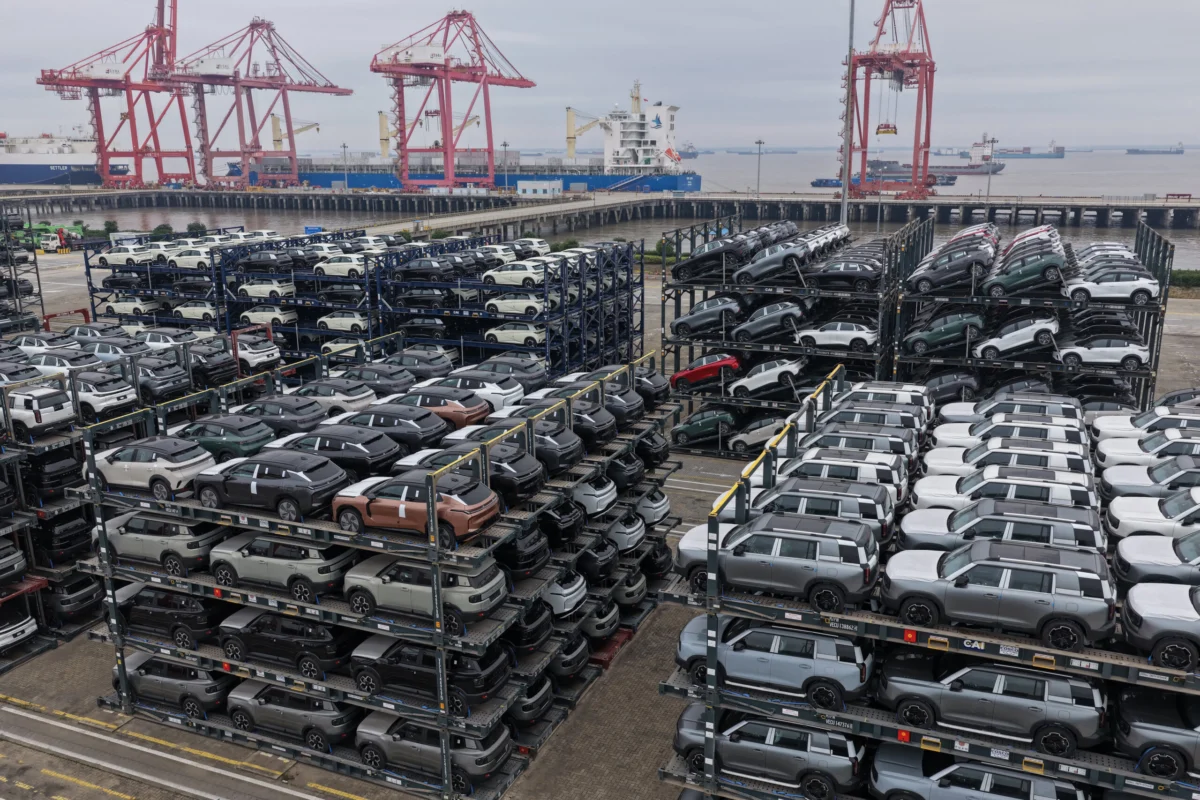
Despite such regional curbs, China’s broader automotive export machine continued to break records. Overall car exports surged by 56.3% in September, reaching a staggering 1.18 million vehicles for the month alone. Concurrently, the financial value of those vehicle shipments climbed by 62%, highlighting the growing global market penetration of Chinese-made traditional and new-energy vehicles alike.
A granular look at geographic distribution reveals that during the first three quarters of the year, China’s exports expanded across every single major country and territory tracked by customs authorities. Conversely, import trends were more varied; during the same nine-month period, imports originating from Malaysia, Germany, and the United Kingdom actually experienced contractions.
Furthermore, trade figures for specialized commodities underscored the profound impact of state-directed trade controls, export restrictions, and strategic national stockpiling initiatives. The physical volume of China’s exports of rare earths and fertilizers dropped significantly during the first three-quarters of the year. In stark contrast, China’s fertilizer imports surged over the same timeframe, illustrating how the world’s second-largest economy continues to aggressively manage and secure its domestic resource reserves amidst an increasingly volatile global geopolitical and commercial landscape.





Comments (0)