


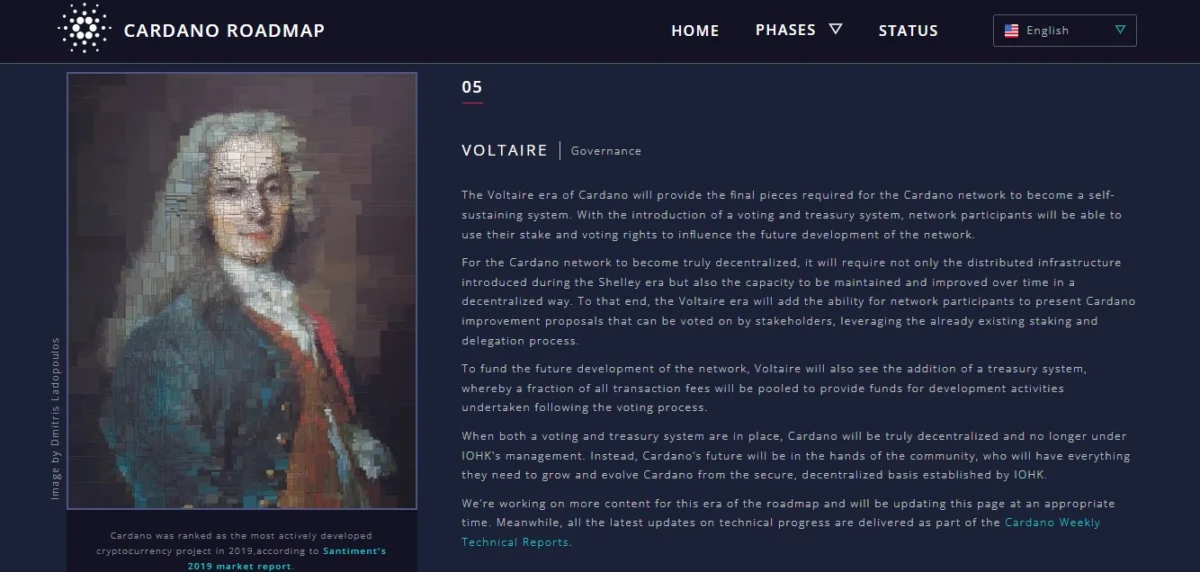
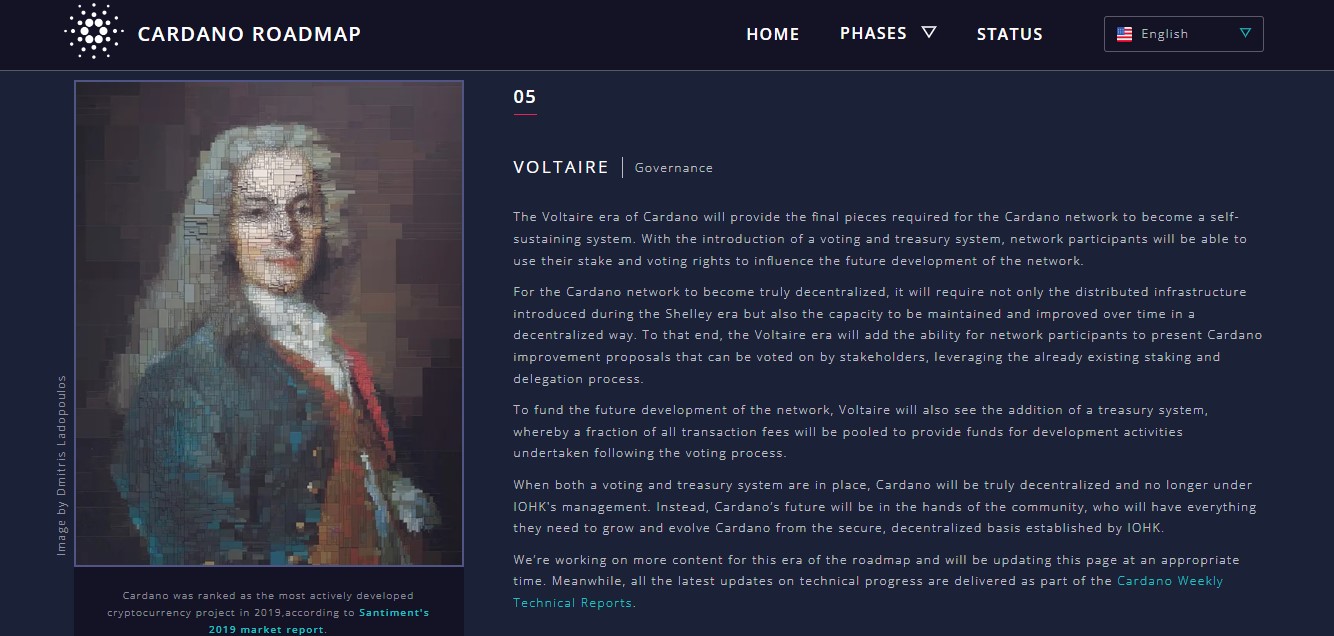
The Cardano ecosystem stands on the brink of a monumental transformation this week as the network prepares to execute its highly anticipated Chang hard fork. Confirmed by Intersect, the member-based organization serving the Cardano ecosystem, the major upgrade is scheduled to roll out on September 1, 2024, at 21:45 UTC. This pivotal event marks the official entry into the Voltaire era, the final foundational phase of Cardano’s original roadmap designed to establish the network as a fully self-sustaining, decentralized system.
The impending upgrade introduces the Interim Cardano Constitution and the Interim Constitutional Committee, setting the stage for a fully decentralized governance model that empowers the global community. As the milestone approaches, key stakeholders, including Intersect, Emurgo, the Cardano Foundation, and Input Output (IOHK), have reached a unanimous consensus following extensive technical preparation and the successful launch of Node 9.0 earlier this year.
What is Cardano’s Chang Hard Fork?
Since its public launch in 2017, Cardano has methodically progressed through four distinct eras: Byron, Shelley, Goguen, and Basho. Each of these eras was meticulously engineered to focus on specific functional milestones, ranging from the initial establishment of the network and the introduction of staking to the deployment of smart contract capabilities and scaling solutions. Following the conclusion of the Basho era, the blockchain has steadily prepared for the Voltaire era, which founder Charles Hoskinson and the core development teams have long described as the final pieces required for the Cardano network to become a completely decentralized and self-sustaining ecosystem.
Under the Voltaire era, Cardano aims to transition away from centralized guidance toward a governance model where ADA holders can directly participate in decision-making processes, vote on protocol changes, and actively contribute to the future development of the network. The upcoming Chang hard fork represents the very first operational step in this historic transition. Technically speaking, a hard fork is a profound network upgrade that introduces radical changes to the underlying protocol. For the upgrade to take full effect across the distributed infrastructure, all nodes—representing the individual computers and validators that run the blockchain—must upgrade to the new software release.
What Will the Chang Hard Fork Do for the Network?
As part of its overarching mission to achieve community-run governance, the Chang hard fork is engineered to introduce a comprehensive suite of advanced governance features. Beyond governance, the upgrade is also structured to improve Cardano’s overall scalability and network security, reinforcing the blockchain’s operational resilience as it handles higher volumes of transactional activity.
To ensure a smooth and stable rollout, the Chang hard fork is structured in two distinct phases. The first phase focuses heavily on establishing the foundational legal and structural governance frameworks, while the second phase is designed to activate advanced community-led features and democratic mechanisms.
Part 1: A Transition to Community Governance
The initial phase of the upgrade initiates the technical bootstrapping process, a rigorous procedure that has been in preparation for several weeks. During this preparatory window, a dedicated working group has actively reviewed progress across the ecosystem to verify that node operators, exchanges, and infrastructure providers are fully prepared for the hard fork event.

The primary deliverable of this first phase is the introduction of the Interim Cardano Constitution, which serves as a temporary governance structure designed to guide Cardano safely through its initial transition toward full community control. Alongside the interim constitution, the upgrade establishes the Interim Constitutional Committee, a temporary governance body tasked with overseeing initial governance actions and upholding the core principles laid out in the interim framework.
The Interim Constitutional Committee will possess specific administrative powers, including the authority to veto proposals through on-chain voting during this transitional window. This initial phase aims to lay the essential groundwork for decentralized governance, ensuring that the network maintains stability while ADA holders gradually begin to assume direct responsibility in decision-making processes.
Part 2: Full Decentralization
Expected to arrive approximately three months after the initial phase, likely materializing in the fourth quarter of 2024, the second phase of the upgrade will unlock advanced governance features aimed at achieving absolute decentralized governance.
During this subsequent phase, the network will introduce Delegate Representatives, commonly known as DReps. These representatives are designed to facilitate decentralized decision-making by representing the individual interests of ADA holders who prefer to delegate their voting power. Furthermore, this phase will implement comprehensive on-chain voting mechanisms, enabling any ADA holder to propose, discuss, and vote on critical governance actions directly on the blockchain. Through these mechanisms, Cardano intends to fully realize its vision of a community-driven decision-making model.
In addition to transforming the governance landscape, the Chang hard fork is engineered to deliver substantial enhancements to Cardano’s core scalability. The network optimizations are expected to increase transaction throughput from approximately 250 transactions per second to over 1,000 transactions per second. Concurrently, the upgrade implements advanced security protocols designed to fortify the blockchain against common vectors of threat and enhance overall network reliability.
When Exactly Will the Chang Hard Fork Happen?
The journey toward the Chang hard fork has been a deliberate and calculated process. In June, Cardano founder Charles Hoskinson announced that the network would soon enter the Voltaire era following the release of Node 9.0. One month after that statement, Cardano successfully released Node 9.0, clearing the primary technical pathway for the hard fork to proceed.
Although the upgrade was temporarily postponed earlier due to initial considerations surrounding exchange liquidity and ecosystem readiness, the timeline has been firmly reset. Intersect formally confirmed that the hard fork is scheduled for September 1, 2024, at 21:45 UTC. The decision to execute the upgrade on this date was finalized following a unanimous vote among key organizational stakeholders, reflecting broad alignment across the decentralized ecosystem.
With the hard fork working group confirming that sufficient technical readiness has been achieved across all sectors of the network, major centralized cryptocurrency exchanges have moved to accommodate the upgrade. Binance announced that it would fully support the Cardano network upgrade, noting that it would temporarily halt deposits and withdrawals of ADA tokens during the operational transition to ensure network stability. Similarly, other major trading platforms like Bitget have initiated backend system updates to seamless support the hard fork without disrupting user asset security.
Will the Hard Fork Impact ADA Holders?
For the vast majority of retail participants and investors, the Chang hard fork is designed to be a seamless event that does not require direct intervention. If you are simply holding ADA tokens within a personal software or hardware wallet, you do not need to take any special action either before or after the upgrade takes place. Your underlying ADA balance, wallet addresses, and complete transaction history will remain entirely intact and unaffected.
For ADA holders who actively participate in the network by delegating their tokens to stake pools, the hard fork operates transparently. While stake pool operators are required to update their node software to the latest version to remain compatible with the new protocol, delegators will experience uninterrupted staking rewards and operational continuity as the network crosses this historic threshold.
What Should We Expect from ADA’s Price Actions?
Historical market data surrounding major Cardano network upgrades provides an interesting context for investors observing ADA’s price action. According to historical figures from TradingView, ADA surged by over 140% in the two months leading up to the launch of the Alonzo hard fork in September 2021, which brought smart contract capabilities to the blockchain. However, the crypto asset experienced a significant price correction following the actual upgrade, largely driven by broader macroeconomic shifts and a shifting cryptocurrency market cycle.
Similarly, the Vasil hard fork, which went live on the mainnet in September 2022, yielded a more subdued price response due to prevailing bear market conditions at the time, demonstrating that network upgrades alone do not automatically dictate short-term market valuations.
With the Chang hard fork fundamentally redefining Cardano’s governance structure and preparing the network for broader enterprise and community adoption, analysts suggest the milestone could enhance the long-term fundamental value of the ecosystem by attracting new developers, users, and institutional interest. Nevertheless, historical precedents emphasize that ADA’s price performance will ultimately be dictated by broader cryptocurrency market dynamics, overall macroeconomic factors, and the sustained organic adoption of the Cardano network in the post-Voltaire era. ADA is currently trading near $0.35, registering modest upward movement over the trailing 24-hour window as the community awaits the launch of the upgrade.




Comments (0)