


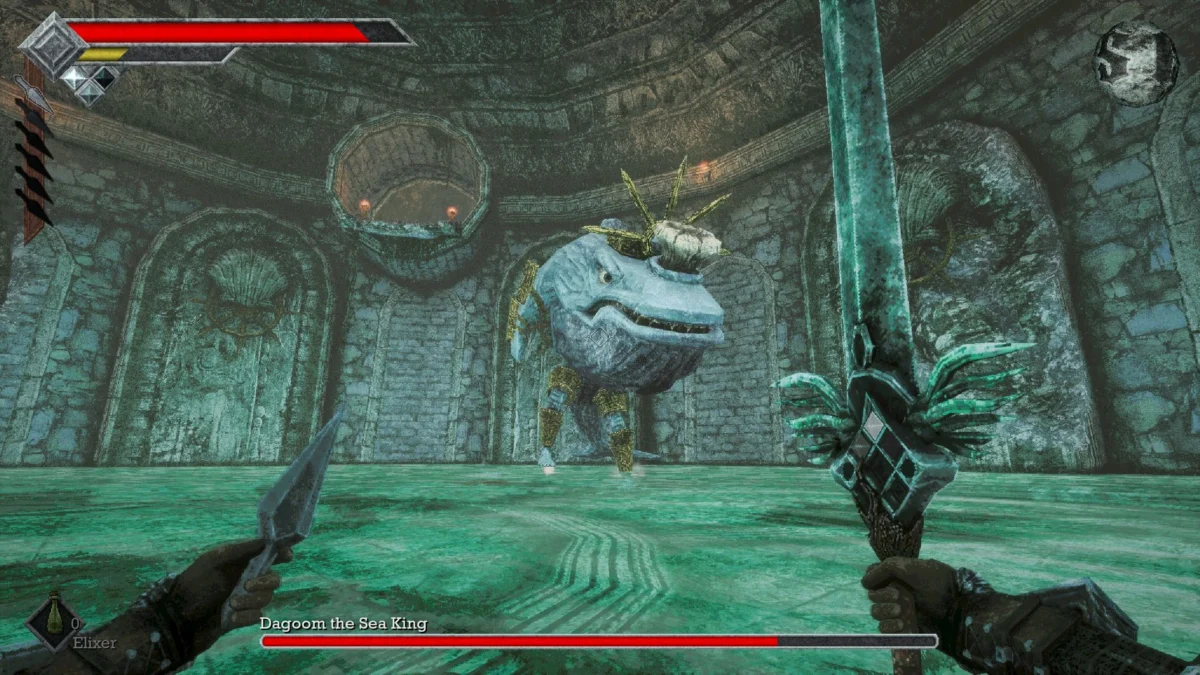
When the demo for Queen’s Domain dropped last year, it immediately caught the attention of fans looking for a fresh spin on classic first-person dungeon crawlers. It showed plenty of promise, boasting an atmospheric dark fantasy aesthetic and a heavy nod to retro gaming sensibilities, though it also featured some early friction that left a few players uncertain about how the full release would pan out. Now that the game has officially launched on Steam following its October 30 release, those early reservations have been entirely shattered for players willing to push past the initial opening hours.
Five hours deep into an expected 30-plus hour campaign, Queen’s Domain has quickly cemented its place as one of the standout surprises of the year. For players diving into the full experience, the demo actually cut out right at the narrative and mechanical tipping point—just moments before the entire adventure opens up and goes into overdrive. What starts as a slow-burn, boots-on-the-ground traditional RPG rapidly evolves into something much faster, more vertical, and far more inventive.
The title initially presents itself as part of a growing, specialized subgenre of indie "King’s Field-likes"—first-person dark fantasy role-playing games that pay direct homage to the classic, often obscure FromSoftware series from the pre-Dark Souls era. Much like fellow genre standout Lunacid, Queen’s Domain distinguishes itself almost immediately through stellar artistic direction, an incredible ambient soundtrack, and a meticulous mastery of nostalgic design intangibles, from its stark menus and user interfaces to its evocative sound cues.
Yet, for all its atmospheric reverence to old-school dungeon crawlers, the game undergoes a dramatic identity shift shortly after defeating its first major boss. It is at this exact milestone that Queen’s Domain rewards the player with its premier tool: a magic airdash sword known as Endu.

Queen of the Skies
Queen’s Domain is deliberately paced from the outset. Like many traditional first-person role-playing games, it initially instills a heavy sense of gravity, making players feel firmly anchored to the earth. It shares a philosophical lineage with the pacing distinction between classic first-person shooters like Doom and Quake; players can usually tell right away whether a game is designed to let them catch some air or keep them strictly grounded.
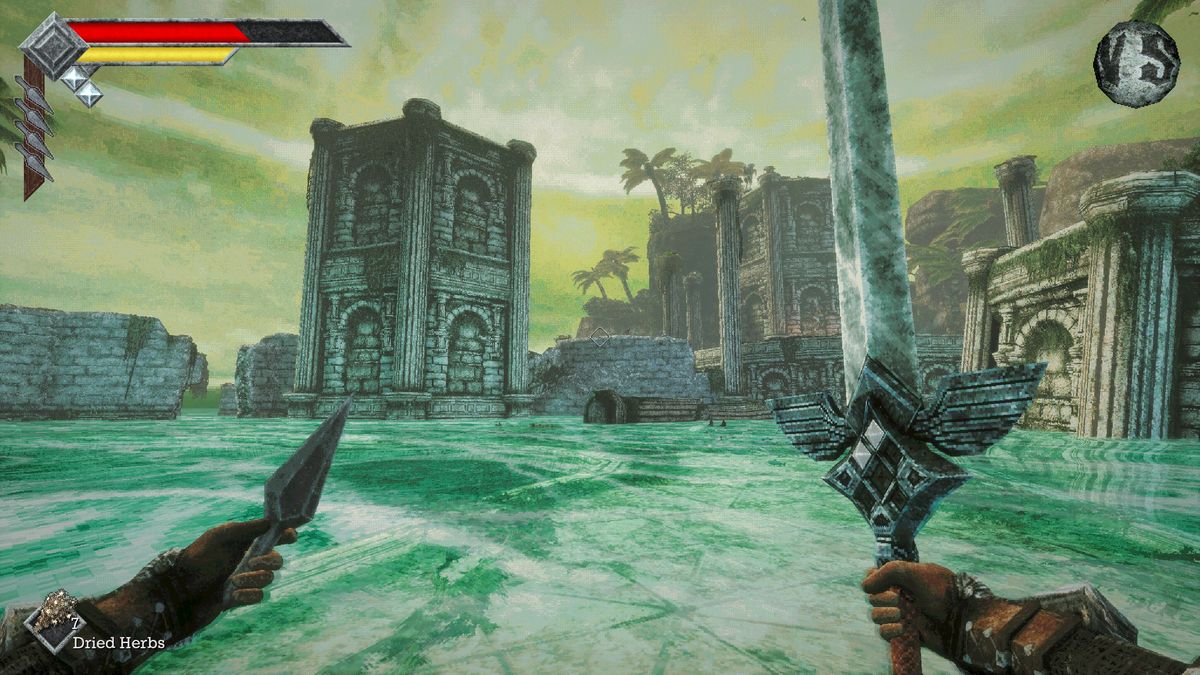
Once the player secures the Holy Sword, Endu, however, the experience changes fundamentally. The game’s opening area unfurls like a complex, beautifully engineered clockwork contraption. The vertical design of the world begins to evoke memories of complex raid environments seen in games like Destiny, where hidden pathways and vertical shortcuts seamlessly blend into the surrounding architecture, making every successful leap feel like an intentional sequence break.
Endu can be upgraded progressively throughout the campaign by collecting special gems hidden across the world, with each upgrade granting an additional dash while airborne. This modular upgrade path radically expands traversal options, allowing players to zoom from one end of a map to another high above the terrain without ever touching the ground. It creates a thrilling sense of momentum that completely recontextualizes earlier areas of the game.
Beyond traversal, Queen’s Domain features an expansive and flexible arsenal where weapons transform as they are upgraded. Rather than relying on traditional stat allocation upon leveling up, the game encourages active experimentation by tying weapon progression directly to usage. Players can effectively craft their preferred combat build by choosing which weapons to hotkey—up to a limit of three—and investing upgrade resources into them. This progression system feels much closer to immersive sims like BioShock or the System Shock remake than traditional stat-heavy action RPGs. PC Gamer hardware writer James Bentley, for context, managed to fully max out roughly 20 distinct weapons across a complete playthrough.

Alongside Endu, players can wield tools like the Caestus, a medieval knuckle-duster weapon familiar to fans of Souls-borne titles. In Queen’s Domain, it serves as a fast-attacking blunt instrument that excels against slashing-resistant skeletons. Rather than offering a horizontal air dash like Endu, the Caestus features a special uppercut attack that launches the player’s character vertically into the air. While designed primarily for combat utility against aggressive foes, players quickly discover its secondary value as an effective double-jump mechanic to reach otherwise inaccessible ledges, which almost always house surprising and meaningful rewards.
Don’t Give Up, Skeleton
The transition from the grounded, pre-Endu phase of the game to the high-flying movement unlocked later on is striking enough that some early players might initially bounce off the slower opening hours. Staff writers and community members alike have noted that pushing through that initial half-hour hurdle requires some patience. However, the stark contrast between the early and late-game movement mechanics ultimately makes the eventual acquisition of the air dash feel profoundly rewarding. Having experienced the limitations of being grounded first, players are far less likely to take their newfound aerial freedom for granted.
This powerful sense of mechanical progression mirrors the finest traditions of the Metroidvania genre—comparable to the feeling of acquiring the wall jump in Hollow Knight or navigating the sprawling environments of early classics. Through its brilliant level design, Queen’s Domain stakes a legitimate claim as one of the most compelling first-person Metroidvania-style adventures released since the original Metroid Prime.
The comparison to Metroid Prime extends well beyond mere movement mechanics. The cryptic atmosphere, breathtaking vistas, and genuinely unique approach to first-person spatial design all echo Nintendo’s classic formula. While the game clearly hints at extensive, game-spanning backtracking for players who love unearthing secrets, the clever layout of the world suggests that revisiting previous areas will feel far more cohesive and engaging than it often did in older titles.
With dozens of hours of exploration and combat ahead for dedicated players, Queen’s Domain is capturing the attention of the PC gaming community as a richly rewarding indie achievement. The game is currently available on Steam for a special launch price of $17, down from its standard MSRP of $20.





Comments (0)