



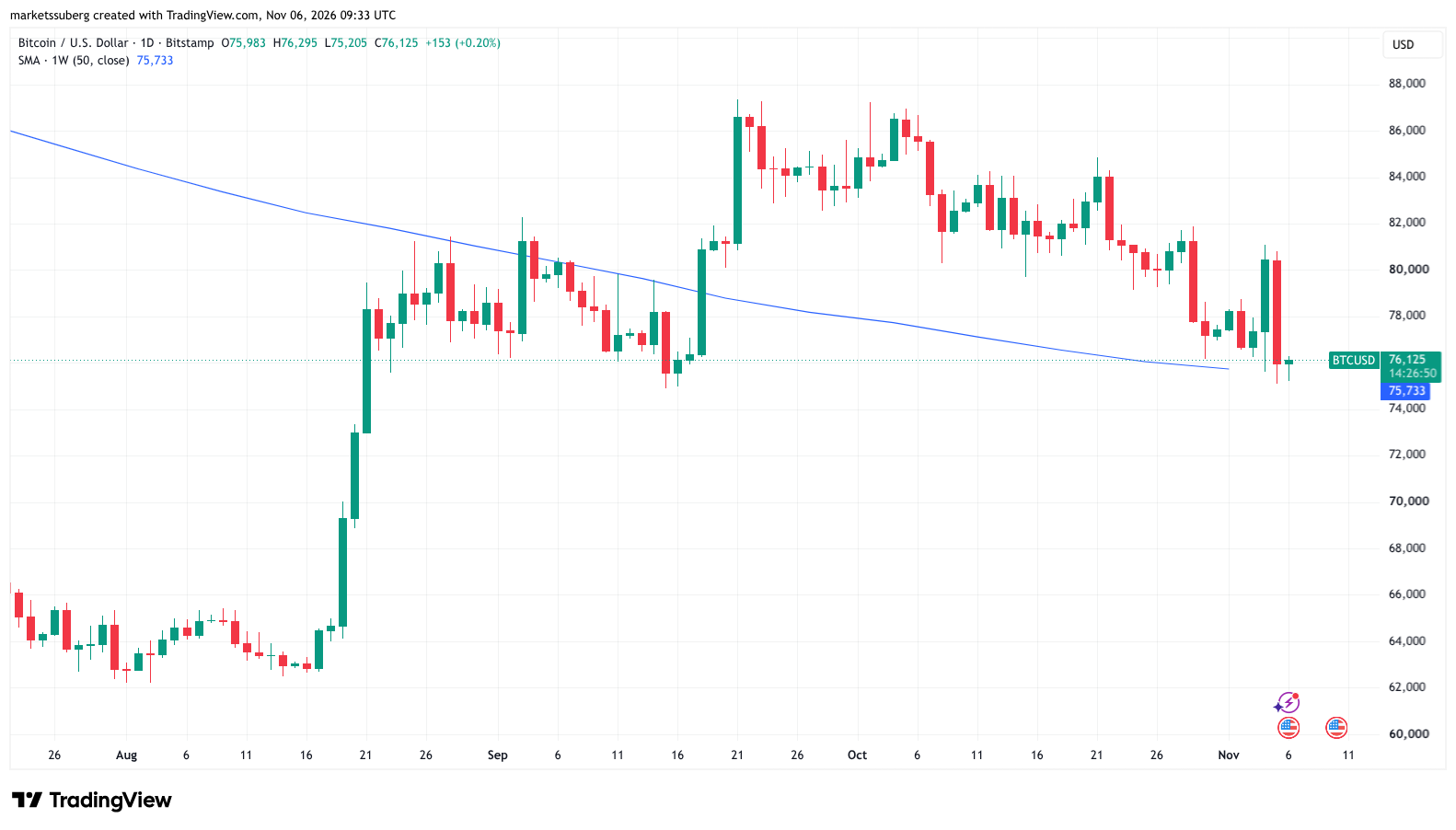
Bitcoin (BTC) held firm above the $75,000 threshold on Friday, demonstrating a degree of resilience even as a sharp, aggressive sell-off originating in United States technology stocks rapidly rippled across global financial markets and bled deeply into Asian trading sessions.
According to data from TradingView, the BTC/USD pair was seen trading near its critical 50-week simple moving average (SMA), hovering around $75,733. This relative stability came in the wake of a turbulent trading period that saw the leading cryptocurrency experience significant downward pressure alongside broader macroeconomic equities declines.
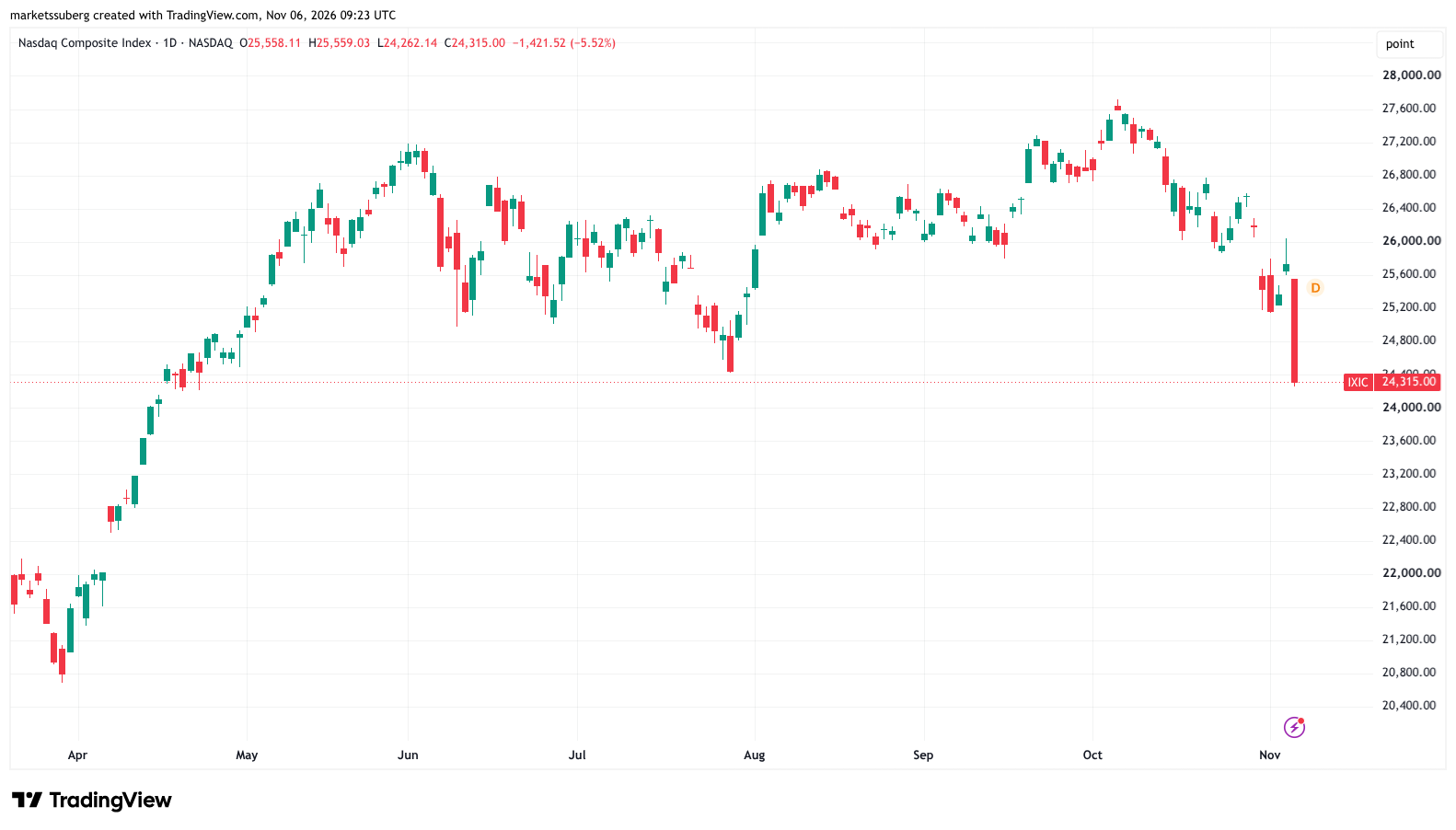
The crypto market’s resilience was tested as the pair fell by as much as 6.6% during Thursday’s sessions. The drop occurred as US stock markets endured sustained, heavy selling throughout the entire Wall Street trading day. The broader S&P 500 index and the tech-heavy Nasdaq Composite index suffered severe blows, closing down 4.4% and 5.5% respectively, as panic gripped traditional financial portfolios and spilled over into digital asset investment vehicles. Bitcoin and Ether exchange-traded funds (ETFs) bore the brunt of this sudden shift in sentiment, posting combined outflows totaling $530 million as post-election gains completely evaporated.

South Korea Eases Collateral Rules as KOSPI Falls 6%
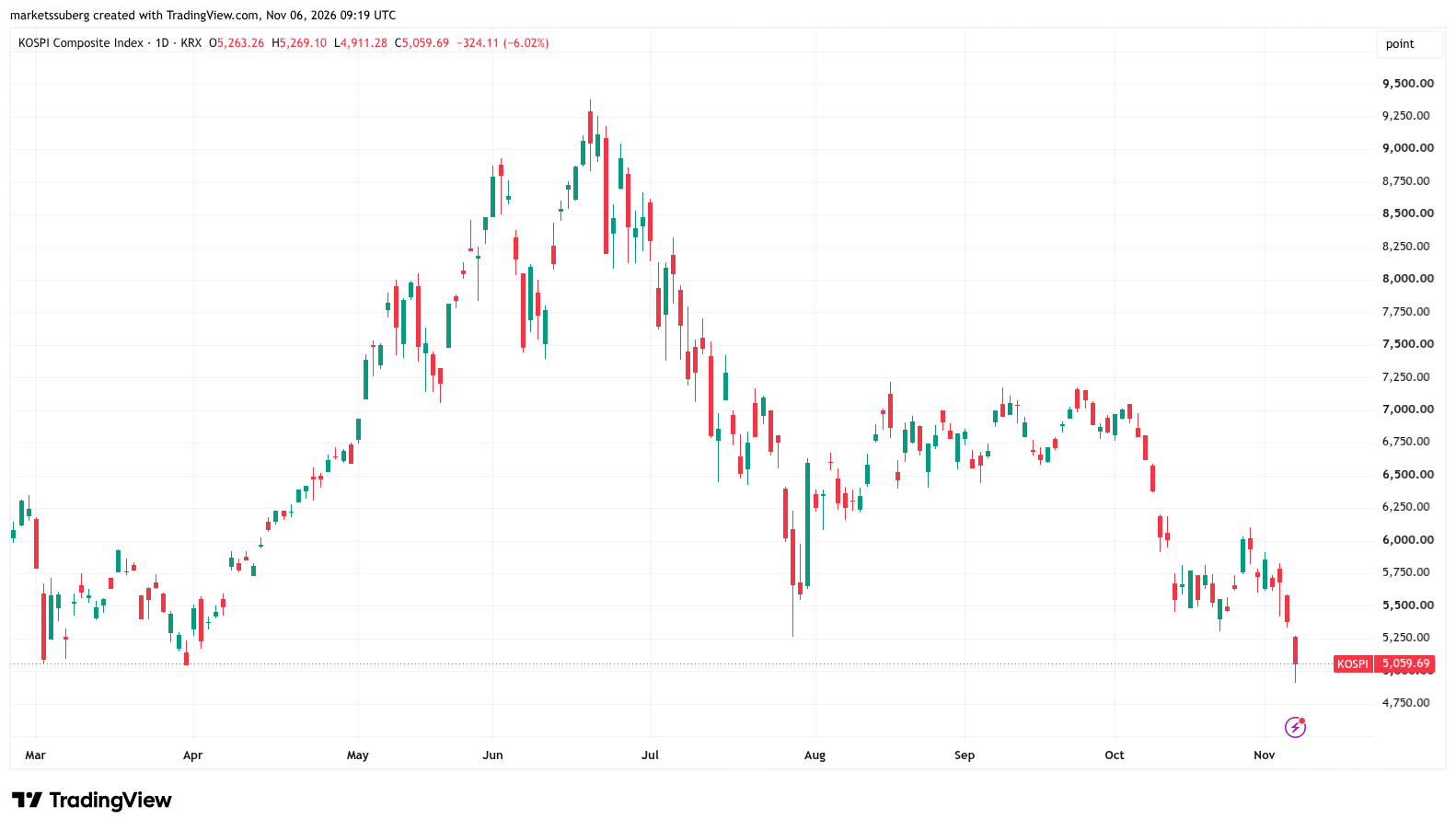
As the trading day shifted to the Asia-Pacific region on Friday, regional stocks aggressively extended the brutal Wall Street sell-off. The contagion hit South Korea particularly hard, where the KOSPI Composite Index plummeted by more than 8% shortly after the market opened. The sheer velocity of the morning decline immediately triggered a market-wide circuit breaker, freezing all trading activity for a mandatory 20-minute cooling-off period in an attempt to stem the panic.
When trading resumed, the index managed to pare back some of its steepest intraday losses, ultimately closing down 6% at 5,059.69 points. Despite the modest recovery from its worst levels, the index marked its lowest closing price since March 31, sending shockwaves through domestic financial circles and prompting swift government intervention.
In response to the escalating crisis, South Korea’s deputy prime minister and finance minister, Lee Hyoung-il, convened an emergency high-level meeting with financial authorities. During the session, the government announced immediate, targeted measures designed to reduce forced selling and stabilize local brokerages. Under the newly announced relief framework, local brokerages will be temporarily exempt from the strict requirement to maintain a 140% collateral ratio on margin loans for a duration of three months, starting from Monday. Local media outlets reported that financial regulators and authorities stood fully prepared to deploy additional stabilization measures should market volatility escalate further in the coming days.
Commenting on the emergency intervention, an unnamed government source quoted by the local publication Chosun acknowledged the severe anxiety gripping the region. "We recognize with gravity the expanding volatility in global stock markets following the U.S. midterm elections," the source noted, before emphasizing that domestic policymakers believe the local reaction may have overshot reality. "However, the domestic market has been overly reactive to external factors."
Analysts Call US Stocks Rout “More Technical Than Fundamental”
Financial analysts and market commentators have closely scrutinized the underlying catalysts driving Thursday’s steep Wall Street rout. Many attribute the sudden panic to mounting fears surrounding potential tighter regulatory oversight for the artificial intelligence sector, particularly after the Democratic party secured victories in both the House and Senate during the US midterm elections. These regulatory anxieties compounded pre-existing macroeconomic concerns regarding the massive capital spending cycles and hefty valuations associated with the tech sector.
Highlighting the political anxieties, market participants pointed to a widely shared post on X by Democratic Representative Yassamin Ansari, who publicly called for a "pause on advanced AI development." However, premier market commentary service The Kobeissi Letter quickly pushed back against the most extreme interpretations of these political developments, arguing that an outright government ban on artificial intelligence in the United States remains an absolute statistical impossibility.
"In our view, a ban of AI will not happen in the US (with near-certainty). Such a ban, if even possible to enforce, would mean the US surrendering its position in the global AI race to China. That won’t happen," the commentary service wrote in a detailed social media post. "We believe today’s decline was more technical than fundamental."
The Kobeissi Letter further pointed out that Thursday’s severe losses were highly concentrated within specific technology sub-sectors rather than the broader economy. To illustrate this point, they noted that the S&P 500 would have declined by a modest 2.5% if the technology sector were excluded entirely from the calculation. Meanwhile, the Philadelphia Semiconductor Index, which tracks 30 of the most prominent semiconductor and hardware companies globally, absorbed the worst of the blow, finishing Thursday down an eye-watering 12.2%.
Prominent economist Mohamed El-Erian also weighed in on the turbulence, emphasizing that policymakers and industry leaders will need to urgently find common ground regarding cohesive artificial intelligence policy moving forward.
"America’s ‘let it rip’ approach to AI aligns with the technology’s productivity potential and national security imperatives. However, it has fallen short not only on safety and diffusion, but also on bringing society along," El-Erian wrote in a published Substack note, adding that the fierce political and market backlash accurately reflected genuine societal concerns, informational failures, and complex behavioral factors.
Historically, market analysts note that Democratic midterm sweeps occurring under Republican presidencies have frequently been followed by strong, sustained stock market recoveries over the longer term. As traditional equities navigate this turbulent policy-driven recalibration, Bitcoin’s ongoing correlation with the S&P 500 has notably tightened and trended more positively in recent months, tying the fate of digital assets closer than ever to macro-driven equity sentiment.




Comments (0)