



As another year draws to a close, society finds itself caught in a peculiar paradox. By nearly every measurable statistical standard, global living standards are experiencing unprecedented improvements, and fundamental markers of human well-being are trending in remarkably positive directions. Yet, if one relies solely on the daily news cycle, the impression left behind is one of an inescapable, accelerating global decline. This striking disconnect between hard data and public perception has become one of the defining features of the modern media landscape, raising urgent questions about how society consumes information and why negativity continues to dominate the public consciousness.

Reflecting on the trajectory of recent years, analysts and commentators have pointed to a surprising abundance of encouraging developments. Observers examining the socio-economic and public health data of 2025 have characterized it as an exceptional period, particularly for the United States. Rather than a singular bright spot, experts have pointed to broad-based, simultaneous improvements across multiple critical categories of human safety and public health. Historical data reveals substantial declines in traffic fatalities, drug-related overdoses, and suicide rates, alongside what appears to be the largest single-year drop in homicide rates ever recorded. Concurrently, dramatic and rapid advances in healthcare continue to push the boundaries of modern medicine, extending and improving quality of life for millions.
This rare convergence of positive outcomes has prompted widespread commentary from economists and social researchers. Observers have noted that this appears to be the first recorded period in modern history when every major cause of premature death—including overdoses, automobile accidents, homicides, and obesity-related complications—is falling simultaneously. Other analysts have compiled extensive lists of indicators pointing to a society actively repairing itself. These positive markers include rising overall life expectancy, a measurable peak and subsequent cooling in daily social media usage among key demographics, and a powerful resurgence in grassroots business dynamism and entrepreneurial activity.
On a global scale, comprehensive trackers of human progress have cataloged well over a thousand distinct positive news stories over the course of a single year. These milestones range from the astonishing and rapid reduction of poverty across large populations in India to ecological success stories, such as the return of puffins to the UK’s Isle of Muck for the first time in a quarter of a century. However, for the average citizen navigating a busy digital life, these stories routinely slip past unnoticed. Without actively seeking out specialized archives dedicated to human advancement, many people would remain entirely unaware that these achievements are taking place.
This absence of good news in mainstream feeds is hardly accidental; it is the product of a media ecosystem governed by long-standing commercial incentives. As the time-tested newsroom adage bluntly reminds journalists, "If it leads, it bleeds." Conflict, tragedy, and impending doom have always captured human attention more reliably than steady, incremental progress. In the modern digital era, this dynamic has intensified exponentially. In the fierce, hypercompetitive battle for scarce human attention, mainstream news outlets, television networks, radio stations, and digital platforms appear to be doubling down on a strategy of driving engagement through fear and anxiety.
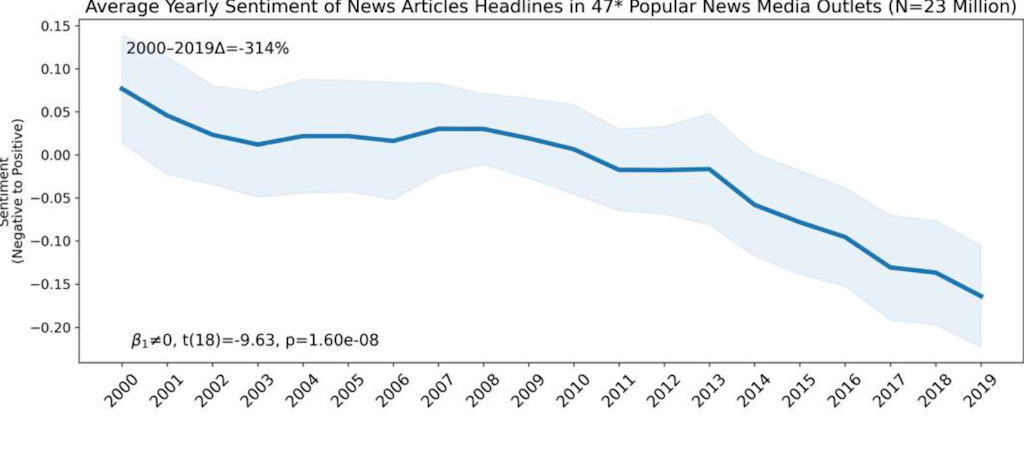
Academic research heavily supports this observation. A comprehensive study published examining longitudinal media trends identified a striking and persistent pattern of increasing negative sentiment in news headlines over time. The findings revealed that headlines from 2019 were more than three hundred percent more likely to reflect emotions such as anger, disgust, fear, or sadness compared to headlines from the year 2000. In the years since that study was conducted, media analysts suggest that the environment has only grown more volatile. Observers warn that contemporary society is experiencing a genuine contagion of negativity. Driven by the pressures of a hypercompetitive media economy, publishers present a profoundly skewed, disproportionately dark picture of the state of the world, warping public perception far beyond what empirical data supports.
None of this is to suggest that the world achieved perfection or ran entirely smoothly. Major systemic challenges persisted unabated. Destructive wars continued to rage across multiple regions, the global climate continued its warming trend, governments around the world piled up unprecedented levels of public debt, and marginalized populations, including migrants and refugees, faced ongoing persecution and hardship. Serious problems require serious attention, and acknowledging positive trends does not mean ignoring genuine crises.
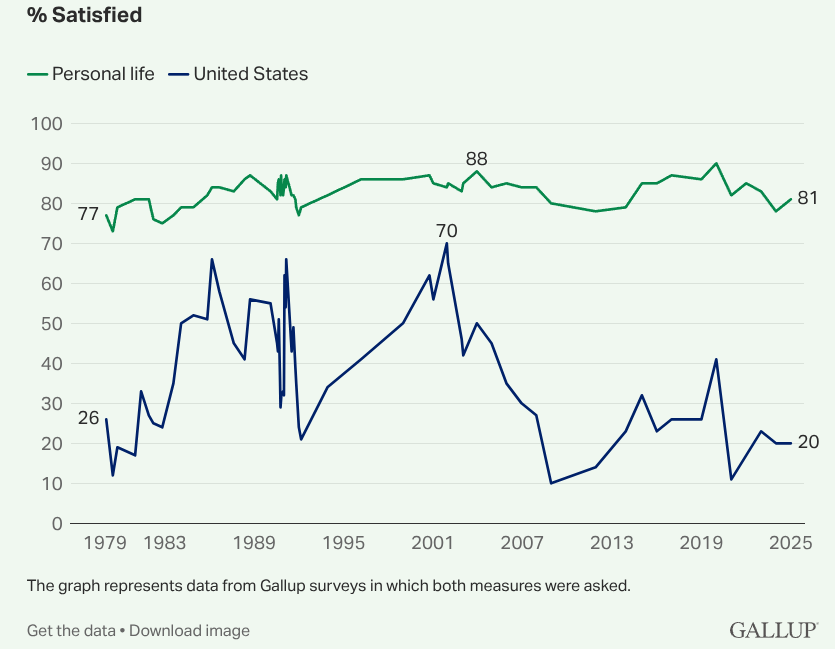
Nevertheless, the data strongly indicates that the world is in a considerably better state than public sentiment would suggest. This profound psychological disconnect is vividly illustrated by modern polling data. Public opinion surveys conducted by organizations like Gallup consistently reveal a bizarre paradox: while roughly four-fifths of citizens report being satisfied with the way things are going in their personal lives, only a small fraction express satisfaction with the direction of the country as a whole. Observers note the logical impossibility of a nation truly failing when a vast supermajority of its individual citizens are personally experiencing a stable or even excellent quality of life.
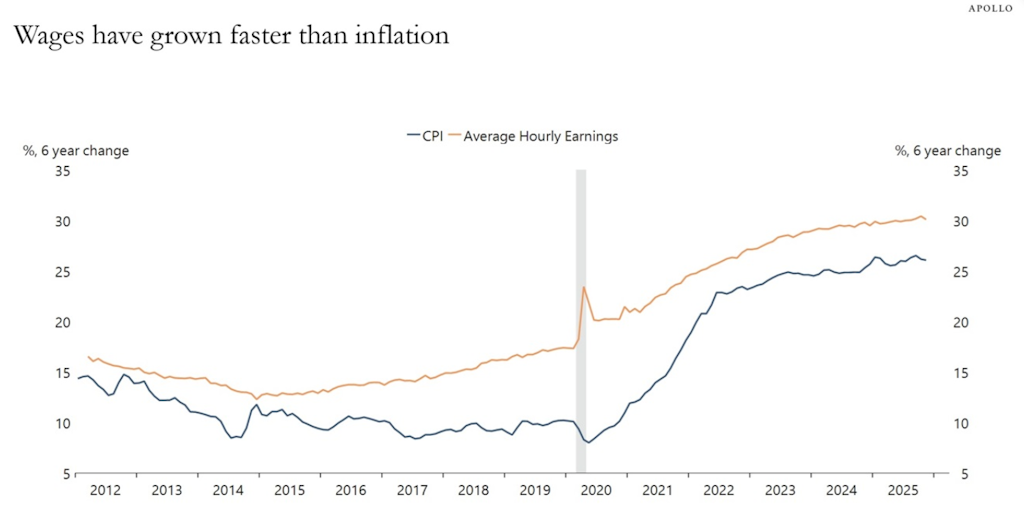
A similar disconnect applies to the much-discussed "affordability crisis" that has dominated economic headlines in recent years. While the cost of living remains a persistent concern for households navigating household budgets, rigorous economic analyses—including detailed examinations by publications like The Economist—conclude that, viewed historically, life in America has rarely been as structurally affordable for as many people. Economic data indicates that wage growth has outpaced price increases over the last decade, even when controlling for volatile housing costs. Yet, positive economic realities of this scale rarely generate the viral outrage necessary to capture high volumes of online traffic.
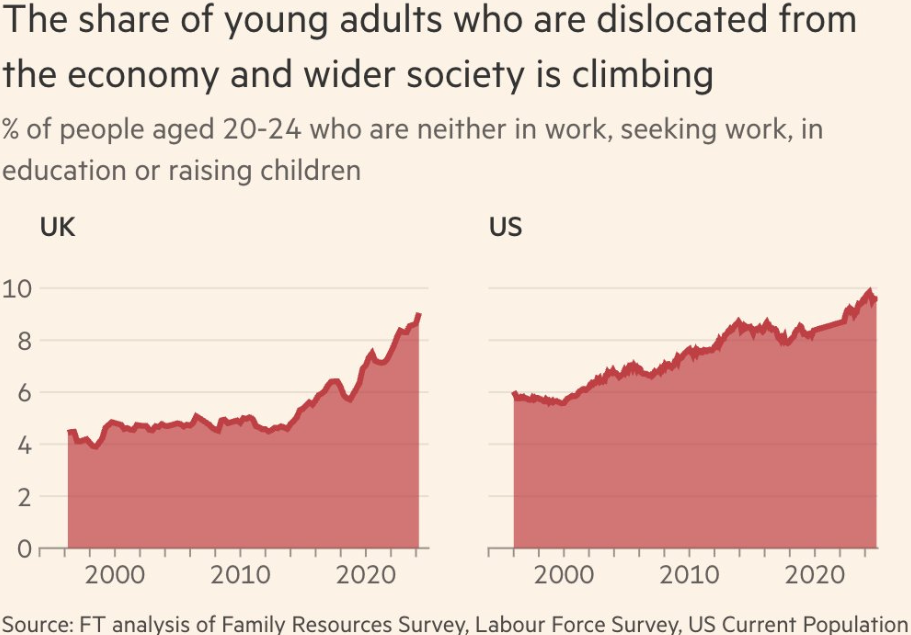
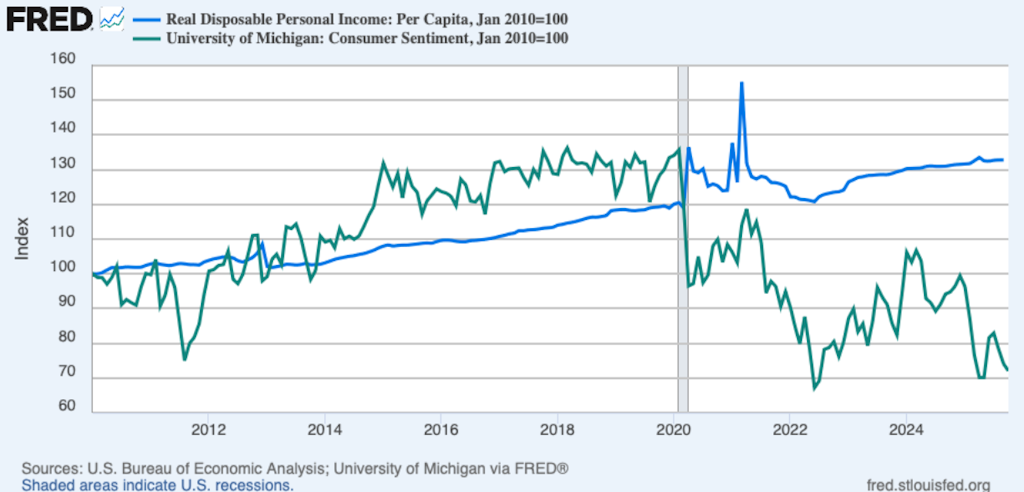
This systemic negativity bias has tangible consequences for public psychology and cultural engagement. Economic sentiment metrics demonstrate that consumer confidence decoupled sharply from real disposable income beginning around the time of the pandemic and has stubbornly refused to recover. People remain trapped in a state of pessimism that is entirely unsupported by underlying financial indicators. Furthermore, labor and sociological data suggest that younger generations are becoming increasingly disengaged from traditional societal milestones, such as stable employment patterns and family formation. Analysts suspect that this growing sense of alienation among young adults is at least partially fueled by a relentless barrage of dystopian media narratives.
Even as traditional institutions struggle to regain their pre-pandemic footing, everyday behaviors and cultural patterns continue to evolve in unexpected ways. While certain sectors, such as the film industry and mass transit networks, continue to grapple with shifting consumer habits, other areas of daily life—including casual dining, air travel, and digital entertainment platforms—have completely rebounded or scaled to unprecedented heights. Millions of users now treat virtual worlds and daily gaming ecosystems as core components of their daily routines, marking a fundamental shift in how modern populations socialize and spend their time.
On a global demographic level, the map of human population growth is also undergoing a quiet, historic transformation. Birth rates in dynamic developing nations have shifted dramatically, with countries like Nigeria now recording more annual births than the entirety of Europe, Ethiopia outpacing the United States, and Afghanistan surpassing Japan. These tectonic demographic shifts represent a world in constant motion, adapting to new economic and cultural realities far removed from the static anxieties presented in standard daily broadcasts.
Ultimately, the persistent gap between data-driven progress and widespread pessimism remains one of the great challenges of the modern information age. While the media ecosystem will likely continue to prioritize sensationalism and fear to drive engagement, the underlying reality of human progress moves forward independently of the news cycle. For those willing to look past the digital noise, the evidence suggests that the world is steadily growing safer, wealthier, and more resilient, offering a quiet counterweight to the prevailing anxieties of our time.




Comments (0)