


Welcome back to TechCrunch Mobility, your definitive industry hub for tracking the rapidly evolving future of transportation, where artificial intelligence and autonomy are playing an increasingly central role than ever before. For readers looking to receive these insights directly in their inbox each week, subscriptions are entirely free and available with just a simple click.
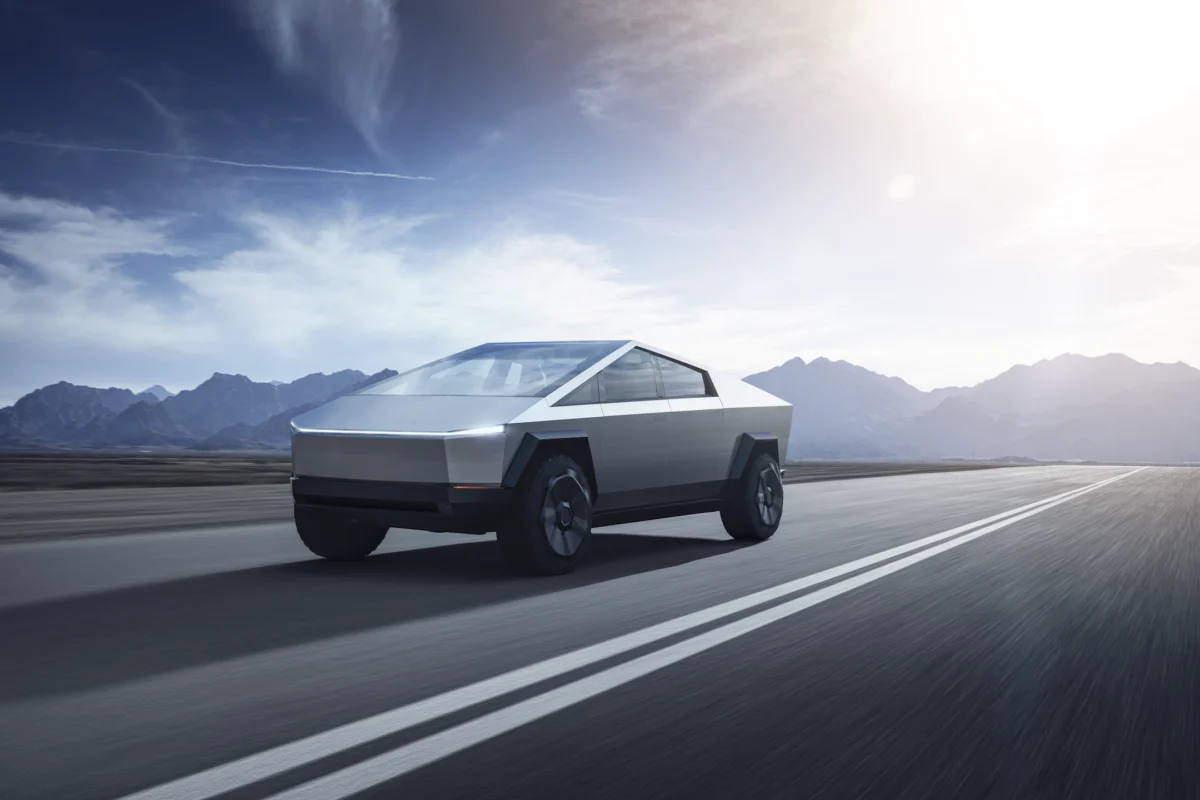
Nearly seven years ago, I stood in a massive sea of ecstatic Tesla fans, clutching a laptop, my smartphone, and a notepad, waiting to witness automotive history. On stage, head designer Franz von Holzhausen approached the driver’s-side window of the newly unveiled Cybertruck, winding up and throwing a metal, baseball-sized ball directly at the glass to demonstrate its supposedly indestructible nature. The result was instantly fractured glass—not just one window, but two by the time the presentation concluded—accompanied by some awkward attempts at humor and nervous chuckling from Chief Executive Officer Elon Musk.
Over the years, I have witnessed a remarkable number of stunning, bizarre, and fantastical moments at various Tesla unveilings and product showcases. Yet, the initial Cybertruck reveal remains the most fascinating spectacle I have ever attended. This intrigue had little to do with the vehicle’s polarizing postapocalyptic, wedge-shaped design and everything to do with the psychological reaction of the crowd.
When the angular truck finally rolled out onto the stage, a collective gasp swept through the audience, with several attendees visibly reacting in outright revulsion. Murmurs filled the room, and I personally overheard dedicated Tesla superfans whispering in disbelief, questioning whether this bizarre vehicle could truly be the long-awaited Cybertruck. Naturally, there were cheers as well, but the momentary shock registered by Musk’s most loyal supporters was quickly replaced by an intense wave of support, active acceptance, and ultimately, a full-throated public endorsement.
That psychological shift moved through the crowd like a rolling wave. By the time attendees were lining up outside to experience their first physical rides inside the Cybertruck, the collective mood had completely transformed. Suddenly, everyone in attendance was an enthusiastic fan.
That infectious fandom initially carried over to consumer demand, translating into reservation numbers that skyrocketed to an astounding one million vehicles, as Musk proudly announced during a third-quarter earnings call in 2023. However, that immense digital enthusiasm never successfully translated into sustained, high-volume retail sales. Industry analysts and market experts estimate that only about 71,000 Cybertrucks have actually been sold since the very first customer deliveries officially commenced in November 2023.
Now, the polarizing vehicle is officially headed toward the automotive scrap pile. Tesla will completely cease manufacturing the Cybertruck next year, Musk announced on Friday, bringing a definitive end to one of the most unconventional production runs in modern automotive history.
Was the vehicle simply too edgy and avant-garde for the broader truck-buying public? Perhaps, but automotive analysts always recognized that the Cybertruck would occupy a heavily niche segment of the market. Beyond aesthetics, more practical and systemic reasons ultimately dampened sales performance. Musk had originally promised consumers that the Cybertruck would deliver an impressive 500-mile driving range alongside an accessible starting price tag under $40,000. As senior reporter Sean O’Kane noted in his comprehensive report, the production vehicle achieved neither of those ambitious metrics, pricing out many prospective buyers who were initially drawn to the concept.
Deals!
The broader transportation and delivery landscape continues to experience massive capital injections, and autonomous drone delivery startup Zipline has enjoyed a remarkable year. Founded back in 2014, the company has steadily scaled its operations over the past decade, but 2026 has unquestionably elevated the business to unprecedented operational and financial heights.

In the early months of 2026, Zipline successfully secured $600 million in capital and quickly capitalized on that momentum by adding another $200 million to close out an oversized Series H funding round. The company initially outlined plans to deploy these fresh funds to accelerate its commercial expansion into at least four major U.S. cities throughout the year.
Now, the autonomous delivery pioneer has secured an even more substantial war chest to fuel even faster expansion. Zipline announced this week that it has raised a staggering $1.5 billion, alongside a dramatically expanded partnership with retail giant Walmart that will integrate drone delivery infrastructure across 300 new sites throughout the United States. Following this massive capital raise, Zipline boasts a massive valuation of $21.5 billion.
Other notable deals captured industry attention over the past week as well. Electric truck startup Harbinger successfully secured a $240 million Series D funding round as the company continues to aggressively expand its broader portfolio of commercial products, which now includes advanced battery storage systems and specialized defense applications. The company did not disclose its updated private valuation following the round.
Meanwhile, Humble Robotics announced a $51 million Series A funding round, bringing its total raised capital to $75 million in less than a full year since its founding. The financing round was officially led by Obvious Ventures, with additional strategic participation from existing insiders including Eclipse, Energy Impact Partners, and several other prominent institutional backers.
In automotive media consolidation, Static Media officially announced the acquisition of automotive news publication CarScoops. The purchase adds to Static Media’s extensive digital publishing portfolio, which already encompasses 34 distinct media brands, including prominent names such as Engadget, Jalopnik, and SlashGear.
Notable reads and other tidbits
In other industry developments, Also, the innovative micromobility startup that was originally spun out of electric vehicle maker Rivian in 2025, quietly initiated and subsequently walked away from an ambitious electric two-wheeler pilot project in Kenya earlier this year. The company opted to halt the international project to refocus its capital and engineering resources squarely on its core consumer e-bike portfolio and long-term autonomous vehicle ambitions.
In the delivery and e-commerce space, Amazon has officially restructured its food delivery strategy by designating Uber Eats as its official restaurant delivery partner for Amazon Prime members across the United States. This strategic shift effectively terminates the e-commerce giant’s prior delivery partnership with Grubhub.
In the high-end luxury vehicle market, Ferrari’s first-ever fully electric car, the Luce—widely regarded as one of the most visually and conceptually polarizing models in the Italian sports car manufacturer’s storied history—is already completely sold out for its entire 2027 production run.
Ford Motor Company made headlines by unveiling what it has termed a comprehensive "privacy promise." This explicit corporate commitment is designed to ensure customer vehicle data remains secure while granting drivers granular control over what information is shared with third parties. Alongside the policy, Ford launched a dedicated consumer website intended to educate vehicle owners about exactly how, where, and why the automaker utilizes personal data, while providing clear, accessible tools to modify their privacy preferences.
In defense technology, autonomous vehicle developers May Mobility and Forterra successfully advanced to the third phase of the Department of Defense’s Robotic Operations for Autonomous Delivery and Sustainment prize challenge. The initiative represents a concerted effort by the military to rigorously test and eventually adopt commercial self-driving vehicle technology for logistical support on military bases.

Robotics innovator Serve Robotics announced major strategic shifts, including plans to launch an entirely new business line dubbed Physical AI Services. While the company will continue operating and expanding its core autonomous sidewalk delivery network, the new division aims to position Serve as a foundational technology supplier for other companies actively building autonomous robots.
Despite widespread speculation regarding the integration of artificial intelligence into everyday consumer habits, the widespread predictions of AI agents independently booking restaurants, travel itineraries, and rideshares for the masses have not yet materialized at scale. During its third-quarter earnings call, Uber disclosed a striking metric: only four total rides were successfully ordered through an external AI agent during the company’s absolute busiest week of October, which coincided with the high-demand Halloween week.
Meanwhile, autonomous vehicle leader Waymo is officially restructuring its commercial relationship with Uber, confirming months of widespread industry speculation. Waymo formally announced that it will end its operational exclusivity agreement with Uber within the Austin and Atlanta metropolitan markets starting in January 2028.
One more thing…
Over the past three years, this newsletter has frequently highlighted critical investigative reports, exclusive scoops, and deep-dive interviews conducted by senior reporter Sean O’Kane. Some of my personal favorites include the major stories we collaborated on, such as his exclusive scoop revealing that Jeff Bezos was secretly backing electric vehicle startup Slate Auto, our joint feature detailing how Jony Ive’s renowned design firm LoveFrom contributed to the industrial design of the Also e-bike, his exhaustive investigative timeline tracking the spectacular corporate fall of EV startup Fisker, and his nuanced coverage of how Waymo robotaxis increasingly relied on human first responders to navigate complex roadside emergency assistance scenarios.
We have co-bylined dozens of critical articles covering quarterly corporate earnings, breaking industry news, and co-hosted Equity, TechCrunch’s flagship podcast dedicated to the intricate business of global startups. Naturally, it is bittersweet to watch him embark on a new professional chapter at The Wall Street Journal, where he will be covering Tesla.
Heartiest congratulations on the prestigious new gig, Sean—we certainly hate to see you leave our newsroom!
I will, of course, continue providing readers with exclusive insider details, breaking scoops, and rigorous analysis regarding the future of global transportation, spanning the latest developments in autonomous vehicle technology, electric vehicles, broader automotive tech, and the emerging frontier of advanced aerial mobility.
Readers with confidential news tips or industry insights are encouraged to reach out directly via email.





Comments (0)