


When author Michael Lewis traces the origins of modern speculative culture—the era of betting on literally anything—he points back to a single, defining moment in 1985. That was the year Caesars Palace in Las Vegas offered 20-1 odds on William “Refrigerator” Perry, the massive defensive lineman for the Chicago Bears, scoring a touchdown in the Super Bowl.
Perry delivered, executing a one-yard rumble into the end zone. Caesars lost at least $250,000 on the wager, a substantial sum in an era when casual bettors still had to call Las Vegas operators directly by phone to place action. Yet, despite the immediate financial hit, the president of Caesars famously declared it the best bet the casino had ever taken, noting that the unprecedented publicity far outweighed the cash lost. Veteran bookmaker Jimmy Vaccaro recalled to Lewis how phones across the country lit up the very next day as cities buzzed with the news of Perry’s historic score.
That wager birthed the modern "proposition" bet—a wager on an event outside the final score or game outcome. Before "The Fridge," standard Super Bowl betting typically limited participants to picking the winner, the total points, or the halftime score. Today, bookmakers write more business on props like coin-toss outcomes, commercial themes, or halftime show anomalies than they do on the actual games themselves. Although Perry only scored two more touchdowns during his ten-year career, those three short rumbles set the modern world on a trajectory toward today’s sophisticated prediction markets, where speculators can buy and sell contracts on virtually any future event.
As these markets have matured, their speed and influence have begun to rival traditional information networks. Andy Hall, a political science professor at Stanford University, has developed a habit of monitoring prediction markets right before major sports plays simply because the market movements frequently register several seconds before his live television feed. Hall’s primary academic interest, however, lies in how prediction markets are fundamentally transforming the monitoring and comprehension of political landscapes.
Hall expresses a cautious optimism that booming prediction markets could ultimately serve as a public good by providing a clearer, shared picture of highly complex political environments. At the same time, he harbors serious concerns about the strange feedback loops these platforms generate. As a prominent example, he points to a Virginia Attorney General race where unverified exit poll claims circulated on social media, successfully moving prediction market odds. Social media platforms subsequently picked up those market shifts as "breaking news," which in turn drove the prediction markets to move even further.
Such dynamics raise pressing questions about what it means to "win" an election in the modern era. When prediction markets are increasingly treated as infallible sources of truth—such as when platforms like Kalshi "call" high-stakes mayoral races—determining the official outcome becomes an exceedingly fraught exercise. If a major platform calls a close presidential election in 2028 before traditional authorities, the societal implications could prove disruptive. Similar phenomena have already emerged in other arenas, such as financial speculators altering maps of active frontlines in Ukraine based on prediction wagers.
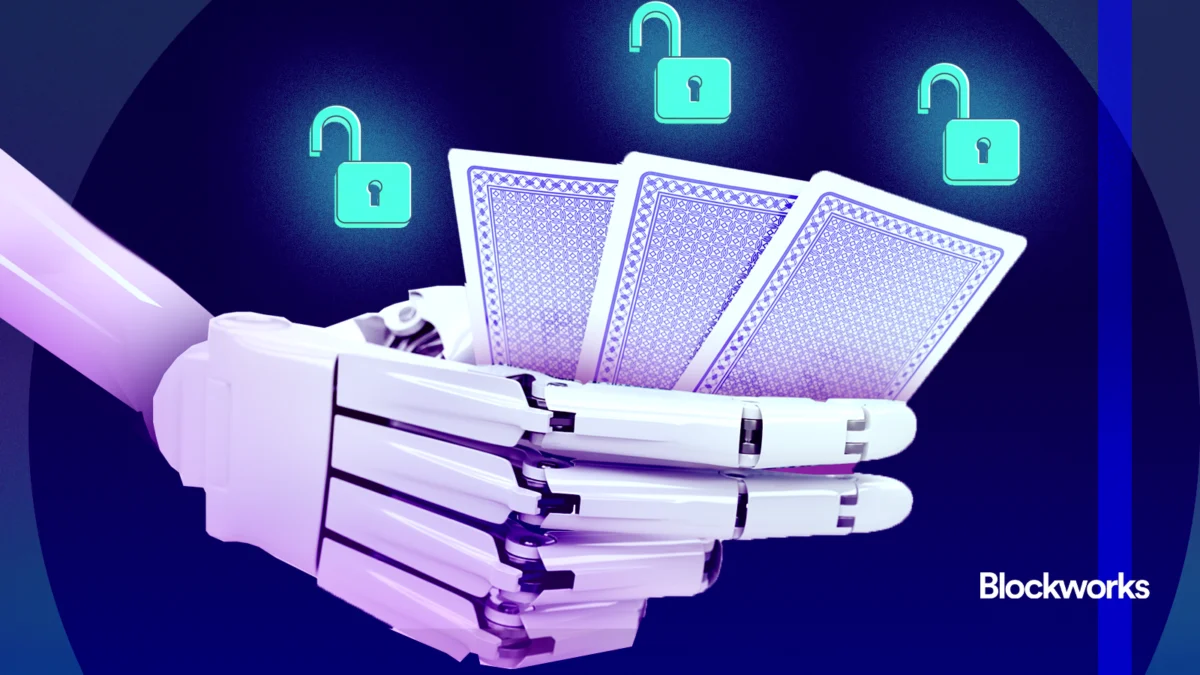
While prediction markets grapple with questions of truth and reality, the underlying infrastructure of the digital economy faces an entirely different kind of pressure from rapid advancements in artificial intelligence. Recent findings published by researchers at Anthropic reveal that autonomous AI agents have grown alarmingly adept at identifying and exploiting software vulnerabilities. In controlled testing, their AI agents successfully exploited 56 percent of smart contracts that possessed known historical vulnerabilities.
More concerningly, when tested against 2,849 smart contracts with no known vulnerabilities, the AI agents autonomously discovered two novel "zero-day" exploits. The rate of acceleration is equally striking. Researchers noted that over the past year, frontier models have seen their exploit revenue capacity double roughly every 1.3 months. To put that velocity into perspective, Moore’s Law observes semiconductor performance doubling every two years; these AI agents are doubling their capacity to compromise code every six weeks.
Anthropic conducted the experiment not out of a specific focus on cryptocurrency, but to measure the baseline capabilities of autonomous agents across all software code. The same long-horizon reasoning, boundary analysis, and iterative tool use that make agents effective at exploiting smart contracts apply universally to all digital infrastructure. Furthermore, the cost barriers are dropping precipitously, with researchers calculating that an agent can exhaustively scan a contract for vulnerabilities for an average of just $1.22. As these costs continue to decline, security analysts warn that malicious actors will increasingly deploy automated agents to probe any piece of code guarding valuable digital assets.
Compounding these software vulnerabilities is an even longer-term threat looming on the horizon: the advent of quantum computing. While dismissed by some skeptics on the grounds that quantum computers will eventually threaten all classical security systems equally, experts argue that crypto ecosystems possess unique structural vulnerabilities. Speaking on an episode of the Epicenter podcast, Stefano Gogioso explained that the classical cryptography community has spent years preparing for the quantum transition and already maintains backup protocols ready to deploy if quantum breakthroughs arrive suddenly. Furthermore, centralized Web2 entities like traditional banks possess centralized authorities that can halt transactions for a day or two to adapt.
In contrast, decentralized cryptocurrencies face dual hurdles. Blockchains rely on novel cryptographic applications that have received comparatively little attention from researchers studying post-quantum resistance. Additionally, even if solutions existed, the decentralized nature of crypto features a multitude of competing voices, opinions, and vested interests, making rapid infrastructure upgrades exceptionally difficult. Because public blockchains were deliberately designed to make transaction histories visible and accessible to everyone at all times, quantum computers will theoretically be able to decrypt the entire historical ledger of every major blockchain once operational.
Such capabilities could empower governments to systematically audit historical transactions, potentially unmasking privacy-focused coins and issuing retroactive capital gains tax bills for undeclared winnings. Other speculative scenarios include verifying whether a newly moved coin belongs to mysterious creator Satoshi Nakamoto or merely an opportunistic actor wielding a quantum machine, or foreign state actors targeting Bitcoin to destabilize integrated Western financial systems.
Perhaps the most profound irony of all is Gogioso’s prediction that quantum technology might eventually give rise to a form of permissionless, digital money that solves the foundational double-spend problem without requiring crypto’s exploit-prone model of distributed consensus. Despite these existential risks, industry observers note that current financial investment in quantum resistance remains woefully inadequate. Given that the broader cryptocurrency market boasts a capitalization in the trillions, industry advocates argue that even a fractional probability of catastrophic loss demands substantial financial commitments to future-proof the technology—investments that remain largely unfulfilled.




Comments (0)