


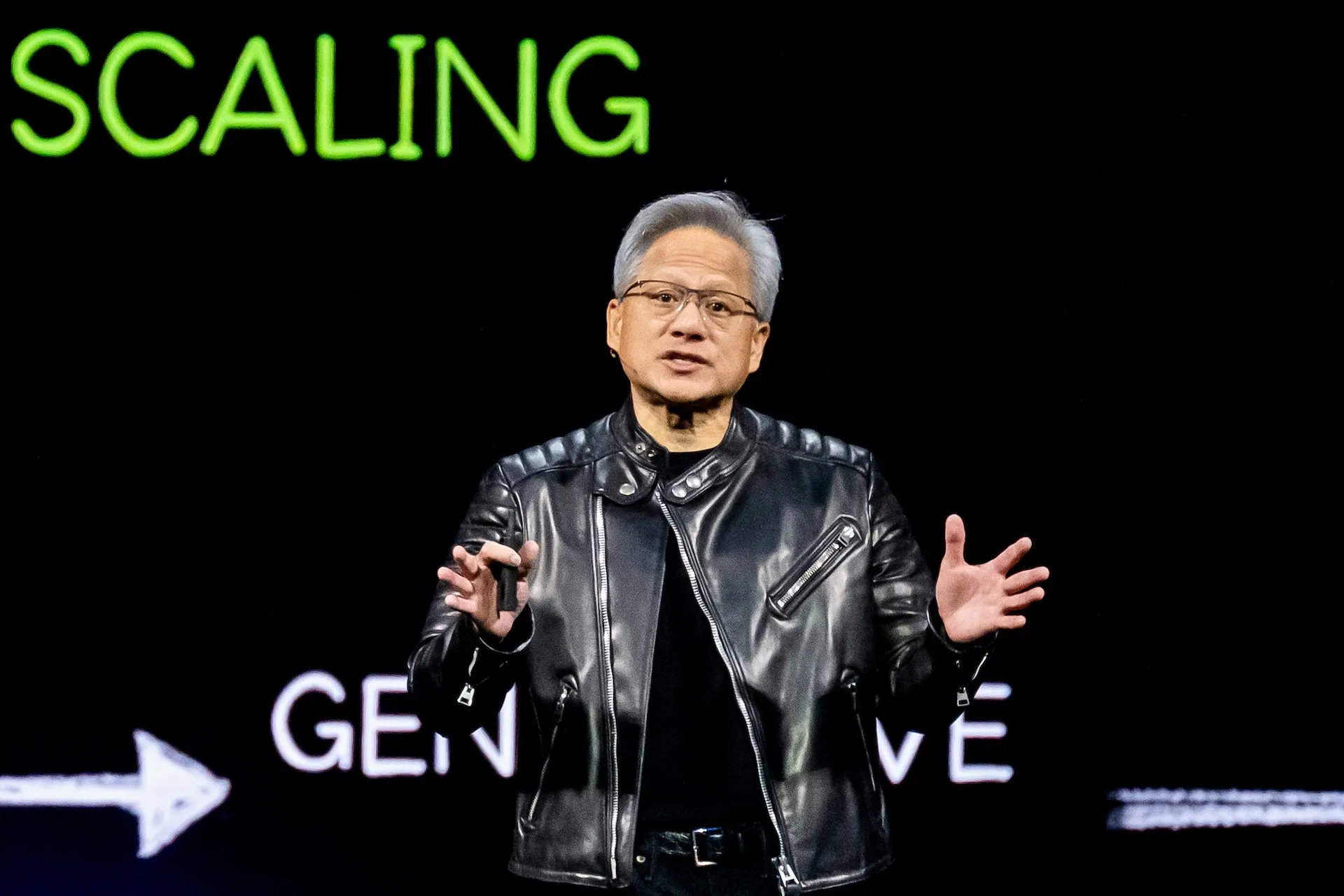
WASHINGTON — Congressional Democrats opened a formal inquiry on Thursday into how the Trump administration handled lucrative and controversial Nvidia chip sales to China, widening a political storm that has already upended the leadership of one of the world’s most valuable technology companies.
The launch of the Democratic investigation came on the same day that Nvidia ousted its founder and longtime CEO, Jensen Huang. In the wake of his removal from the company he built into an artificial intelligence powerhouse, Huang also agreed to testify before a separate set of Republican-led congressional committees following weeks of mounting pressure and threats of subpoenas.
Huang’s stunning fall from grace followed his public confession to an extramarital affair with a woman accused by authorities of being a Chinese spy. Subsequent reports have revealed that Huang was also involved in additional affairs with Nvidia employees, further compounding the corporate crisis at the chipmaker.
The alleged Chinese spy at the center of the geopolitical scandal has been identified as Alice Huang. She served as an executive at Megaspeed, a Singapore-based customer of Nvidia that U.S. officials have increasingly suspected of acting as a conduit to illegally route advanced Nvidia semiconductors into mainland China, circumventing strict U.S. export controls.
The newly announced Democratic inquiry is being led by prominent congressional leaders: Rep. Richard Neal of Massachusetts, who serves as the top Democrat on the House Ways and Means Committee, and Sen. Ron Wyden of Oregon, the ranking Democrat on the Senate Finance Committee. Because Democrats currently hold minority status in both chambers of Congress, they lack subpoena power and cannot unilaterally compel answers or document production, meaning their investigative efforts rely on formal letters, public pressure, and oversight requests.
Even without subpoena authority, the lawmakers launched a pointed offensive. In a sharp letter sent to Commerce Secretary Howard Lutnick, the Democratic leaders urged the Department of Commerce to immediately preserve all records relating to what they describe as a questionable and potentially illegal arrangement governing advanced chip exports.
According to the lawmakers’ description of the arrangement, the scheme involved a direct understanding between President Trump and Nvidia. The administration agreed to permit sales of Nvidia’s advanced H200 chips to buyers in China under a specific condition: the chips, which are manufactured in Taiwan, were first required to be physically shipped to the United States. Upon their arrival on U.S. soil, the administration levied a tariff on the shipments.
The congressional letter alleges that this mechanism effectively allowed the executive branch to take a direct financial cut of Nvidia’s commercial sales to China through what the lawmakers describe as an unconstitutional export tax system. Once the fees and tariffs were accounted for, the Commerce Department, operating under Secretary Lutnick, issued the necessary export licenses for the hardware to move overseas.
This revenue-sharing arrangement was not initially a secret. In August 2025, public reporting by the Associated Press revealed that Nvidia and rival chipmaker AMD had both agreed to surrender 15% of their revenue generated from Chinese chip sales directly to the U.S. government. The unusual arrangement was struck as part of a deal with the administration to secure official export licenses.
However, the new Democratic congressional inquiry digs deeper into the operational execution of these deals. The letter questions why Secretary Lutnick and the Commerce Department continued to authorize Megaspeed to purchase and receive chips even after U.S. intelligence agencies reportedly briefed officials regarding their suspicions surrounding Alice Huang and Jensen Huang’s personal relationship with her. Furthermore, the inquiry demands answers as to why the department reportedly green-lit other Asian corporate entities to acquire Nvidia hardware despite those companies maintaining no physical presence at their officially listed business addresses.
The scope of the investigation places the actions of the administration squarely under the microscope, extending scrutiny far beyond Nvidia and its disgraced former chief executive.
The inquiry also raises questions regarding corporate donations made by Nvidia to projects backed by President Trump. Specifically, the lawmakers noted that the high-stakes export deal was green-lit only after the administration became aware of Jensen Huang’s compromised personal situation involving the alleged spy, and crucially, after Nvidia contributed $26 million toward Trump-backed initiatives, including the construction of a presidential ballroom. The congressional letter appears to question whether the administration leveraged its knowledge of Huang’s personal compromises to secure financial contributions from the tech giant.
The intersection of executive pressure, personal scandal, and corporate policy was further highlighted by recent public remarks from the president himself. During an interview on "60 Minutes" that aired on Sunday, President Trump recounted how he and his administration had directly threatened an unnamed artificial intelligence executive with potential imprisonment, asserting that following the threat, the executive "totally changed" their posture.
The mounting congressional scrutiny represents the second major legislative probe into Nvidia’s China sales and its complex relationship with the White House since details of the alleged spy affair emerged publicly.
A separate, Republican-led investigative coalition has been pressing forward on a parallel track. That group comprises leadership from the House Select Committee on the Chinese Communist Party, the House Committee on Foreign Affairs, and the House Intelligence Committee. Those Republican panels demanded that Huang appear before them for a closed-door deposition, having previously threatened to issue formal congressional subpoenas if he failed to cooperate voluntarily. Following his resignation from Nvidia, Huang agreed to comply with those demands and testify.



Comments (0)