


The digital artificial intelligence revolution swept across the global technology landscape in a matter of a few short years, transforming industries, redefining productivity, and capturing the imagination of the public. Yet, despite the staggering leaps forward in large language models, generative media, and deep learning, industry observers and technologists widely agree that humanity is still only scratching the surface of what artificial intelligence can ultimately achieve.
As the digital ecosystem has evolved through successive generations—progressing rapidly from pretraining and fine-tuning to advanced reinforcement learning and widespread commercial deployment—financial investments and technical expenditures on compute infrastructure and data acquisition have shown no signs of plateauing. Instead, spending has accelerated aggressively, driven by the insatiable appetite of foundational models and the relentless pursuit of artificial general intelligence, commonly known as AGI.
Now, a new frontier is opening that promises to be of comparable importance to digital AI, if not significantly larger in its ultimate economic and societal footprint: the integration of artificial intelligence into the physical world. However, the foundational infrastructure required to transition AI from server racks and cloud environments into physical hardware and automated systems is exceptionally harder to build, test, and scale. These severe engineering and operational hurdles are already manifesting at every single stage of development.
In the early days of digital AI pretraining, language models enjoyed a massive tailwind provided by decades of digitized text, code, and media organically accumulated across the internet. In stark contrast, the robotics and physical AI sector possesses no comparable, ready-made, centralized digital repository of the physical movements, nuanced interactions, rich sensory inputs, and real-world spatial understanding necessary for machines to comprehend and navigate the physical universe. Before a physical AI model can learn from an experience, that experience must be meticulously captured in the physical world.
Furthermore, while digital AI systems operating in reinforcement learning and deployment phases benefit from clean, highly structured digital environments that can be effortlessly simulated, replicated, and scaled across thousands of cloud servers, physical AI must contend with the noisy, chaotic, unpredictable, and operationally complex reality of the physical world. Physical AI operates dynamically out in the field, exposed to fluctuating weather, irregular terrain, and unpredictable human behavior, rather than safely insulated within the pristine confines of the cloud.
To successfully achieve the milestone of physical AGI, the global technology industry faces the monumental task of simultaneously building both the synthetic brain and the mechanical body. The artificial brain requires unprecedented volumes of multimodal data that has never before been systematically collected. Simultaneously, the physical body requires a massive labor force and operational footprint to do the grueling work on the ground, interacting with the real world to generate that vital training data.
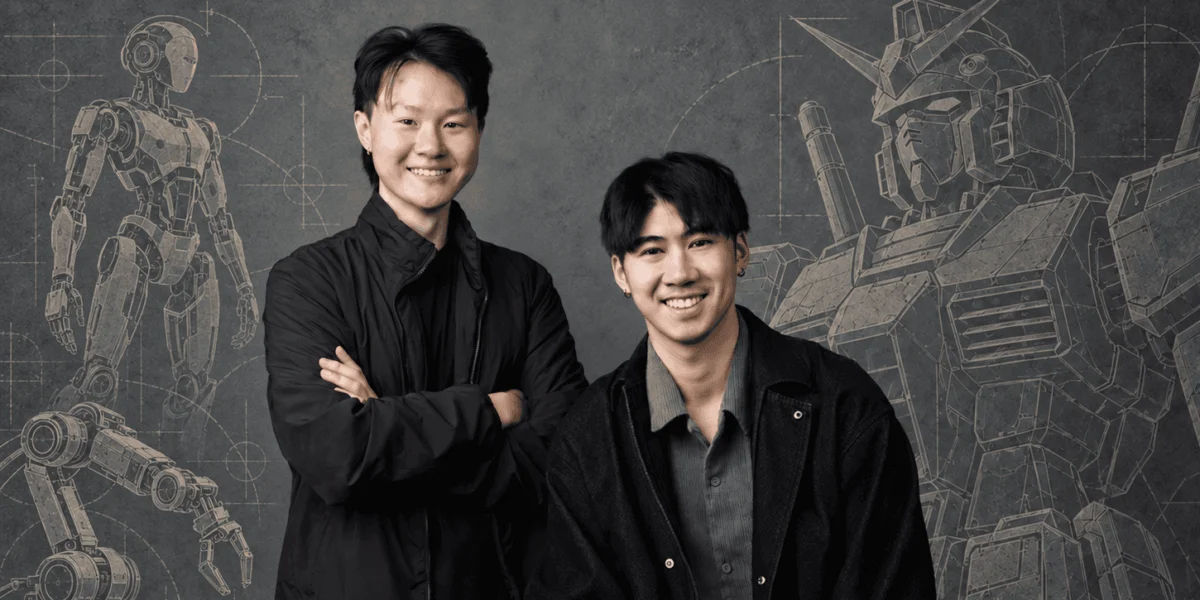
Recognizing this critical bottleneck, founders Josh, Jason, and the dedicated team at Mecka AI have taken on the ambitious mission of helping physical AI laboratories, advanced robotics companies, and traditional industrial enterprises reach physical AGI and put it into practical use. Mecka AI operates as an essential operational partner, specializing in comprehensive training data acquisition, reinforcement learning optimization, and real-world deployment services.
Delivering successfully on this multifaceted mission requires the rapid development of several distinct operational and technical disciplines across multiple fields, all executed simultaneously and all scaled to meet massive industrial demands. Each of these core disciplines is notoriously difficult to cultivate independently. However, to emerge victorious in the competitive physical AI landscape, a company cannot merely master one of these capabilities; it must master all of them, integrating them seamlessly to function together at scale.
Consider the modern requirements for training data in the robotics sector. Data today must simultaneously achieve high volume, high diversity, and exceptional quality, while also being delivered rapidly and at a commercially viable price point. Achieving any single one of these criteria at a small volume is relatively straightforward, but accomplishing all of them concurrently and at industrial scale represents an extraordinary engineering and operational challenge. Yet, meeting this exact standard is precisely what is required to help industry partners successfully bridge the gap toward physical AGI.
This dynamic is closely mirrored in other complex logistics and operations-heavy industries. For example, it is relatively straightforward to launch a boutique food delivery service that handles a single dish from one local restaurant to a single nearby apartment block. However, transforming that rudimentary concept into a massive, highly efficient, globally scaled logistics powerhouse on the scale of a DoorDash requires solving monumental operational complexities across software, supply chain, and physical labor.
The founders and team members at Mecka AI deeply understood these realities from the outset and moved swiftly to build out their core operational capabilities, establishing a distinct competitive edge in each domain and executing with precision. The resulting outcome is a robust, highly scalable, and flexible platform that has already enabled them to win the trust and business of many of the leading artificial intelligence laboratories and robotics enterprises today. Through this rapid execution, Mecka AI has quickly emerged as the frontrunning leader in this nascent and vital category.
What initially draws prominent investors and industry veterans to Mecka AI is not merely that they placed the correct strategic bet on the proper form of training data, although their strategic foresight has proven remarkably accurate. The broader robotics industry remains in its absolute infancy relative to the mature state of digital AI. Consequently, the physical form factor of the data will likely evolve, and the mechanical form factor of the robots themselves will undoubtedly change as hardware innovation accelerates.
What truly matters is that Mecka AI has successfully constructed the underlying machinery that scales dynamically alongside the broader industry and its diverse partners. Regardless of how the raw data input changes over time as technology matures, the output delivered to partners remains consistently aligned with their strategic needs. This dynamic mirrors the foundational architecture built by companies like DoorDash, where whether the underlying input being transported is a hot pizza or an expensive laptop, the end customer ultimately experiences the same reliable, delightful delivery service. When an enterprise tackles a domain in the physical world characterized by extraordinarily high barriers to entry and operational scaling, it creates a generational opportunity for the right team to build a large, enduring business fortified by deep competitive moats.
This fundamental realization is what drove venture partners and strategic investors to back Josh, Jason, and their rapidly expanding team at Mecka AI. Observers see within the company a unique combination of talent, technical acumen, and operational rigor that will continue to compound over the long term, positioning them to win this category and empower their commercial partners to advance the shared global mission of building and deploying autonomous robots at scale around the world.
This compelling vision has attracted a formidable coalition of co-investors, ranging from major corporate strategics such as NVIDIA, Samsung, Microsoft, and Qualcomm to legendary founders and corporate operators who successfully scaled some of the most defining technology companies of their generation. These backers bring deep expertise in many of the exact disciplines required to fuel Mecka AI’s rapid expansion, including Tony Xu, founder and chief executive officer of DoorDash; Frank Slootman, former chief executive officer of ServiceNow and Snowflake; Milan Kovac, former head of the Optimus humanoid robotics program at Tesla; Christopher Payne, former president and chief operating officer of DoorDash; and Jonathan Chadwick, former chief operating officer and chief financial officer of VMware and board member at Databricks, alongside numerous other prominent industry leaders.





Comments (0)