


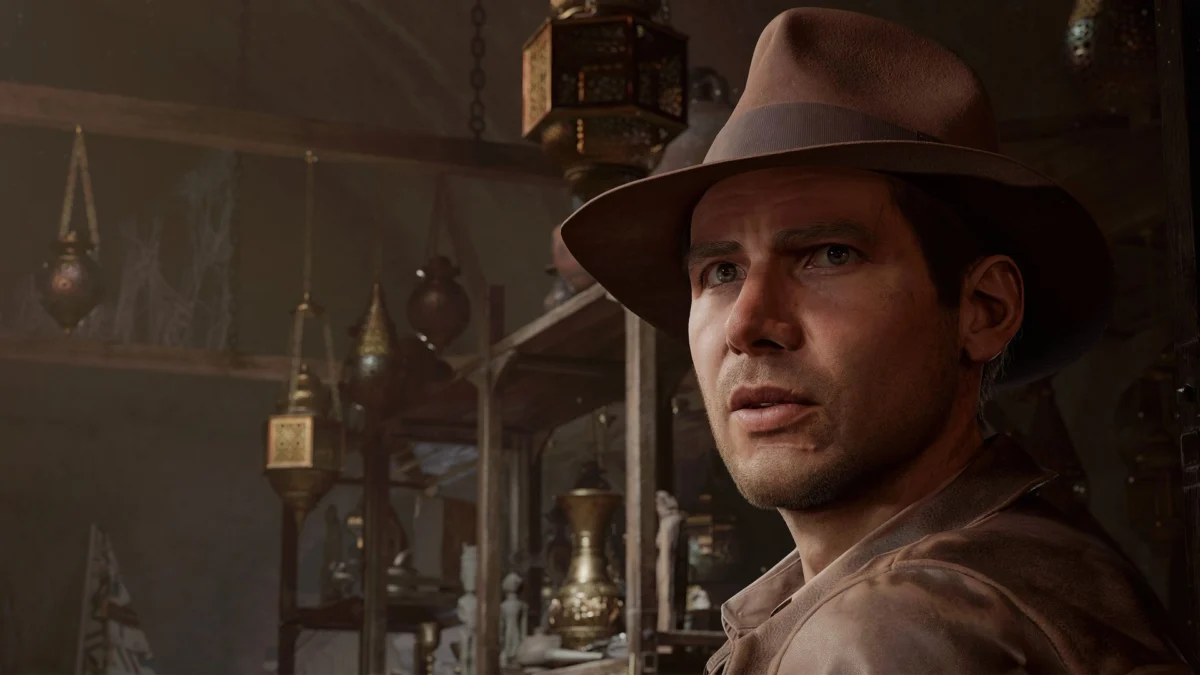
When Swedish developer MachineGames set out to create Indiana Jones and the Great Circle, they faced a daunting creative paradox. The studio is globally renowned for its work on the Wolfenstein franchise, a series built on the glorious, unapologetic, high-octane destruction of Nazi forces through heavy artillery and explosive firepower. Translating that studio DNA over to George Lucas and Steven Spielberg’s iconic, whip-slinging archaeologist required a massive paradigm shift. After all, Indiana Jones is famous for using his fists, his wits, and his iconic bullwhip, only resorting to a revolver when backed firmly into a corner.
Capturing that precise cinematic feeling proved to be one of the most significant design challenges the team encountered during development. According to design director Jens Andersson, finding the right balance for firearms in the game was a major hurdle. The developers wanted to remain true to the adventurous spirit of Spielberg’s classic films, ensuring that guns felt like a meaningful part of Indy’s available toolset rather than the default, go-to response for every single combat encounter or puzzle in the game.
Speaking in a recent interview, Andersson revealed that getting the firearms to feel genuinely satisfying to use was a completely "non-negotiable" requirement for the team, largely because a significant portion of the developers at MachineGames simply love working on gun mechanics. However, this love for shooting created a friction point: how do you design satisfying guns without accidentally encouraging players to turn the world-famous archaeologist into a generic first-person shooter protagonist who blasts his way through entire battalions of enemies?

Early on in the development cycle, the team implemented slow reloading times to subtly encourage players to lean on other signature tools, such as Indy’s trusty whip or a well-placed punch. Yet, the studio quickly realized that slow reloads alone would not be enough to fundamentally alter player behavior.
To combat the temptation of turning the game into a traditional shooter, the development team brainstormed and tested a wide variety of systemic workarounds. One of the more notable ideas explored was a mechanic reminiscent of the notorious wanted star system found in the Grand Theft Auto franchise. Under this proposed system, if a player chose to shoot an enemy, hostile reinforcements would immediately flood the area, heavily penalizing loud and reckless combat tactics. The underlying psychological trick for the designers was to discourage players from going overboard with firearms. The studio was deeply worried that the path of least resistance for players would simply be taking down a single guard, picking up a dropped weapon, and systematically clearing out entire regions of the map using only gunfire.
Ultimately, the breakthrough solution that MachineGames stumbled upon came in the form of alternative, breakable melee weapons scattered casually across the game’s environments. Ranging from everyday household objects like frying pans to surprisingly fragile items like violins and fly swatters, these abundant and lightly comedic tools completely transformed the rhythm of combat. They encouraged players to embrace the improvisational, slapstick-adjacent nature of how Indy handles close-quarters skirmishes, offering a quick and satisfying knockout whether the player was engaging in stealth takedowns or desperately scrambling after their ammunition had completely run dry.
Remarkably, Andersson noted that this crucial breakable weapon system was integrated very late in the overall development cycle. It was only when the team saw how effectively these quirky items solved their pacing and combat identity problems that they decided to lean into the concept, populating the world with all sorts of bizarre objects. While these items introduced a slight touch of slapstick humor to the proceedings, they managed to strike the right tone without tipping over into outright silliness.

This late-stage addition proved instrumental in achieving the final, finely tuned combat balance that defines the experience today. In the completed game, stealth and fisticuffs serve as the primary, intended approach to enemy encounters, while firearms are relegated to a desperate last resort. Andersson acknowledged that while this deliberate penalty on heavy shooting frustrated some players who wanted a more traditional action experience, a much larger segment of the player base embraced and loved the design choice.
The ultimate fix, according to Andersson, was making the melee combat system deeply interesting, fun, and accessible. While the encounters themselves are not necessarily easy from a raw challenge perspective, the barrier to entry is wonderfully low. Players can sneak up behind an enemy, strike them with whatever object happens to be lying around—whether it is a makeshift club or a humble fly swatter—and immediately feel like they are stepping right into the shoes of cinema’s most famous adventurer.
This dynamic and carefully considered approach to combat played a massive role in making the title one of MachineGames’ finest achievements to date. The game earned a stellar score of 86 in PC Gamer’s official review, cementing its status as a triumph for both the developer and the iconic franchise. Whether fans will ever see a direct follow-up or another Indiana Jones project from the Swedish studio remains uncertain for now. If a sequel ever does materialize, it likely will not happen anytime soon, as MachineGames has officially confirmed that its current focus is fully dedicated to the production of Wolfenstein 3.



Comments (0)