


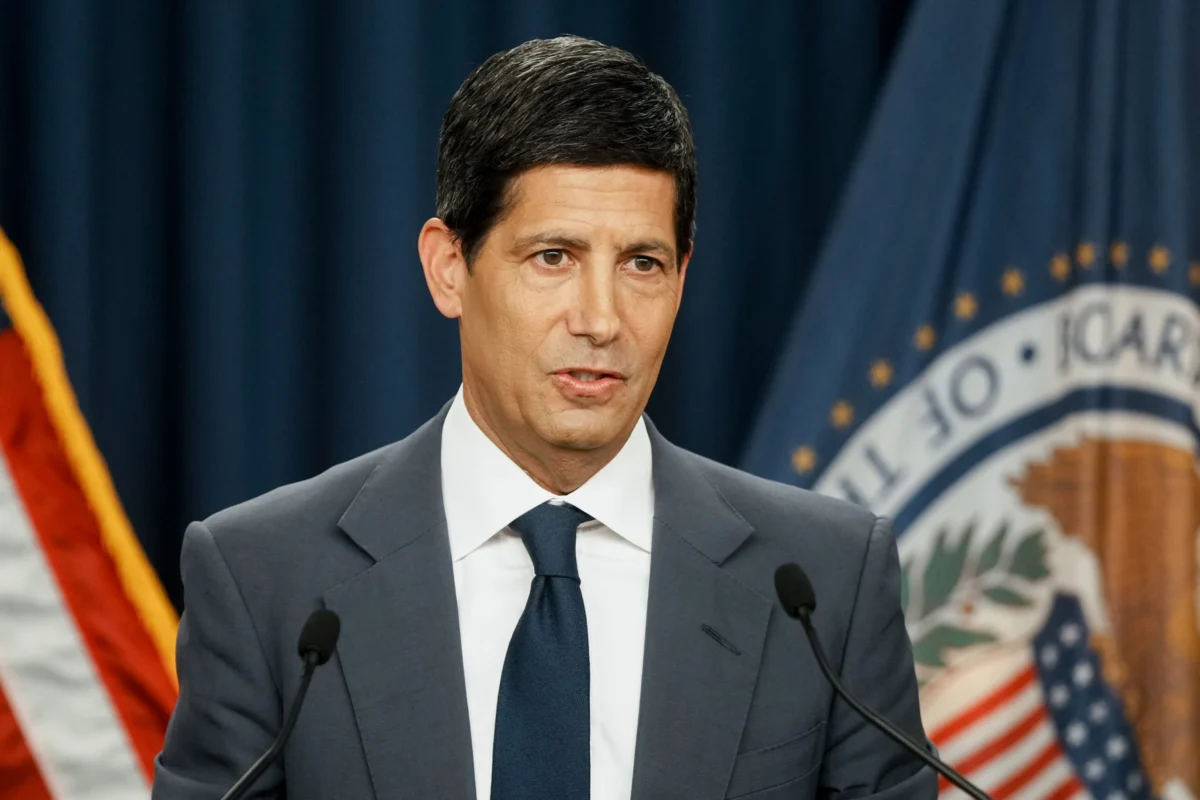
Reserve Removes October 2027 Interest-Rate Vote as Part of Chairman Kevin Warsh’s Strategic Overhaul
The Federal Reserve will not vote on potential interest-rate changes at its October 2027 meeting, a significant departure from standard scheduling that forms part of a broader initiative from Chairman Kevin Warsh aimed at reducing the central bank’s footprint in financial markets and encouraging deeper long-term economic strategy.
According to a formal announcement released Thursday, the rate-setting Federal Open Market Committee will officially set aside its scheduled Oct. 26-27 session for the discussion of broad monetary policy strategy issues rather than taking up immediate policy levers. The shift marks a notable evolution in how the world’s most influential central bank manages its calendar and communicates with the public.
Chairman Warsh first announced the move during his news conference following the conclusion of the FOMC’s regular meeting in October, though he did not specify at the time exactly which future meeting would be affected by the restructuring. Under the newly released calendar, the FOMC will hold seven voting meetings in 2027. The October session will instead be dedicated entirely to extra time for policy deliberation, operating without a formal vote or the customary post-meeting policy statement. Additionally, the new calendar reveals that the final voting meeting of that year will now take place in November, moving up from its traditional December slot.
In explaining the reasoning behind the scheduling shift, Chairman Warsh emphasized the need to balance short-term economic data collection with long-range institutional thought.
"Now, what’s the reasoning behind this change? To me, it’s quite straightforward," the chairman said, outlining his rationale. "Getting policy well involves assessing near-term developments at timely, regular, and information-rich intervals."

"But it’s equally important we reserve time and space, as an intellectually diverse group, for strategic deliberations—for thinking anew about big questions, looking out over longer time horizons, focusing, as I say, on the left side of the decimal point," he added.
Warsh has previously emerged as a critic of the Federal Reserve’s prior communications strategy, arguing that policymakers historically spent far too much time providing explicit guidance on forthcoming policy moves. In his view, such rigid forward guidance often handcuffed officials when it eventually came time to make critical decisions under shifting economic realities.
Under typical operating practice, the Federal Reserve meets eight times a year. Each of these regular gatherings is traditionally followed by a formal vote on interest rates and a widely watched press conference hosted by the central bank chair.
Since taking over the helm of the institution, Warsh has moved deliberately to alter the post-meeting rhythm. The official post-meeting policy statements have been shortened dramatically, stripped of repetitive language and complex bureaucratic nuances. Furthermore, the accompanying question-and-answer sessions with the press have been curtailed, cut down to roughly half an hour from their customary duration of about 45 minutes.
During his October news conference, Warsh indicated that tweaking the meeting schedule is simply another foundational step in his broader plan to streamline central bank communication and refocus institutional priorities. He also noted last month that the total number of nonvoting policy meetings would likely increase to two by the year 2028.
"I believe the setting of the meeting schedule and agenda is more than some administrative detail," Warsh said. "It’s an institutional choice, affecting the nature and the quality of our deliberations and, ultimately, the wisdom of our decisions. It’s yet another change to get the conduct of monetary policy on the right track."
The FOMC is next scheduled to meet on December 8-9 to evaluate current economic conditions and determine near-term interest-rate policy. Looking further ahead, the central bank’s very first voting meeting of the 2027 calendar year will take place on January 26-27, setting the stage for a modified operational calendar that prioritizes extended strategic thought alongside traditional rate decisions.


Comments (0)