


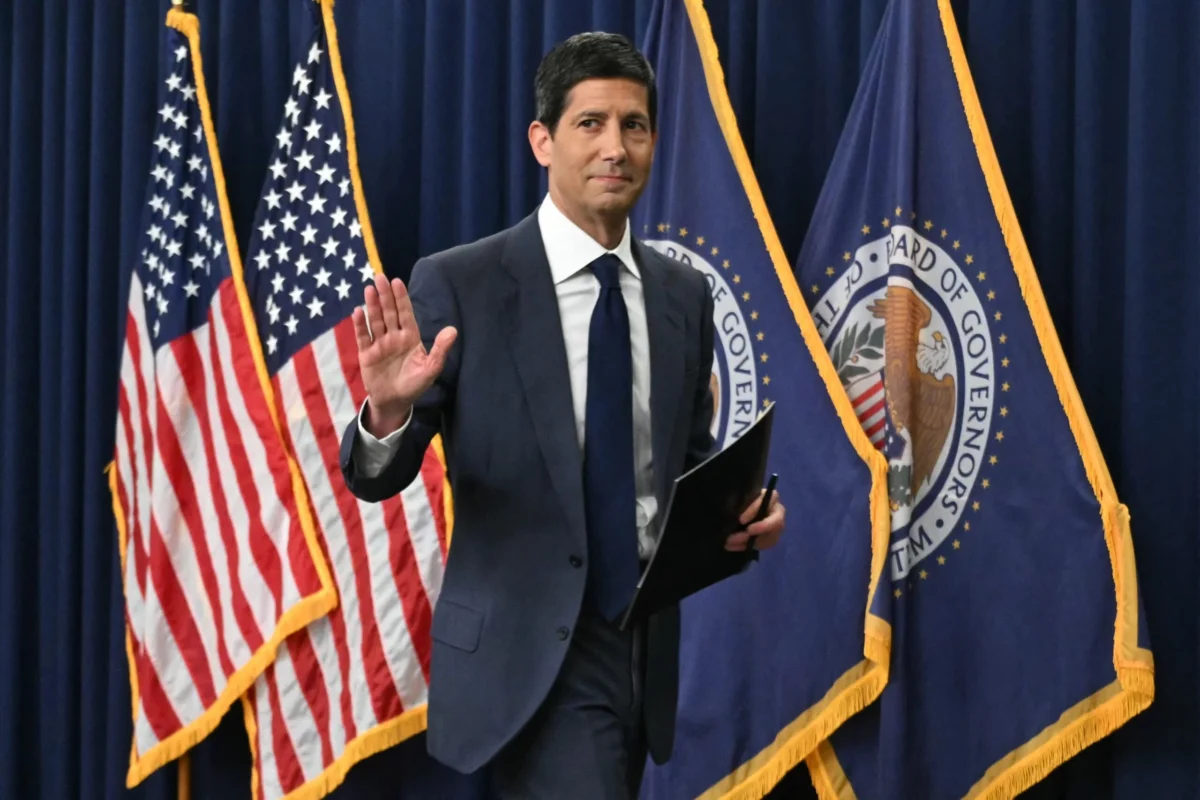
Federal Reserve officials expressed growing confidence during their October policy deliberations that further interest rate increases will likely be necessary to adequately stem persistent inflationary pressures across the broader economy. However, policymakers chose to temporarily hold off on immediate action at that specific gathering in order to gather more comprehensive economic data and evaluate incoming indicators.
The details of these discussions emerged Wednesday with the official release of the meeting minutes from the Federal Open Market Committee. Beyond traditional economic metrics, the summary revealed that policymakers placed the economic impact of artificial intelligence at the very core of their recent strategy discussions. Officials explicitly indicated that surging demand associated with the rapid expansion of artificial intelligence technology would act as a material source of ongoing inflation risk moving forward.
Examining the broader economic landscape, central bank officials observed that inflationary pressures within the economy remained notably broad-based. This widespread momentum warranted proactive monetary policy action, with some policymakers actively advocating for a quarter percentage point rate increase during the October meeting. A couple of participants even highlighted the potential necessity for an even larger increase at the subsequent policy meeting scheduled for December.
The meeting summary explicitly noted that almost all participants judged that, under their baseline economic outlooks for inflation and the labor market, further actions to raise the target range for the federal funds rate would likely be appropriate. Such measures would be required to ensure a timely return of inflation back to the central bank’s established 2% objective.
Reinforcing this hawkish perspective during a media appearance on Wednesday, Fed Governor Christopher Waller reiterated his belief that the Federal Open Market Committee should seriously consider a half-point rate hike during its upcoming December policy meeting.
AI Concern and Financial Stability Risks
Throughout the October gathering, officials expressed an unusually high level of concern regarding the rapid rise of artificial intelligence, viewing the sector both as an underlying driver of broader inflation and as a potential flashpoint for future financial instability.
Federal Reserve staff members who provided formal briefings to meeting participants specifically noted that off-balance-sheet leasing commitments and complex circular financing arrangements among artificial intelligence-related firms could severely amplify potential financial losses if expected returns on massive artificial intelligence investments were to disappoint.
Most participants observed that artificial intelligence-related debt had grown at an exceptionally rapid pace, and that a significant portion of this growth had taken place through increasingly complex and opaque financing structures. Furthermore, a few participants remarked that exposures tied to artificial intelligence were becoming increasingly concentrated among a small, select group of firms, raising systemic risk considerations.

Despite these emerging financial sector vulnerabilities, central bank officials stated they still broadly expect consumer price inflation to fall off sharply in 2027 and beyond as the lingering impacts of current economic shocks gradually wear off.
Ultimately, the Federal Open Market Committee voted 10-2 to keep its benchmark overnight borrowing rate locked in a steady range between 3.75% and 4%. The decision to pause and maintain the status quo faced formal dissent from two prominent central bank officials: Governor Lisa Cook and Cleveland Fed President Beth Hammack. Both officials dissented in favor of an immediate quarter-point increase to the benchmark rate.
Those committee members who voted in favor of maintaining the existing rate target pointed to the distinct benefits of accumulating additional macroeconomic information. They argued that waiting would help the committee in determining the precise policy stance appropriate to ensure a stable and timely return of inflation to the committee’s stated 2% goal.
However, incoming economic data released since the October gathering has continued to demonstrate that the underlying pace of price increases remains stubbornly well above the central bank’s desired target. The consumer price index report for October showed that headline inflation rose 0.4% across all items, while core inflation—which strips out volatile food and energy components—advanced 0.3%. Both monthly readings came in 0.1 percentage point higher than consensus economic expectations.
While these persistent figures indicated clear concern among policymakers over how stubborn inflation has proven to be, most Fed officials who have spoken publicly in the weeks following the meeting have continued to advocate for a measured, patient approach to monetary policy adjustment.
Potential ‘Shock’ to Markets and Differing Policy Views
Despite the general preference for patience among many of his colleagues, Governor Waller argued Wednesday that the Federal Reserve may ultimately have to shock financial markets by approving a more aggressive half-point rate hike at the December meeting. Waller stands as the sole central banker to publicly espouse this specific view thus far, though St. Louis Fed President Alberto Musalem stated that he anticipates as much as a full percentage point of cumulative rate increases by the spring of 2027. As a governor, Waller holds a permanent voting seat on the FOMC, whereas Musalem is not scheduled to rotate into a voting role until 2028.
Adding to the urgency surrounding the policy debate, Chicago Fed President Austan Goolsbee warned during a television interview that the central bank risks losing its hard-earned institutional credibility if it fails to take decisive action against persistent price pressures.
At the very center of policymakers’ current analytical concern is whether rising prices tied to geopolitical conflicts, such as the war involving Iran, and broad economic tariffs implemented by President Donald Trump—events that historically might be viewed as temporary disturbances not requiring a monetary response—are instead becoming structurally entrenched within the economy.
Financial markets are currently fully pricing in a quarter percentage point interest rate increase at the upcoming December 8-9 policy meeting, alongside low but non-zero odds of a more aggressive half-point move, according to data from the CME Group’s FedWatch gauge. Additionally, interest rate futures traders are currently pricing in a solid likelihood of at least two additional rate increases over the course of 2027.



Comments (0)