


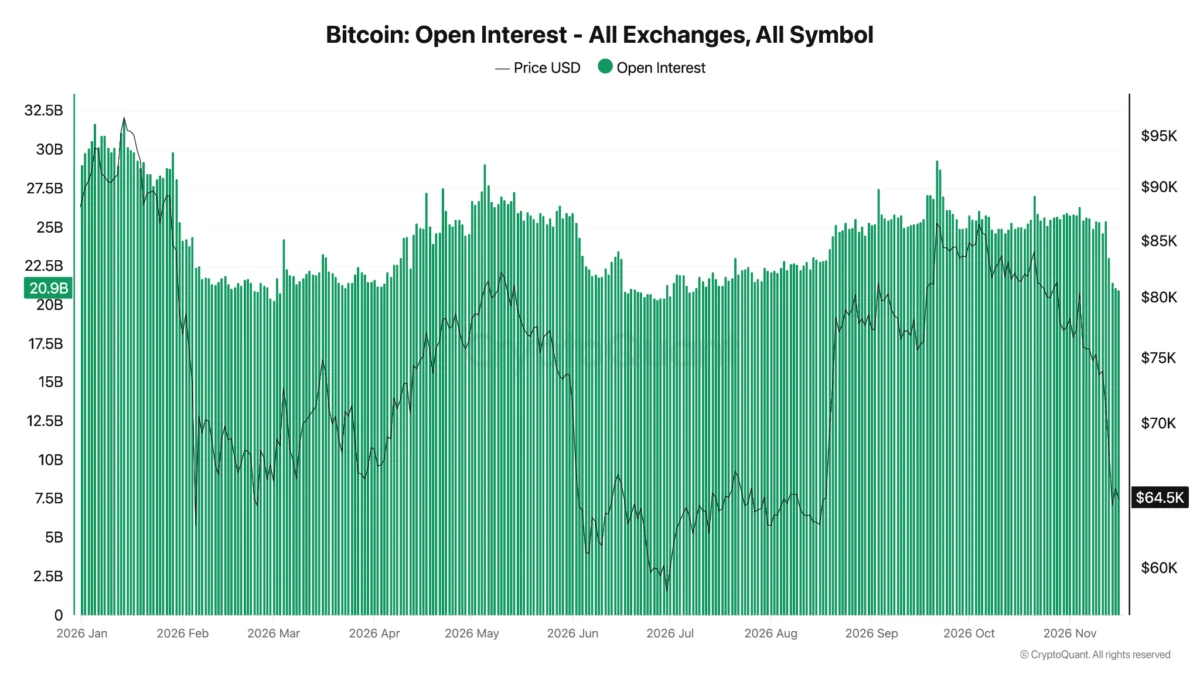
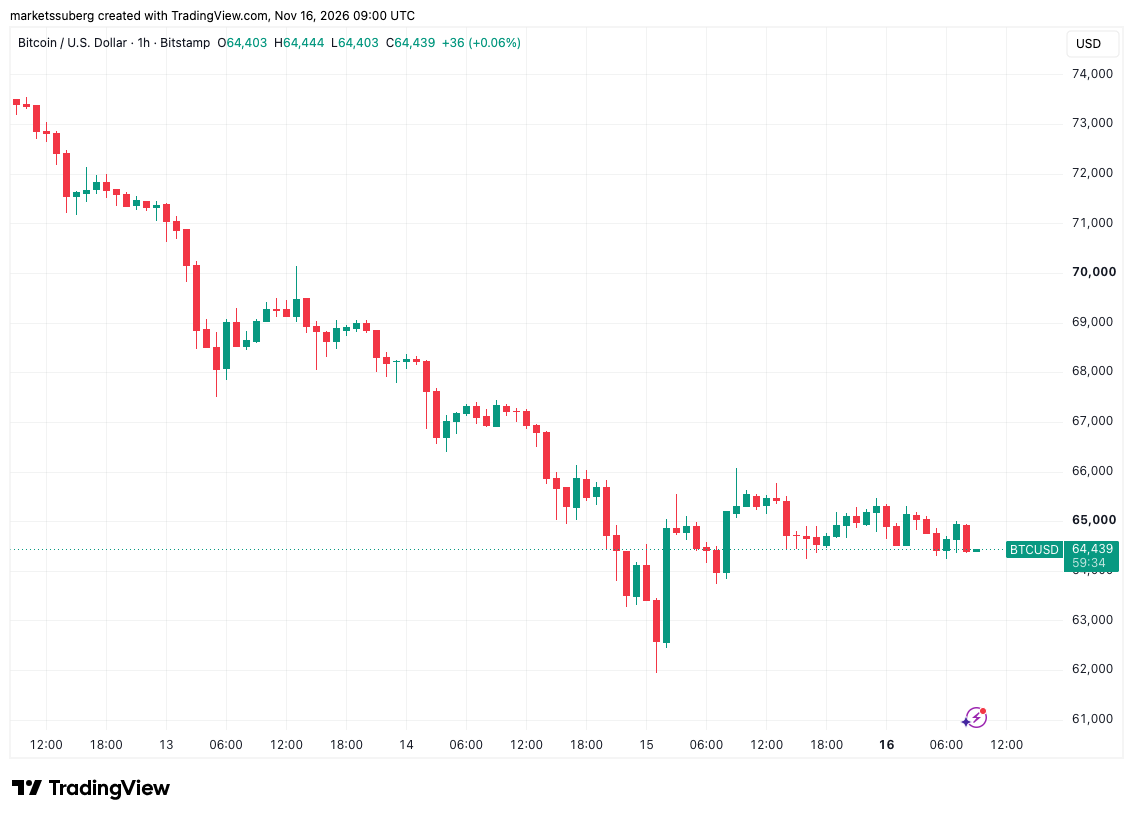
Bitcoin (BTC) traded around $64,500 early Monday morning following a sharp weekend sell-off during thin liquidity conditions that dragged the leading cryptocurrency down to a four-month low of $61,950. The sudden downturn has injected renewed caution into digital asset markets, coinciding with a turbulent week for global equities, intensifying controversy surrounding artificial intelligence giant Nvidia, and shifting expectations regarding future monetary policy from the United States Federal Reserve.
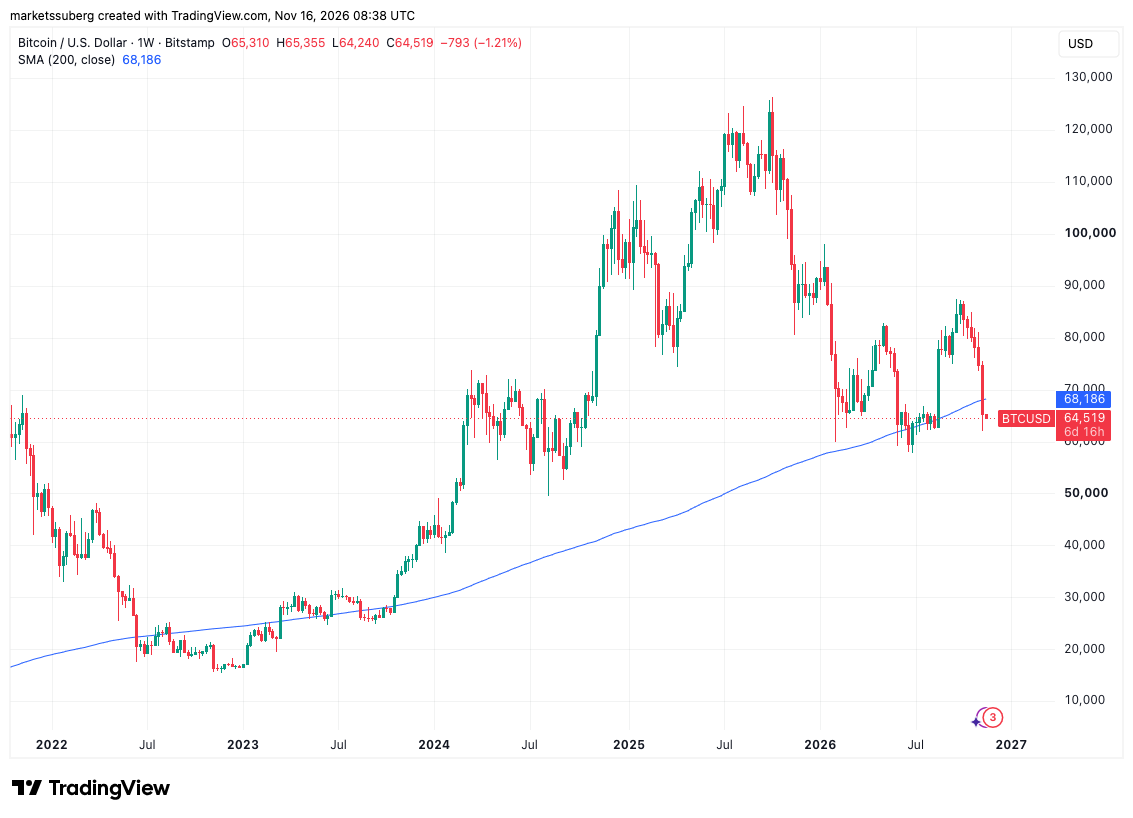
Bitcoin Falls Below Its 200-Week Moving Average
Data from TradingView indicated that the BTC/USD pair slumped to $61,950 on Bitstamp over the weekend, touching a price level not seen since July 13. Although the pair managed a brief technical rebound toward the $66,000 threshold, it subsequently eased back to trade around $64,500 during Monday’s Asian trading hours.
The decline dealt a technical blow to the asset by pushing Bitcoin below its vital 200-week simple moving average (SMA) of $68,186. This breakdown has cast a shadow of doubt over Bitcoin’s previous recovery trajectory that began in August, which had propelled prices as high as $87,000. Market historians note that successfully converting the 200-week SMA from a ceiling of resistance into a reliable foundation of support has historically served as an absolute prerequisite for sustaining previous bear-market recoveries.
"Deviating below the 200-week SMA has historically been the key to building out a Bear Market bottom formation," noted crypto trader and analyst Rekt Capital in a post on X over the weekend.

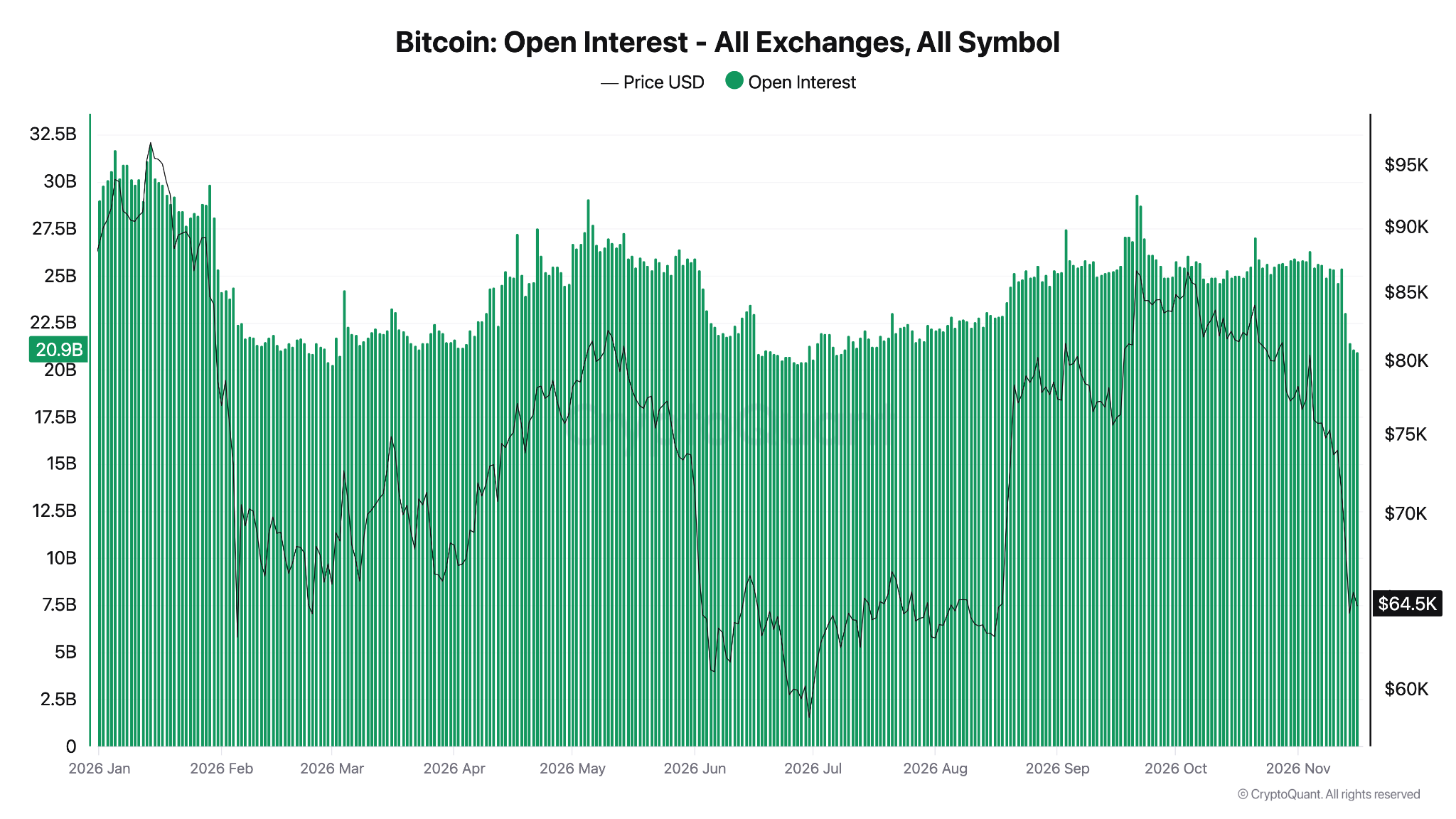
Onchain metrics further underscored the scale of the weekend deleveraging event. According to data tracked by analytics platform CryptoQuant, Bitcoin open interest experienced a sharp contraction, falling by approximately 9.1% to rest at $20.98 billion between Friday and 10:00 UTC on Monday.
A contributing analyst at CryptoQuant drew direct parallels between this latest liquidation flush and similar open interest drawdowns observed earlier in the year during February and June, questioning whether the market was actively carving out a local cyclical bottom.
"If the flush is complete, a bottoming zone may be near. If shorts keep piling up, even a modest rally could squeeze them. The $59K-$60K summer low remains the next key test," the analyst wrote on Sunday.
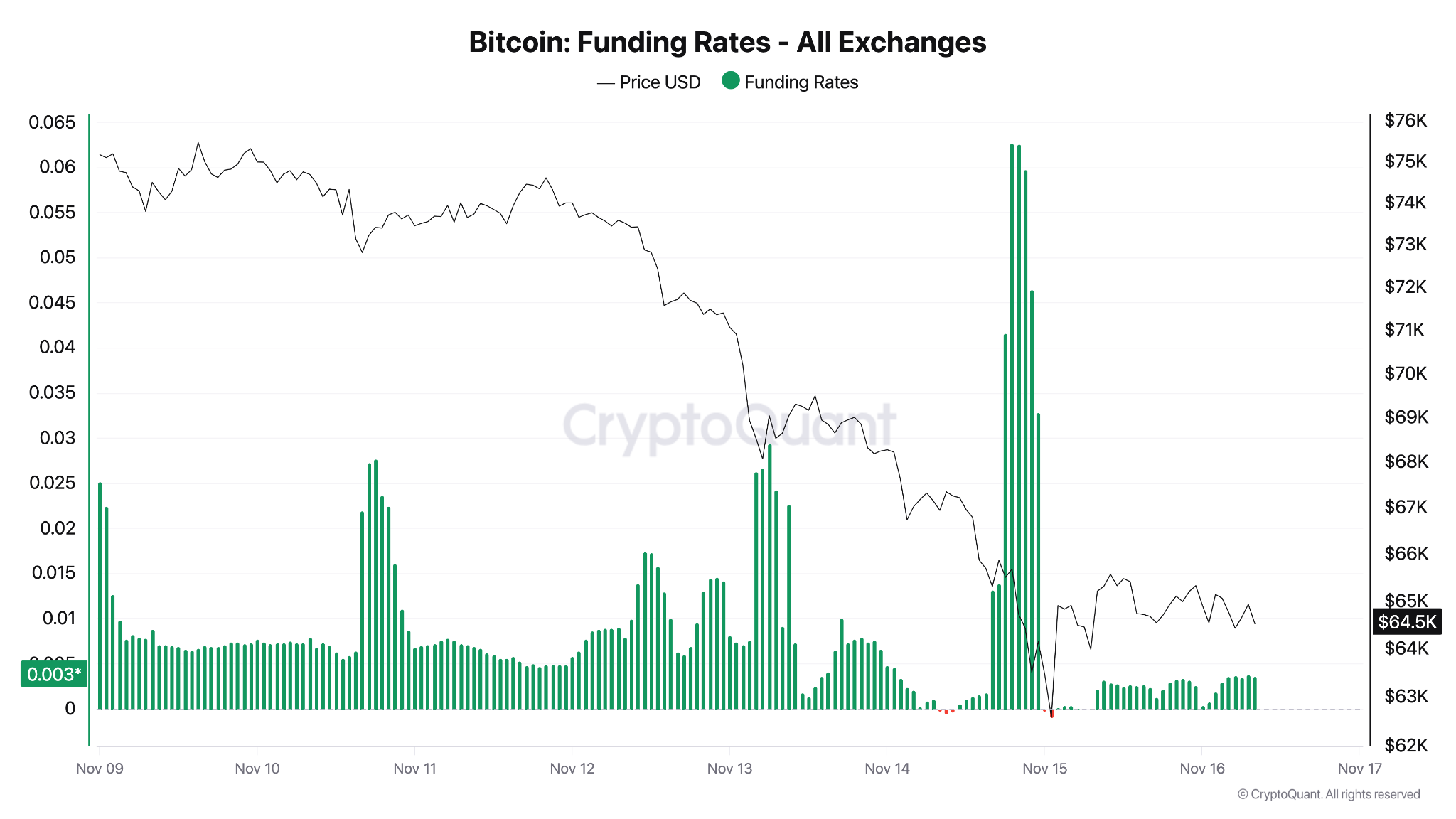
Adding to the bearish short-term sentiment, Bitcoin perpetual futures funding rates briefly dipped into negative territory near the weekend’s local low. This unusual market dynamic meant that traders holding short positions were effectively paying a fee to those maintaining long exposure, highlighting aggressive downside positioning by derivatives market participants.
Nvidia Earnings Due Tuesday as Allies Push for Huang’s Return
While the cryptocurrency ecosystem absorbed the macro shock of Bitcoin’s technical breakdown, traditional financial markets remained fixated on developments surrounding Nvidia. The artificial intelligence bellwether is slated to report its third-quarter financial results after the closing bell on Wall Street on Tuesday, a scheduled event made even more sensitive by ongoing executive turmoil involving former Chief Executive Officer Jensen Huang.
In the wake of Huang’s departure last week, interim CEO Colette Kress is expected to lead the company’s upcoming earnings call. Prior to the executive shake-up, Nvidia had provided guidance anticipating quarterly revenue of approximately $108 billion, while Wall Street analysts have projected that earnings per share will nearly double on a year-over-year basis.
Huang’s sudden resignation arrived in the wake of reports concerning a personal relationship with a chip executive who is currently facing scrutiny from United States authorities over suspected espionage ties to China—allegations that Beijing has firmly denied. Despite the severe corporate governance crisis, reports have emerged indicating that Huang is actively weighing a potential return to the helm.
According to a report by the Financial Times, an influential "war room" comprising various technology chief executives and industry leaders has been actively lobbying for Huang’s reinstatement. Simultaneously, an open letter demanding his return quickly circulated across social media platforms, amassing more than 165,000 signatures, including a public endorsement from Tesla and SpaceX CEO Elon Musk.
"A petition is underway to reinstate Jensen and I’m signing it too," Musk wrote in an online statement posted to X on Friday.
However, these grassroots and industry-led efforts to restore Huang face significant institutional friction. United States Treasury Secretary Scott Bessent publicly voiced a dissenting view, asserting that Nvidia’s corporate board should look outside the organization when searching for its next permanent leader.
"This makes me think that as the board conducts a search for a new leader that they need to go outside the company, that just with what was going on inside the company, they need a dramatic shakeup," Bessent told Fox News.
Investor anxiety surrounding the leadership vacuum and broader market conditions weighed heavily on Nvidia’s equity valuation. The company’s stock closed out Friday’s session at $162.85, registering a weekly loss of 12.7%. Earlier in the week on Thursday, shares plunged to an intra-week low of $148.80—their weakest valuation since mid-2025—before managing a partial recovery ahead of the weekend.
The volatility in Nvidia shares sent ripple effects through both traditional tech equities and correlated risk-on assets, including crypto markets, leaving investors closely parsing Tuesday’s earnings commentary for any tangible signs regarding the ongoing global corporate demand for AI infrastructure hardware.
Fed Minutes Due as Markets Price in December Rate Hike
Macroeconomic headwinds compounded the pressure on risk assets as monetary policy expectations shifted. Central bank officials are scheduled to deliver public remarks throughout the week, providing investors with further opportunities to parse the trajectory of United States interest rates ahead of the Federal Reserve’s upcoming policy meeting in December.
Federal Reserve officials are maintaining a busy public schedule. Opening remarks were delivered at the Federal Reserve’s Productivity and Jobs Task Force Conference in San Francisco, where central bank speakers moderated high-profile policy panels and interactive fireside chats. Attention will pivot sharply on Wednesday toward the release of the official minutes from the Federal Open Market Committee’s October 27–28 policy meeting. During that gathering, policymakers opted to keep the benchmark federal funds rate steady in a target range of 3.75% to 4%, with officials highlighting resilient domestic economic spending despite persistent global geopolitical uncertainties.
Following the release of stronger-than-expected economic data, interest rate futures markets have fully priced in expectations for a quarter-point rate reduction—or alternative policy adjustments—as traders continuously recalibrate their models. Last week’s Consumer Price Index inflation reading came in hotter than anticipated. Although the complementary Producer Price Index report showed cooler monthly figures than initially feared, the broader annual increase still marked the largest advance recorded in four years.
These shifting monetary expectations drove significant movement across global bond and currency exchanges. The benchmark 10-year United States Treasury yield climbed above the psychological 5% threshold. Meanwhile, the Japanese yen renewed familiar headwinds for international liquidity and risk assets by weakening past the crucial threshold of 160 per United States dollar on Friday.
Complicating the policy picture further, official data released on Monday revealed that Japan’s domestic economy contracted at an annualized rate of 0.1% during the third quarter. This unexpected economic contraction clouds the policy horizon for the Bank of Japan, where benchmark interest rates already sit at a three-decade high of 1.25%.
"With the yen perched precariously at 160 per dollar, a combination of sluggish domestic growth and sticky price pressures, if they were to materialize, would complicate life for both the Bank of Japan and the Ministry of Finance," noted economist Mohamed El-Erian in commentary published over the weekend.




Comments (0)