



returned to positive inflows, bringing a temporary halt to a punishing 11-session outflow streak that had previously drained roughly $2.35 billion from the flagship fund. The sudden shift back into positive territory offers a glimmer of relief to a market that has recently found itself under severe downward pressure, even if industry experts remain deeply divided over whether this minor uptick signals a genuine turning point or merely a momentary pause in an ongoing correction.
According to data compiled by Farside Investors, the iShares Bitcoin Trust (IBIT) successfully attracted $76.5 million in net inflows. This capital injection was potent enough to help the broader category of United States spot Bitcoin exchange-traded funds register an overall positive net inflow of $7.9 million for the day. This modest net positive figure materialized despite continued withdrawals and capital flight from several other competing spot Bitcoin funds in the market, illustrating the sheer dominance that BlackRock’s product continues to hold over institutional and retail allocation flows within the exchange-traded product landscape.
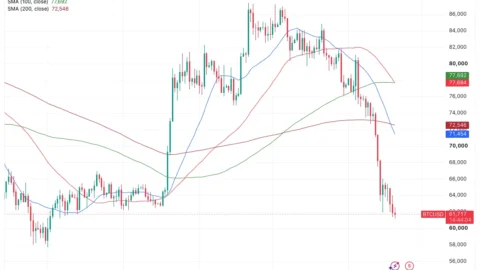
The return of capital to IBIT coincided with a particularly bleak macro-environment for the world’s leading cryptocurrency. Bitcoin was seen trading near multi-month lows, hovering dangerously close to the crucial $64,000 threshold. At the same time, broader market psychology deteriorated rapidly. The Crypto Fear and Greed Index, a widely followed metric designed to quantify investor sentiment across the digital asset ecosystem, plunged to a chilling reading of 10 out of 100. This represented the absolute lowest score recorded by the sentiment tracker since June 2026, highlighting a state of extreme fear and capitulation among market participants.
Despite the psychological milestone of IBIT snapping its prolonged outflow streak, industry professionals have rushed to temper market enthusiasm, warning against premature celebrations of a broader market recovery. Nick Pitto, head of marketing at the prominent blockchain analytics firm CryptoQuant, urged caution and emphasized that a single day of net positive flows should not be misconstrued as a definitive trend reversal.
"One day of inflows doesn’t change the picture too much," Pitto remarked, pointing out the stark mathematical reality behind the recent market movements. He noted that the capital returned to IBIT on Monday managed to recover a mere 3% of the massive withdrawals the fund had suffered over the preceding 11 sessions. Furthermore, looking at the wider picture, United States-based spot Bitcoin exchange-traded funds had collectively shed more than 31,000 BTC over the course of the trailing month, demonstrating that institutional sell pressure has been both heavy and persistent.

"It’s too early to call this dip buying," Pitto added, laying out clear criteria for what a genuine market stabilization would actually require. "We’d need to see several days of inflows in a row, and from more funds than just BlackRock’s."
Contrasting this deeply cautious outlook, Salman Parcy, managing partner at the crypto investment firm Cequire Capital, offered a slightly more optimistic interpretation of the day’s market data. Parcy suggested that the willingness of some investors to deploy capital amidst the severe market pullback could indicate that certain institutional players are beginning to view the steep price decline as a compelling long-term accumulation opportunity.
"While it is still early to call this a reversal, the return of capital to IBIT does show that some institutional investors are beginning to see an opportunity in current price levels," Parcy explained, noting that extreme price volatility often forces long-term capital to re-evaluate entry points.
The timing of this market activity also coincided with a critical regulatory reporting deadline. Monday marked the final day for most major institutional investment managers to file their third-quarter Form 13F disclosures with United States regulators. These mandatory filings revealed the precise state of institutional Bitcoin exchange-traded fund holdings as of September 30. While several major financial institutions reported notably increased exposure to crypto-related exchange-traded products during the third quarter, CryptoQuant’s Pitto cautioned against drawing a direct causal link between these historical disclosures and Monday’s sudden capital inflows.
"ETF buying peaked in August and September. But the filings only show what they held at the end of September, not what they’ve done since. So they may not explain Monday’s inflow," Pitto explained, noting that the dynamic nature of institutional portfolio management means quarterly disclosures often lag behind real-time market sentiment and active trading strategies.




Comments (0)