


Drops to $60,000 as Wall Street Tech Rout and Hawkish Fed Stance Spark Broad Market Contagion
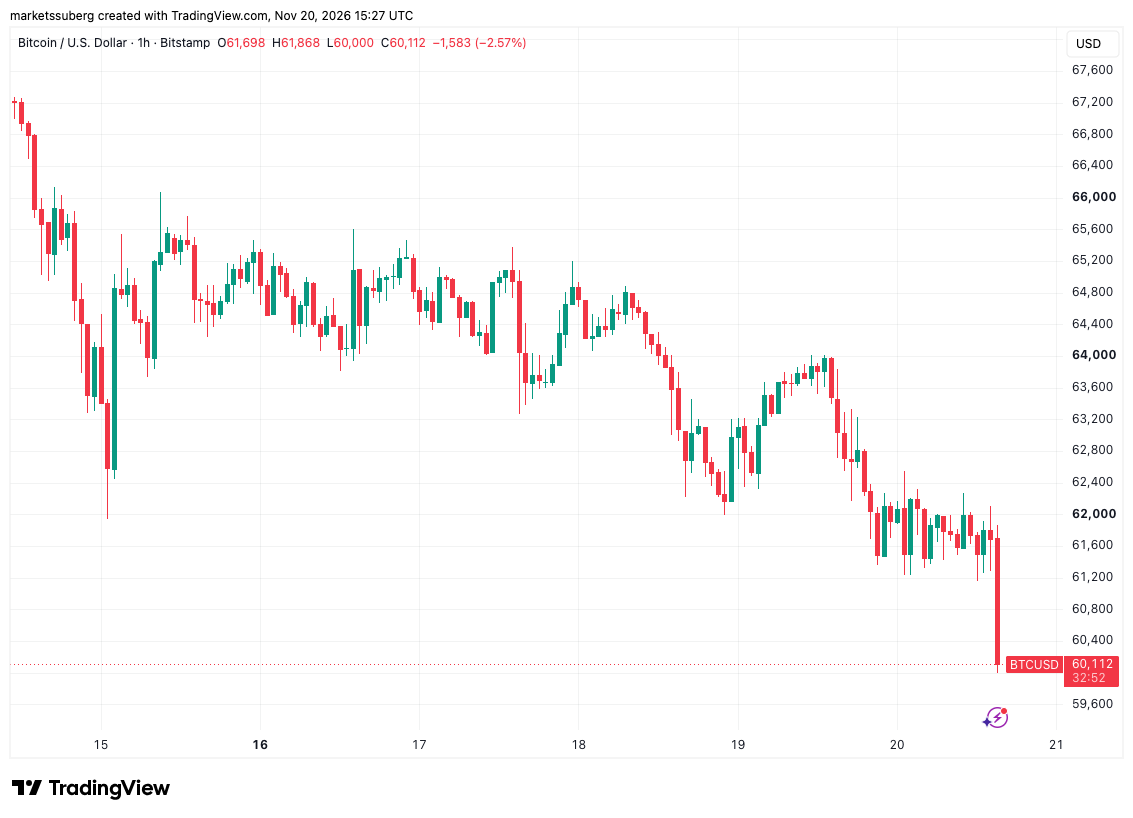
Cryptocurrency markets faced intense downward pressure following Friday’s opening bell on Wall Street, with Bitcoin plunging to the $60,000 threshold. The digital asset experienced immediate contagion effects stemming from a fresh and severe rout in US technology stocks, dragging down major indexes and unsettling investors across risk-on asset classes.
Data provided by TradingView captured Bitcoin circling the $60,000 mark, plunging the leading cryptocurrency to its lowest valuation in 20 weeks. The sharp pullback reflects a broader macroeconomic shift that has rapidly drained liquidity from risk assets, leaving digital currencies particularly vulnerable to external shocks originating in traditional equity markets.
US stocks extended their recent weakness, failing to reverse a downward reversal that began during Thursday’s trading session. Market participants had hoped that high-profile market events might inject new enthusiasm into the equities sector, but sentiment remained fragile. The much-anticipated market debut of Anthropic on the Nasdaq proved entirely insufficient to preserve any meaningful upside momentum, as broad selling pressure quickly overtook the day’s high-profile listings.

Nasdaq Composite Index Dips to New Seven-Month Low
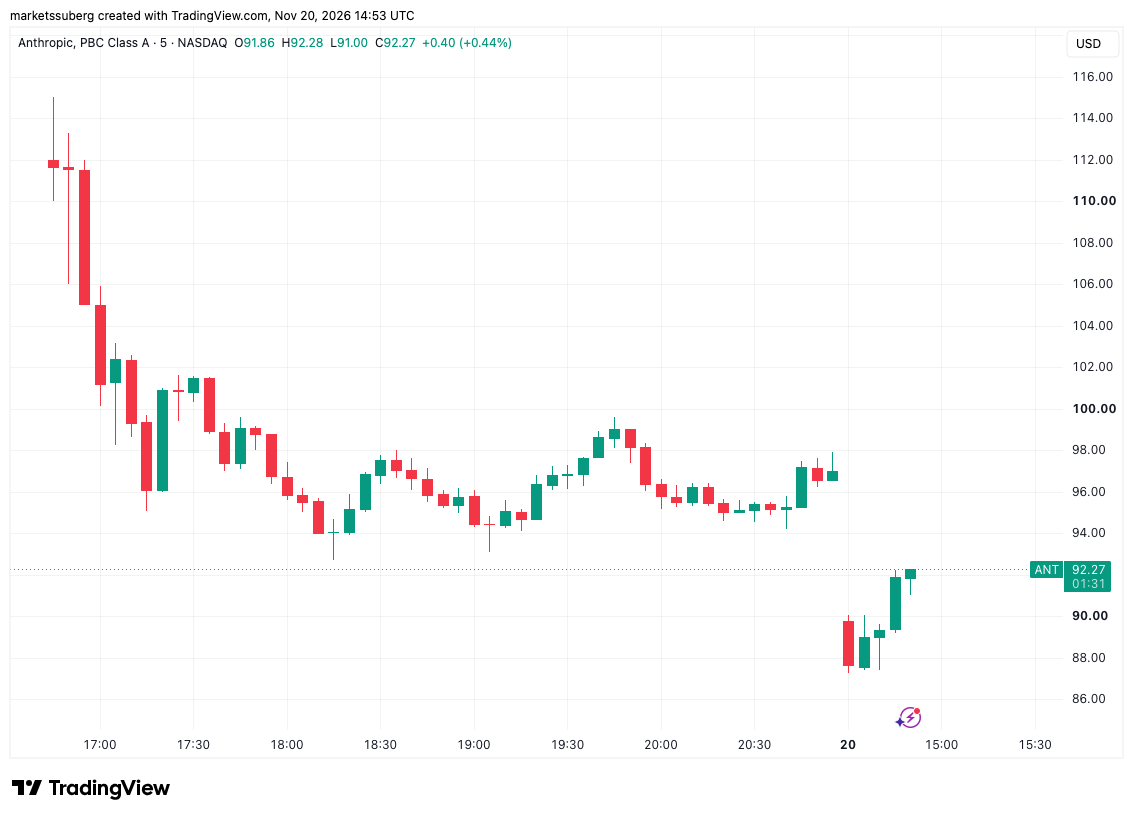
Anthropic’s initial public offering initially captured immense market attention, with its stock—trading under the ticker ANT—surging to intraday highs of $115 per share. However, the early euphoria proved short-lived. The stock quickly reversed course, tumbling below the psychological $100 mark and falling as low as $87.27 during the session.
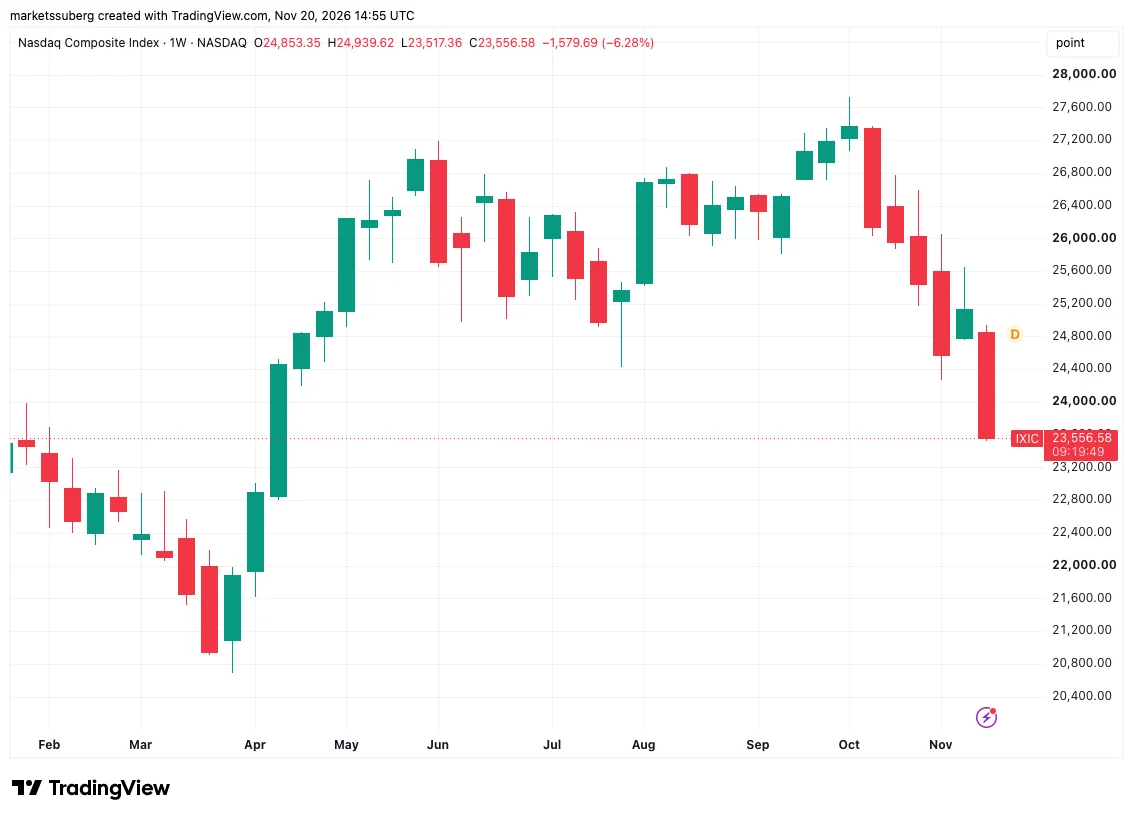
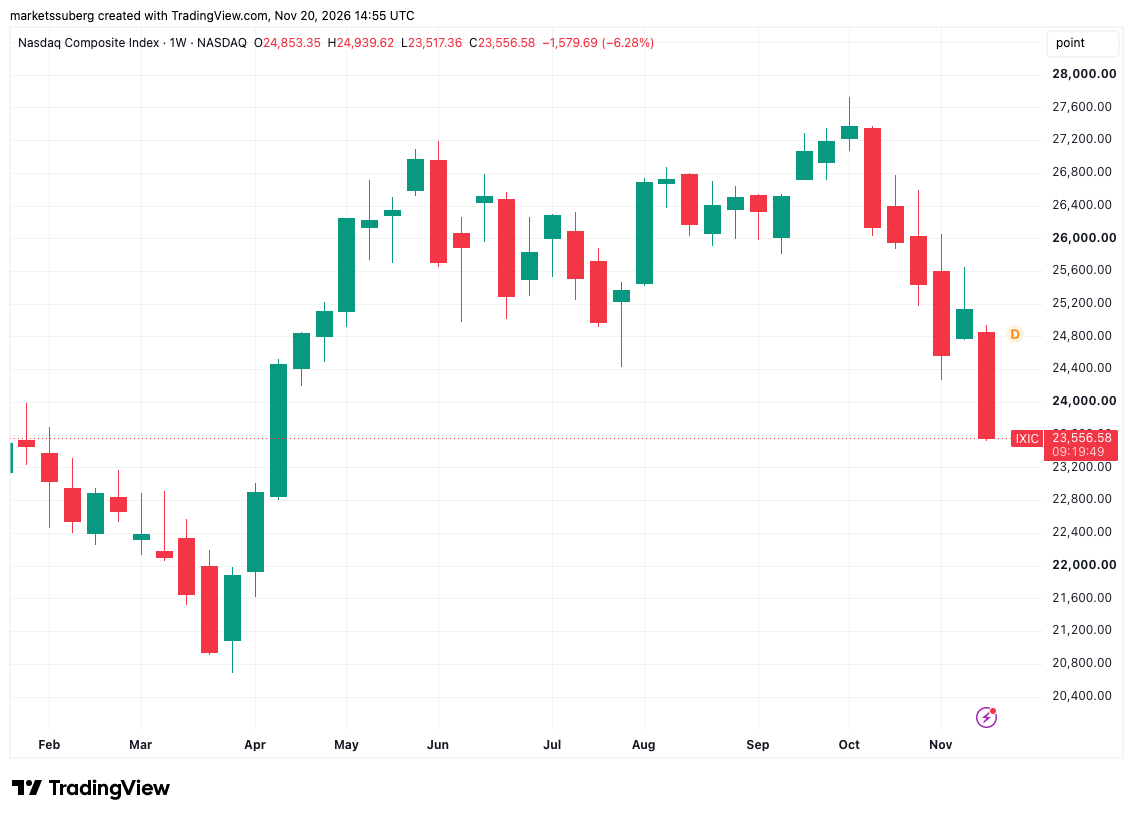
The inability of a major AI-related IPO to hold its gains rippled across the broader technology sector. The tech-heavy Nasdaq Composite Index opened the trading day down 1.2%, sliding to 23,517 points. This drop marked the index’s lowest closing and trading level since mid-April, underscoring a rapid deterioration in market sentiment over a relatively short period.
Prominent crypto trading firm QCP Capital weighed on the broader implications of the tech sector’s struggles in a daily market insight note. The firm drew direct attention to the glaring lack of underlying momentum in technology stocks, even in the immediate wake of what was billed as a blockbuster IPO.
"Even Anthropic’s blockbuster IPO failed to restore confidence. Despite opening 34% above its offer price, shares faded to close up just 17%, highlighting a market increasingly unwilling to chase AI valuations," QCP Capital wrote in its analysis.
The firm further emphasized that underlying financing concerns have persisted throughout the artificial intelligence sector, keeping markets exceptionally sensitive to debt and credit issues throughout 2026. Rather than being viewed purely as a high-growth equity story, the AI sector is increasingly morphing into a complex credit and liquidity narrative.
"AI has become more than an equity growth story. It is increasingly a credit and liquidity story," the analysis continued. "As infrastructure spending becomes more dependent on debt financing, weaker investor appetite could push borrowing costs higher, tighten financial conditions, and trigger broader deleveraging."
This heavy reliance on debt financing creates a precarious environment where any hesitation from investors can easily cascade into other asset classes, including cryptocurrencies. When institutional liquidity providers face margin pressures or tightening financial conditions in the equities and credit markets, capital is frequently withdrawn from speculative digital assets first, explaining Bitcoin’s swift and pronounced reaction to the Nasdaq’s slump.
Hawkish Fed Policy Seen Holding Bitcoin Back
Compounding the troubles in both equities and digital assets was a broader flight to safety among risk-conscious investors. This widespread defensive shift drove stock markets lower across the board while triggering a corresponding drop in US bond yields. The benchmark 10-year Treasury yield fell to 4.96% on Friday, touching its lowest level since November 10.
Market participants had been closely monitoring commentary from Federal Reserve officials for hints of a pivot toward monetary easing. However, a speech delivered by Federal Reserve Governor Christopher Waller at the 2026 College Fed Challenge in Washington, D.C., failed to deliver any dovish signals. Instead, traders focused heavily on existing hawkish cues that had been circulating earlier in the week.
Just days prior, Waller explicitly told CNBC that he considered a substantial 50-basis-point interest-rate hike necessary at the upcoming December Federal Open Market Committee meeting. This proposed figure stood at twice the prevailing market expectation of a standard 25-basis-point adjustment, catching many fixed-income investors off guard and reinforcing fears that monetary policy will remain restrictive for longer than previously anticipated.
Renowned economist Mohamed El-Erian expressed surprise that bond yields had not pulled back even further given the scale of the equity sell-off. In a public blog post, El-Erian analyzed the unusual behavior of the fixed-income market in the context of persistent stock losses.
"Reflecting this week’s sharp fall in stocks, where a seventh straight day of S&P 500 losses would mark its longest losing streak since 2020, the yield on the 10-year Treasury has pulled back to 4.97%," El-Erian wrote. "While the direction aligns with conventional correlations, the relatively modest size of this week’s yield move down is less typical."
The stubbornness of bond yields, coupled with the Federal Reserve’s overtly hawkish rhetoric, has created a challenging backdrop for non-yielding assets like Bitcoin. Higher interest rates increase the opportunity cost of holding capital in alternative assets, pulling liquidity away from decentralized markets and steering it toward secure, high-yielding government debt instruments.
Market analysts at QCP Capital suggested that a durable recovery for Bitcoin’s price performance will likely require a confluence of positive macroeconomic developments. Specifically, they pointed to the stabilization of tech stocks, a reduction in interest rate volatility, and a renewed influx of institutional capital as essential prerequisites for a lasting trend reversal.
Until those conditions materialize, temporary relief rallies driven by short covering are expected to face stiff resistance, particularly if the Federal Reserve maintains its commitment to quantitative tightening and high borrowing costs.





Comments (0)