


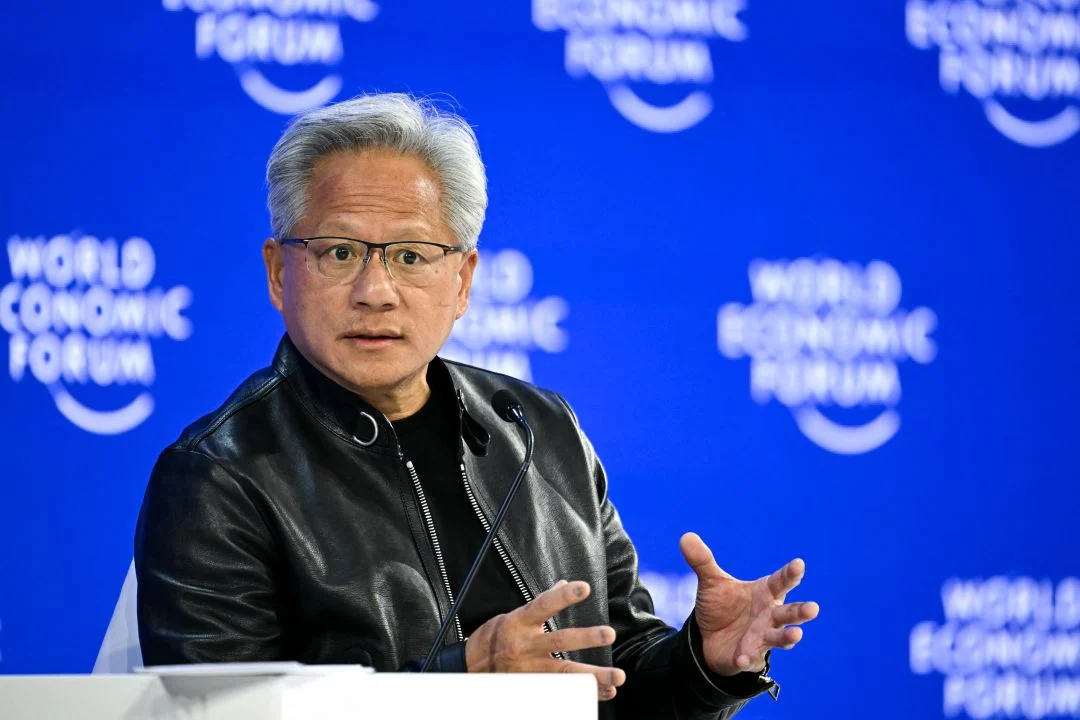
We are currently witnessing two very different pictures of Nvidia, depending entirely on whether the focus is placed on the AI chipmaker’s latest financial report or the growing chorus of tech executives loudly campaigning for the return of former CEO Jensen Huang.
On an episode of TechCrunch’s Equity podcast, hosts Kirsten Korosec, Tim De Chant, and Anthony Ha sat down to break down a turbulent week for the semiconductor giant. The company recently reported soaring revenue and insisted that it has no immediate plans for Huang to return to the helm. Yet, despite stellar financial guidance, the situation on the ground remains deeply complicated by international trade restrictions, boardroom politics, and high-profile public pressure.
Kirsten Korosec characterized the current environment as "the tale of two Nvidias this week." On one side, the company’s current executives are attempting to project absolute stability, assuring investors that operations are running smoothly. On the other side, prominent figures like Elon Musk are actively pushing to bring Jensen Huang back, circulating petitions, while Huang himself has reportedly indicated that he is prepared to return. Meanwhile, a falling stock price suggests that Wall Street is far from fully reassured by the current leadership’s assurances.
A Strategic Retreat From the Chinese Market
One of the most consequential developments emerging from Nvidia’s latest announcements is a major pivot regarding its international sales strategy, specifically concerning China. According to interim CEO Colette Kress, Nvidia will no longer sell its H200 chips in China.
This strategic withdrawal coincides with ongoing discussions within the Trump administration regarding the closure of regulatory loopholes. Officials have focused heavily on restricting remote access, a workaround that has allowed Chinese entities to utilize advanced hardware without directly importing the physical silicon. In practice, tech companies have been setting up data centers just outside of mainland China—in nations like Malaysia and other parts of Southeast Asia—and enabling domestic Chinese firms to remotely harness the processing power of Nvidia’s chips.
With the latest policy tightening, those remote access pathways are being systematically shut down. While these regulatory shifts represent a broader geopolitical strategy far larger than Nvidia itself, the company’s decision to publicly announce the termination of these sales channels marks a definitive compliance milestone. Industry observers remain split on whether these restrictions will evolve or soften during the first half of 2027.
The regulatory history surrounding these exports is complex. Tim De Chant noted that export controls were tightened significantly toward the end of the first Trump administration, a trajectory that largely continued through the Biden administration, severely capping Nvidia’s direct export capabilities to China. However, a noticeable loosening occurred over the past couple of years, temporarily opening up pathways for the chipmaker to conduct business in the region.
The Hidden Impact on the Bottom Line
The financial implications of pulling back from the Chinese market could be substantial, even if they are not immediately obvious on the surface of the company’s official balance sheets. Critics monitoring Nvidia’s footprint in China estimate that roughly 20% of the company’s overarching business ties back to the region.
Because many of these transactions do not manifest as direct sales to mainland Chinese corporations—routing instead through intermediate buyers in Malaysia and other East Asian or Southeast Asian hubs—the financial exposure is obscured. If Nvidia genuinely and permanently severs these indirect channels, analysts warn it could pose a significant blow to the company’s long-term bottom line, despite management’s current optimism.
Even so, Nvidia’s immediate financial performance remains robust. Kirsten Korosec pointed out that the company’s overall financial guidance has been extraordinary, outperforming market expectations and boasting a lengthy pipeline of enterprise demand.
The Public Campaign for Jensen Huang
While financial fundamentals appear strong, external noise has reached a fever pitch. Over the course of the week, overlapping industry events—including the Dealbook Summit and various technology conferences—became focal points for high-profile commentary regarding Jensen Huang’s abrupt departure and his potential comeback.
The public narrative has effectively split into two parallel realities. While executive leadership, led by Colette Kress, closed out their recent earnings call with a firm declaration that management has everything under control, external figures like Elon Musk have spearheaded public petitions to reinstate Huang. Adding fuel to the fire, Huang himself has publicly stated his readiness to return, creating a high-stakes corporate drama that is unlikely to fade away quietly.
Skeptics of the current executive team argue that the recent record-breaking quarter represents the final high-water mark of Huang’s tenure, leaving investors uncertain about how the company will navigate the future without his visionary leadership. Although Nvidia’s official stance has been to categorically dismiss rumors of his return, observers note that corporate positions can shift rapidly under sufficient pressure. Just a week and a half prior to announcing his ouster, the company was publicly affirming its complete confidence in Huang’s leadership.
While a reinstatement may not be immediately imminent, analysts suggest that the swiftness and firmness with which the board shot down the petitions may indicate deeper internal friction behind closed doors.
Boardroom Control and Corporate Governance Lessons
A central motivation for the board’s rigid stance appears to be a desire to maintain absolute autonomy. Corporate governance experts observing the situation suggest that Nvidia’s directors are acutely aware of the dangers of appearing pliable to external pressure, especially from activist billionaires like Elon Musk. Even if an eventual return were theoretically considered, the board wants to project an image of independent control rather than succumbing to public demands.
Furthermore, industry watchers have drawn inevitable parallels to the dramatic governance battles seen at other prominent AI firms, such as OpenAI, noting that Nvidia’s leadership is likely working hard to avoid a similar chaotic trajectory. However, unlike private entities, Nvidia is a publicly traded corporation, meaning that governance structures, shareholder dynamics, and the legal constraints of a public board make any sudden executive reshuffling a far more complex undertaking.





Comments (0)