



Bitcoin (BTC) began the final week of October under considerable pressure, fighting hard to defend the psychological $80,000 support level as global markets brace for a heavy slate of United States macroeconomic data and high-stakes corporate earnings reports. The leading cryptocurrency has experienced heightened volatility following a weekend sell-off that triggered widespread liquidations, setting a cautious tone for both digital assets and traditional financial markets alike.
Markets See Fed Rate-Hike Pause With Oil Still Above $100
The US Federal Reserve remains the primary focus for macroeconomic analysts this week, as central bank officials prepare to announce their latest decision on the federal funds rate on Wednesday. Financial markets will be closely monitoring the policy outcome delivered by the Federal Open Market Committee (FOMC), alongside the tone and specific language used by Fed Chair Kevin Warsh during the accompanying press conference.

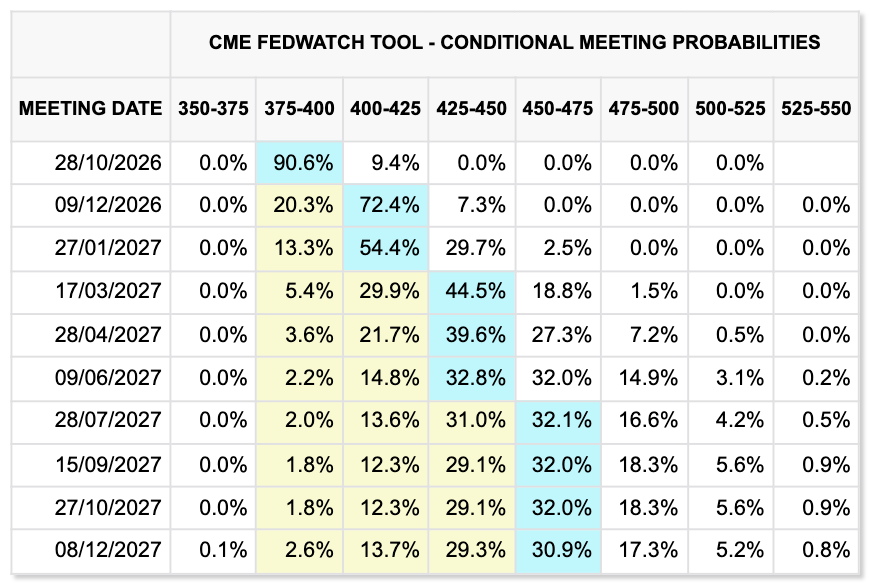
Market participants harbor little doubt regarding the immediate policy decision, with current pricing reflecting over 90% odds that interest rates will remain unchanged within their present range of 3.75% to 4%. Meanwhile, FedWatch data indicates that the prevailing market consensus currently favors a modest 0.25% rate hike at the subsequent FOMC meeting in December.
Weighing in on these expectations, economist Robin Brooks argued that the current market consensus serves as a welcome reprieve for Fed Chair Warsh, sparing him from external political and market pressures to alter monetary policy course abruptly.
"After very contentious Fed meetings earlier in 2026, this week’s meeting gets zero interest in markets, which price only 12% odds of a hike. That’s nothing versus how markets tried to push Warsh into hiking back in July. A temporary reprieve for Warsh," Brooks summarized.
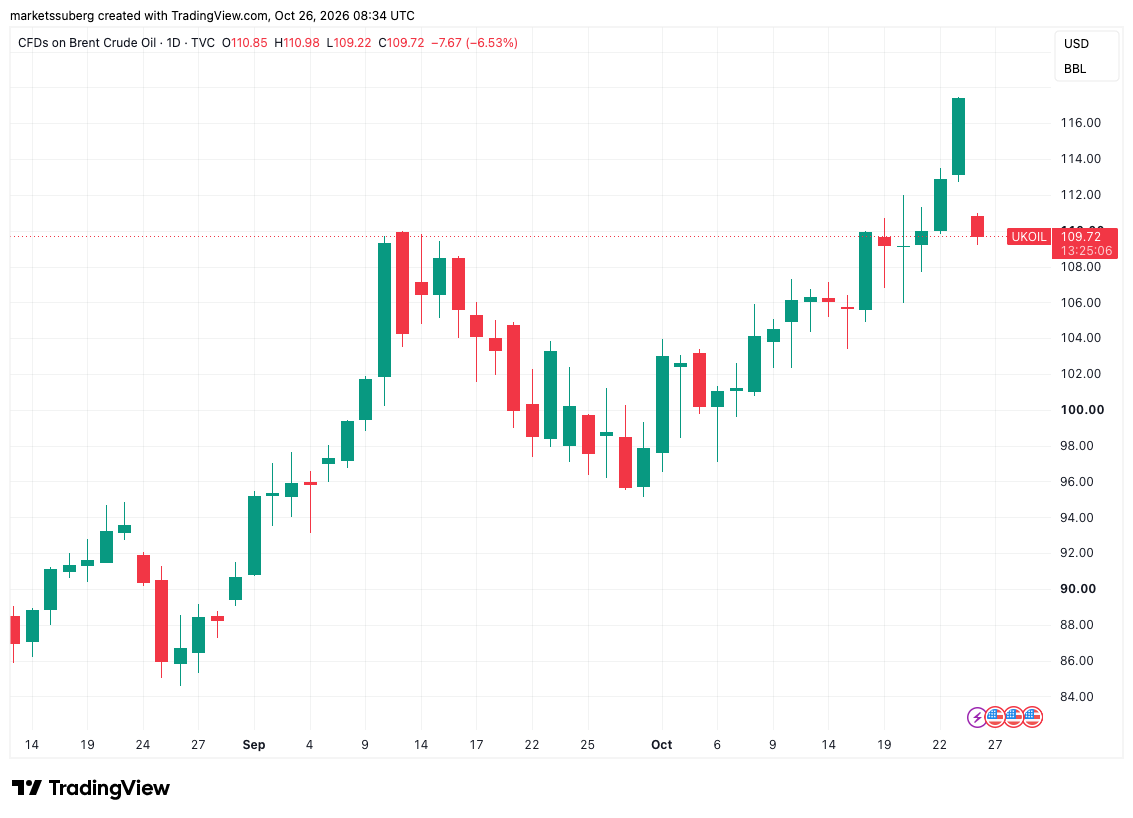
In separate analytical commentary published last week, Brooks suggested that a policy rate pause is virtually inevitable, even when factoring in surging oil prices and escalating geopolitical tensions in the Middle East. Brent crude climbed as high as $117 per barrel on Friday, marking its highest price point since March 19, before cooling down to trade around $110 on Monday. Brooks noted that even if crude prices were to extend their rally toward $125 per barrel, the Federal Reserve would not be compelled to shift its policy stance.
"The debt crisis in France would escalate sharply, anxiety around all the AI and data center debt would increase and the S&P 500 would tumble. That just isn’t a setting where the Fed is itching to hike," Brooks wrote. "If anything, financial conditions would be tightening sharply, so the last thing you’d want to do is hike."
Adding to the macroeconomic calendar on Thursday, the US Bureau of Economic Analysis is scheduled to release the Personal Consumption Expenditures (PCE) price index, widely regarded as the Federal Reserve’s preferred measure of inflation. In the previous month, the PCE reading came in cooler than anticipated at 3.4% on a year-over-year basis, though market analysts subsequently clarified that the deceleration was primarily driven by methodological adjustments in how certain index components are calculated.
KOSPI Struggles as Markets Prepare for US Tech Earnings
Persistent anxieties surrounding the broader artificial intelligence sector continued to weigh heavily on global equities on Monday, casting a shadow over Wall Street’s opening bell.
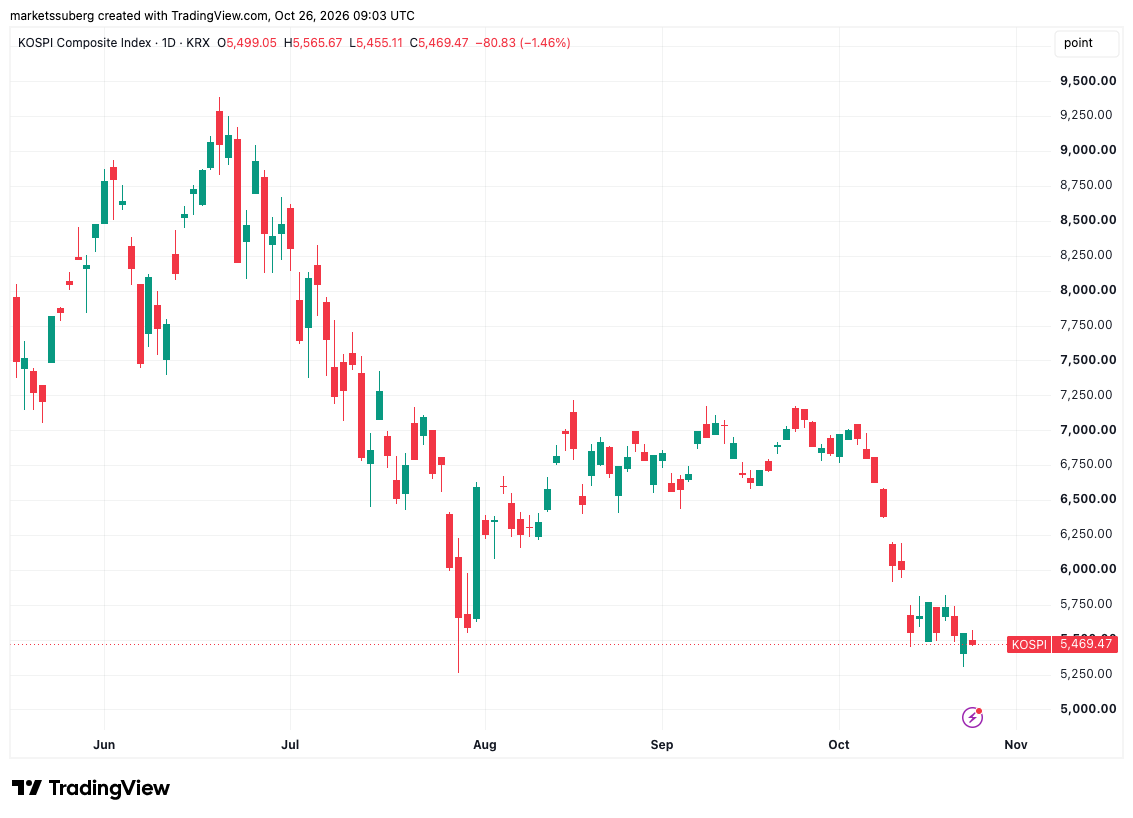
Following a late-week recovery attempt, South Korea’s KOSPI Composite Index ultimately closed down 1.5% on Monday, settling at 5,469 points. Earlier in the week on Friday, the technology-heavy benchmark plummeted as low as 5,308 points, marking its weakest valuation since late July.
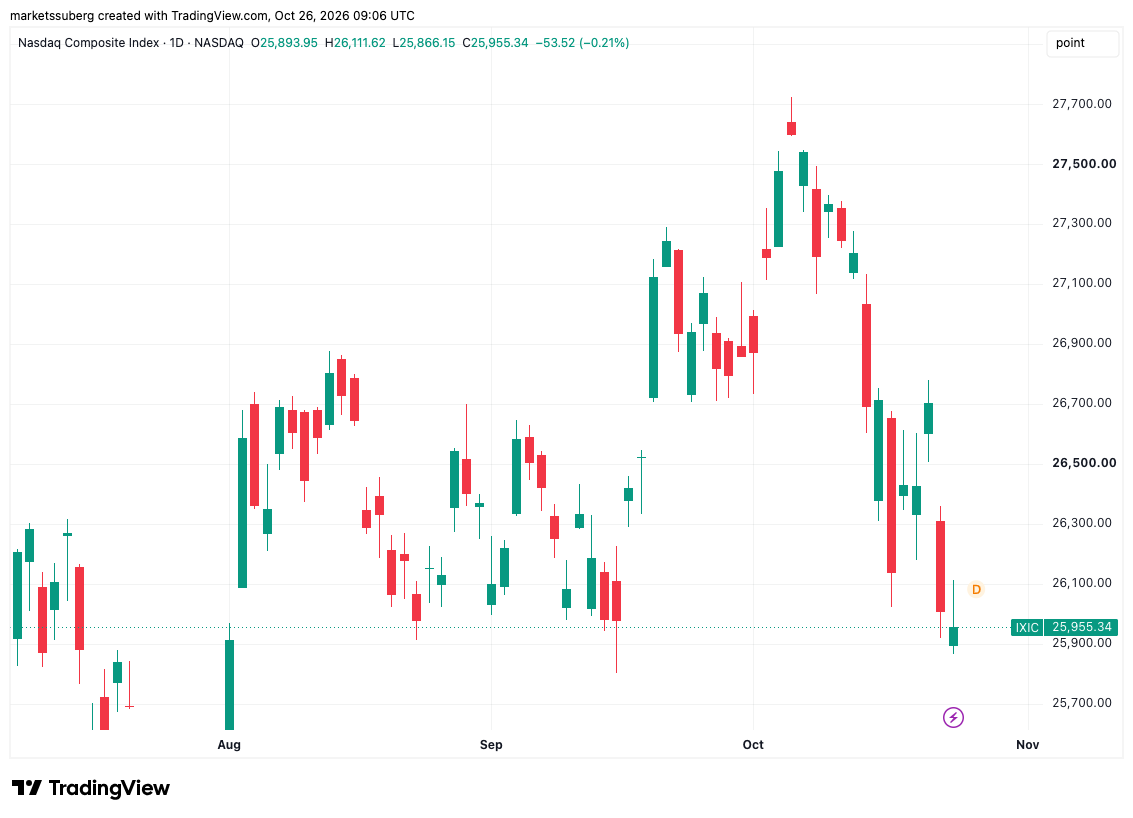
The sharp downturn was precipitated by aggressive selling across key technology equities as foreign capital fled toward safer assets. Although several major US corporations posted stronger-than-expected quarterly earnings reports last week, the figures failed to inspire broad investor confidence, with market sentiment heavily impacted by Tesla’s announcement of reduced capital expenditure for the third quarter. Consequently, the Nasdaq Composite Index finished Friday’s session at 25,955 points, its lowest daily closing level since August 3.
Appearing on CNBC on Monday, Raisah Rasid of JPMorgan Asset Management offered a more measured perspective on the ongoing valuation adjustments within the artificial intelligence sector.
"It’s really about investors thinking, ‘Look, we’re not rewarding capex anymore; what we are rewarding is return on capital.’ I think that’s what’s happening with AI," Rasid noted.
A substantial wave of third-quarter corporate earnings is slated for release throughout the week. Microsoft and Alphabet are both scheduled to report their financial results after the market close on Wednesday, followed by Amazon and Intel on Thursday. In total, approximately 20% of the companies comprising the S&P 500 index are set to update investors by week’s end. Furthermore, Thursday will bring the initial reading of US third-quarter gross domestic product (GDP) growth, providing a comprehensive snapshot of economic momentum.
Bitcoin "Uptober" Sentiment Meets 4% Month-to-Date Losses
Bitcoin heads toward the close of October facing a potential 4% monthly decline if the asset fails to recover ground above its current trading range near the $80,000 threshold.
Historical market data tracked by CoinGlass demonstrates that while October has traditionally delivered an average historical upside of 26.1% for the BTC/USD pair since 2010—earning the popular moniker "Uptober"—both the current year and 2025 have bucked historical seasonal trends. Following a 3.9% contraction in October 2025, Bitcoin extended its losses by dropping an additional 17.5% the following November, defying long-standing historical patterns that have typically yielded average November gains of 35%.
Selling pressure intensified over the weekend when nearly $150 million in bullish leveraged long positions were forcibly liquidated within a compressed two-hour window on Saturday as Bitcoin dipped briefly to a low of $79,145. Despite serving as a major psychological milestone, the $80,000 level struggled to provide adequate support on intraday time frames. Order book metrics from CoinGlass highlight a substantial cluster of bids forming a $73 million support wall designed to keep prices afloat above $79,300, while overhead selling resistance remains concentrated near the $81,000 mark.
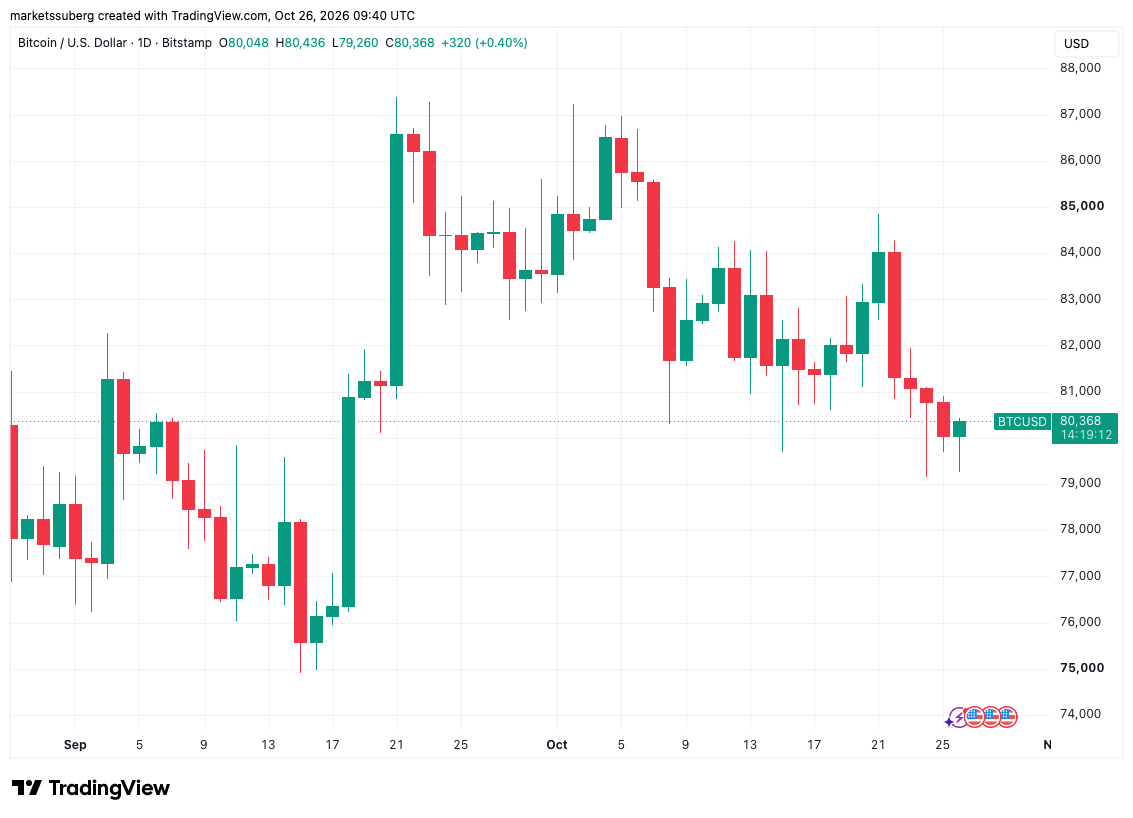
Market participants are displaying mounting caution regarding the prospect of a sustained recovery under prevailing macroeconomic headwinds. Benjamin Cowen, founder of the cryptocurrency analytics platform Into the Cryptoverse, characterized Bitcoin’s previous surges toward $87,000 in late September and early October as a temporary market "fakeout."
Addressing his followers on social media platform X on Monday, Cowen suggested that the BTC/USD pair is likely to experience continued downward pressure through the remainder of the calendar year, pointing to historical precedent during US midterm election cycles.
As previously reported, the stubborn resistance cluster residing near the $87,000 region encompasses several crucial technical price points, including the 2026 yearly opening price at $87,490 and the 20-month moving average currently situated at $87,165.





Comments (0)