


Software development has officially entered a new era, but with this shift comes a fundamental bottleneck that is testing the limits of modern engineering teams. The primary challenge in the software lifecycle is no longer the physical act of writing code, but rather the ability to trust it. Today, modern coding agents generate vastly more code than any human development team can realistically read, review, or verify using traditional systems. To address this emerging crisis, infrastructure startup Blacksmith has developed a specialized platform designed to help organizations validate code at the unprecedented scale demanded by artificial intelligence.
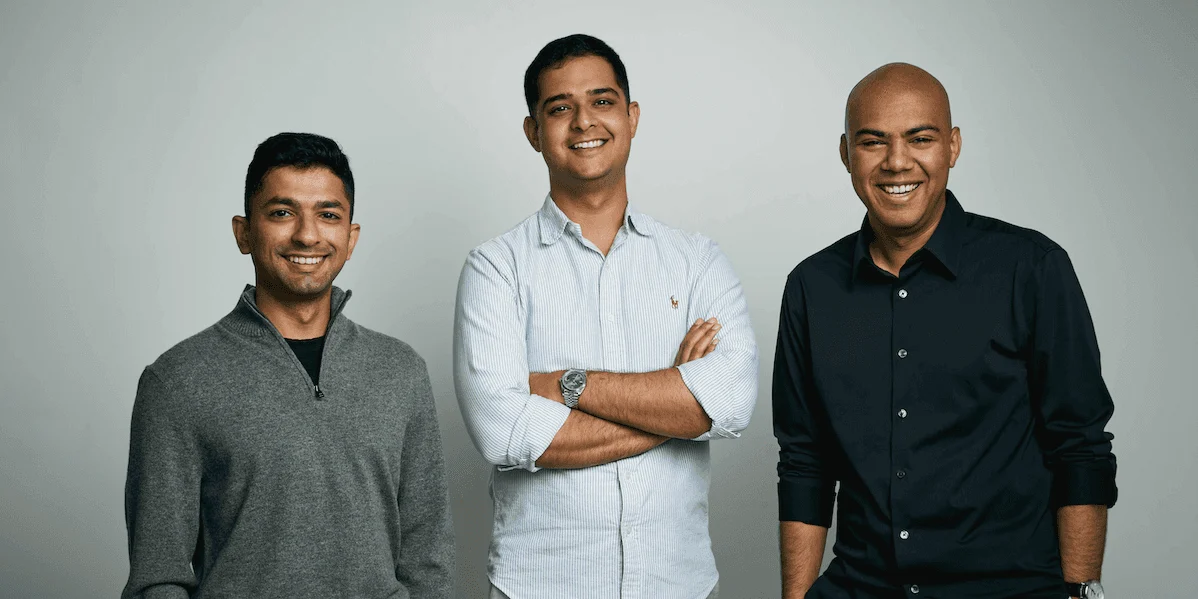
Led by co-founders Aditya Jayaprakash, known as JP, alongside Aayush Shah and Aditya Maru, Blacksmith is building the critical infrastructure required to keep pace with agent-driven software development. The urgency of this mission was underscored last month when the engineering team at Anthropic published a detailed account of what happened internally as their own adoption of coding agents scaled. According to their findings, engineers began shipping approximately eight times as much code per quarter, which in turn caused their internal test suite to grow tenfold. More dramatically, the volume of continuous integration jobs—the essential builds and automated tests that evaluate every single code change before it is approved for production—surged by twenty-five times over a span of just six months.
While Anthropic operates at the bleeding edge of this technological curve, their trajectory mirrors the reality facing software organizations across the global economy. Their core guidance to the broader technology industry has been unequivocal: engineering leadership must actively plan for a twenty-fivefold increase in continuous integration workloads within the span of just two quarters. For decades, the fundamental scaling law of software development was directly tied to human engineering capacity. Developers were universally recognized as the ultimate scarce resource within any organization, meaning that shipping more features, products, and services invariably required hiring more people.
That paradigm has now been completely upended. Modern software developers no longer write every line of code by hand; instead, they direct fleets of intelligent coding agents that operate in parallel, execute tasks around the clock, and function with increasing degrees of autonomy. Crucially, these artificial intelligence agents do not produce finished, deployment-ready software. Instead, they produce probabilistic attempts—ranging from isolated patches and automated tests to complex database migrations and throwaway branches—with each iteration running repeatedly against a test suite until it achieves a state deemed ready to merge.
Meanwhile, the quiet, foundational backbone of software engineering that is responsible for validating, testing, and securing that code has remained largely unchanged for years. This validation phase has arguably never been more critical to enterprise security. Artificial intelligence coding tools are fully capable of generating large volumes of sophisticated security vulnerabilities, and the very same underlying model capabilities that allow these systems to write code efficiently also make those security flaws significantly more dangerous when introduced into production environments. Consequently, the verification systems designed to catch these errors are straining under immense pressure precisely when developers need them to be faster and more reliable than ever before. With the velocity and scale of this architectural shift, the primary constraint in software engineering has definitively migrated from writing code to proving that it actually works and remains secure.
This systemic challenge is precisely what Blacksmith was founded to solve. The founding team initially approached the problem by focusing intensely on accelerating continuous integration performance. By implementing a remarkably simple adjustment—requiring just a single-line change within an existing workflow configuration file—developers utilizing Blacksmith can experience continuous integration jobs that complete twice as fast while reducing operational costs by an average of sixty percent. Underneath this streamlined and straightforward product experience lies a deeply sophisticated technology stack built completely from the bare metal up, purposefully engineered to absorb massive demand spikes from enterprise customers while growing increasingly fast and efficient as it scales.
The broader software development community has taken swift notice of these capabilities, translating into explosive business growth over the past year. More than ten thousand companies now rely on Blacksmith for their infrastructure needs, marking a dramatic increase from just seven hundred companies a year prior. Usage metrics reflect this hyper-growth, with weekly continuous integration jobs surging eighteenfold—rising from five million to ninety million—during the course of 2026 alone. Concurrently, the company’s annual recurring revenue has multiplied seventeenfold over the same timeframe, with its largest enterprise customers now allocating more than one million dollars annually to the platform.
Much of the conviction surrounding Blacksmith’s trajectory stems from the exceptional pedigree of the team driving its vision. Co-founders JP, Aayush, and Maru have maintained a close professional and personal relationship since their undergraduate years at the University of Waterloo. During their subsequent careers at high-growth technology companies like Cockroach Labs and Faire, they cultivated an intense, almost maniacal focus on building hyper-performant, resilient systems. They established Blacksmith in 2024, right at the historical inflection point when simple code autocomplete tools were rapidly evolving into sophisticated coding assistants, driven by the firm conviction that the sheer volume of code requiring testing would soon increase by orders of magnitude.
While the rest of the global technology sector recognized this monumental shift in 2026 with the widespread arrival of genuinely autonomous coding agents, Blacksmith had already spent years building the necessary solutions to accommodate it. The Blacksmith team remains talent-dense and is expanding its workforce rapidly to meet surging market demand. With several major product launches scheduled for the coming months, the company’s strategic roadmap remains packed with high-impact milestones.
Supporting this vision, the announcement of the Series C funding round marks a critical chapter in the company’s evolution. As the global software industry prepares to run exponentially more code than it has ever written in human history, the imperative for robust verification infrastructure has never been greater. Someone must ensure that the code actually works, and Blacksmith is uniquely positioned to provide that crucial guarantee. The ongoing collaboration with JP, Aayush, and Maru will continue to focus on delivering high-performance infrastructure designed to operate seamlessly at agent speed, transforming code validation and pushing the boundaries of what is possible in modern software development.



Comments (0)