



Long before generative artificial intelligence became a ubiquitous household term and the centerpiece of nearly every tech conference, Zayd Enam was already chasing a deeply practical and operational question: Could artificial intelligence actually help everyday people become better at their jobs?
That single, focused question eventually became the genesis of Cresta. Transforming that initial academic inquiry into a fully fledged enterprise software company that is now joining software giant Salesforce required years of deep customer engagement, relentless product validation, and the assembly of a dedicated team capable of delivering reliable enterprise-grade technology.
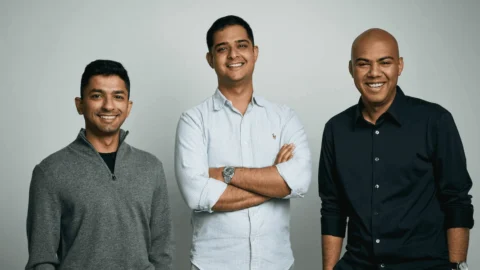
Cresta officially began its corporate life in 2017, emerging directly out of the prestigious Stanford Artificial Intelligence Laboratory. Zayd served as the driving foundational force behind the venture, successfully bringing together a talented founding group that included Tim Shi, Sebastian Thrun, and Andre Esteva. Their core technological and business thesis was remarkably simple, yet it stood as distinctly contrarian for its time: instead of trying to replace humans outright, build artificial intelligence directly around people to augment their natural capabilities.
Customer service and contact center operations represented a natural place to start this ambitious endeavor and offered an enormous market opportunity. Anyone who has ever struggled through an automated phone tree, repeating endless prompts to a rigid, unhelpful script, inherently understands the frustrating shortcomings of traditional automated systems and early-generation chatbots. Cresta took a fundamentally different approach by meticulously studying what the absolute best human customer service agents did well during complex interactions and using those insights to help their colleagues emulate that success. The company’s underlying technology was designed to analyze live customer conversations in real time and deliver intelligent, contextual guidance while the interaction was still actively underway. Through this system, a struggling or novice agent could instantly receive a suggested response, practical advice on handling a difficult customer objection, or a timely prompt to ask a more targeted question.
Co-founder Tim Shi often remembers a specific print of Diego Rivera’s famous mural Detroit Industry that Zayd proudly hung in their very first office space in Redwood City. The artwork depicted industrial workers with every specialized tool they could possibly need arranged neatly and immediately within their reach. The founders wanted that exact same conceptual outcome for knowledge workers and customer support representatives: having the right answer instantly at hand, precisely at the moment a representative needed it most. Cresta was effectively putting generative AI to work years before the broader technology category ever became a mainstream industry phenomenon.
By 2020, Cresta was ready to emerge from stealth mode, a milestone that happened to coincide precisely with the onset of the global pandemic and the sudden, massive corporate shift toward remote work. In this new operational reality, corporate managers could no longer physically sit beside a newly hired employee to offer guidance, nor could they easily walk across a bustling contact center floor to provide real-time coaching. Businesses suddenly desperately needed a reliable, scalable way to effectively train and support heavily distributed teams working from home. Cresta’s proven ability to deliver intelligent, real-time guidance in the moment became absolutely critical to enterprise operations. Customer adoption accelerated rapidly, and true product-market fit began to firmly take hold across the organization.
From proving the product to scaling the company
To capitalize on this surging momentum, Zayd had also focused heavily on recruiting an exceptional engineering and technical team. Many of those early engineers remain foundational pillars at Cresta today, carrying forward years of invaluable technical knowledge and deep customer understanding. Among those recruitment efforts, one of the most consequential additions to the leadership ranks was Ping Wu, who had previously co-founded Google’s prominent Contact Center AI effort. Ping officially joined Cresta in 2021 and eventually stepped into the role of Chief Executive Officer in May 2023, succeeding Zayd. He brought rare technical expertise and extensive operating experience necessary to scale the business effectively for demanding enterprise-grade customers who required absolute reliability.
Under Ping’s executive leadership, Cresta significantly strengthened its broader management team, sharpened its operational execution, and substantially expanded its product portfolio. Building firmly upon its historical foundation of assisting human customer service agents, the company successfully introduced the Cresta AI Agent, a sophisticated offering capable of handling complete, end-to-end customer interactions autonomously where appropriate. Large enterprises could now utilize Cresta’s platform to intelligently decide precisely where artificial intelligence could solve a customer’s problem directly and efficiently, and where involving a human representative would deliver the best possible final outcome.
Delivering consistently on that ambitious technological promise required far more than simply developing better or larger language models. Enterprise customers required software products they could fundamentally rely upon for mission-critical operations, seamless integration with the legacy systems they already used daily, and human teams genuinely accountable for real business results. Ping and his dedicated colleagues successfully built an organization structured to deliver all three of these pillars while continuously pushing the technological envelope forward.
Salesforce’s immense global market reach and world-class enterprise platform now provide Cresta with an extraordinary opportunity to bring its innovative technology to a vastly larger number of enterprises worldwide. Operating from within Salesforce, the Cresta team will continue its ongoing mission of transforming the future of customer service.
Cresta’s overall journey serves as a clear illustration of what it truly takes to build a successful, enduring artificial intelligence company. Rigorous academic research creates theoretical possibilities, while visionary founders turn those possibilities into viable commercial products by getting intensely close to their customers. Building enduring companies thereafter requires seasoned leaders and cohesive teams who can deliver those products reliably and at enterprise scale. Zayd supplied the early conviction and relentless persistence required to get Cresta started, while Ping built expertly upon that solid foundation and led the company through its next major chapter of corporate growth. Across both distinct chapters, the entire team maintained a steadfast focus on translating rapid advances in artificial intelligence into practical, measurable value for real-world customers.
The milestone stands as a testament to the hard work of Zayd, Ping, the original founders, and every individual who helped build Cresta along the way. Moving from an academic research project inside Stanford into mission-critical business infrastructure, the team has clearly demonstrated what it genuinely takes to put artificial intelligence successfully to work.



Comments (0)