



As the global financial markets wind down for the Christmas holiday, traditional asset classes and digital assets alike are experiencing a quiet period characterized by muted trading volumes. With traditional exchanges having been closed for the holiday and Bitcoin experiencing a modest 0.4% slip amid thin liquidity across the board, market participants are finding themselves with an opportune moment to pause, assess the sweeping shifts of 2025, and begin mapping out strategic positioning for the year ahead.

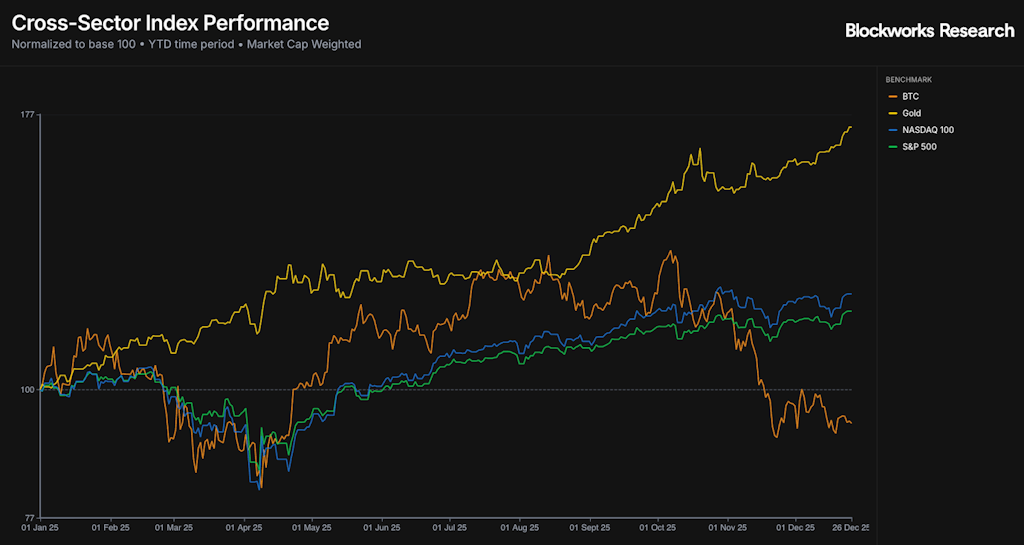
The year 2025 will likely be remembered in macroeconomic lore as a period of profound divergence between traditional safe-haven assets and speculative digital tokens. While various equity benchmarks have enjoyed steady performances, the most striking narrative of the year has been the astonishing resurgence of precious metals—specifically gold and silver—which have vastly outperformed major cryptocurrencies like Bitcoin. For many investors who entered the year anticipating a continuation of aggressive digital asset dominance, the extraordinary rallies in bullion have come as a stark and fascinating surprise.
Gold is currently on track to record its best annual performance since 1979, delivering an astonishing year-to-date gain of approximately 72%. The precious metal recently breached new all-time highs, pushing convincingly past the $4,500 per ounce threshold. This historic surge has been driven by persistent global macroeconomic uncertainties, shifting central bank monetary policies, and a renewed rush toward hard assets as a hedge against currency depreciation and geopolitical instability.
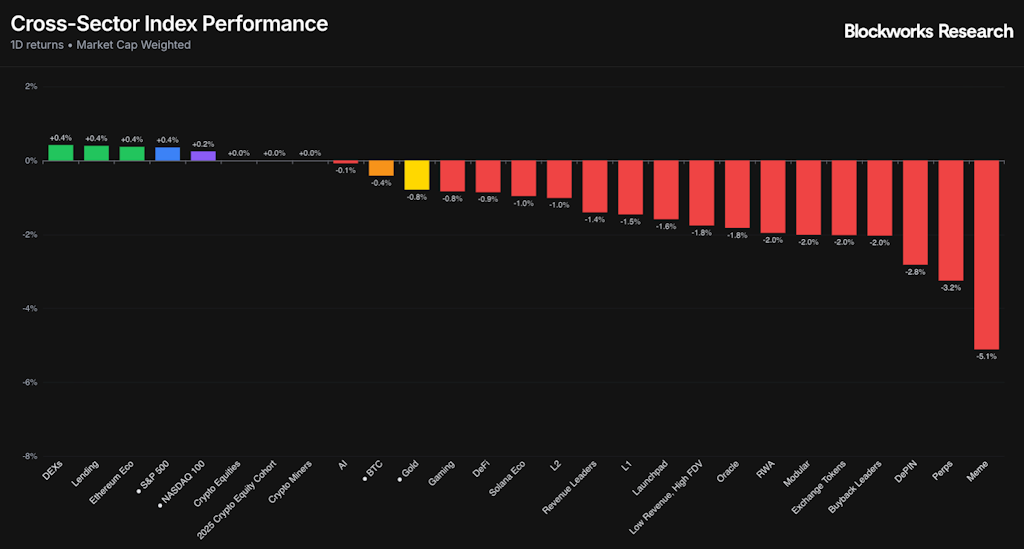
However, as impressive as gold’s run has been, it has been eclipsed by the meteoric rise of silver. Silver has outperformed even its yellow counterpart, rallying nearly 160% on a year-to-date basis. The white metal has seen particularly ferocious momentum in the final weeks of the year, surging roughly 45% over the past month alone to touch a record-breaking $75 per ounce. This dramatic decoupling of precious metals from traditional digital currency trajectories highlights a broader reallocation of capital among institutional and retail allocators seeking shelter in tangible, time-tested stores of value.
Meanwhile, the digital asset ecosystem has navigated a more complex landscape. Bitcoin, while maintaining a resilient baseline compared to previous cycle corrections, has underperformed broader stock benchmarks throughout the year. The contrast becomes even more pronounced when examining the decentralized finance sector, where many high-quality DeFi protocols and tokens are currently trading near multi-year lows. This depressed valuation environment exists paradoxically alongside robust fundamental growth and expanding network utility.
Looking forward toward 2026, market analysts suggest that these discounted valuations in liquid tokens could present compelling opportunities for forward-looking capital allocators. A critical structural shift is quietly taking place beneath the surface of the crypto economy: the historic flow of value capture is visibly flipping away from foundational infrastructure layers and concentrating instead within user-facing applications.
This evolution is perhaps most clearly visible within ecosystems like Solana, where decentralized applications are now generating approximately three times the revenue produced by the underlying network infrastructure itself. This fundamental inversion challenges long-held crypto economic assumptions about where economic value naturally accumulates. As the market transitions into the new year, the central question facing investors is not whether these applications are growing—their usage metrics speak for themselves—but precisely when broader market valuations and token prices will begin to reflect this new reality.




Comments (0)