



The foundational crypto ethos of “be your own bank” has long placed the responsibility of asset protection squarely on the shoulders of individual users. However, as the cryptocurrency industry matures and eyes a broader, mainstream audience, top crypto executives are deeply divided over whether self-custody was ever truly designed with beginners in mind. This debate comes at a critical juncture for digital asset adoption, highlighted by mounting security trade-offs, hardware wallet vulnerabilities, and the ongoing friction between uncompromising security and everyday usability.
At the heart of the discussion is the fundamental question of whether everyday crypto investors should be expected to master complex cryptographic security.
“We don’t expect every driver to be a mechanic, and we shouldn’t expect everyone who wants to own their assets to become a security expert,” Safe Labs CEO Rahul Rumalla told Cointelegraph.
Advocates for simplifying self-custody argue that removing technical roadblocks is critical to Bitcoin’s broader adoption. For self-custody to scale globally, proponents believe the experience must become frictionless without sacrificing the sovereignty that defines decentralized currencies.
However, other industry leaders take a different view, drawing parallels to the early days of personal computing. Michael Tanguma, CEO of Bitcoin custody provider Onramp, compared the current state of Bitcoin custody to personal computers in the 1970s. During that era, early adopters required advanced technical skills just to assemble and operate their machines.
“Self-custody was never designed with newcomers in mind,” Tanguma told Cointelegraph. He noted that it was only through subsequent, simpler designs that personal computers eventually reached a massive global audience, suggesting that Bitcoin custody now faces a remarkably similar evolutionary challenge.

Rumalla strongly disagrees with that assessment, maintaining that self-custody was “always meant for everyone” and that “being able to own and control your assets is the whole point of crypto.” He argued that embracing self-custody “does not mean doing everything yourself,” pointing to the need for better ecosystem tools that abstract complexity away from the end user without stripping them of ultimate control.
This debate over accessibility takes on added urgency in light of recent high-profile security incidents. Hardware wallets have long been widely recommended as one of the safest methods to hold cryptocurrency because they keep private keys completely offline, away from internet-connected threats. Yet, recent vulnerabilities involving major hardware wallet manufacturers like Ledger and Coldcard have exposed unsettling weaknesses in these physical barriers.
In recent incidents, compromised components in some Ledger devices were found to have covertly stolen recovery phrases, while a firmware bug in Coldcard allowed sophisticated attackers to mathematically recreate private keys and siphon users’ funds. These supply-chain and software vulnerabilities have sparked intense industry soul-searching regarding how much trust users must place in hardware manufacturers and their intricate supply chains.
Multisig Improves Security, But Not Without a Cost
To mitigate single-point-of-failure risks, many experienced users and institutional investors turn to multisignature, or multisig, wallet architectures. Multisig arrangements require multiple independent keys to authorize a single transaction, theoretically preventing a malicious actor from stealing funds even if they compromise a single device or recovery phrase.
However, managing multiple keys introduces a steep learning curve that can easily overwhelm beginners.
“Traditional multisig implementations can introduce additional complexity involving signer coordination, key backups, recovery procedures, and transaction approvals,” said Justin Hutzler, chief technology officer of Synergy Network.
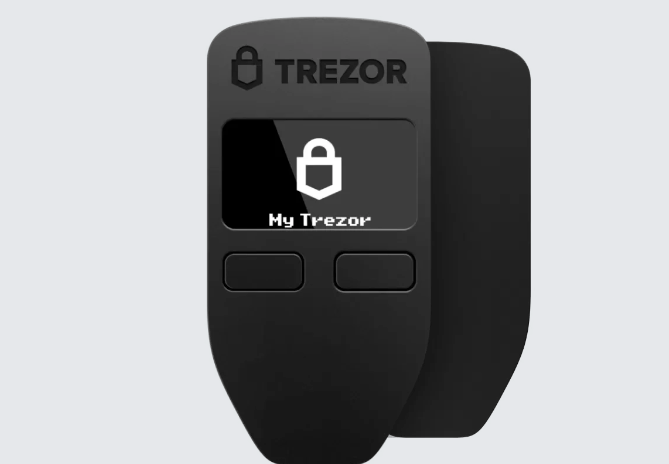
Furthermore, multiple approvals are not a silver bullet against every type of modern attack vector. Safe Labs’ Rumalla pointed out that multiple signers could still be tricked into authorizing a malicious transaction if they are all simultaneously deceived by the same compromised or spoofed user interface. If an attacker manages to manipulate the display or interaction layer seen by the signers, the collective approval mechanism can still result in catastrophic fund losses.
Seedless Wallets Remove One Risk, Introduce Others
In an effort to bypass the notorious friction of managing traditional 12- or 24-word seed phrases—which frequently lead to permanent asset loss if misplaced or improperly backed up—alternative solutions have emerged. Companies like Tangem have popularized seedless wallet designs aimed at simplifying self-custody for a wider audience.
Tangem’s architecture removes the requirement for users to write down and safeguard a recovery phrase. Instead, a private key is generated directly on a secure physical card, with automatic backup copies stored on up to two additional physical devices. Tangem confirmed to Cointelegraph that losing every single one of these physical backup devices would permanently lock users out of their funds, though the company stated it had received no reports of users actually losing all of their cards.
While removing seed phrases eliminates the risk of user error during paper backups, keeping physical cards secure does not protect users from falling victim to software-level deception or malicious transaction prompts. Zach Herbert, CEO of rival hardware wallet manufacturer Foundation, acknowledged that seedless backups can help preserve self-custody for some users, but he criticized designs like Tangem’s for lacking a built-in screen. Without an independent hardware display, users must rely entirely on their smartphones to verify critical transaction details.
“An attacker does not need to extract your private key if they can trick you into authorizing a transaction that empties your wallet,” Herbert warned, highlighting the persistent threat of interface manipulation in modern crypto asset management.





Comments (0)