



Recent market turbulence has knocked semiconductor stocks and other artificial intelligence-momentum equities down by 30 to 40 percent from their all-time highs. This sharp correction has prompted many market observers to declare that the cycle for chips, AI infrastructure, and memory has peaked, validating the stance of those who chose to sit on the sidelines. Yet, such premature celebrations fail to account for the foundational economic and structural drivers powering the ongoing infrastructure buildout. At the core of the entire semiconductor and artificial intelligence investment thesis lies a single, defining question: Does the market believe the demand for compute is finite or infinite?

In standard market discussions, skepticism often stems from individuals extrapolating their localized enterprise software experiences onto the broader global economy. While enterprise software adoption may proceed at a measured pace, this friction actually creates a powerful counter-incentive for smaller, AI-native firms to outcompete legacy players. When utilized effectively, artificial intelligence offers a vastly more cost-effective alternative to scaling human headcounts, bypassing traditional overhead such as legal complexities and management hours. Zooming out beyond enterprise adoption, the broader AI buildout is fundamentally about bringing massive amounts of compute online to serve a diverse array of global buyers.
This compute capacity is utilized by an expanding ecosystem of entities, ranging from sovereign governments and hyperscalers to frontier research laboratories and specialized autonomous agents. Each of these buyer segments operates with a vastly different willingness to pay for processing power. While certain market participants may tap out as the cost of compute fluctuates, assuming that no other buyer possesses a higher budget ignores the competitive realities of the modern technological landscape. For sovereign entities and major hyperscalers, securing compute is a non-negotiable imperative in a cutthroat geopolitical and commercial race. For others, compute serves as a direct, highly economical replacement for human labor costs.

To argue that the market has overbuilt or expanded past actual capacity is to assume that these various buyer groups have reached a static end-state of technological satisfaction. It implies a belief that governments, hyperscalers, and enterprises have acquired all the intelligence they will ever need to achieve their strategic goals. Those who subscribe to this view are justified in labeling the AI sector a speculative bubble characterized by over-investment. However, if one accepts that human ambition and institutional competition are insatiable, the logical conclusion is that the demand for compute is effectively infinite. The global economy has entered an unprecedented race for processing power, and the broader financial markets are only beginning to recognize the implications.
A persistent concern among institutional investors centers on the aggressive capital expenditures deployed by major hyperscalers, with many questioning whether these firms are dangerously jeopardizing their free cash flows and future stability. Beyond capital expenditure, intense scrutiny is directed toward the revenues and operating margins captured by leading artificial intelligence laboratories. This landscape is further complicated by the proliferation of open-source models that threaten to erode the extractable commercial value of proprietary frontier models.
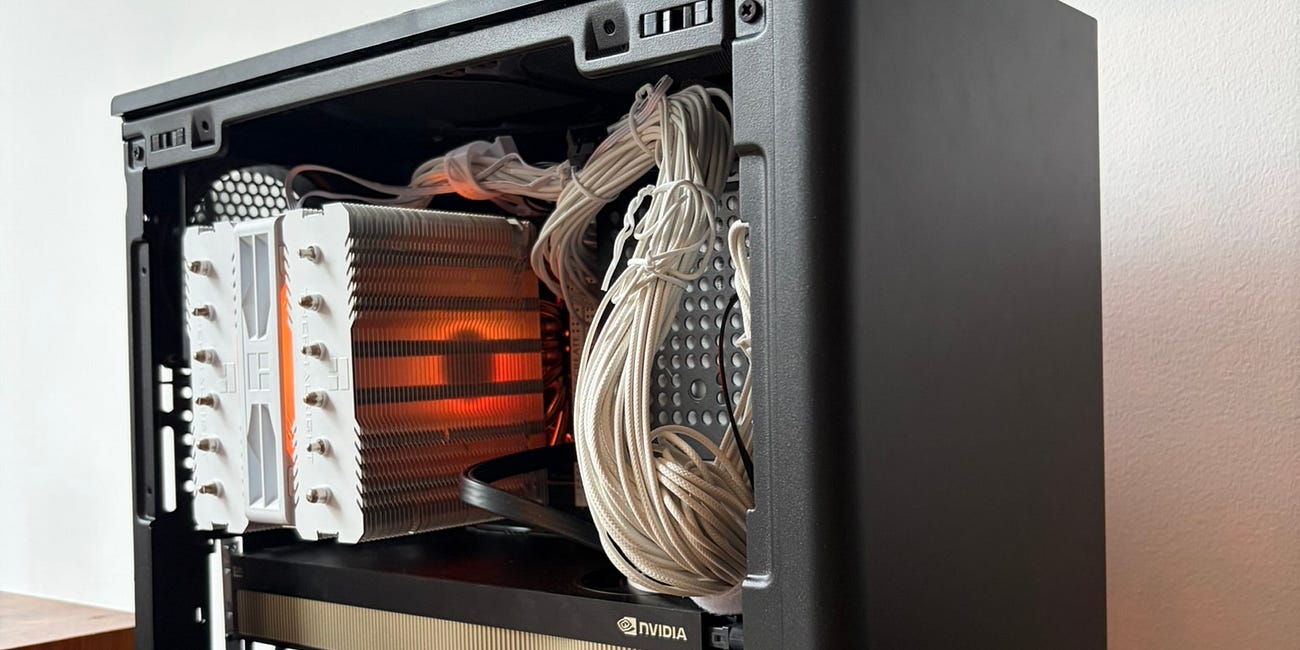
Skeptics who argue that hyperscalers have miscalculated their spending often overlook the immense pricing power these cloud providers hold. Public cloud offerings command significant margins, and major providers have successfully entrenched generations of businesses into proprietary infrastructures. Cloud operators typically apply steep markups on specialized compute workloads while simultaneously levying ancillary fees for data storage, logs, and egress traffic. This business model relies on heavy ecosystem lock-in, where data gravity makes migrating away a complex, multi-year undertaking.
For hyperscalers, running out of available compute capacity is an existential threat. If a major cloud provider cannot supply sufficient graphical processing units to a core tenant, that customer is forced to migrate workloads to a competitor. Consequently, these providers are compelled to secure hardware aggressively, creating a market dynamic where tenants absorb high infrastructure costs because moving off bare-metal architectures is often entirely impractical.

An examination of hardware economics highlights the substantial premiums embedded in cloud pricing models. Assembled hardware clusters yield rapid payback periods, often recovering their initial equipment costs within a short timeframe when compared against equivalent cloud-leased infrastructure. This dynamic persists even when accounting for ongoing electricity, real estate, and operational overhead. Furthermore, older-generation hardware continues to retain its economic value and command rising rental costs, suggesting that the traditional depreciation model for technological hardware is shifting. Hardware can be conceptualized as a dual-component asset class where declines in raw compute efficiency costs are consistently offset by the rising structural value and scarcity of high-speed memory.
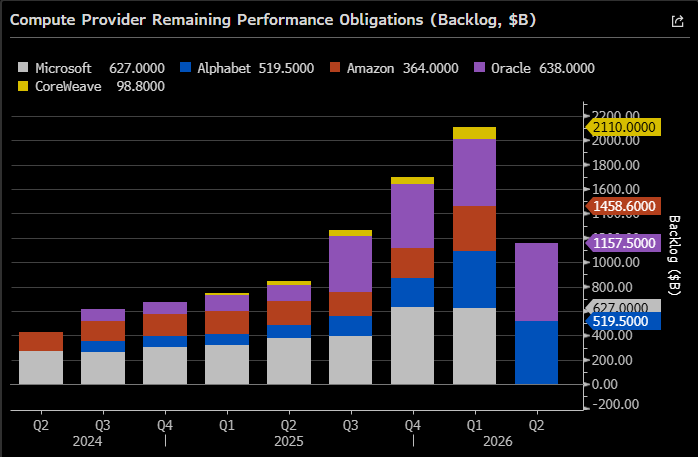
Market anxiety regarding hyperscaler credit risk and capital expenditure efficiency frequently overlooks fundamental pricing realities. Spot market pricing for renting specialized artificial intelligence compute remains significantly above contracted rates, indicating that hyperscalers may actually be under-earning relative to current market demand. Operating cash flow acceleration across these technology giants provides a robust, under-appreciated source of funding for ongoing artificial intelligence infrastructure expansion. When evaluated through the lens of order backlogs, demand indicators show substantial growth, with industry-wide backlogs expanding significantly over recent quarters. Attributing trillions of dollars in corporate spending to a non-economic bubble misreads the underlying structural shift driven by end-customer adoption.

Unlike historical technological revolutions such as the internet or the construction of transcontinental railroads, which relied entirely on linear human adoption and physical diffusion across the population, artificial intelligence possesses the unique characteristic of recursive demand. In an AI-driven economy, compute can actively generate its own subsequent demand for more compute. Once an organization identifies a positive return on investment use case, expanding its compute allocation becomes a self-funding mechanism. While casual users interact with artificial intelligence through simple prompt-and-response interfaces, power users and agentic engineering frameworks demonstrate an ever-increasing appetite for compute resources.
Evaluating the sustainability of artificial intelligence demand requires distinguishing between model training and model inference workloads. State-of-the-art frontier models require substantial upfront capital investments, establishing a useful lifetime value generated through ongoing inference services, albeit subject to rapid technological evolution. While open-source models diffuse through the market and offer alternative options, frontier models remain massive in scale and demand specialized, high-capacity hardware clusters that far exceed standard consumer capabilities. The computational demands required to serve advanced models ensure that well-capitalized laboratories retain a strong competitive advantage, as managing high-volume enterprise workloads requires enterprise-grade infrastructure.
Inference workloads continue to demonstrate healthy operating margins, reinforcing the economic viability of serving providers. Even as certain enterprises transition toward managing their own hardware deployments, that demand ultimately translates into direct hardware purchases from semiconductor manufacturers. Because inference represents the dominant and rapidly expanding workload across the industry, overall demand continues to outpace available supply. Leading artificial intelligence laboratories, bolstered by millions of monthly active users and rapidly accelerating top-line revenues, are demonstrating clear commercial traction rather than unsustainable financial engineering.
The modern artificial intelligence trade remains uniquely complex, combining rapid structural growth with widespread institutional skepticism. Market participants frequently react to short-term headlines while overlooking the fundamental hardware and memory requirements of advanced models. Although technology equities have experienced considerable appreciation, they continue to trade at reasonable forward multiples based on conservative assumptions that demand will experience a sharp contraction.
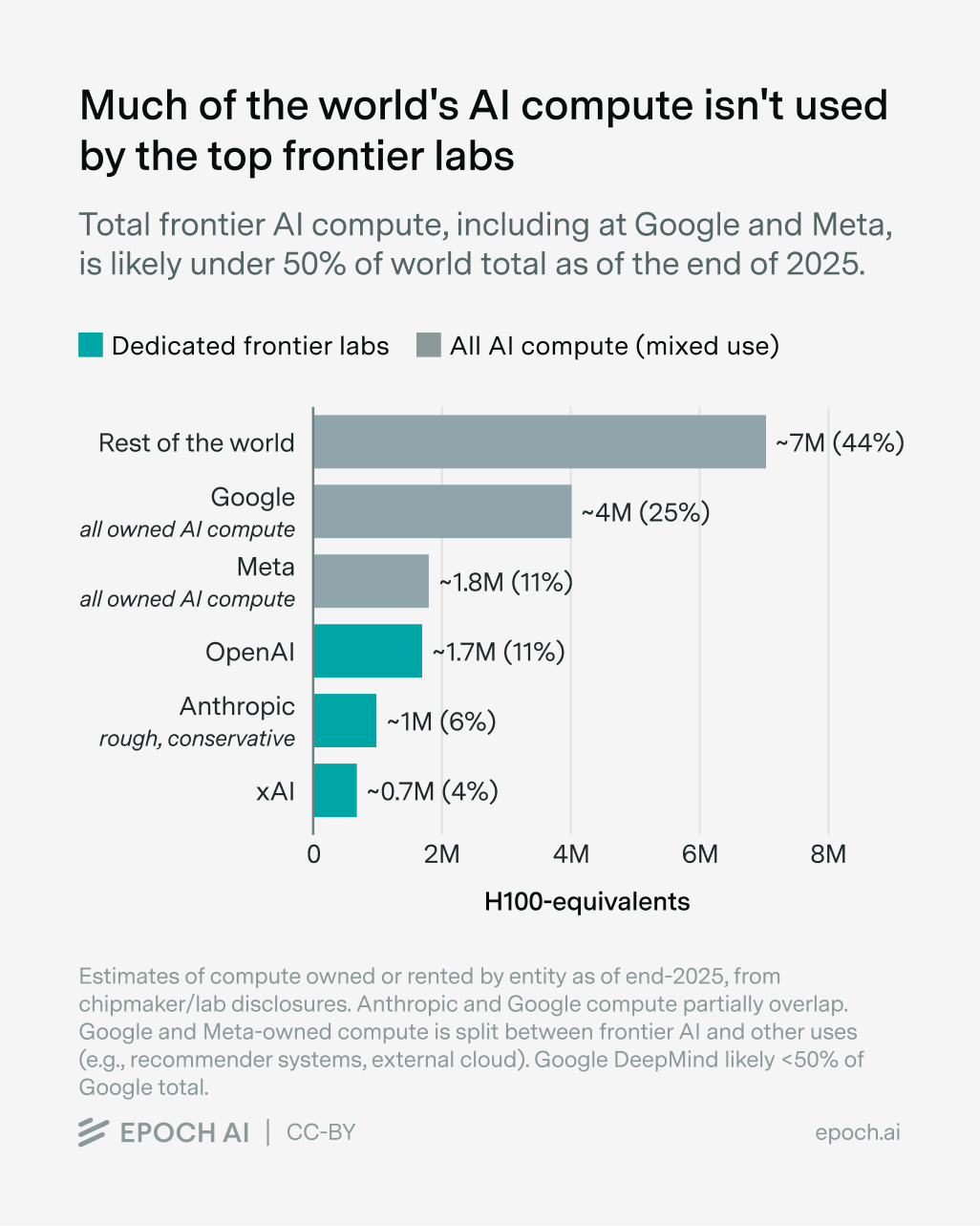
Traditional economic theory posits that surging demand is invariably met by a corresponding expansion in supply. However, because artificial intelligence production relies on constrained physical inputs such as specialized power generation, land availability, and semiconductor fabrication capacity, the supply response faces severe real-world bottlenecks. Furthermore, standard compute forecasts frequently omit the impending integration of physical robotics over the coming years, a sector that will introduce entirely new dimensions of computational demand. In the context of shifting global demographics and labor dynamics, artificial intelligence and automated robotics represent primary drivers for future economic expansion and productivity growth.
As the global economy works to bring additional data center capacity online, geographic limitations in North America are already redirecting expansion toward international markets. The quantitative supply of semiconductors remains highly visible through scheduled manufacturing milestones and earnings reports, whereas real-time demand continues to be understated by traditional forecasting models. This analytical disconnect creates a market environment where near-term supply limits are fully priced in while long-term, structural demand is substantially underestimated. Ultimately, navigating the modern semiconductor and artificial intelligence landscape requires answering whether the global economy’s appetite for compute will ever reach a definitive limit.




Comments (0)