


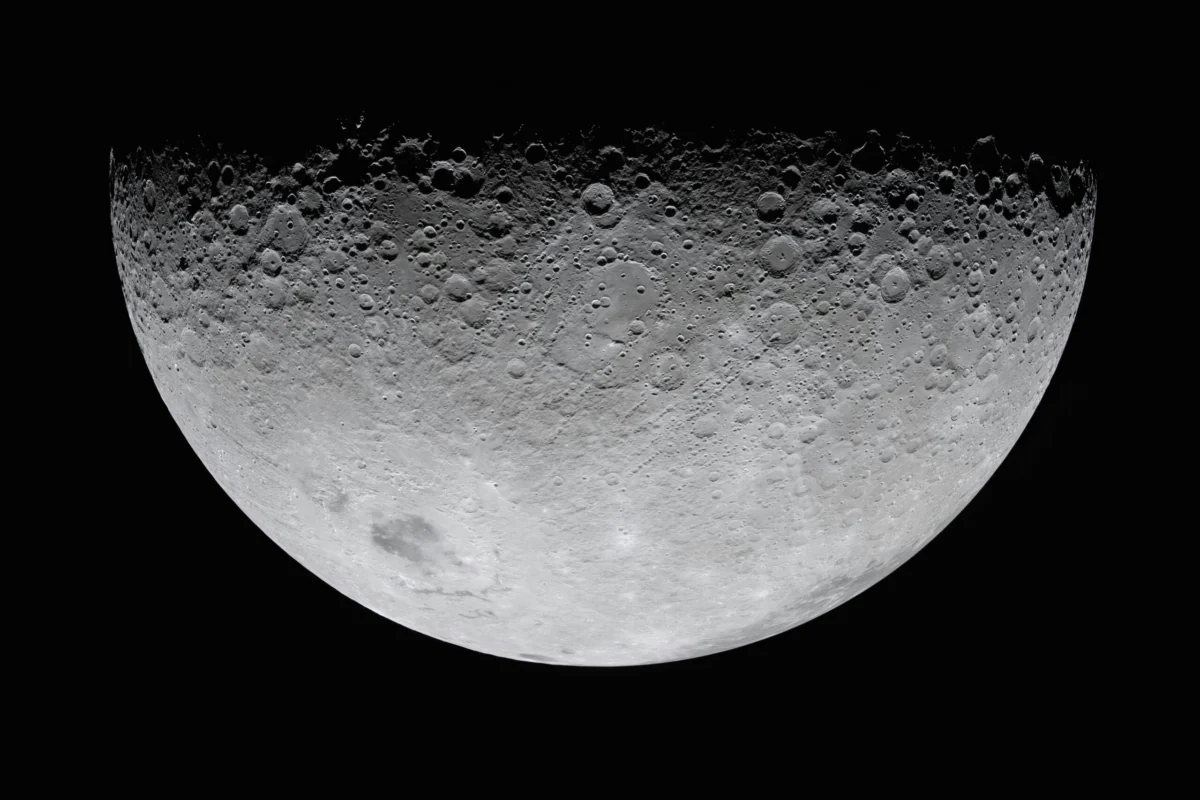
There is a photograph taken in 2017, resting on the floor of a university library, capturing an open copy of Jonathan
Black’s The Secret History of the World. The page details the classical planetary sequence—Saturn, the Sun, Venus, the Moon, and Jupiter—weaving together the metaphysical conditions believed to have made life on Earth possible. The picture was initially snapped simply to remember a specific page number, with no grand blueprint for what might follow it.
Fast forward to the present day. Opening a laptop reveals an analytics dashboard for a software application built over the course of two years. Tens of thousands of people visit the site monthly, with the vast majority arriving through articles housed in a digital grimoire. This knowledge base has expanded to roughly two thousand comprehensive entries covering planetary correspondences, crystals, herbs, spells, runes, tarot cards, and the complex relationships connecting them.
The library and the dashboard represent two chapters of the same underlying enterprise, separated by six years. Only recently has the creator been able to articulate out loud what took years to fully understand: these seemingly distinct pursuits are, in fact, the exact same project.
Why the MA Did Not End
Most academic research undertaken for a Master of Arts degree concludes precisely at graduation. A thesis is submitted, external examiners sign off, the degree is conferred, and the manuscript is filed away in a drawer or a university repository. This is not a failure mode; it is the standard lifecycle of academic research. It serves to prove that an individual can perform rigorous scholarly work before moving on.
However, some research refuses to stop because it plants a question that cannot be resolved merely by reading more books. The inquiry at the heart of this work was roughly this: if Hermetic cosmology remains internally coherent across two thousand years of texts—spanning Egyptian, Greek, Latin, and Coptic translations, and traversing the works of writers like Black, G.R.S. Mead, John Everard, and Timothy Freke and Peter Gandy—and if it describes a precise mechanism by which consciousness enters a human body through seven planetary spheres, what would that mechanism look like if it were rendered entirely in software?
At the age of 23, there was no coherent answer to that question. There was not even full awareness that the question was being asked. There was only the sensation of having painted invisible sentences onto the inside walls of a conceptual cube, the profound resonance of a Wordsworth line, and the lingering impact of passages from the Corpus Hermeticum that refused to leave the mind.
When the development of Lunary began, the conscious motivation was not academic nostalgia or an attempt to resurrect a thesis. It was driven by a technical frustration: existing astrology platforms on the market were largely dated, overly credulous, or marketed strictly as superficial entertainment. There appeared to be a genuine opening for a digital product that took the underlying philosophical and astronomical system seriously. It was only about six months into the process, while writing the knowledge schema for the grimoire, that the realization struck. The master’s thesis written at age 22 was being rebuilt in code, organized in Postgres tables, and manifested through a birth chart calculator consuming a VSOP87 ephemeris to generate quality assignments.
It was the same underlying argument, simply translated into a different medium.
What Lunary Actually Is, Read Through the MA Lens
Viewed through the Hermetic frame developed during nine months spent inside a university library, the architecture of Lunary becomes entirely clear.
The birth chart functions as a formal record of the qualities acquired by consciousness as it descended through the seven celestial spheres. Within this ancient framework, the soul descends downward through Saturn, Jupiter, Mars, the Sun, Venus, Mercury, and the Moon, picking up a distinct signature quality from each sphere along the way. The configuration of the sky at the exact moment of birth serves as a local snapshot of that descent. Consequently, the chart is not treated as a deterministic prediction; rather, it is a receipt. Lunary’s chart module calculates these exact positions using astronomy-engine, an open-source VSOP87 implementation in JavaScript distributed under an MIT license. Users can view their chart without needing a subscription, making it the most transparent object in the software.
The transit engine represents the ongoing conversation between a person’s acquired qualities and the celestial spheres that originally contributed them. When Mars transits across the exact position where the Moon sat at a person’s birth, ancient cosmology views it as an active dialogue between the sphere that contributed instinct and reflex and the sphere that contributed the capacity for assertion. Whether one views this dialogue as strictly causal or purely symbolic, the mapping is real, the geometry is precise, and the tradition assigning meaning to that geometry is two thousand years old and internally consistent. Lunary computes these interactions in real time across thirty-six aspect types and every classical and modern body. The software handles the arithmetic, leaving the user to do the reading.
The grimoire acts as the centralized knowledge base, containing two thousand articles encoding centuries of traditional correspondences. It details which herb pairs with a specific planet, which crystal supports a particular intention, which tarot card corresponds to a path on the Tree of Life, and which rune draws from Norse cosmology. These correspondences are not personal inventions; they are the stable threads maintained by tradition over centuries. The software simply structures them so they can be retrieved coherently, effectively transforming an academic bibliography into a queryable graph.
The astral guide provides an artificial intelligence layer designed with strict operational boundaries. It does not fabricate answers, nor does it engage in freewheeling fortune-telling or generative astrology. Instead, it retrieves specific passages from the grimoire and matches them with the user’s chart context, stitching them together into a coherent reply. The model is strictly constrained to surfacing information already established within the knowledge graph. The AI exists purely to eliminate manual clicking, not to invent new esoteric content.
Taken in sequence, these four components form a unified whole. The chart is the starting state, the transits provide the live feed, the grimoire functions as the library, and the astral guide acts as the librarian. The entire product operates like an ultraviolet light, revealing what was already true about the sky at the moment of birth and what remains true about the sky in the present moment. The data was always present; the product is simply the mechanism that turns on the UV light.
The Distinction That Keeps Being Missed
Astrology as a cultural artifact occupies two vastly different realities in the modern world.
On one side is the popular horoscope column found at the back of lifestyle magazines and daily engagement-optimized mobile applications. This iteration is often loose, entertaining, and frequently unconcerned with historical or structural rigor, making claims it cannot substantiate and selling a certainty it does not possess. This is the primary reason thoughtful critics dismiss astrology before ever encountering its primary source material.
On the other side exists the serious cosmology engaged with during the MA research—an older, more demanding intellectual framework suggesting that the ancient world developed a sophisticated architecture for understanding how consciousness enters the physical body. This tradition does not claim that the physical planet Venus causes an individual to appreciate beauty; rather, it posits that the sphere conventionally called Venus is symbolically associated with the quality of desire, and that a birth moment represents a meaningful coordinate within that broader architecture.
Lunary was built exclusively for this second project. The grimoire reads much closer to a philosophical reference work than a casual lifestyle app, transit articles prioritize astronomical data before interpretation, and the astral guide refuses to offer simplistic predictions.
Information Structured Correctly Becomes Visible
The foundational premise behind everything built here is straightforward: information that already exists in the world becomes visible when it is structured correctly and presented through the appropriate medium. The world does not require entirely new data or unprecedented events; the core labor lies in the architecture.
In the original academic installation, that architecture was physical—constructed from fabric panels, ultraviolet paint, and a deliberate transition from darkness into invisible light where hidden sentences emerged for the viewer. In Lunary, that architecture is digital, consisting of database schemas, ephemerides, knowledge graphs, and retrieval layers. In both instances, the underlying content was already present. A product, much like an academic thesis, is ultimately an affordance for perception.
Ideas possess a remarkable capacity to survive their original containers. The Corpus Hermeticum survived the collapse of Alexandrian schools, the destruction of libraries, the burning of the Serapeum, medieval Latin translations, Renaissance rediscovery, Victorian theosophists, and twentieth-century academic skepticism. These concepts did not require their original containers to persist; they required readers willing to construct new ones. Lunary represents the next container built to house those enduring ideas, continuing a tradition that has spanned two millennia.


Comments (0)