


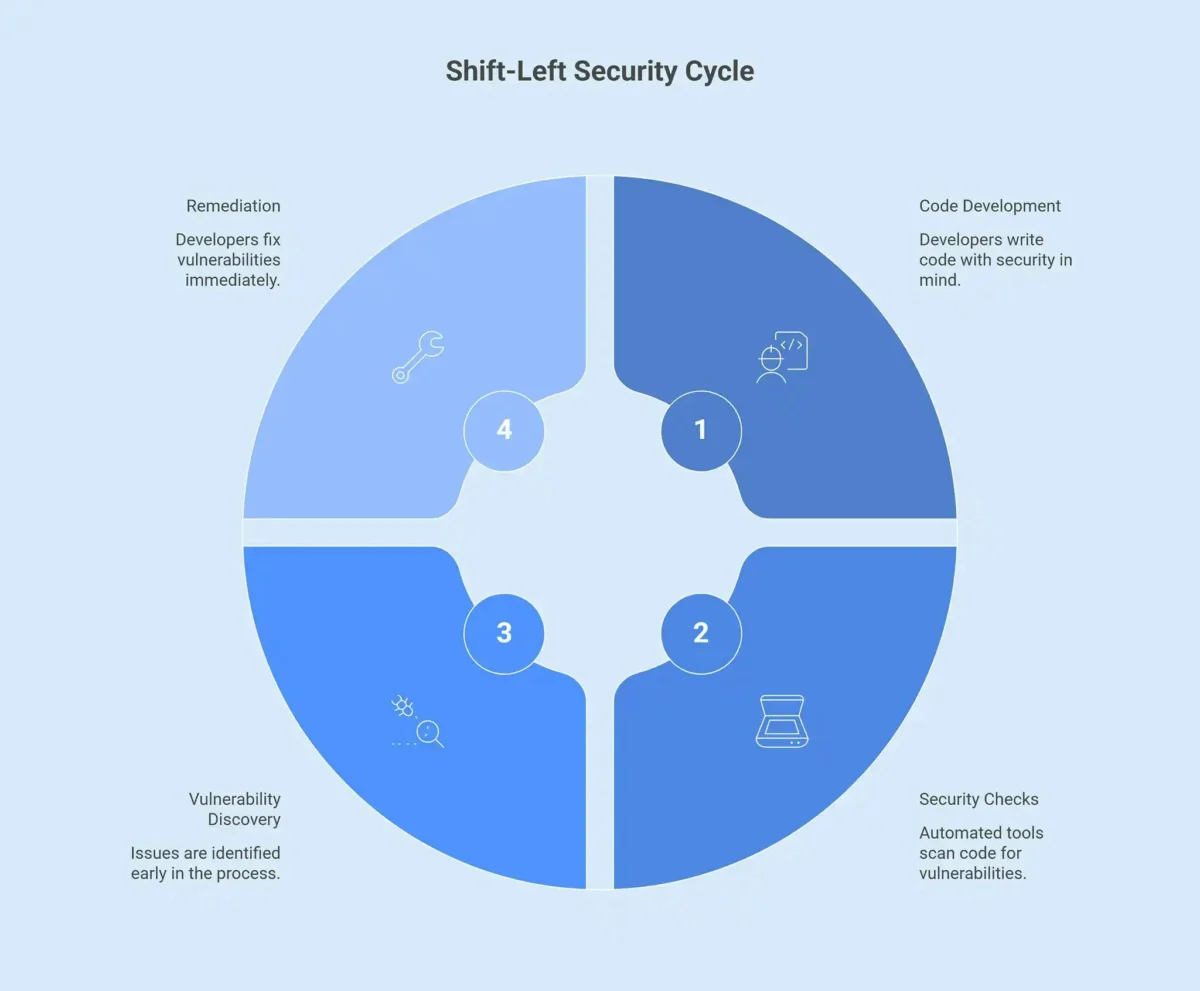
Most production vulnerabilities are not introduced in production—they are born much earlier, taking root right inside the Integrated Development Environment (IDE) while software is actively being written. Yet historically, the vast majority of enterprise security tooling has operated as an afterthought. Security checks have traditionally occurred after code is written, after pull requests are merged, or, in the worst cases, after software has already been deployed to live environments. This reactive approach creates costly rework cycles, bogs down release velocity, and significantly amplifies organizational risk.
Modern DevSecOps fundamentally challenges this outdated model. As software development accelerates toward microservices, cloud-native architectures, and rapid, continuous release cycles, traditional security checkpoints are no longer sufficient. Security can no longer reside outside the developer workflow; it must exist directly inside it.
Over the past decade, the software supply chain threat landscape has evolved dramatically. Today, organizations face profound risks not only from insecure application code, but also from open-source dependency vulnerabilities, license compliance violations, misconfigured cloud resources, insecure CI/CD automation pipelines, compromised build artifacts, and malicious dependency injection attacks. When teams attempt to push emergency bug fixes into production overnight, overlooking established security checks in the process, the entire production system becomes dangerously exposed.

Safeguarding sensitive data—whether Personally Identifiable Information (PII) or Customer Proprietary Network Information (CPNI)—remains paramount. Failure to adequately protect this information exposes customers to severe risks while landing the organization in deep legal, financial, and regulatory jeopardy. To combat these mounting threats, engineering leaders are adopting a pragmatic, scalable approach to secure development that embeds intelligence directly into the tools developers use every day.
The Importance of Developer-Friendly Security
Because the majority of vulnerabilities are introduced during the initial coding phase, developer-focused security ensures that issues are detected at the absolute earliest possible stage—when they are cheapest, fastest, and least disruptive to fix. Common vulnerabilities born during development include SQL injection flaws, improper authorization or missing access validation, hardcoded credentials and secrets, unsecured cryptographic algorithms, and outdated or vulnerable external libraries.
When these issues are caught early, developers can resolve them seamlessly before code review, build, or deployment phases ever begin. Modern toolsets help developers understand security risks directly within their daily workflows, allowing them to apply secure coding fixes quickly and consistently. In large enterprise environments—particularly within complex telecom and financial systems—early detection translates directly into lower remediation costs, fewer production incidents, accelerated release cycles, and heightened developer productivity.

Protecting Your Code via Source-Based SAST
Real-time code quality and security analysis tools that run directly inside popular IDEs like VS Code, IntelliJ, and Eclipse play a vital role in this paradigm shift. These solutions help developers detect bugs, security vulnerabilities, and code smells as they write code, addressing issues before they ever reach the CI/CD pipeline. Core capabilities include real-time static application security testing (SAST), security hotspot detection, strict code quality rule enforcement, and proactive secure coding suggestions across multiple programming languages including Java, Python, JavaScript, C#, and C++.
By implementing SAST features such as real-time linting and automated fix suggestions during coding, teams maintain a unified security baseline. When these development environments are connected to enterprise servers via connected modes, individual IDEs pull down the exact same quality profiles, rules, and project settings established by security teams. This guarantees that developers adhere to enterprise security guidelines and eliminates vulnerable code submissions at the source.
Handling hazardous code as technical debt is another crucial component of this strategy. Security tools frequently highlight potential risks such as insufficient input validation, weak cryptography, unsafe regular expressions, and risky file handling practices. Triaging and resolving these security hotspots before code review reduces downstream review cycles and prevents a crippling security backlog from accumulating.

Embedding these security scans directly into continuous integration pipelines further mandates strict quality gates, zero critical vulnerabilities, and rigorous pull request-level SAST scanning. Across enterprise telecom and financial platforms, internal security analytics consistently reinforce why shift-left security is an operational necessity rather than an optional luxury.
Securing Dependencies and the Open-Source Supply Chain
Modern applications rely heavily on open-source software libraries to accelerate development, but this heavy reliance also introduces external risk exposure. Supply chain security tools provide comprehensive dependency manifests, software bill of materials (SBOM) generation, license compliance scanning, CVE vulnerability checks of third-party dependencies, and real-time notifications about critical security flaws.
Embedding these scans directly into CI/CD workflows allows organizations to enforce strict policies. Pipelines can be configured to automatically block builds that contain critical common vulnerabilities and exposures, instantly generate tracking tickets for remediation, and apply automated patch version suggestions. Furthermore, generating comprehensive SBOMs in standard formats like CycloneDX or SPDX satisfies federal executive orders, enterprise security audits, and zero-trust supply chain methodologies.

Using Artificial Intelligence to Fix SAST Vulnerabilities Efficiently
Artificial intelligence-assisted development has transformed how engineering teams handle remediation. By leveraging AI assistants, developers can resolve identified vulnerabilities much faster by generating secure code patterns tailored to specific contexts and security rules. When an automated scan flags an insecure query structure, developers can prompt AI assistants to rewrite the vulnerable logic using parameterized queries or robust database access frameworks.
AI tools are similarly effective at improving cryptography practices, allowing teams to seamlessly replace outdated hashing logic like MD5 with robust algorithms such as SHA-256 or Argon2. Developers can also generate secure input validation routines for enterprise frameworks, ensuring that length, data type, and sanitization requirements are strictly met. When automated linters flag specific rule violations, developers can feed those exact rule citations into AI assistants to rapidly refactor code in total compliance with enterprise security standards.
The Secure DevSecOps Workflow and Organizational Best Practices
A truly resilient secure software development lifecycle operates across multiple continuous stages. In the initial developer stage, real-time coding analysis detects insecure patterns while AI assistants provide instant remediation paths. Moving into the build stage, comprehensive SAST and open-source dependency scanning evaluate the compiled artifacts. The deployment stage introduces container scanning, infrastructure-as-code checks, and zero-trust validations before software reaches production. Finally, a continuous feedback loop automatically routes findings back to responsible developers, surfaces security metrics within existing dashboards, and enforces strict release governance policies that block any deployment failing to meet established security thresholds.

Succeeding in this environment requires a shared commitment across all engineering roles. Developers must enable connected security modes, fix issues immediately, apply AI coding patterns safely, avoid hardcoding secrets, and ensure all external inputs are properly validated. Build and CI processes must strictly enforce security policies and block releases containing critical findings. At the organizational level, leaders must champion the shift-left philosophy, train developers on secure coding standards such as OWASP and CWE, maintain accurate and up-to-date SBOMs, and drive remediation through automated policy enforcement.
The future of secure software development will continue to be shaped by deeper integrations within developer tooling, advanced AI-assisted coding, and automated security governance. Security signals will live natively inside developer environments, providing contextual risk awareness in real time. Organizations that treat security as an essential component of the developer experience rather than an isolated compliance hurdle will successfully achieve both rapid delivery velocity and a robust, impenetrable security posture.





Comments (0)