


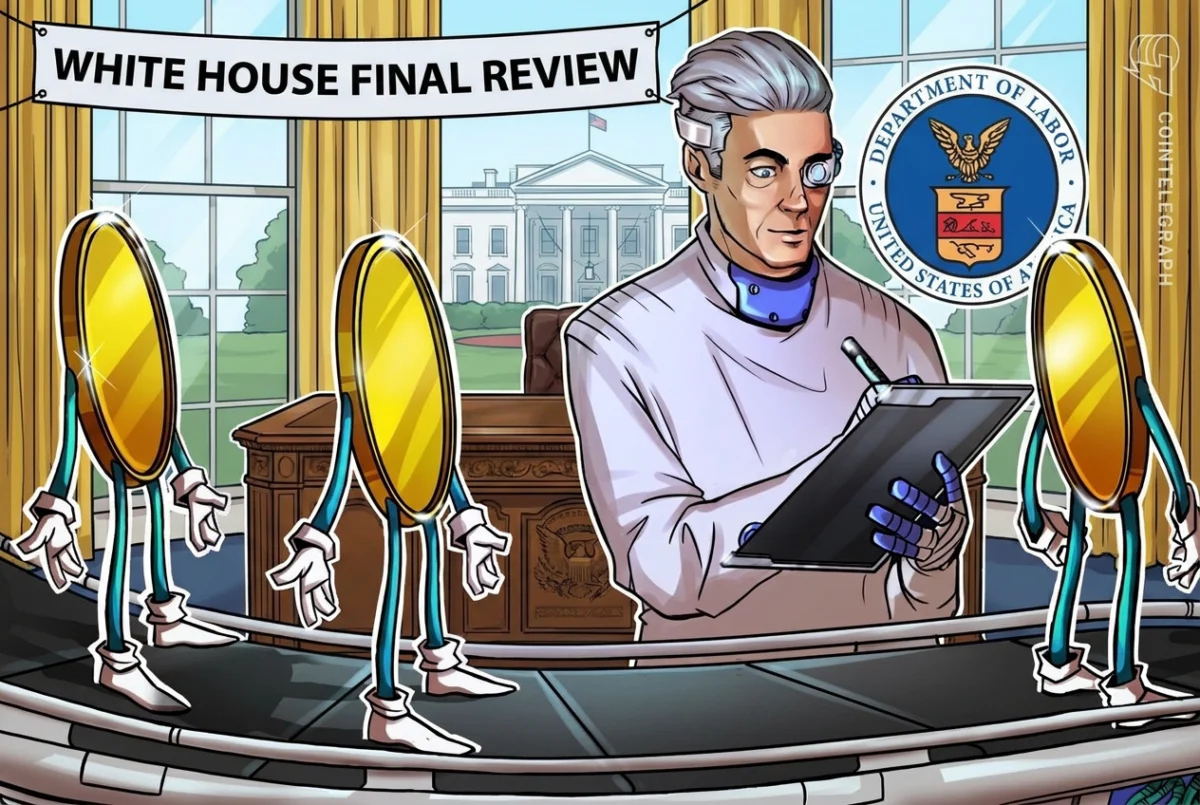
Smaller cryptocurrencies could soon find their way into United States 401(k) retirement plans under a proposed Labor Department rule currently advancing through federal review. However, financial and legal experts warn that altcoins will face significantly steeper hurdles than market heavyweights like Bitcoin and Ether before they ever appear in American nest eggs.
The regulatory measure reached the White House on Thursday for its final review, according to filings from the Office of Information and Regulatory Affairs. The initiative is designed to pave the way for retirement plans to incorporate alternative investments, including digital assets, while simultaneously establishing greater legal protections and "safe harbor" provisions for employers, plan sponsors, and fiduciary managers who choose to diversify their offerings.
Although the Labor Department’s initial proposal—first introduced in March—neither explicitly names which digital assets would be permissible nor sets a definitive minimum market capitalization threshold, it does outline a rigorous framework. The regulatory guidance directs retirement plan managers to evaluate prospective digital investments through six critical lenses: historical performance, fee structures, market liquidity, valuation methodologies, appropriate benchmarks, and overall structural complexity.
This regulatory opening creates a pathway for a broader array of cryptocurrencies to potentially enter the multi-trillion-dollar retirement space, but it falls short of guaranteeing their inclusion. When it comes to lesser-known tokens and smaller altcoins, industry experts caution that limited operating histories, thin liquidity pools, and distinct technological risks will make meeting these fiduciary standards exceptionally difficult.
Why smaller cryptocurrencies could face challenges
Teresa Goody Guillén, managing partner at Bellementis PLLC, noted that Bitcoin and Ether are the most natural and probable candidates to be integrated first due to their deeply established market infrastructure and mature investment products. According to CoinGecko data as of 20:01 UTC on Nov. 6, Bitcoin and Ether remain the dominant digital assets by a wide margin, commanding market capitalizations of approximately $1.5 trillion and $273 billion, respectively.
Yet, Guillén emphasizes that the lack of explicit exclusion does not mean altcoins will automatically find a home in retirement portfolios. Instead, individuals and committees managing 401(k) plans will bear the legal burden of demonstrating that their chosen digital asset allocations are sensible, justifiable, and strictly aligned with fiduciary duty.
"The real question isn’t which cryptocurrencies regulators pick – it’s whether an investment meets the same standards of prudence, liquidity, valuation and investor protection as any other retirement option," Guillén explained. She added that while a digital asset’s market capitalization is undeniably relevant, it should never serve as the sole deciding factor in an asset allocation decision. "Big doesn’t mean suitable, and small doesn’t mean disqualified. Digital assets shouldn’t get special treatment, or be excluded because they use different technology."
Bernardo Brites, co-founder and chief executive officer of Trace Finance, echoed Guillén’s assessment, offering a stark appraisal of how most altcoins would fare under the proposed regulatory criteria. "Run any token through that list and the answer is short. Bitcoin passes clearly. Ether passes; everything else fails on track record or benchmark before a fiduciary ever gets to market cap," Brites stated.
According to Brites, market capitalization ultimately matters only indirectly in this regulatory environment. "The practical test is simpler: can a plan committee document a daily, reliable price from a regulated wrapper? If not, it is not going in," he added.
ETFs could come before direct crypto holdings
While the Labor Department’s proposal does not explicitly restrict crypto investments solely to exchange-traded funds or professionally managed pooled funds, market participants and legal experts anticipate that packaged financial products will precede direct crypto ownership by a wide margin.
"ETFs and managed funds will likely come first because they fit existing custody and recordkeeping systems," Guillén said. She pointed out that holding cryptocurrencies directly within a retirement plan introduces a cascade of operational complexities and secondary concerns regarding secure digital storage, cybersecurity vulnerabilities, and reliable institutional pricing mechanisms. Nevertheless, she maintained that these inherent risks should not automatically rule out direct exposure if proper safeguards can be implemented.
Brites shares a similar timeline, predicting a measured, phased rollout for digital asset integration within the retirement landscape. He suggested that existing brokerage windows within 401(k) plans will likely serve as the initial entry point, followed later by standalone exchange-traded funds and diversified multi-asset funds that allocate a small, controlled percentage of their portfolios to cryptocurrency.
Looking ahead at the potential timeline for adoption, Brites projects that preliminary crypto investment options could begin trickling into select retirement plans by 2027, with ETFs tailored for larger employers following later that same year. By 2028, digital assets could see significantly wider availability across broader retirement fund offerings, provided regulatory momentum holds.
"The rule changes the legal risk, not the plumbing, and the plumbing is slower," Brites remarked, highlighting the mechanical realities of institutional finance. Outlining the administrative horizon, he noted, "White House review can take up to ninety days, then publication, then an effective date typically sixty days later."
Legal uncertainties remain
Beyond the operational and liquidity challenges facing smaller tokens, Brites cautioned that persistent legal uncertainty could significantly decelerate overall institutional adoption. While the proposed rule is intended to offer retirement plan managers a degree of insulation from litigation, it does not provide absolute immunity or prevent unhappy participants from filing lawsuits over poor investment performance or fiduciary missteps.
Furthermore, Brites warned that the political nature of federal regulations leaves the door open for future administrations to alter or completely reverse course, a prospect that naturally breeds caution among corporate employers planning for long-term employee benefits.
"The 2022 guidance was reversed in 2025; a fiduciary signing a ten-year plan design has to consider that this rule could be reversed too," he noted. "And with courts giving less deference to agencies, how much weight the safe harbor carries in litigation is itself unsettled."





Comments (0)