


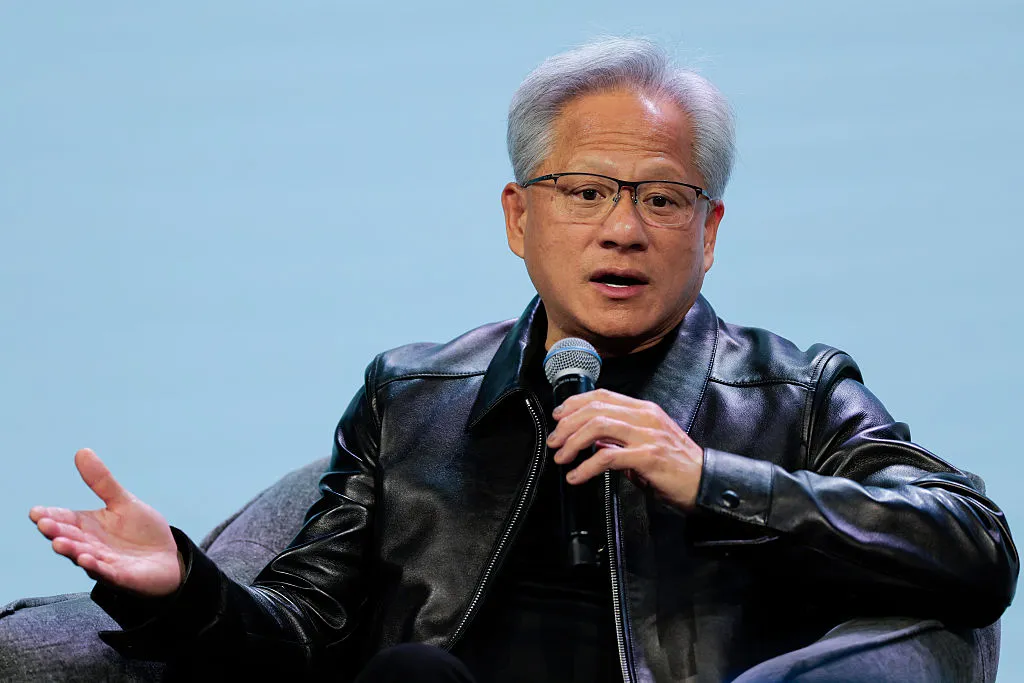
It was the resignation heard across the world. Jensen Huang, Nvidia’s embattled CEO who co-founded and led the semiconductor giant for 33 years, officially stepped down from his post. The departure of the visionary leader, whose tenure defined the modern artificial intelligence boom, sent immediate shockwaves through the technology sector. "It’s like a bomb went off," one neocloud founder told TechCrunch upon first hearing the news.
Over the last several years, Nvidia has operated not just as a hardware manufacturer, but as a prolific venture investor. The company has poured tens of billions of dollars into startups annually, participating in 105 funding rounds in a single year, frequently acting as the largest investor on the cap table, according to data from PitchBook.
"If that direction changes, it’ll be a big blow to so many young companies," said Maria Davidson, founder of Relational Capital. Huang’s abrupt absence leaves the startup ecosystem without one of its most powerful champions and facing a sudden contraction of available capital. Venture capitalists warn that this shift could have a massive, systemic impact on dealmaking, valuations, funding velocity, and even broader market competition.
"Nvidia is carrying almost every AI-native startup from application to neocloud," noted Shamillah Bankiya of Dawn Capital.
According to Umesh Padval, managing partner at Seligman Ventures, most of the significant strategic decisions to invest heavily in early-stage startups came directly from Huang himself. Padval, who has known Huang since serving on the board of Mellanox Technologies—a networking chipmaker that Nvidia acquired for approximately $7 billion in 2020—observes that while there is eventual hope a successor might revive the aggressive dealmaking strategy, investors are deeply skeptical that any revival will happen in the near term.
Nvidia’s newly appointed interim CEO, Colette Kress, is widely expected to institute immediate operational changes. These shifts will likely target Nvidia’s massive ongoing investments into AI startups that sit at the very crux of the multi-billion-dollar data center build-out. Huang’s rampant, high-stakes dealmaking in this sphere had increasingly become a source of quiet anxiety and scrutiny for Wall Street analysts.
"She’s much more conservative," one investor remarked regarding Kress. "I don’t think she’s going to commit the same amount of money to keep the early-stage ecosystem going."
Nvidia’s biggest strategic bets historically centered on backing neocloud providers, inference infrastructure companies, and open weight models—areas that are exceptionally capital-intensive and expensive for smaller, independent companies to build out on their own. "Jensen’s initiatives are a big reason an ecosystem has emerged despite that," said Zain Javaid, co-founder of the hardware company Ghost.
The sheer scale of Nvidia’s past investments illustrates the magnitude of the void left by its withdrawal. The chipmaker backed CoreWeave when it was still a private entity and participated in two major funding rounds for Crusoe, including its mammoth $1.4 billion Series E. The company agreed to buy Hugging Face this year for $13 billion in a deal expected to close in 2027, alongside holding substantial investments in Mistral AI, Lambda, and Black Forest Labs. In many cases, Nvidia was the single largest investor in these transactions. Last year, for example, the company wrote an $800 million check into a $2 billion Series B round for Reflection AI, before the open-source startup had even begun to generate meaningful revenue, according to reporting by the Wall Street Journal.
"Jensen believed in open source and frankly speaking, Europe," Bankiya said, highlighting how Huang championed AI development on a global scale. The potential cessation of that robust financial support in international regions outside of America, particularly in Europe, "would be a massive funding and honestly ecosystem gap that no one can fill."
At the same time, it is undeniable that Nvidia was such an overwhelmingly dominant player in the technology ecosystem that its financial dominance occasionally felt monopolistic. By backing dozens of companies with remarkably generous checks, Nvidia effectively locked those startups into relying exclusively on its proprietary chips and software architectures, reinforcing its already formidable market position.
If the company grows considerably more conservative with its startup investments moving forward, it could inadvertently leave much more room for rival technology giants and smaller competitors to capture market share. Coincidentally, Google announced two new specialized AI chips just this week amid the fallout of Huang’s departure from Nvidia.
Several investors interviewed by TechCrunch expressed cautious optimism that large cloud computing providers and rival semiconductor makers might eventually step in to back emerging startups, helping to fill some of the substantial void left by Huang’s exit.
Dharmesh Thakker, a general partner at Battery Ventures, expects Big Tech rivals to compete fiercely for Nvidia’s former investment crown, though he notes that success will depend "upon who brings the best combination of a great product, an ecosystem and community to compete with CUDA, and the financial power to bankroll the ecosystem." CUDA is Nvidia’s proprietary software platform that enables developers to run complex AI models efficiently on its graphics processing units.
While enterprise cloud giants like Google, Amazon, Microsoft, and Advanced Micro Devices may step up to back more mature startups to drive adoption of their respective chips and cloud services, Thakker doubts they will replicate Nvidia’s strategy of pouring hundreds of millions of dollars into pre-revenue infrastructure startups.
Under Huang’s leadership, infrastructure companies needing $100 million to $500 million worth of GPUs would frequently raise half that amount at valuations of $1 billion or more directly from Nvidia just to get their operations off the ground. The chipmaker’s direct participation provided essential psychological and financial comfort to other venture capitalists, convincing them to back these high-risk companies at lofty valuations.
Now, as Nvidia transitions toward a more selective approach to new company creation and smaller check sizes for its existing portfolio, the broader market is bracing for a measurable drop in startup valuations.
"When Nvidia was on the cap table, everyone felt safe," Padval said. Without that institutional backing, investors suggest that traditional venture capital firms are likely to think twice before writing large checks into these capital-intensive startups, potentially pausing certain early-stage dealmaking altogether.
Even so, few industry observers believe that an investment slowdown from Nvidia will single-handedly halt the broader, secular artificial intelligence boom.
While acknowledging that losing Huang is a profound blow to Nvidia’s corporate identity, Amulya Vishwanath, a former Nvidia employee who now runs her own venture capital fund, emphasized that corporate leaders must ultimately be held accountable, and that the wider technology ecosystem is far larger than any single individual. "That talent will, and must, continue to thrive," she said.


Comments (0)