


Fueled by a relentless global boom in artificial intelligence stocks, relaxed capital rules, and surging lending to hedge funds, Wall Street’s premier investment banks are marching toward a historic financial year. Even with an entire quarter still left on the calendar, the industry has already shattered previous performance benchmarks, establishing a staggering new paradigm for equities trading and prime brokerage revenue.
Through September 30, the five largest investment banks in the United States generated approximately $67 billion in equities revenue, according to recent company filings. That impressive haul already surpasses the total revenue generated by the group during all of 2025 by a full $7 billion, a period that itself was widely celebrated as a record-breaking year for trading desks.
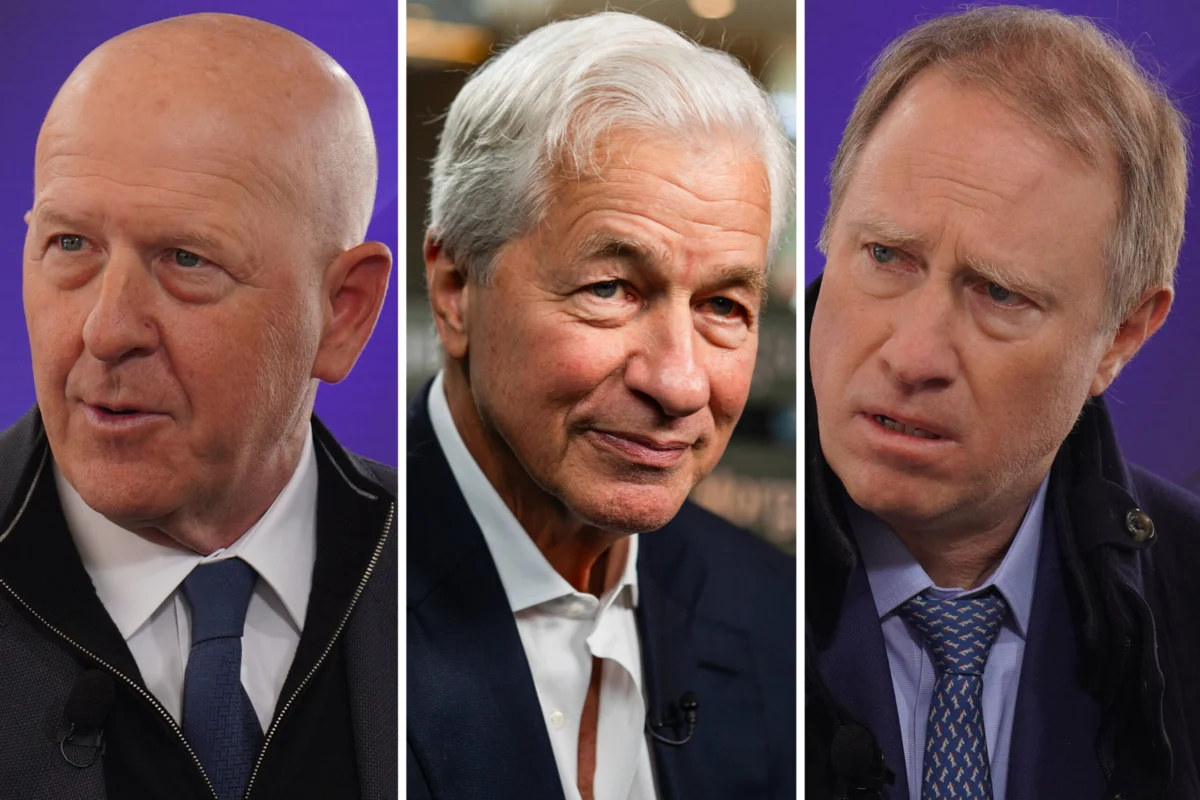
Yet, beneath those broad industry numbers lies a stark concentration of wealth and market power. Wall Street’s undisputed "Big Three"—Goldman Sachs, JPMorgan Chase, and Morgan Stanley—have captured the lion’s share of what is rapidly shaping up to be the most lucrative arena in modern banking history. Together, these three financial titans have pulled in a combined $52 billion in stock trading revenue so far this year, accounting for nearly 80% of the entire sector’s total take.
"When it comes to the AI mega trade, the Big Three consider each other their main competitors, and that’s pretty much it," Mike Mayo, a prominent banking analyst at Wells Fargo, told CNBC. "They’ve been best positioned to take advantage of this market."
Across the financial sector, major banking institutions are experiencing an epic run of blockbuster profits. This financial windfall is running parallel to a soaring stock market where total market capitalization continues to balloon, alongside a steady rise in trading activity from both institutional and retail market participants. Volumes are surging across individual equities, exchange-traded funds, and complex derivatives alike. Crucially, a major catalyst behind this heightened activity is the heavy influx of margin loans that banks are extending directly to hedge funds through their prime brokerage divisions, empowering those funds to significantly amplify their market bets.
Prime brokerage—the specialized institutional business of providing hedge funds with margin financing, securities lending, and administrative execution services—has rapidly transformed into a vital battleground and a massive engine for growth. The prime brokerage units housed within the Big Three sit at the very center of the broader equities narrative because they maintain deep relationships with the largest and most active funds operating across global markets and asset classes.
Demand for the leverage required to place oversized bets on AI hardware developers, hyperscale cloud providers, and semiconductor manufacturers has scaled unprecedented heights, according to senior bank executives who spoke about market conditions.
At Goldman Sachs, equities financing activities skyrocketed by 96% during the third quarter alone, reaching a record-breaking $3.37 billion. While JPMorgan Chase and Morgan Stanley do not break out their specific financing figures in the exact same manner, executives at both firms noted that they are experiencing a remarkably similar underlying dynamic.
"I like your ‘insatiable demand for capital’ point. That feels about right," JPMorgan Chief Financial Officer Jeremy Barnum remarked during the bank’s third-quarter earnings conference call, responding directly to analytical inquiries regarding the mounting demand for leverage.
"In this moment where AI is such an overwhelming theme… there is capital being tapped through all kinds of different mechanisms," Barnum added, underscoring the sheer breadth of the capital deployment cycle.
This relentless demand has helped fundamentally transform equity trading desks at the Big Three. Once viewed as traditionally cyclical and purely transactional operations, they have evolved into durable, high-margin lending engines that generate reliable streams of revenue, according to leading Wall Street figures.
At the same time, this dynamic has widened the performance gap between Wall Street’s dominant giants and their competitors, including rivals like Bank of America and Citigroup, highlighting a pronounced and growing divide across global capital markets.
"For clients, the value isn’t just a price on one trade, it’s coverage and continuity," Rachid Alaoui, JPMorgan’s global head of equities, explained in an interview with CNBC. "You want a dealer that can give you the full suite across products, and you want that service to travel with you across regions. That matters in stressed markets and periods of volatility."
Executing massive, multi-billion-dollar bets—such as leveraged total return swaps on volatile artificial intelligence equities or heavily traded sector-specific exchange-traded funds—often requires an exceptionally robust balance sheet. The largest institutions possess the financial heft to comfortably absorb potential trading losses reaching $100 million without jeopardizing their quarterly financial results, trading executives point out. Conversely, smaller or more specialized banks simply lack the balance sheet capacity to underwrite single-trade risks of that magnitude, forcing them to decline lucrative business opportunities or steadily cede market share to the industry leaders.
U.S. prime brokers have also been distinct beneficiaries of the structural retreat of European financial institutions from the global equities landscape, noted Herman Chan, an analyst at Bloomberg Intelligence. The departure or downsizing of traditional European players, such as Credit Suisse prior to its emergency absorption by UBS, has concentrated even more client flow into the hands of well-capitalized American dealers.
"Prime is one of the ultimate scale businesses," Chan said. "If you have a strong equities franchise, the hedge funds will want to transact with you because you have a bigger pool of trading opportunities with counterparties."
Picks and Shovels
While domestic U.S. markets have been profoundly captivated by software developers and cloud computing giants throughout the year, trading executives note that one of the fastest-growing geographical frontiers for equities activity has actually been located in Asia.
Institutional investors have poured substantial capital into markets like South Korea and Taiwan, targeting the essential "picks and shovels" that form the foundational backbone of the global artificial intelligence supply chain. These investments have heavily focused on advanced memory chipmakers, contract semiconductor manufacturers, and specialized hardware vendors that make the construction of massive data centers possible, according to Alaoui.

For the Big Three, which maintain deep-rooted institutional footprints spanning trading floors in Tokyo, Hong Kong, Seoul, and Mumbai, the surge in Asian trading activity proved to be a financial goldmine. However, trading executives caution that local transaction taxes and stamp duties are frequently bundled directly into top-line revenue reporting, which can serve to artificially inflate gross Asia prime totals.
Furthermore, there remains no universally standardized definition across the global financial industry regarding what constitutes exact equities trading revenue. While some major institutions incorporate related business lines such as clearing services into their figures, others deliberately exclude them, creating persistent challenges when analysts attempt to draw direct, apples-to-apples comparisons between competing institutions.
Yet, accounting nuances do little to diminish the overarching momentum driving the business. This structural upswing has been heavily sustained by a broader stock market rally that originally took root in October 2022, mere weeks before OpenAI publicly released ChatGPT and ignited the generative AI revolution.
"We’re still in a stock-based world," Morgan Stanley CEO Ted Pick asserted during his firm’s quarterly earnings call with analysts and investors. "Equities are still, all things being equal, the attractive asset class."
Even as the chief executive officers of both Goldman Sachs and Morgan Stanley have publicly stated that the massive infrastructure build-out supporting artificial intelligence remains in its foundational early years, market observers warn of underlying vulnerabilities. Analysts point out that if the economic promise of artificial intelligence ultimately proves less transformative than current valuations suggest, an abrupt sector downturn could impact these heavily exposed banks far more severely than their more diversified peers.
The current speculative boom has also sparked broader regulatory and macroeconomic concerns regarding the potential systemic risks introduced by highly leveraged hedge funds.
The International Monetary Fund issued a formal warning cautioning that rapidly growing leverage, crowded market positions, and correlated asset selling by hedge funds could introduce significant financial stability risks into the broader economic system. The IMF estimated that total global hedge fund assets under management had swelled to an extraordinary $13 trillion.
Back in August, JPMorgan CEO Jamie Dimon publicly noted that industrywide leverage was operating at "the highest it’s ever been," though he stopped short of characterizing the accumulation of risk as an immediate existential threat to the stability of broader financial markets.
Wall Street executives and market analysts have been quick to emphasize that the financial system absorbed minor turbulence this summer without experiencing systemic contagion. While the sudden operational wind-down of a prominent hedge fund managed by former OpenAI researcher Leopold Aschenbrenner, known as Situational Awareness, captured significant media attention during the summer months, several smaller speculative firms also underwent forced position liquidations.
Prime brokers have grown increasingly sophisticated at issuing rapid margin calls and swiftly curtailing credit risk when market movements turn sharply against their clients, according to JPMorgan’s Alaoui.
"In the summer, some investors had positions they were forced to unwind," he told CNBC. "They deleveraged, risk came down, and the market moved on."
Known Unknowns
Another powerful factor accelerating the ongoing equities boom is the regulatory environment fostered by Washington. Regulators under the administration have moved to ease specific post-crisis leverage and capital requirements for the largest U.S. banks, providing them with significantly more operational freedom to expand balance-sheet-heavy activities, including prime brokerage services. These revised capital rules were finalized in 2025, with major institutions permitted to adopt the more flexible frameworks as early as January.
By easing stringent balance-sheet caps that previously treated safe assets like U.S. Treasurys and fully collateralized prime brokerage loans similarly to much riskier corporate debt, regulators have granted primary dealers greater flexibility to deploy capital efficiently across markets.
"Capital did go down, so you have to say the system is somewhat more levered because of the relaxation in regulations," observed Darrell Duffie, a professor of finance at Stanford University and a recognized expert in global financial stability. "It’s not a good idea, but it hasn’t gotten dramatically out of whack."
While the sheer scale of the modern market and elevated levels of volatility naturally generate higher volumes of trading, increased derivatives activity, and expanded leverage, Duffie noted that these developments are not inherently alarming on their own.
Wall Street executives likewise downplay concerns regarding elevated leverage, emphasizing that they rely on rigorous daily collateral monitoring and frequent, comprehensive stress testing to identify and mitigate potential problems well before they materialize.
"Hedge fund leverage as a contributor of risk to the system is very much in the category of known unknowns," JPMorgan’s Barnum stated. "It doesn’t mean it’s riskless, but we kind of know what it is."




Comments (0)